
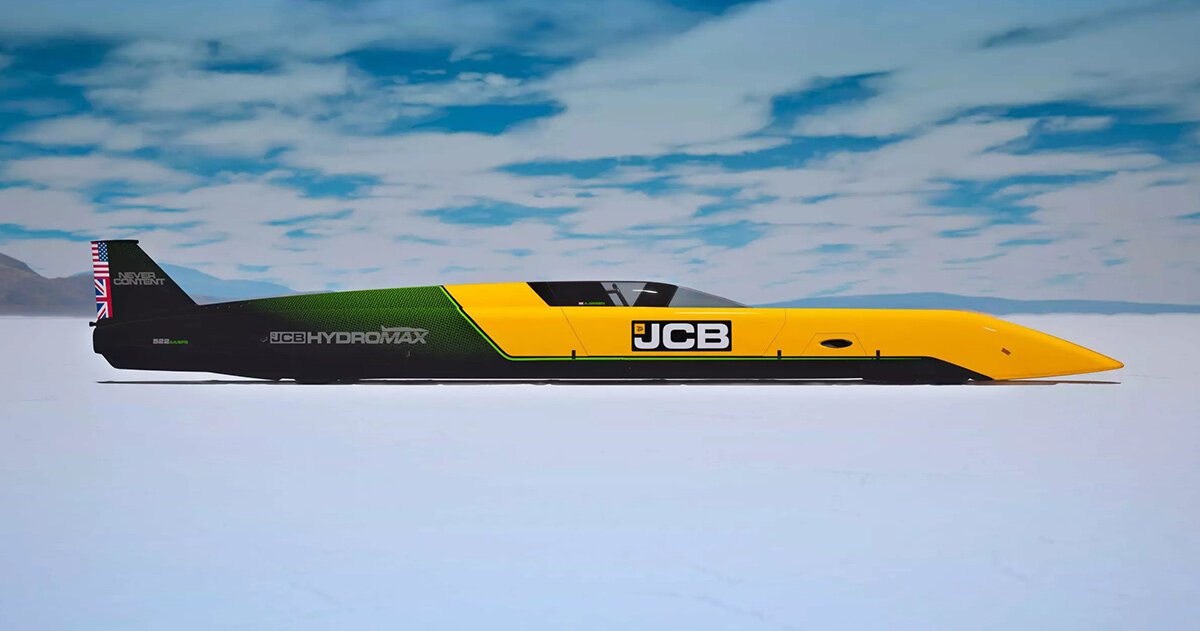

JCB’s hydrogen-powered Hydromax chases 350 mph
JCB takes hydrogen power to the Bonneville salt flats with Hydromax, a large, low land speed car built to chase 350 mph in the Utah desert. Best known for its yellow excavators and construction machinery, the British company is now putting hydrogen-burning technology into a very different kind of vehicle: a record-seeking racer with 1,600 horsepower, two engines and fighter pilot Andy Green behind the wheel.
Andy Green is a household name at Bonneville. In 2006, he drove JCB’s Dieselmax to 350.092 mph, setting the diesel land speed record in a car that took industrial engine technology to pure speed. Hydromax picks up on that thread with hydrogen, turning the company’s work on low-carbon construction equipment into something sleeker, faster, and far more dramatic.
from construction sites to salt pans
The Hydromax is powered by two JCB-developed hydrogen combustion engines, each producing 800 horsepower. They are based on the same family of engines the company has developed for excavators, where hydrogen combustion could provide a practical alternative to battery electric systems in heavy machinery. For work sites, the interest is quick refueling, long operating hours and the ability to keep large machines running without huge battery packs.
In salt, this engineering story becomes much more visceral. The car spans thirty-two feet (almost ten meters) in length, with a narrow body shaped for stability at extreme speed. At 350 mph, every detail matters. Airflow, tire contact, cooling, powertrain layout and camera visibility are all part of the same problem: how to keep a hydrogen-powered machine calm while traversing a white surface moving faster than most aircraft take off.

JCB’s Hydromax is built to chase 350 mph in Utah’s Bonneville Salt Flats
a 1,600-horsepower argument for burning hydrogen
The play is more than a gimmick, although it certainly knows how to get attention. JCB has spent years and around £100m developing hydrogen combustion engines, with the aim of using them in machines that dig, lift, load and work long hours in demanding conditions. Hydromax is of the same mind and cranks up the volume all the way.
The goal is ambitious. JCB wants the Hydromax to pass 350 mph, which would put it well beyond the current hydrogen internal combustion land speed record of 187.62 mph, set by BMW’s H2R prototype. It will also surpass the 303 mph mark achieved by Ohio State University’s fuel cell Buckeye Bullet 2.

the hydrogen-powered racer is powered by two JCB internal combustion engines
because JCB chases speed
Hydromax treats the Bonneville Salt Flats as a proving ground, billboard and engineering stage all at once. Instead of explaining hydrogen combustion through a spec sheet, JCB sends it into the desert at speeds that put supercars to shame.
The timeline also says a lot about where mobility conversations are headed. Battery electricity dominates much of the clean transport debate, but JCB is advocating another route in heavy machinery. This August, the company will see if excavator-derived hydrogen engines can make history on the salt.

the 32-foot long body is shaped for stability at great speed
project information:
name: Hydromax
company: JCB | @jcbmachines



