


The most common mistake, when a part of the room looks unfinished, is to interpret it as a lack. You immediately think of what to add: a lamp, a small piece of furniture, a plant, something that fills the void and makes the space look more “finished”.
It is almost always a misreading.
An anonymous space does not necessarily arise from what is missing, but from what does not take place. Objects placed without any relation to each other, light distributed evenly, proportions that do not communicate: the result is that indeterminate effect that makes a corner irrelevant even when it is perfectly arranged.
The DIY trick, in this case, is not decorating. It consists in changing the visual hierarchy using exclusively what is already in the house.
The secret is not to add elements, but to change their visual function
When an area of the room looks characterless or weak, our instinct is to fill it to cover it up. In fact, design experience shows that the exact opposite works much better: ie redefine the visual function and weight of objects that already exist in this environment, reorganizing them according to a new logic.
Try doing a little thought experiment and looking at that quadrant of the room without constantly wondering what is missing to complete it. Try asking yourself: what is this space trying to communicate without succeeding? What function does it implicitly express?
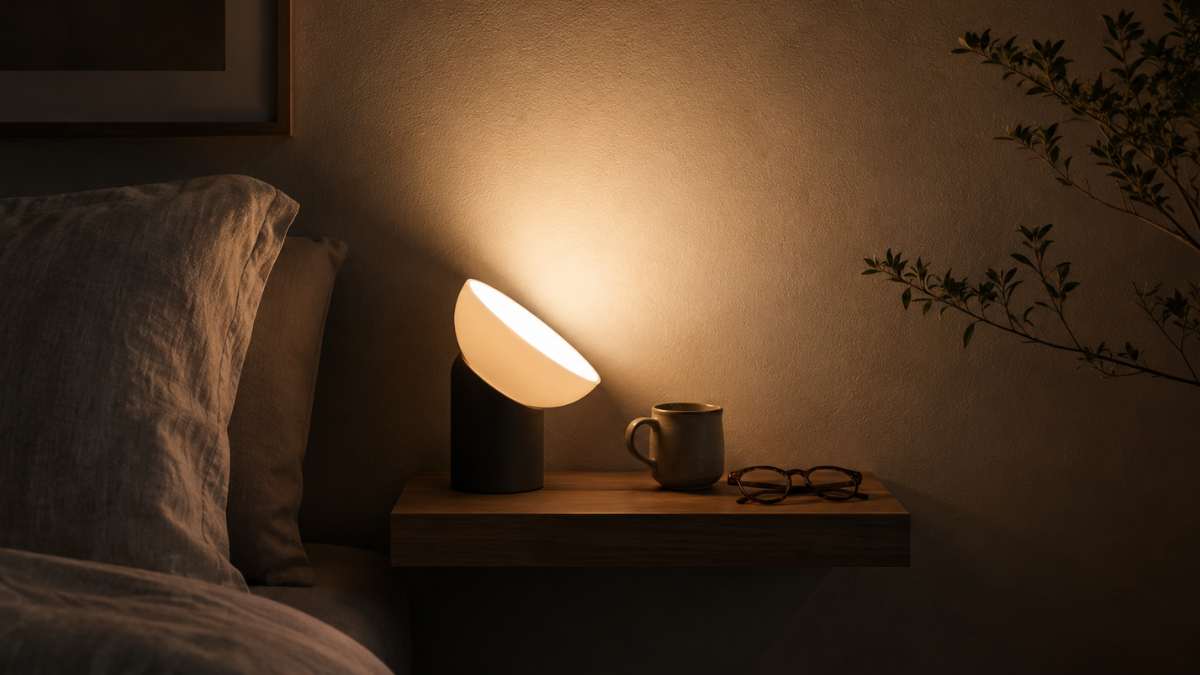
You will often find that a simple corner next to a window can be turned into a perfect visual point of rest and decompressioneven without having to fit a signature armchair. A completely empty wall next to the bed can become a very intimate atmospheric detail, simply by changing the orientation of the light. Even an ordinary chair, long forgotten in a hallway, can regain a strong stylistic dignity if it stops being crushed against the wall as an object of punishment and placed with a slightly studied slope.
To begin this transformation process, the first practical exercise you must do is drastic but necessary: remove everything.
Yes, empty the area completely, leaving no exceptions.
Observing a completely bare space, without superstructures and objects accumulated over time, forces the mind to assess the actual proportions of the roomthe way natural light and clean architectural volumes move, freeing the eye from the elements that usually cover and confuse them.
In this way, the real problem of the room will surface in a few minutes: you will realize that this corner is not inherently ugly or poorly designed, but was just victim of visual overload or a furniture arrangement without a logical thread.
The geometric rule of depth: layers of objects in space
One of the most common and repeated mistakes when furnishing a wall or a corner is to align all the elements in the same exact straight line, flattening them against the wall as if we were taking inventory of a warehouse or the layout of a showroom.
The visual effect of this approach is inevitably two-dimensional, cold and lacking in dynamism.
A corner able to attract attention and convey warmth, on the contrary, is always developed through a precise depth play and layering of levels.
To break the rigidity of the lines and create movement, minimal calibrated gestures are enough: a chair placed diagonally rather than parallel to the wall, a lamp oriented to cut the space laterally, a soft fabric (such as a woolen or linen check) draped over the seat in a natural and apparently simple way, an art book or it is placed vertically instead of being inserted into the usual stack. They are small everyday actions, but capable of profoundly modifying the three-dimensional perception of a place.
The fundamental objective of this strategy is avoid the fake showroom effect at all costswhich makes houses cold and impersonal.
The homes we find most successful, welcoming and exciting are never those that are geometrically perfect or obsessively tidy. they are the ones who they know how to appear alive with extreme criteria and sensitivity.
A strategic detail that makes the difference: when arranging objects, try to work by creating significant differences in height. If all elements are on the same visual plane, the human eye tends to drift off and stop focusing on details. On the contrary, the combination of a light point located higher, a low and solid decorative object and the introduction of a soft, textile surface close to rigid material (like solid wood or metal) creates a dynamic visual rhythm without forcing you to buy new pieces.
Indirect light as an invisible intensity corrector
If there is a single furnishing factor that can completely change the atmosphere and volumetric perception of a corner without making you spend a single euro, that factor is undoubtedly lighting.
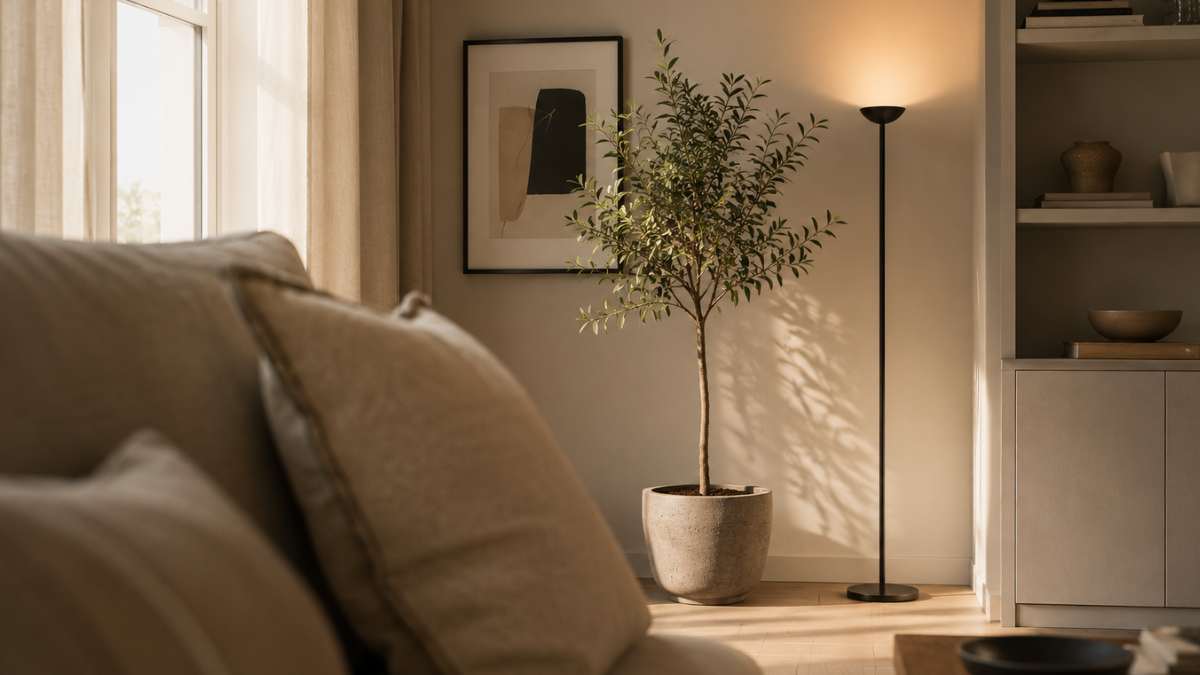
However, even in this area there is a very common error of judgment: the tendency to illuminate excessively and indiscriminately.
A diffused, central and completely uniform light (such as that coming from a classic ceiling chandelier) has the main defect of flattening shadows and flattening spaces, making every detail immediately legible but depriving it of all charm or mystery. The most familiar and successful corners in a house are almost always those that they suggest shapes and volumes through contrastsinstead of showing them completely and boldly.
I invite you to do an immediate practical test: take a table or floor lamp that you already have in another room, place it in the critical corner and directs the light beam directly towards the wallrather than towards the floor or the center of the room.
The stylistic transformation you achieve will be immediate and surprising.
The light, bouncing off the vertical surface of the wall, diffuses into the environment in a soft and full way, softens the rigidity of the sharp edges, creates subtle and it gives a sense of design purposefulness even in a part of the room that previously seemed completely banal or neglected.
If this corner is near a window, take the time to look carefully at it at different times of the day. The pastoral light of dawn and the warm reflections of sunset draw completely different domestic landscapes on the same wall. Often, noticing these nuances will allow you to figure it out just move a small piece of furniture a mere thirty centimeters to find the perfect point of balance between light, shadow and shapes.
The authentic power of real objects against the aesthetics of fiction
Many of the corners we try to furnish end up looking fake, cold and artificial precisely because they are treated like a shop window or the photo set of a catalog.
We often see stereotypical compositions: three art books arranged to a millimeter, an expensive scented candle that has never been lit, or small trinkets placed specifically to give an idea of an experience that, paradoxically, communicates the exact opposite, revealing its artificial nature.
To overcome this aesthetic rigidity, the most intelligent and sophisticated measure consists inuse elements that have a real and everyday function in your life.
Let’s talk about specific and personal items: a woolen blanket that you actually use on winter evenings on the sofa, the ceramic cup that you leave there because it has become your real reading area, a book that you are currently reading that you don’t just choose for the color of the cover to match the walls, a pair of audio headphones, a linear vase or a small memento that preserves a familiar memory.
The most compelling interior environments, rich in atmosphere and able to capture the attention of visitors, rarely appear as tabletop scenery. Instead, they always give it pleasant feeling of being discovered and layered over timeone piece at a time.
And this subtle difference between the authentic and the purely decorative is immediately noticeable as soon as you cross the threshold of a room.
The final test from the right perspective: sitting observation
There is one final fundamental step in this home renovation process, a technical check that almost no one performs, but which determines the true effectiveness of the work performed.
After you have finished arranging the objects, calibrating the indirect light and removing the unnecessary, take a very simple action: sit down.
Make yourself comfortable on the sofa, lie on the bed or sit in the main chair of the room, depending on where you are. In summary, look at the angle you just rearranged from real and everyday perspective from which you will specifically experience this space in your days.
Many furniture compositions, in fact, are created and evaluated standing up and reveal all their formal limits once the view height changes, appearing disproportionate, unbalanced or off-axis compared to the lines of the other furniture.
A well-designed and well-calibrated corner of the house doesn’t just have to look pretty or photogenic when viewed from above. must be able to they convey an accurate and coherent emotional sense: feeling of calm, visual order, warmth, curiosity or spatial depth.
When finally that particular part of the room stops looking like a forgotten fragment of wall or a chaotic crossing point and starts to be perceived as natural and pleasant break for the eyesmeans your intervention worked perfectly.
And the most interesting and satisfying thing in this whole creative process lies in one fact: to achieve this result you didn’t need to buy or add anything new. You just gave yourself the time to look at this space with different eyesultimately treating it as a place that deserved a deliberate decision.



