


The Mediterranean is not just a geography. It is a precise color palette: the lime of the houses of Mykonos, the chalk terracotta of the alleys of Amalfi, the petrol blue that the sea takes on at dawn before it becomes a postcard. Bringing this visual universe into the living room requires subtraction rather than addition. No souvenirs hanging on the walls, no prints of olives or amphorae.
The key is inside raw materials, to those who preserve the light instead of reflecting it, that age well. Carpets, in this system, do a quiet but decisive job: they define the emotional perimeter of the room, they establish a visual temperature, they connect the floor with the rest of the furniture without noticing the exact moment that the space stopped looking normal and started to look like something.
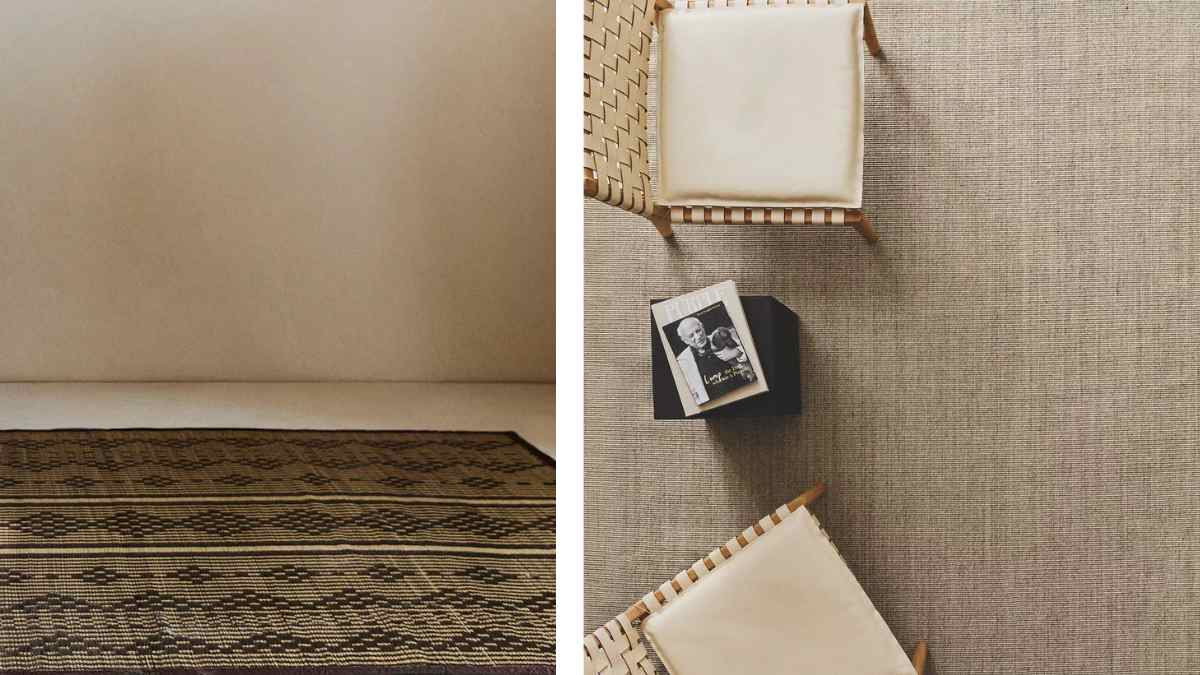
In recent years, Zara Home has produced a series of carpets made of natural materials that perfectly fits this logic. Not by chance, but because jute, sea grass, hand knitted cotton and raw wool are exactly the materials with which the Mediterranean has always lived. What follows is a practical pairing guide based on real products and concrete reasoning.
Jute and raw linen: the carpet that an already tanned living room needs
Zara Home’s jute rugs, including the natural weave model in various sizes (available in 160×230 and 200×300 cm variants, with prices starting at around 129 euros), work best when the living room already has a warm color base. They are not carpets for use on light-colored floors or on clean white walls: they risk disappearing, becoming neutral in the worst sense of the term.
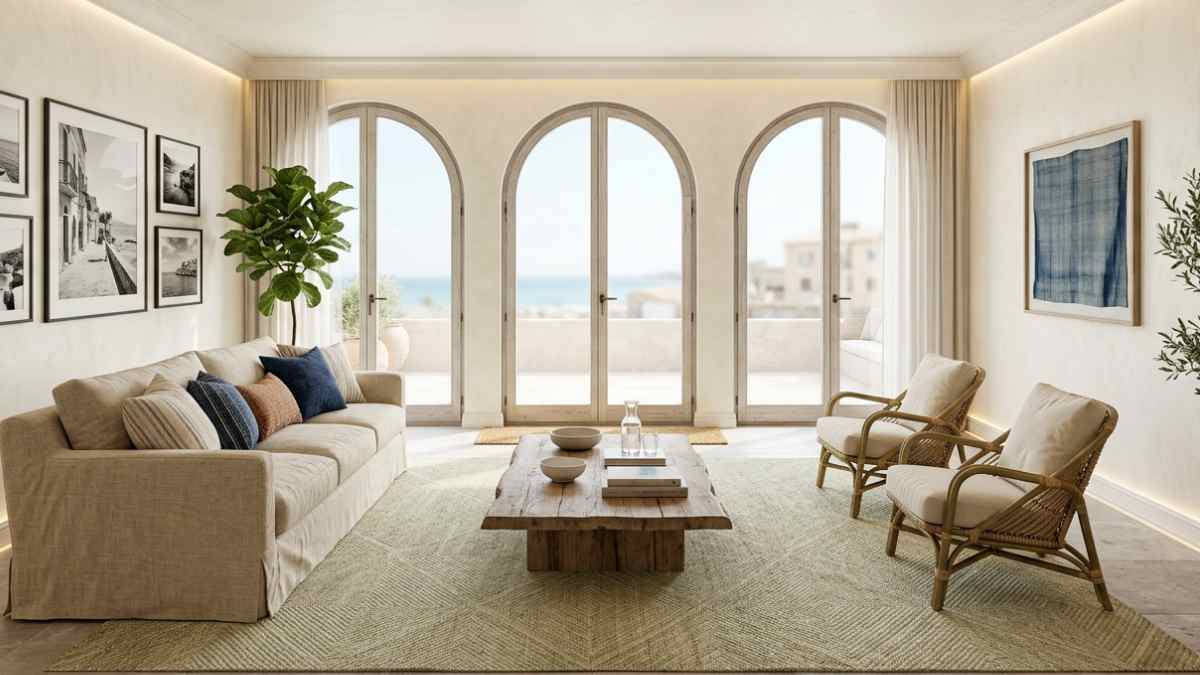
The ideal framework is a wooden floor natural terracotta or stone effect in shades of dark beige, combined with off-white or sand-colored walls. On this basis, the woven jute weave brings texture without adding color, which is exactly what an authentic Mediterranean style needs: layers of surfaces, not accumulations of color.
The combinations that work best: a sofa raw off-white colored linen or ivory, cotton cushions in cobalt blue or sage (not dark green, not forest green), coffee tables in olive or mango wood with a natural finish. Zara Home offers accessories in both versions. Avoid: white or light gray lacquered furniture, which takes the heat out of everything and makes the jute look opaque rather than vibrant.
Seaagrass: when the living room can afford to be rough
Seagrass is a marine fiber and it shows. It has a natural, almost grassy green-yellow color, with tonal variations that change depending on how the light falls. Zara Home’s seagrass rugs, in standard living room sizes, bring an unexpected tactile quality to the home: they are firm underfoot, slightly stiff, not soft in the conventional sense. For some it is a limit. For those who want a reliable Mediterranean style, it is a plus.
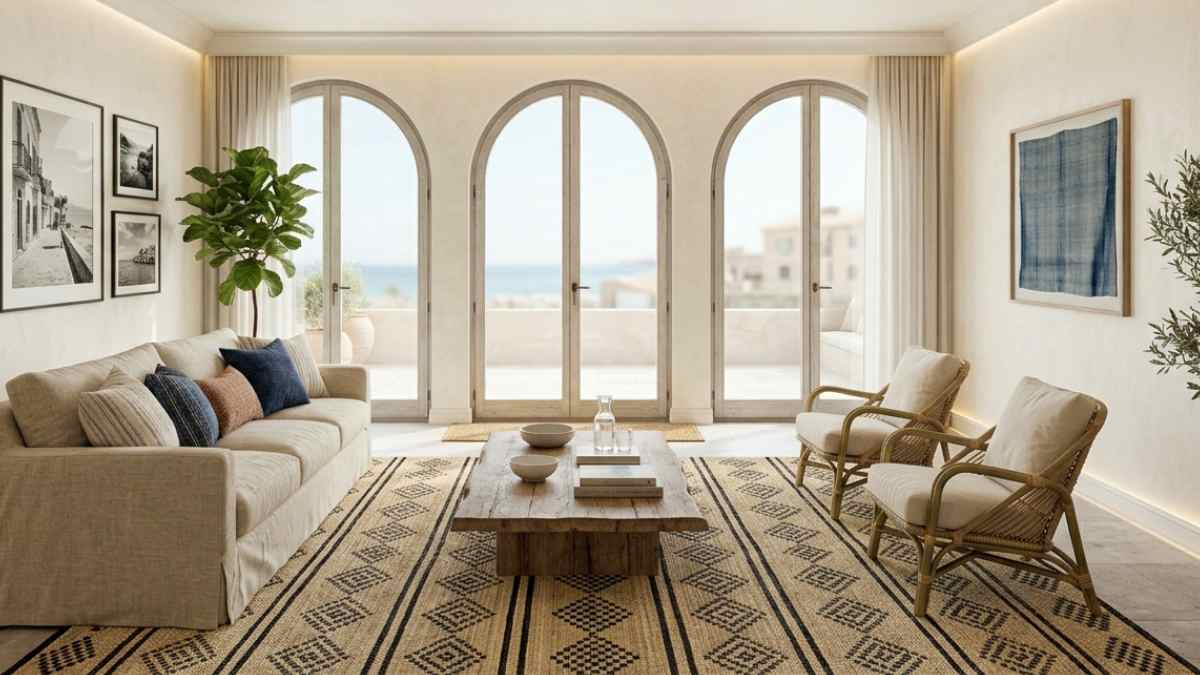
Seagrass works in environments that are not afraid of contrast. It is combined with a wooden floor light parquet or natural pine woodcreates a layering of natural tones reminiscent of the interiors of Greek houses or the more modest homes of Sicily. The colors that converse best with his green-yellow: pure (not dirty) white, burnt terracotta, deep navy blue.
A specific combination: sea grass rug 160×230 cm in the center of the living room, a sofa upholstered in midnight blue velvet or white cotton, a low table in white polished ceramic and iron legs (a type that Zara Home has recommended for several seasons), some cushions in cross-stitch fabric in shades of orange or rust. The result is a space that feels lived in without looking neglected.
Woven cotton and macramé: texture as a structural element
Zara Home has been producing handmade cotton rugs for years, often with geometric patterns or dhurrie effects, in colors that vary seasonally. Those that fall under the Mediterranean aesthetic are generally in combinations of white-natural, white-blue or plain off-white or terracotta.
These rugs have a different nature to jute and seagrass: they are softer, visually lighter, easier to put together but also run the risk of being more generic. The difference is the context. A blue-and-white cotton rug with a Berber geometric pattern or a stylized kilim works great in majolica glazed floortypical of traditional Mediterranean homes, where it makes no sense to add further visual complexity to the floor. Here the carpet acts as a mediator, not a protagonist.
With neutral pavement, Conversely, the cotton rug can have a terracotta or mustard tone. In this case, the best combination is a sofa made of light natural linen, a bookcase or sideboard made of unpainted solid wood and walls that lean towards white lime. Ikea Sinnerlig and Muuto’s Stockholm range are based on similar principles about natural materials, but Zara Home has the advantage of more affordable prices and wide distribution.
Curly wool and Berber-Mediterranean patterns: the living room that does not need the sea outside the window
There is a zone of stylistic overlap between Mediterranean and North African aesthetics that has produced some of the most interesting interiors in recent years. Wool bouclé or patterned rugs inspired by Berber kilims, available in the Zara Home catalog in more affordable versions than the original handmade pieces (sourced from brands such as Beni Ourain starts from 400-500 euros for 150×200 cm)they bring a visual complexity to the living room that raw natural materials alone do not have.
Ivory wool rug with geometric pattern in black or charcoal, placed on a gray concrete floor or in light natural stone, it becomes the starting point for a living room that speaks Mediterranean without mentioning it. Combinations that work: low seats in leather or natural leather (not black, not chocolate brown), white or cobalt blue glazed ceramics as decorative elements, succulents or prickly pears in unpainted terracotta pots. Low thread-like lights, in wrought iron or matt brass.
No: mix this type of blanket with white Scandinavian furniture and thin oak legs. The contrast isn’t interesting, it’s just confusing. The Mediterranean aesthetic wants weight, matter, controlled imperfection. The right furniture has depth, not lightness.
A living room with a 160×230 cm Zara Home jute rug, a camel colored cotton sofa, a natural wood coffee table and two cobalt blue cushions is already elsewhere. You don’t need pictures of boats or shells on the windowsill.



