


The garden bench has long had a double life: outside when it’s nice, in the cellar when it rains. A seasonal, almost disposable item, designed to withstand the elements but not necessarily for pleasure. Then something changed in the way designers viewed outdoor spaces, and this distinction between indoors and outdoors began to lose meaning. Not because trends dictated it, but because some stalls stopped looking like a garden.
We are talking about objects that can be compared favorably with a sofa, with a bookcase, with a designer coffee table. Benches that enter the living room without looking like intruders, that work alongside structured fabric or terracotta flooring. The boundary between outdoor and indoor furniture has never been more porous and these four pieces prove it better than any theoretical reasoning.
Raw teak: when imperfection becomes strength
The teak left naturally ages to silver gray within a few months. For many it is scary, for those who know the material it is tempting. Ethimoan Italian brand based in Meda, works with teak with this in mind: its benches from the collection Knit they have a solid wooden structure combined with nautical rope weaving, and bring an aesthetic that has nothing rustic about it to the home. The profile is clean, almost minimalistic. Standard dimensions approx 150cm in length, sits approx 45cm off the ground. Starting price around 900 euros, which is not little, but the piece lasts for decades.
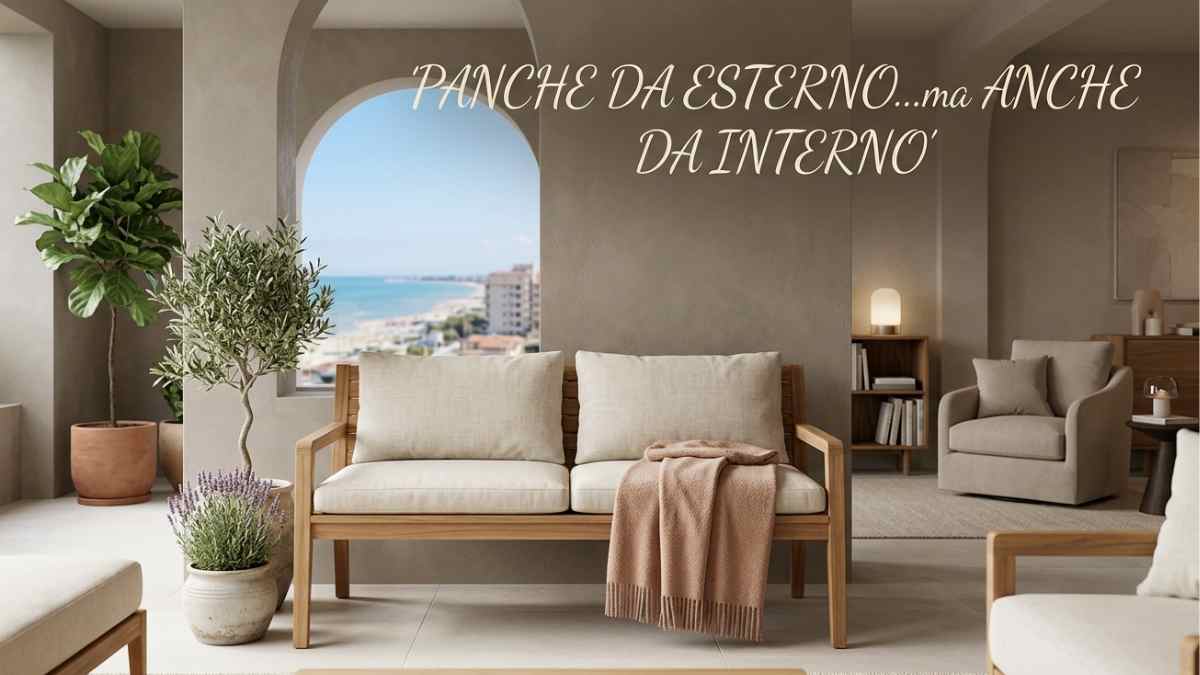
In the living room, this type of bench works on the edge of a sofa or under a window. Raw teak dialogues well with neutral tones, with raw linen, with matte ceramics. What doesn’t work is combining it with lacquered wood or overly glossy surfaces: it creates a contrast that gets tiring quickly.
Wrought iron becomes thin
Forget the black iron public park benches, the ones with slotted backs and bolted legs. Modern wrought iron is something else. Fermobthe French company that turned the washed-out green of Luxembourg in Paris into a cult color, offers the collection Surprising powder-coated metal construction benches that weigh less than they look and have a color performance that lasts indoors.
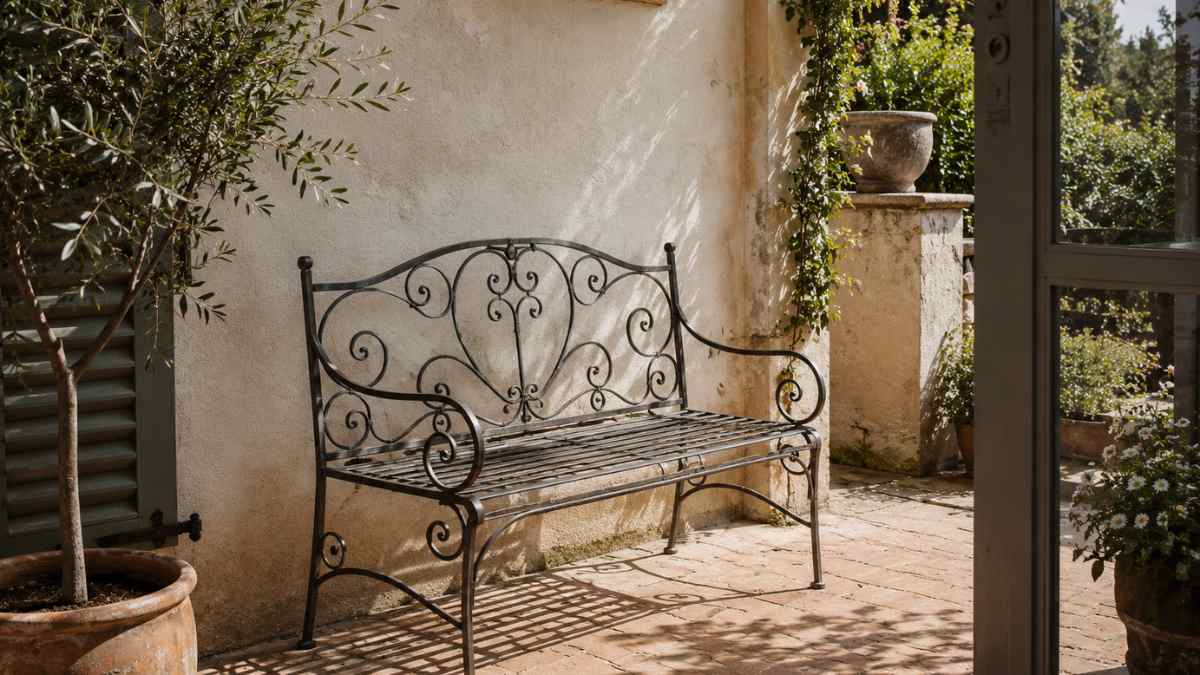
Color gamut is the real problem: forty seven colors availablefrom white cotton to red poppy to slate. A bench in stormy blue placed in the entrance of a white-walled apartment calls for no explanation. It’s there and it works. The seat is made of perforated sheet metal, which makes it breathable on the outside and visually light on the inside. Width 110 cm, weight approx. 9 kg. Prices between 300 and 450 euros depending on the model.
The concrete that does not weigh
Concrete in furniture went through a moment of overexposure, when every gray surface was passed off as industrial chic. Once that phase is over, what remains makes sense: pieces of fiber cement or lightweight concrete with a precise official identity. SeraxA Belgian distributor and manufacturer, it has been working for years with ceramists and designers on objects that use outdoor materials in a domestic way. The bench Domo by Marie Michielssen is an example: essential geometry, thin thicknesses, solid presence without the bunker effect.
In the living room, a light concrete bench works particularly well on dark wood or antique parquet floors: the contrast of materials is just right. It should be used without a pillow if the intent is aesthetic, with a natural cotton pillow if the focus is on function. It’s not the most comfortable piece in the world, but that’s not what you’re asking of it. Misure indicative 120 x 35 cmweight about 18 kg. Price around 600 euros.
Rattan reinterpreted: it’s not nostalgia, it’s structure
Rattan has had a second life in recent years, but not all products that call themselves rattan are worthy of the name. The real thing, handcrafted using traditional techniques, has flexibility and stability that synthetic polyethylene cane cannot duplicate. Sika-Designa Danish company founded in 1942, it still produces with natural rattan harvested in Indonesia and has a model portfolio that includes low-backed garden benches that are also suitable for indoor spaces.
The bench Colonial it has a structure that refers to the British colonial aesthetic without being a prisoner to it: the proportions are more modern, the seat is wide, the back is not oppressive. In the living room, with a plush or bouclé pillow, it becomes a piece that needs no explanation. Natural rattan is afraid of prolonged moisture, but it keeps well in the shade and in ventilated areas. Price around 700-800 euros for the version with pillow included. Width about 120 cm.
A matter of intent, not of category
What these four pieces have in common is not material or price. It is that none of them ask to be justified. You don’t have to explain to visitors why you have a garden bench in your living room, because visually it isn’t. The outdoor/indoor distinction, when it comes to quality furniture, is a matter of technical certifications and surface treatments, not aesthetics. A well-designed object finds its place where you put it.
It’s worth remembering this when you’re tempted to buy two separate sets of furniture, one for indoors and one for outdoors. Sometimes you just need to pick one that works in both contexts. Four square meters of terrace and a narrow entrance will please you.



