Some homes begin with a site visit, while others begin with a passing thought. But this work belongs entirely to serendipity. Months ago Fariz Mamedov of FM Interior Design Office officially approached to design this 150-square-meter apartment in downtown Almaty, Kazakhstan, he often drove past the housing complex while it was still under construction––thinking about one day working on its interiors. Soon after, clients contacted an apartment in that very building.
Whether you call it coincidence, intuition, or something closer to good luck, this story set the tone for a home that is shaped as much by feel as by floor plan.
The apartment belongs to a family of five: a warm, creative household whose interests revolve around music, theatre, art, travel and each other. Mamedov describes them not only as people whose energy immediately moved him. Their conversations were open, their connection instant, and their sensibilities unusually aligned with his own. This emotional fluency became the silent engine of the work.
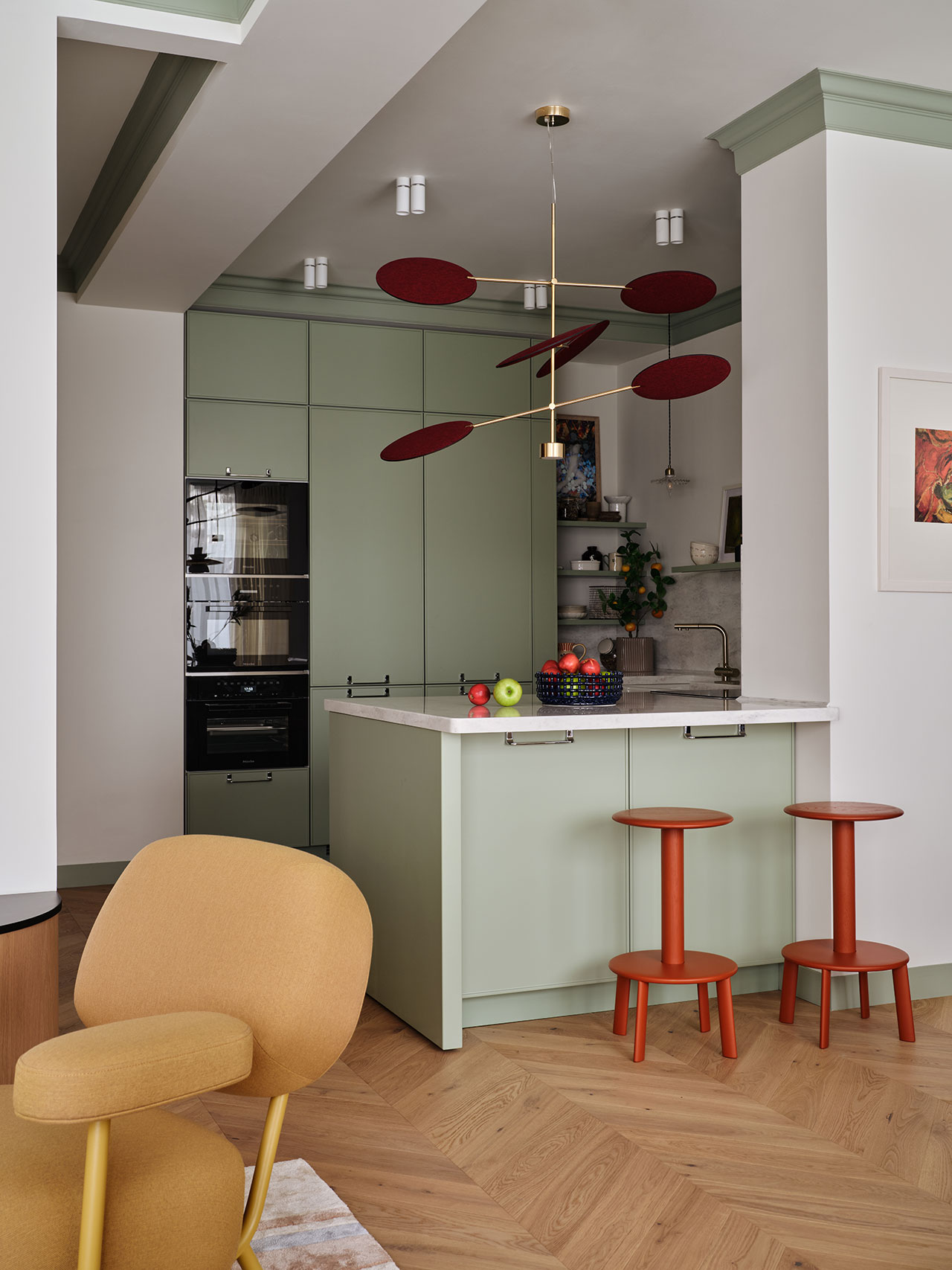
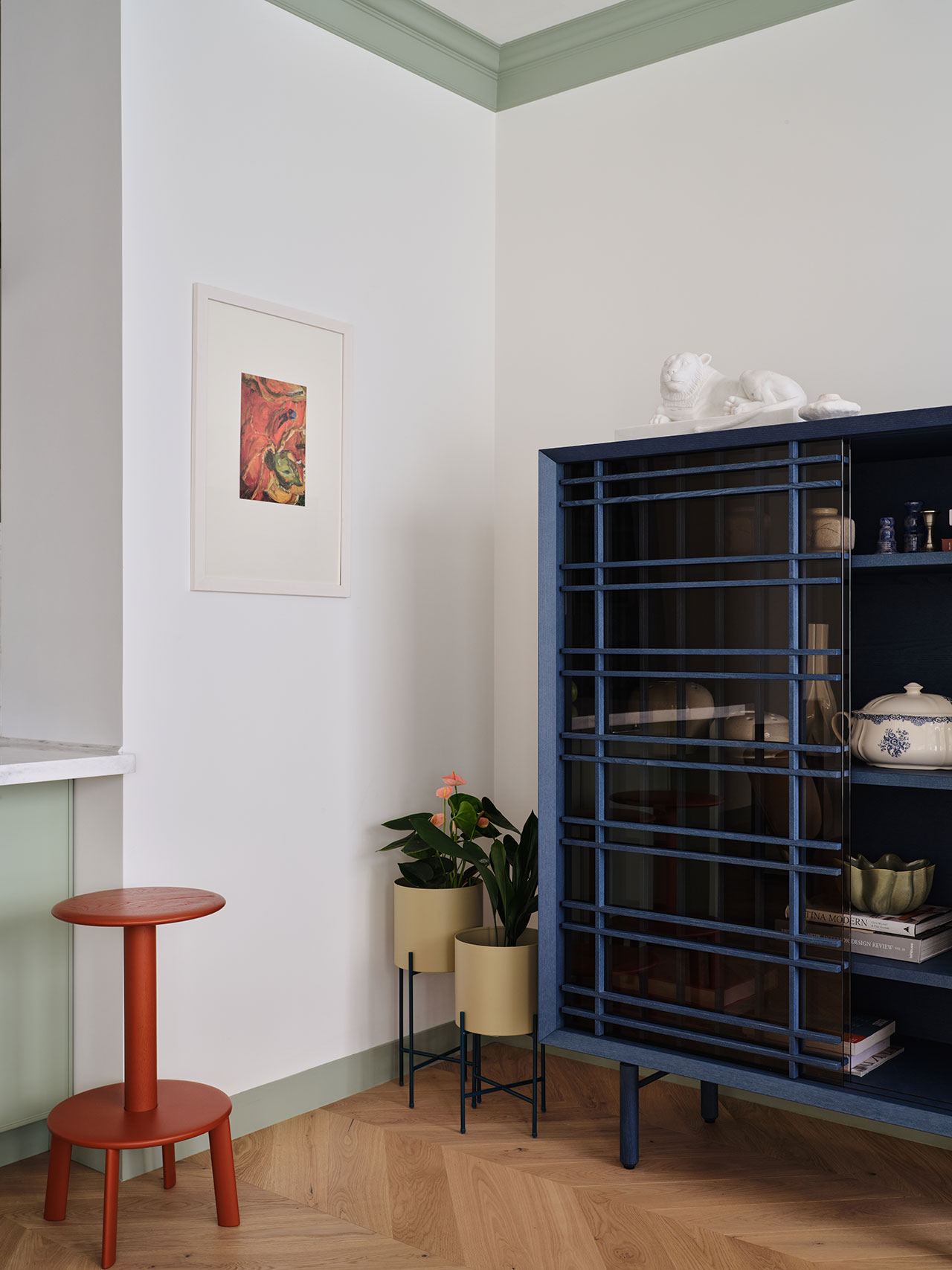
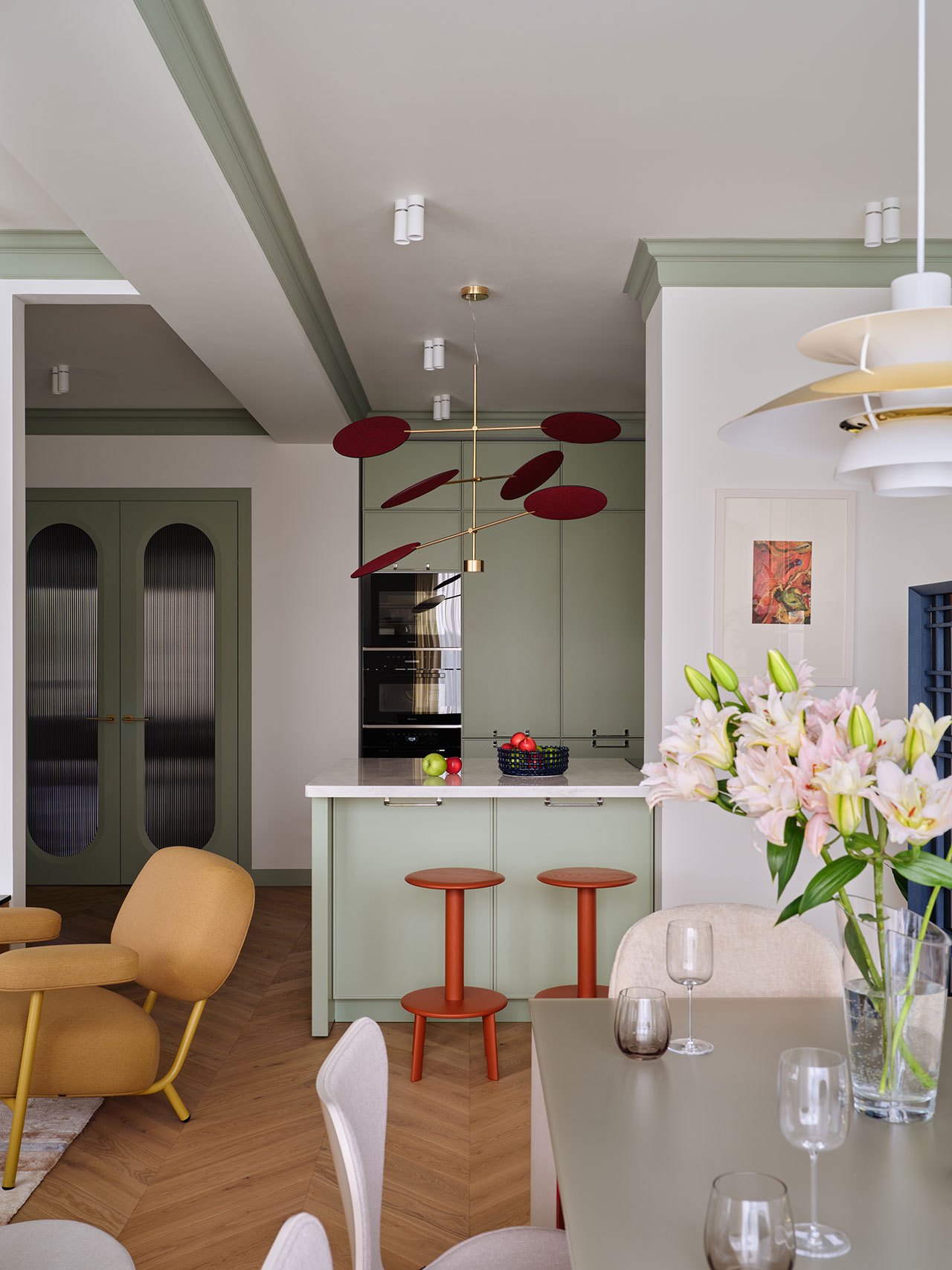
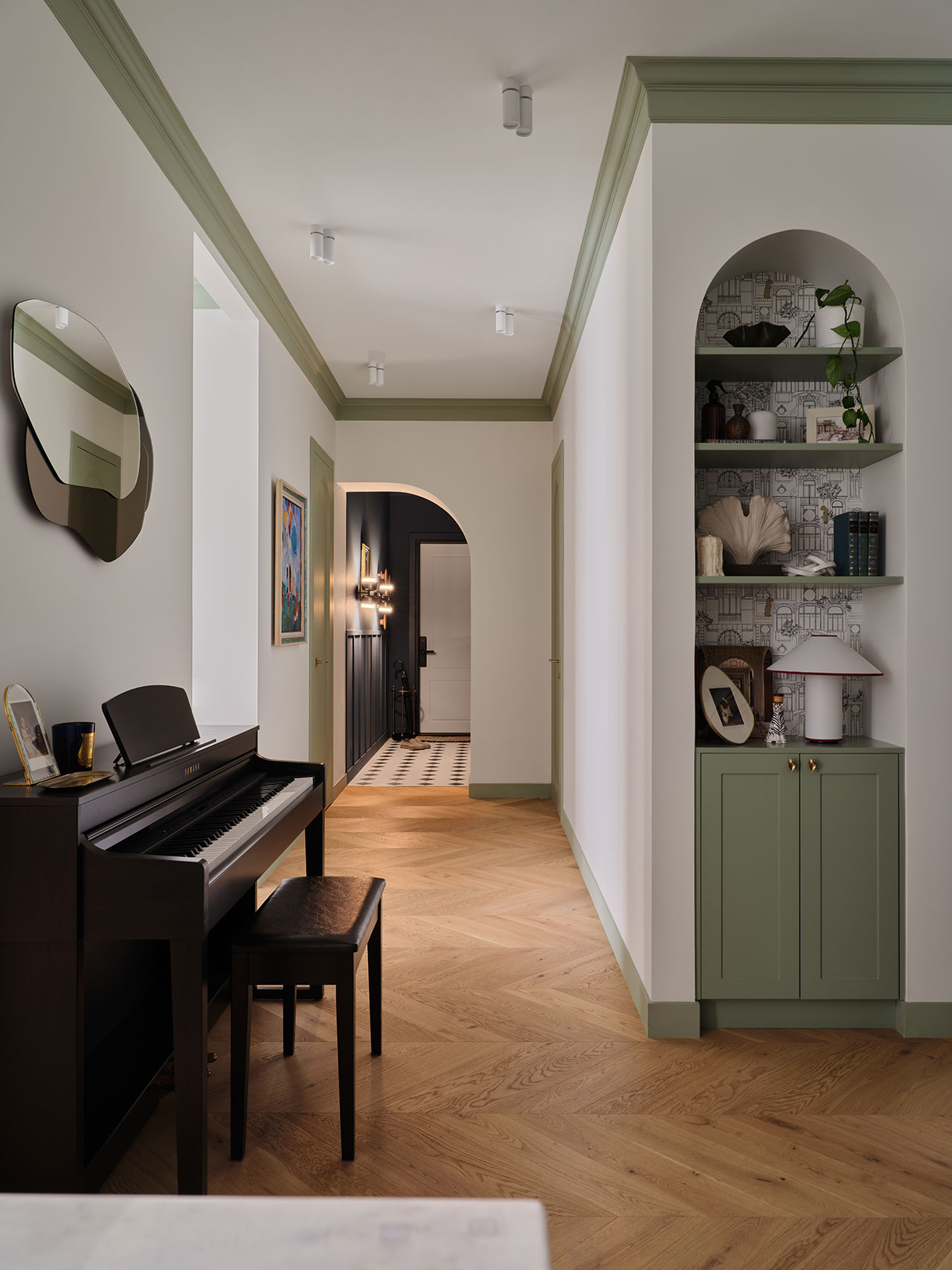
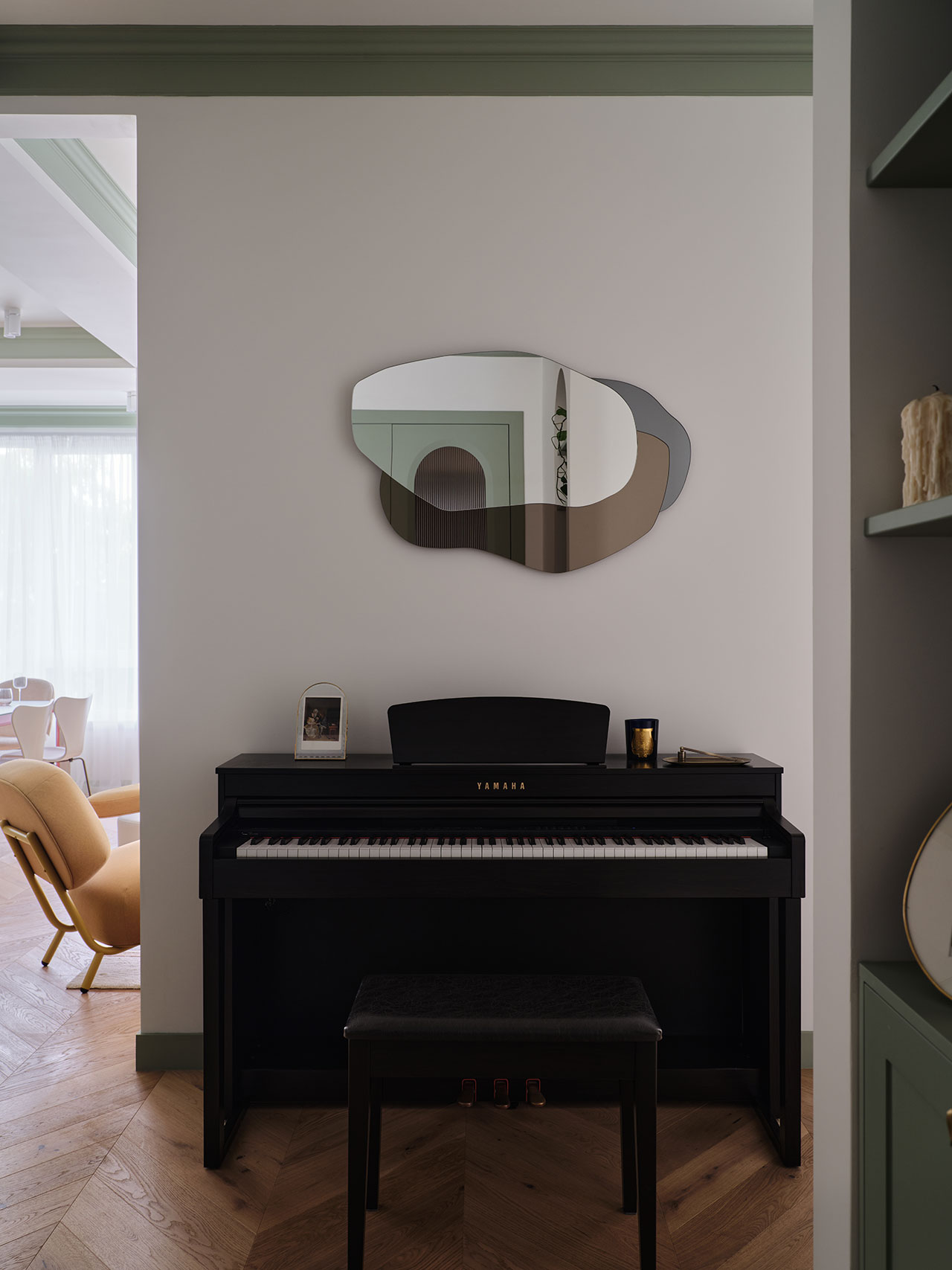
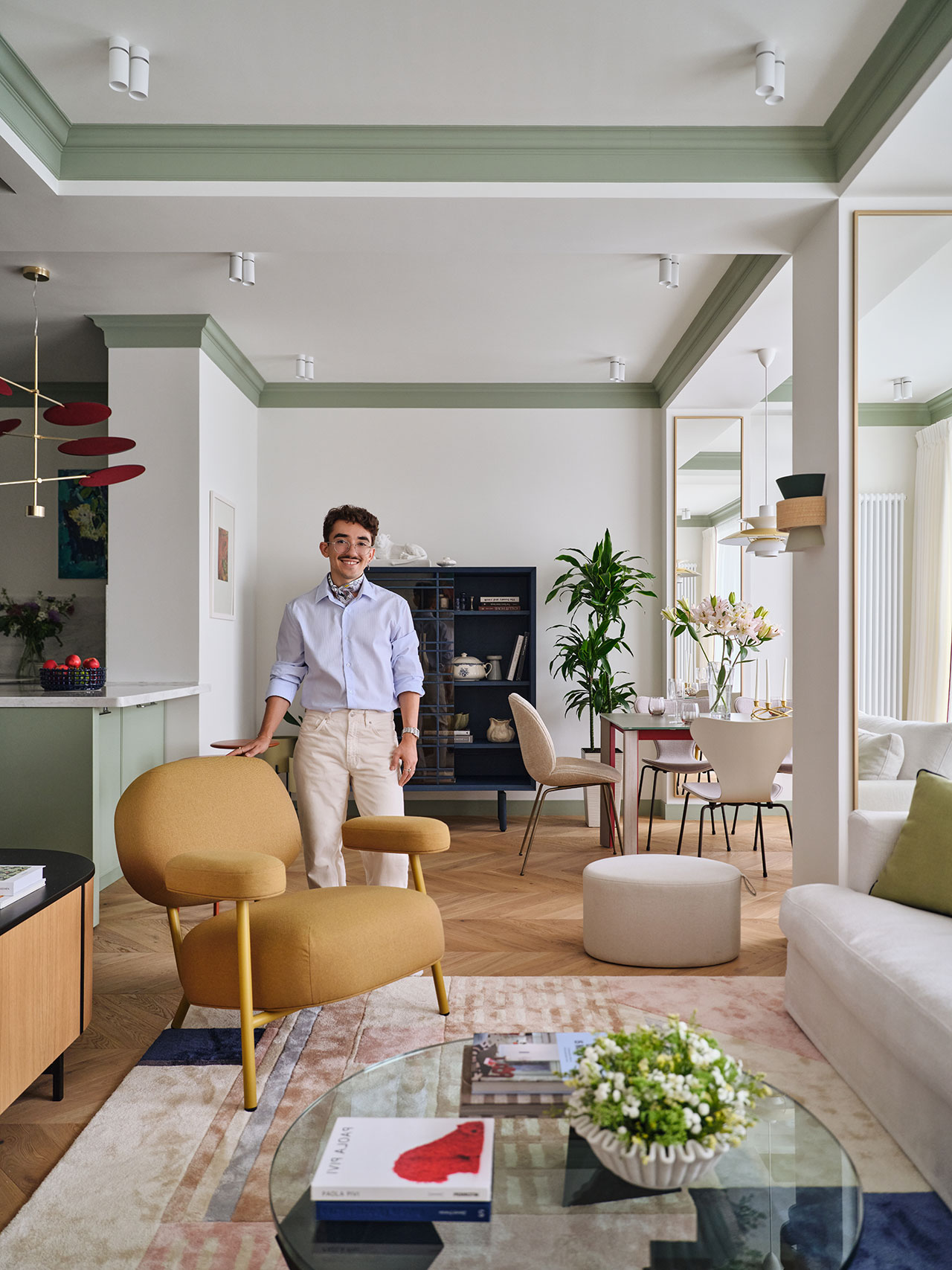
Mamedov talks about color almost musically. When he looks at people, he says, he instinctively associates them with shades. Images are displayed. colors begin to play and sound. For this pair, the resulting note was a complex sage, or light olive: calm, elegant, understated, but anything but simple. It became the emotional foundation of the apartment that moves through the house like a repeating melody.
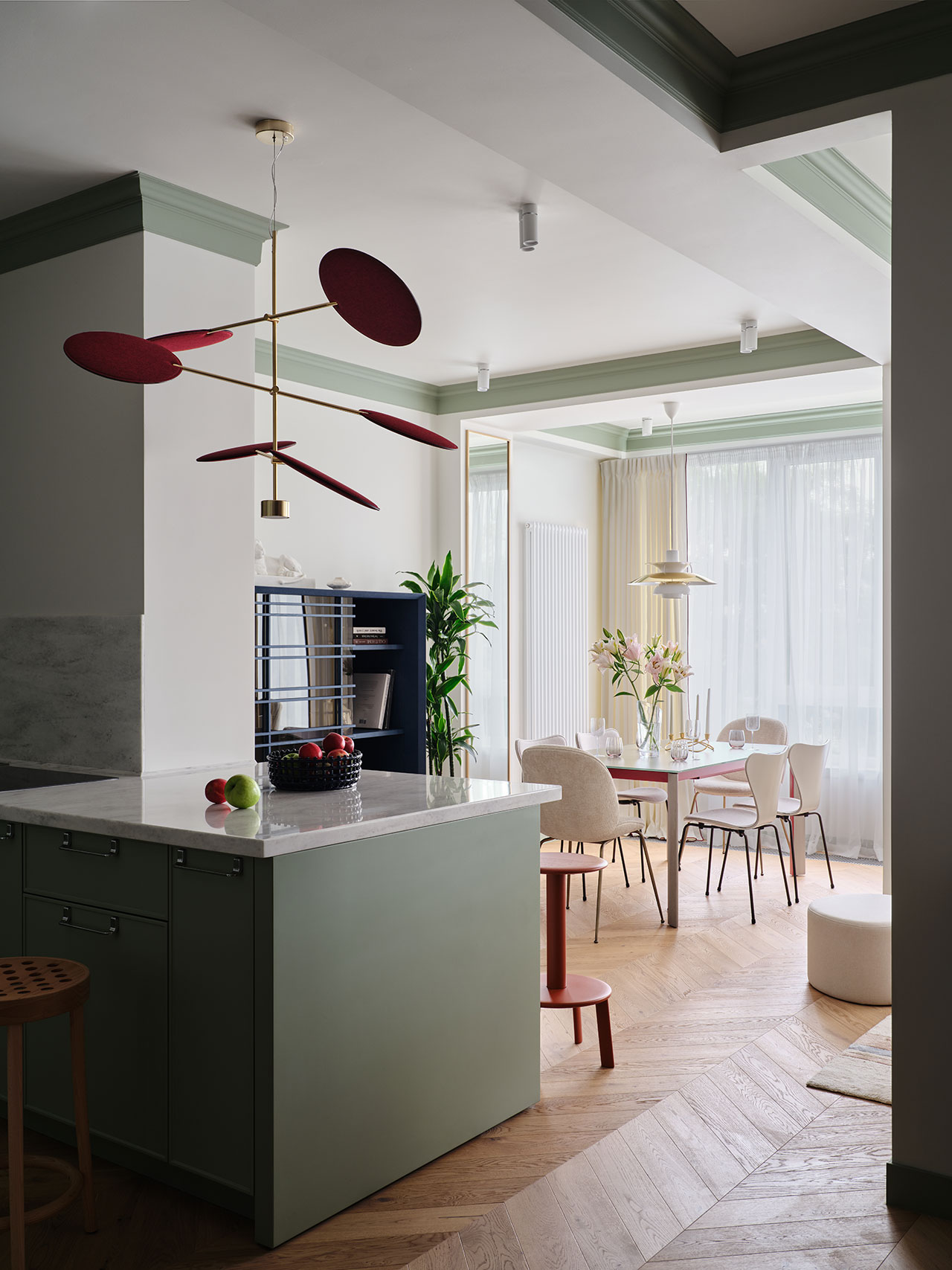
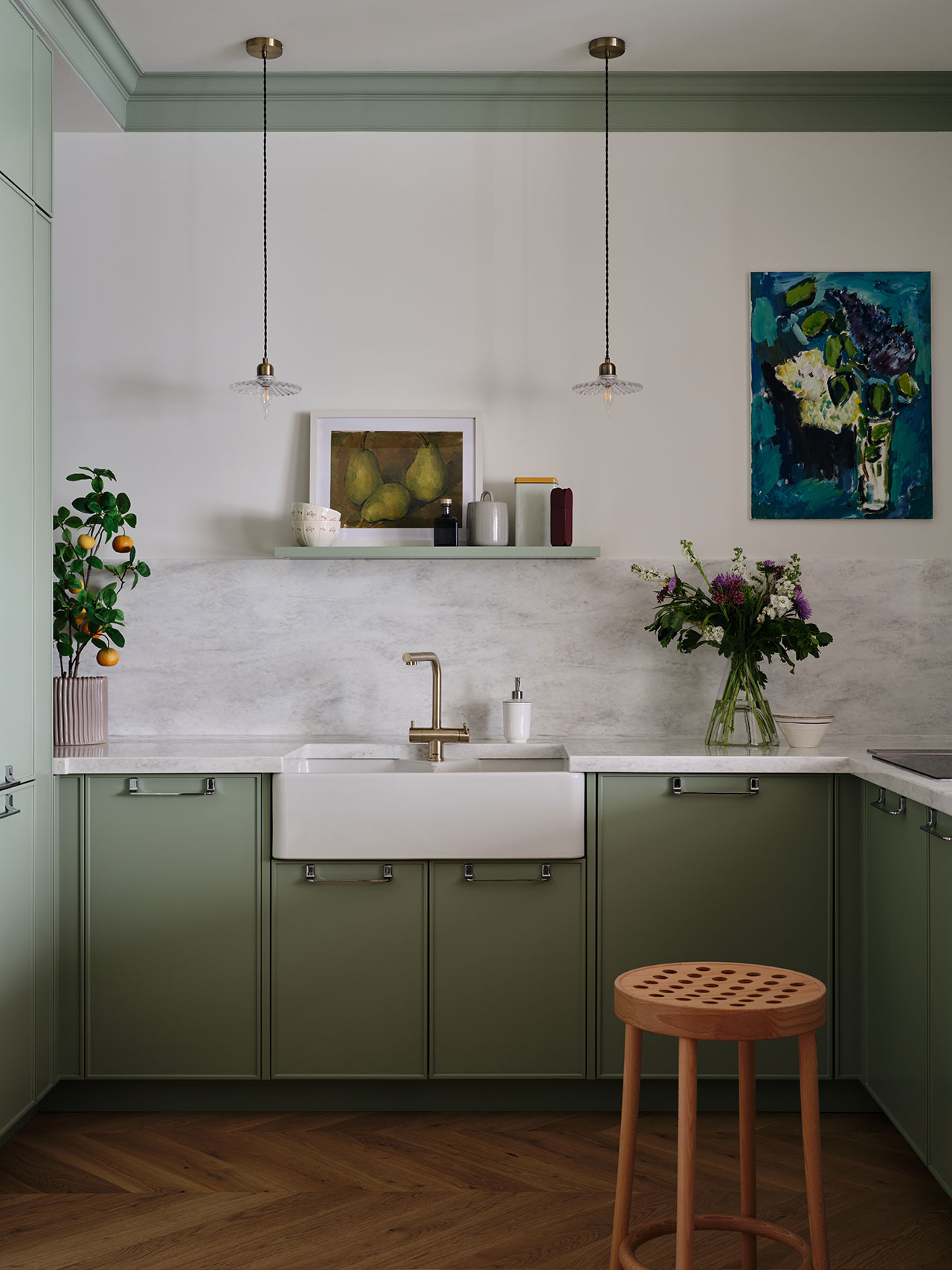
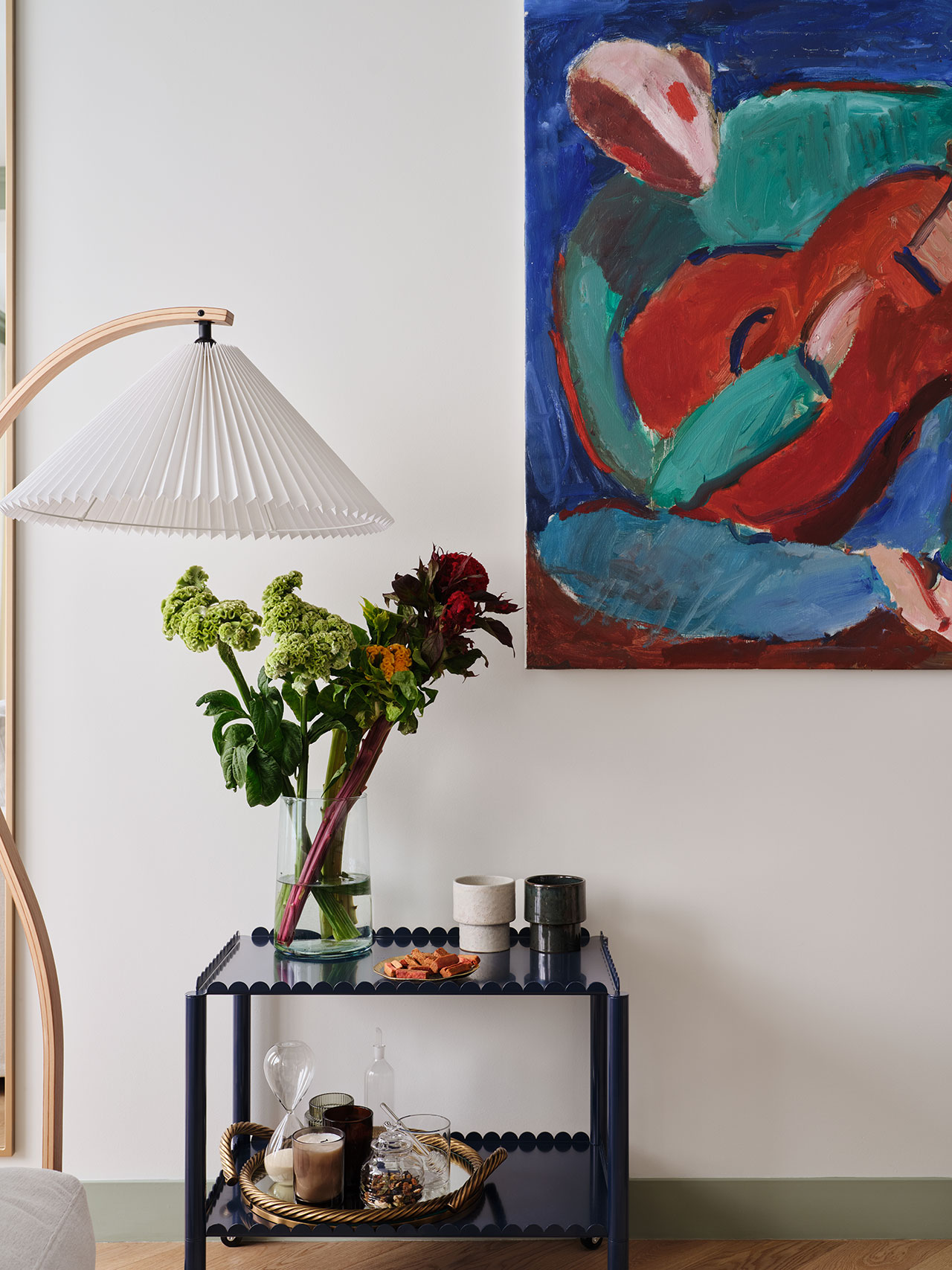
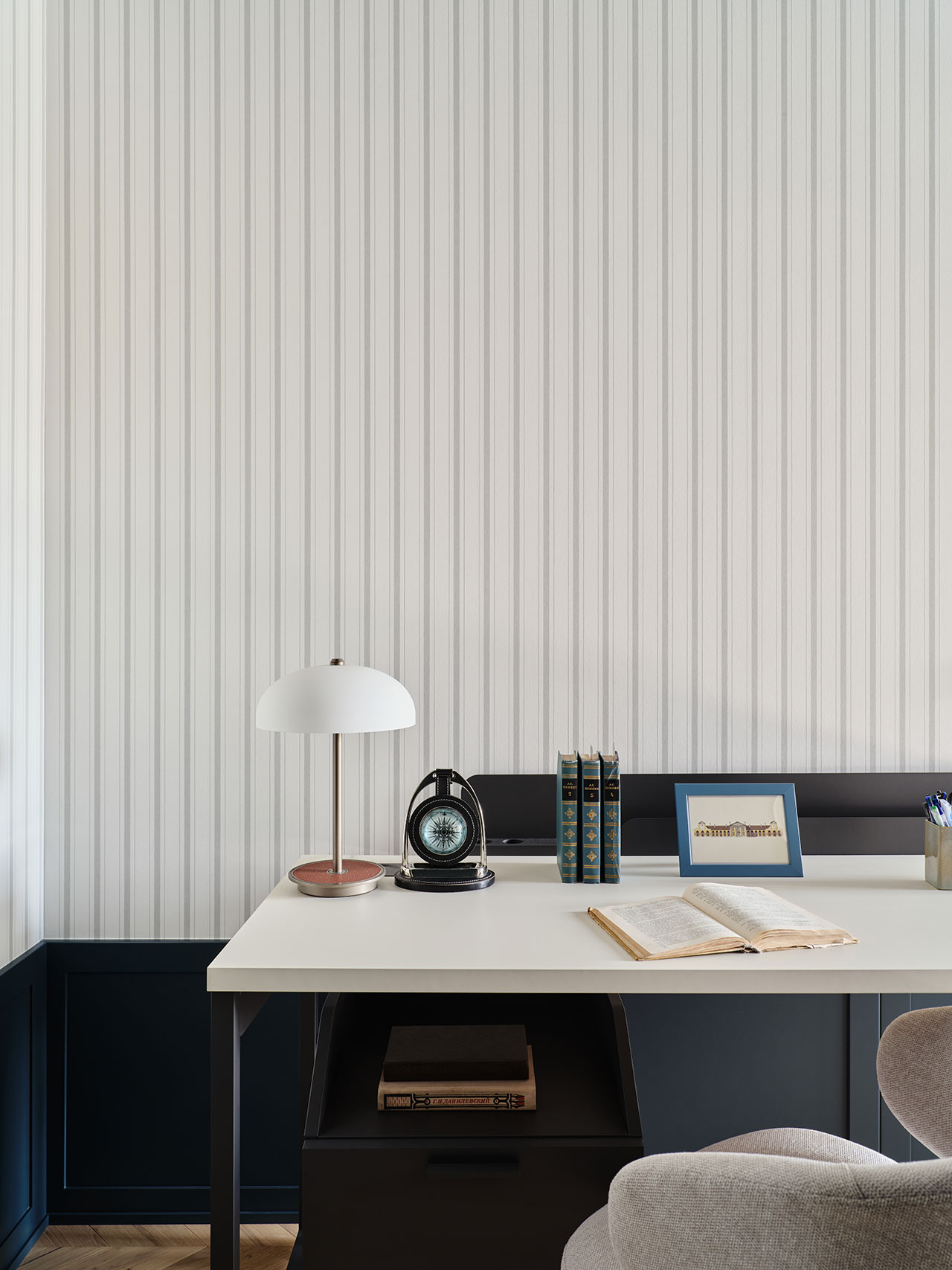
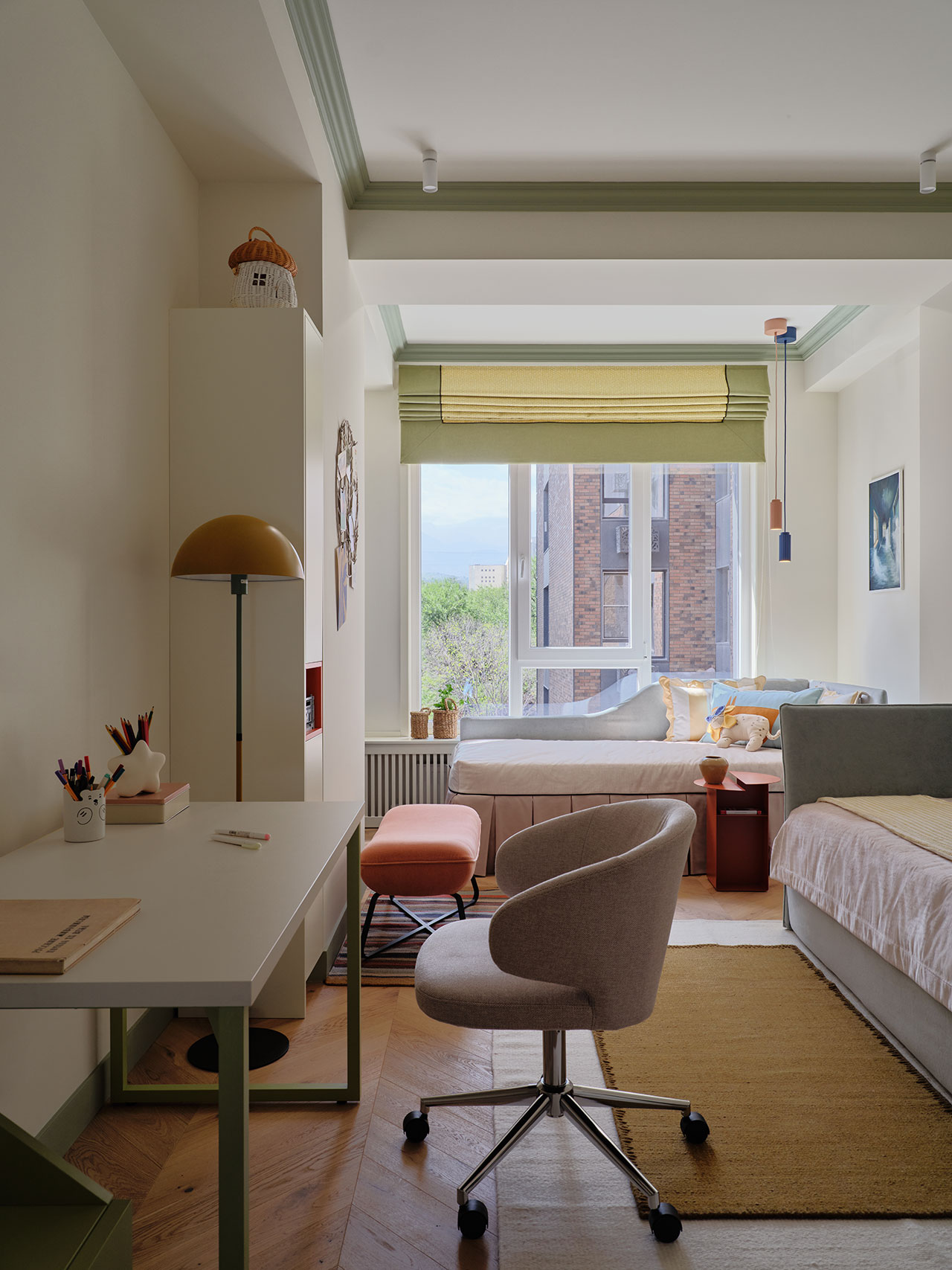
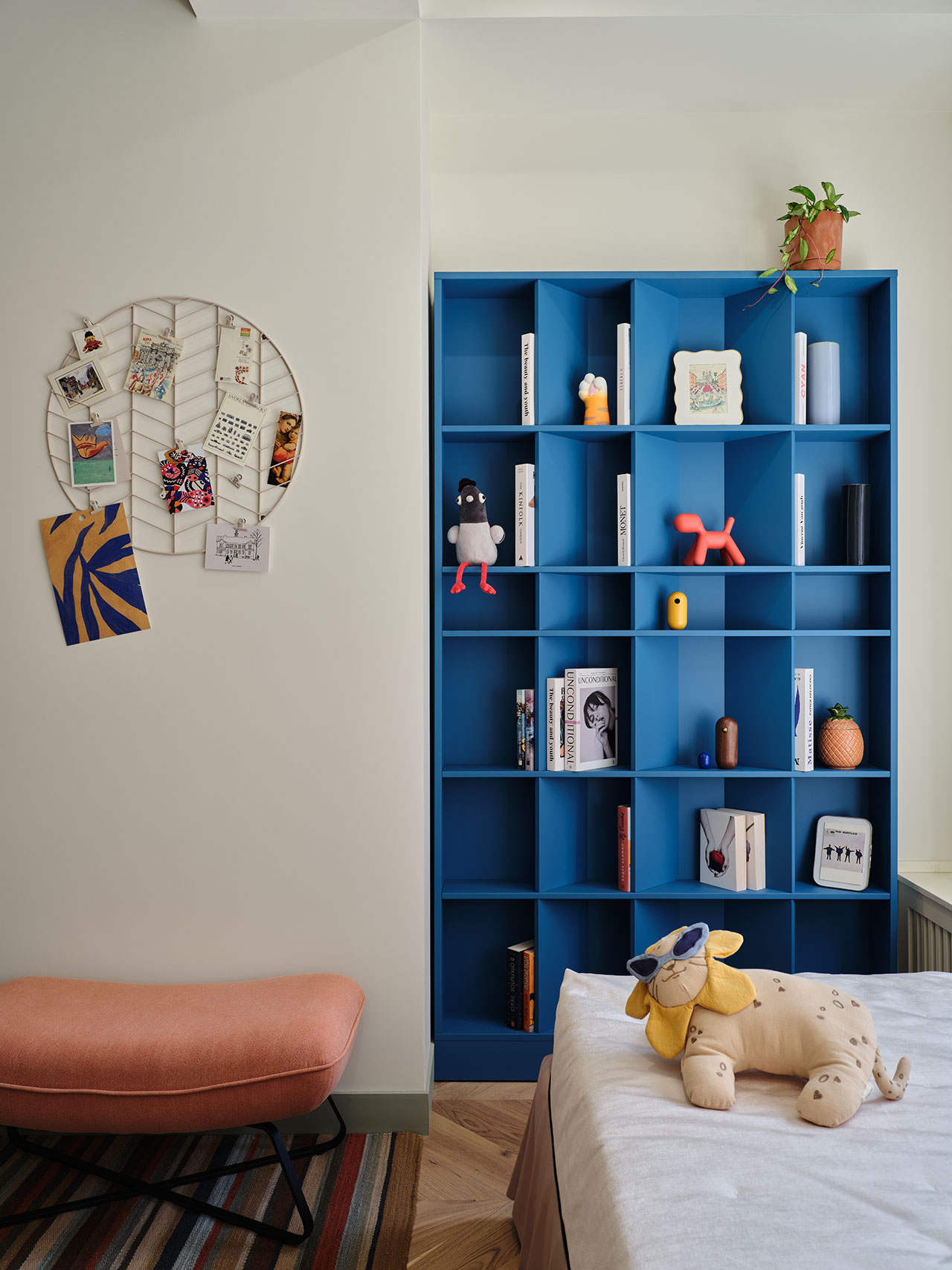
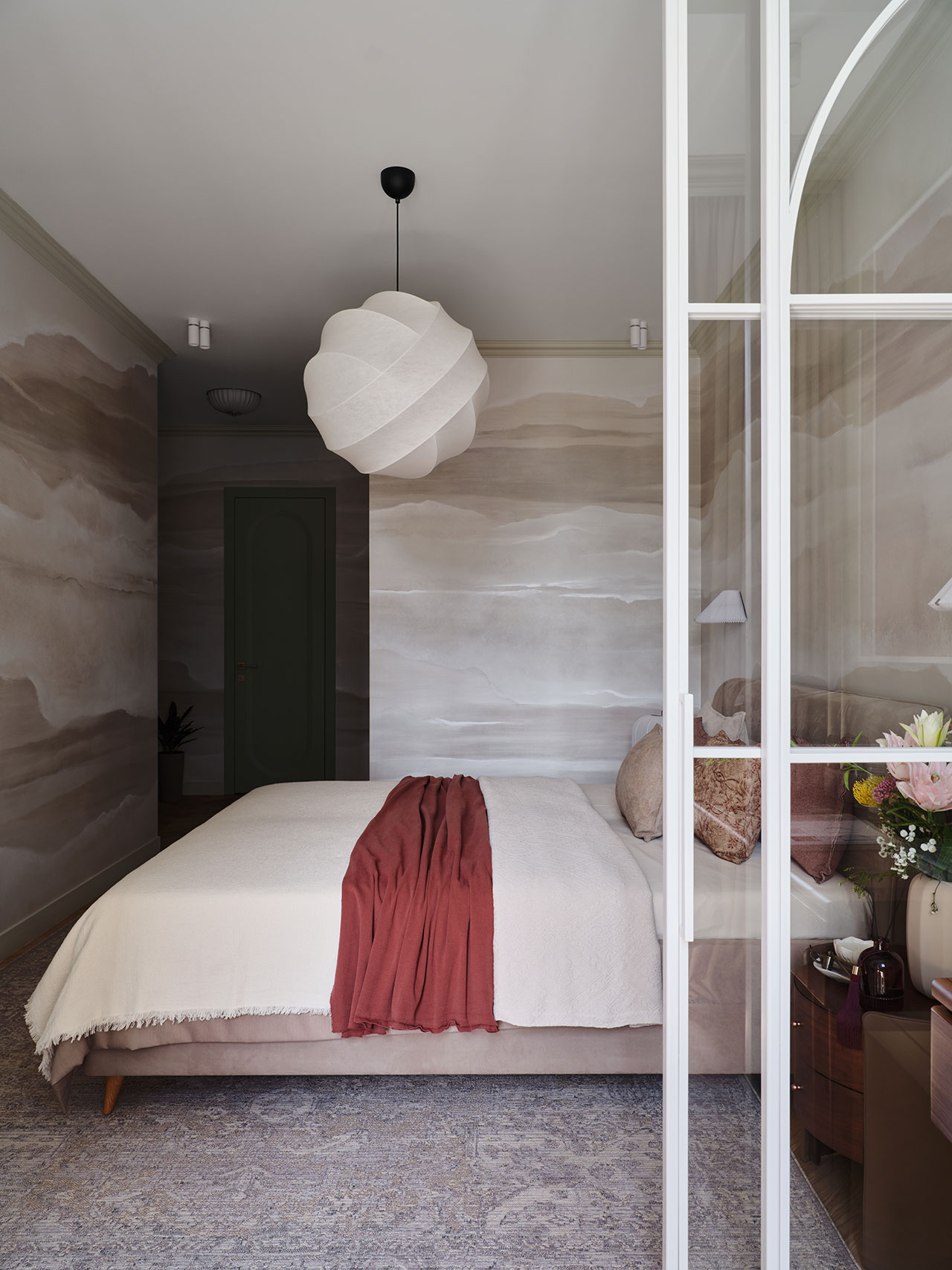
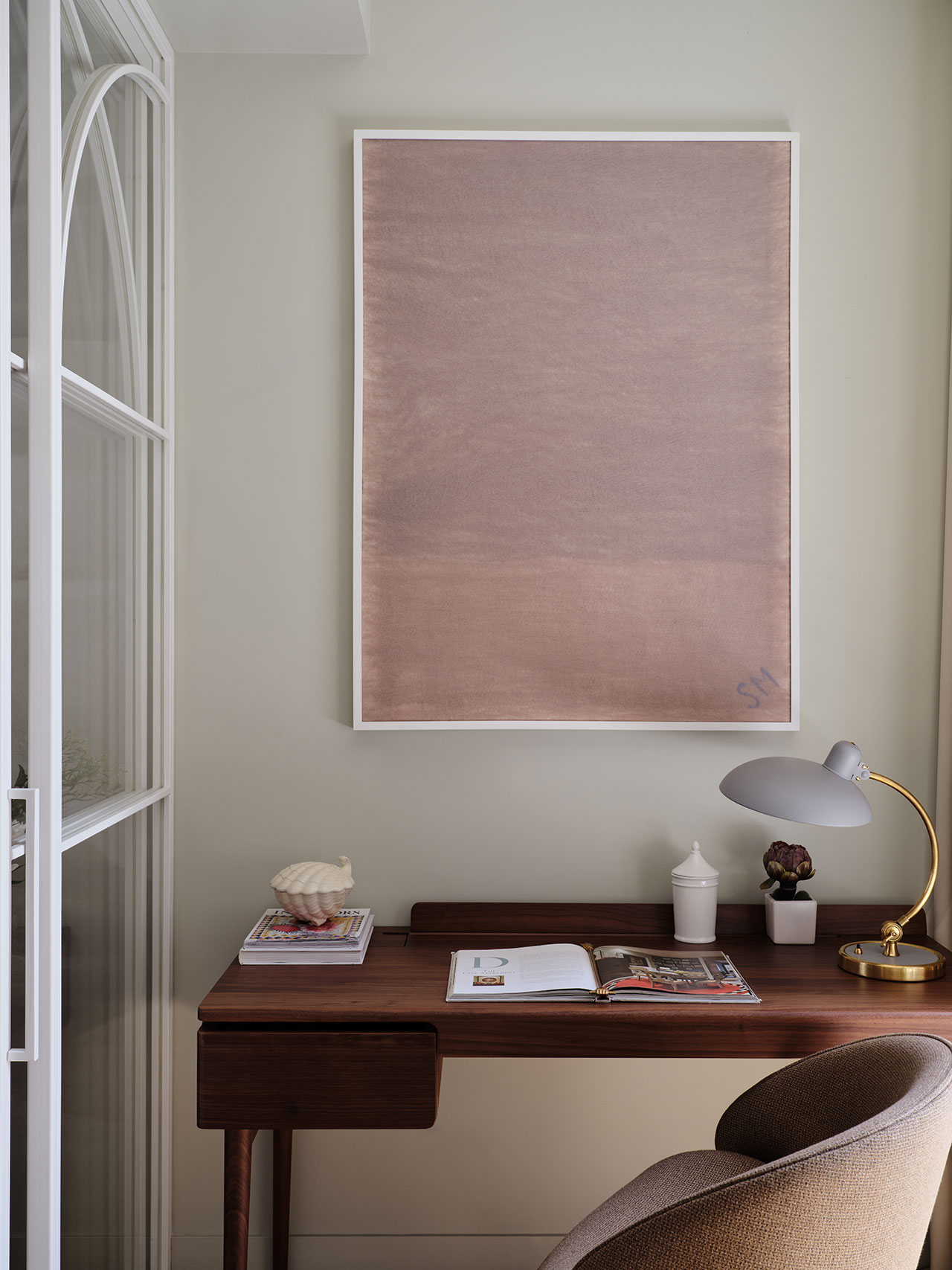
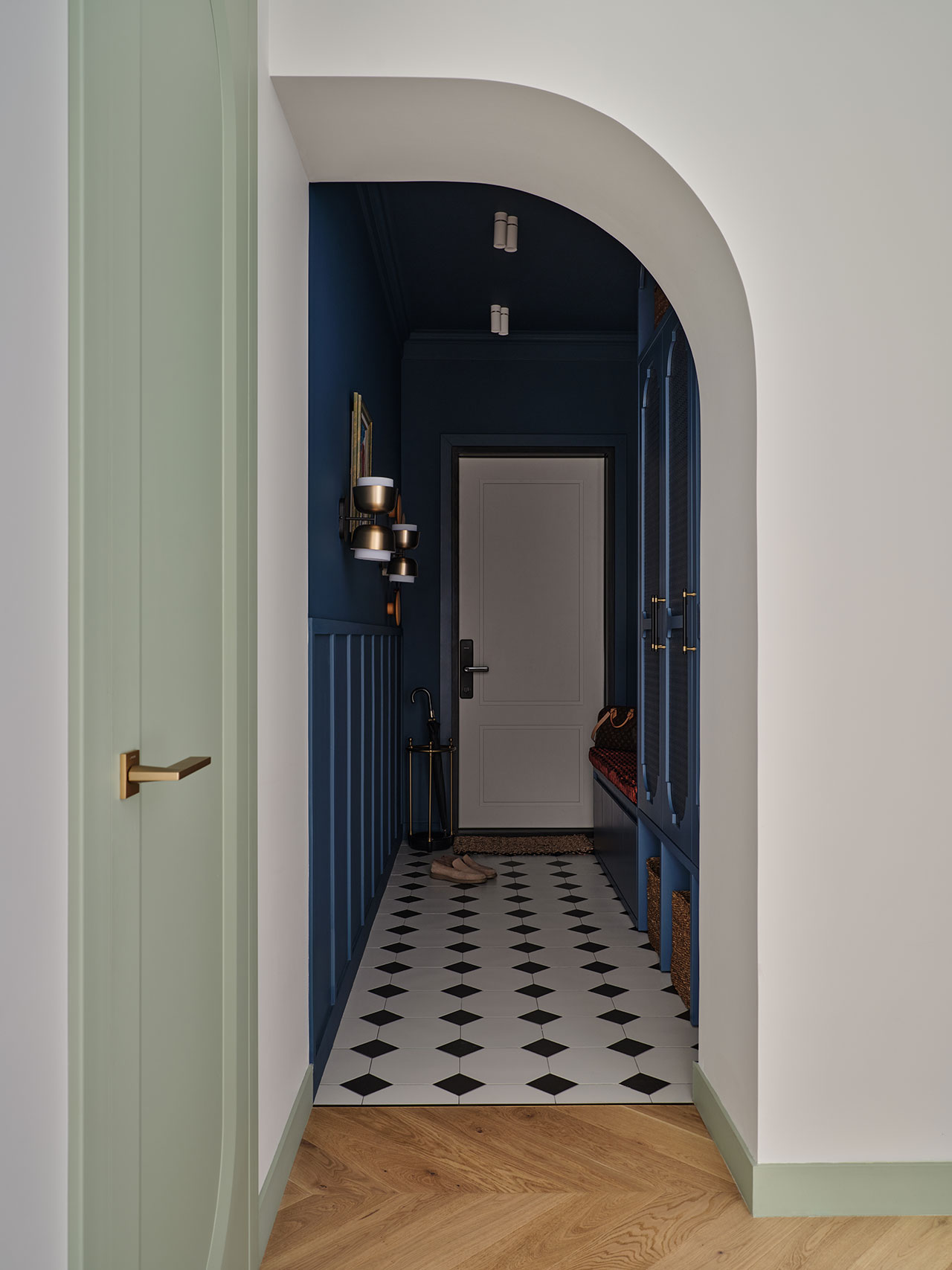
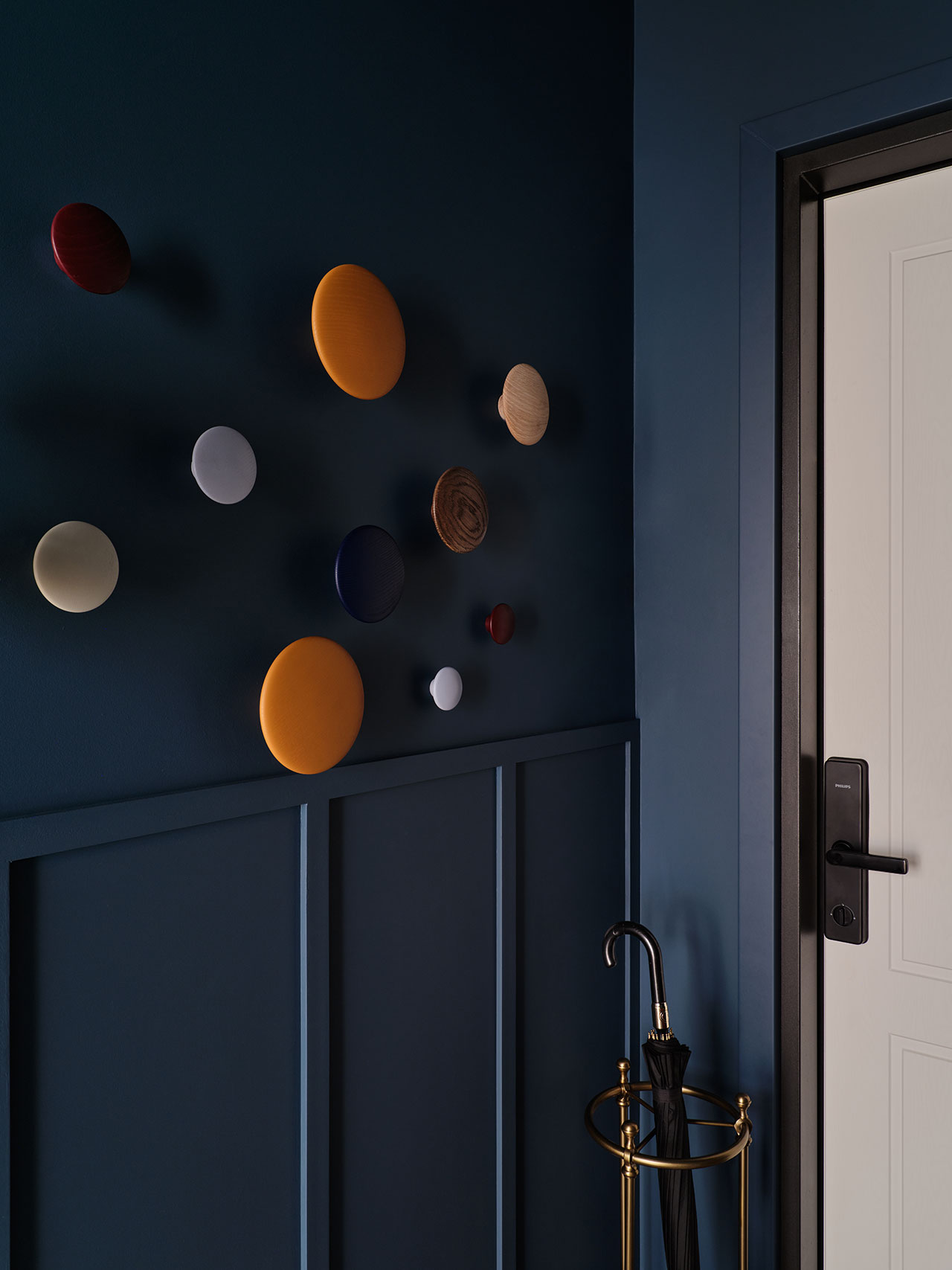
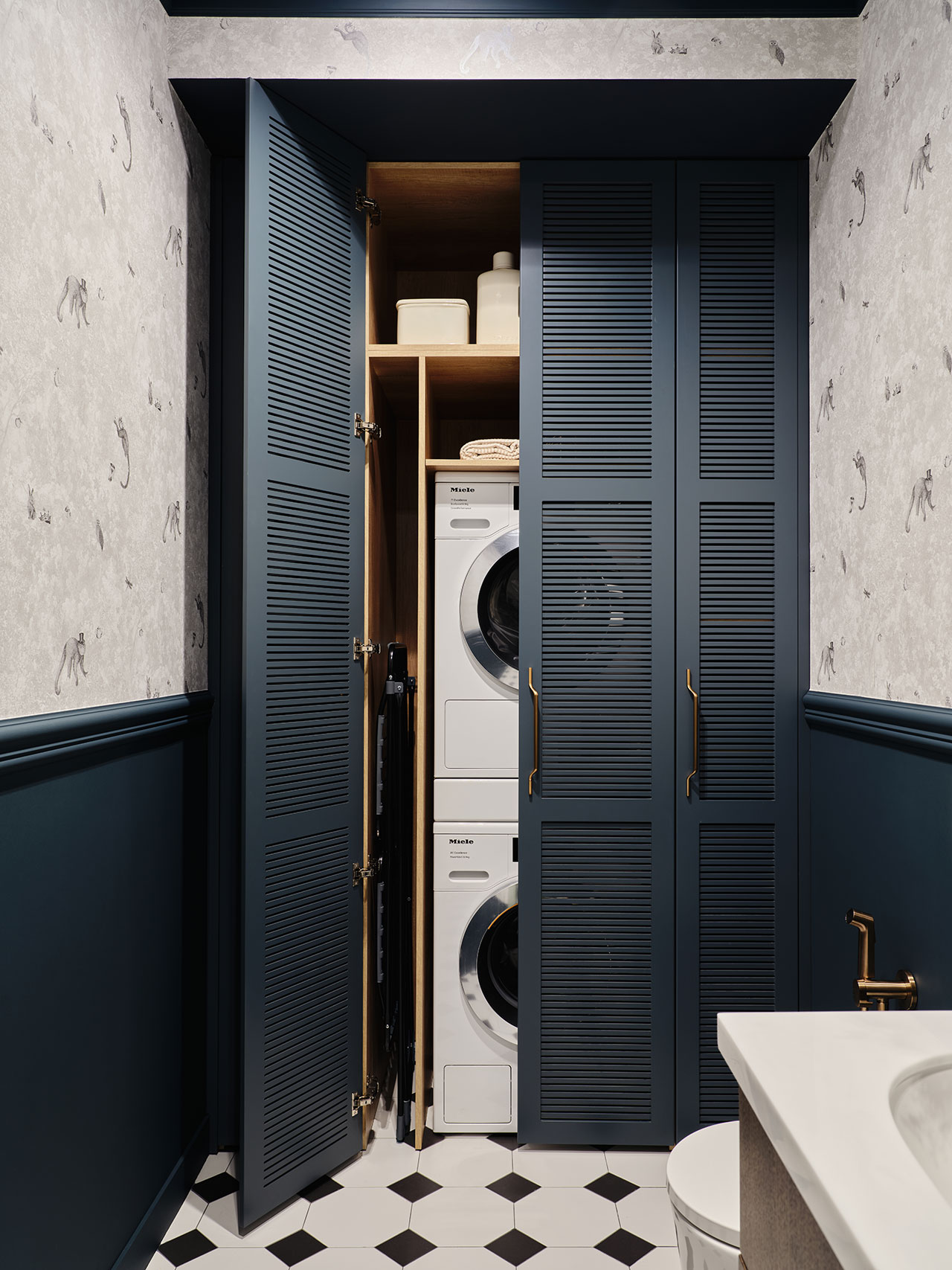
Around this central tone, Mamedov placed a more expressive score: red appears as bold and energetic. Blue brings depth and calmness. and a sunny yellow evokes joy, play and invention in children’s spaces. In the master bedroom, pastels meet burgundy in a quieter arrangement of tenderness, unity and intimacy. Color is allowed to travel beyond expected surfaces, appearing not only on walls, doors, boards and wallpaper, but also on ceilings. The result is understated without being timid, colorful without being theatrical.
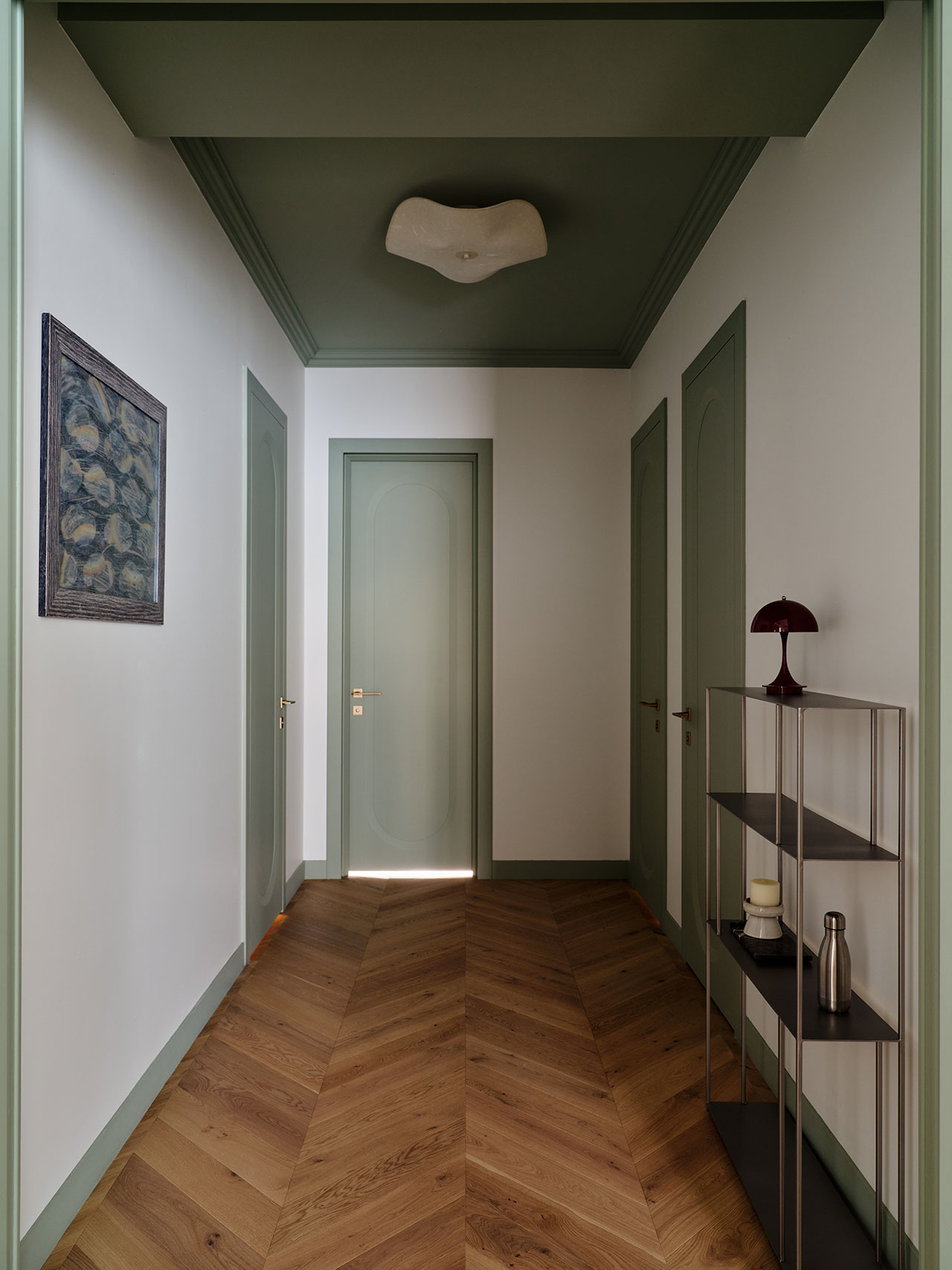
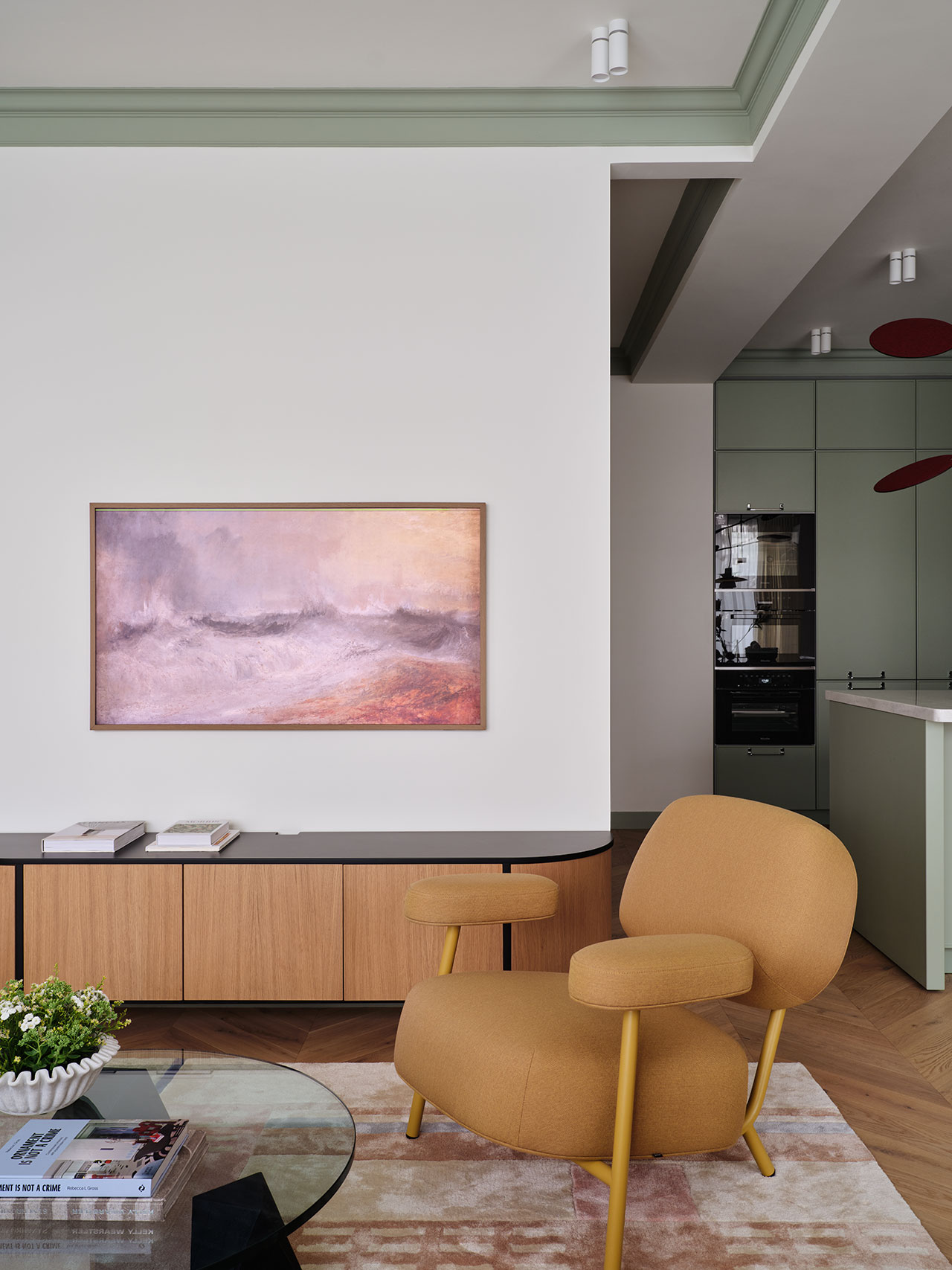
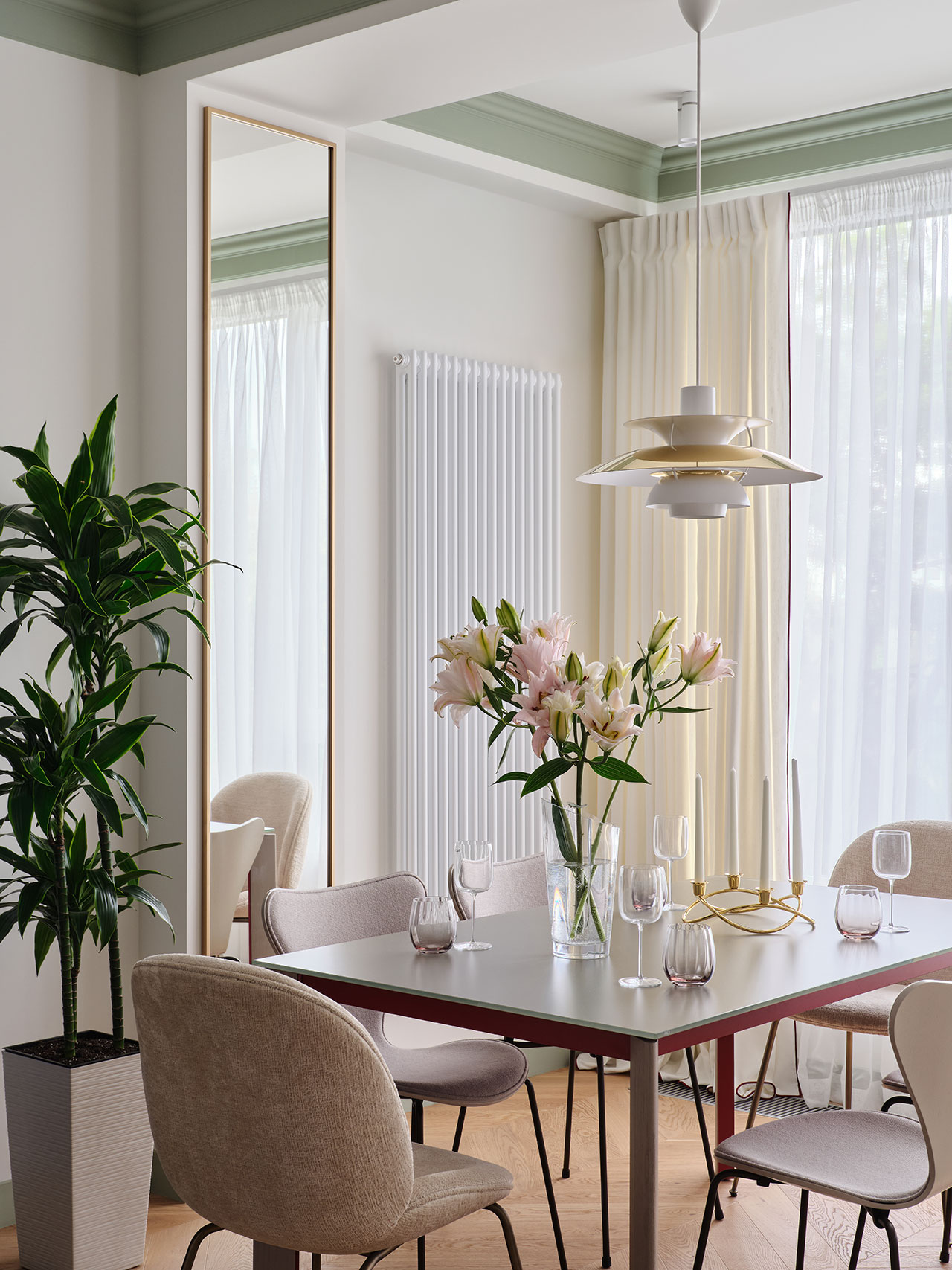
The palette also helps the apartment overcome one of its central architectural challenges. Because Almaty is located in a seismically active area, the building had a significant number of columns and beams, which Mamedov used as a defining rhythm. Mirrored columns in the living room visually divide the open space into conceptual islands, while a color-accented ceiling cornice frames the beams and unites the apartment as a cohesive whole. What could have interrupted the house becomes part of its rhythm.
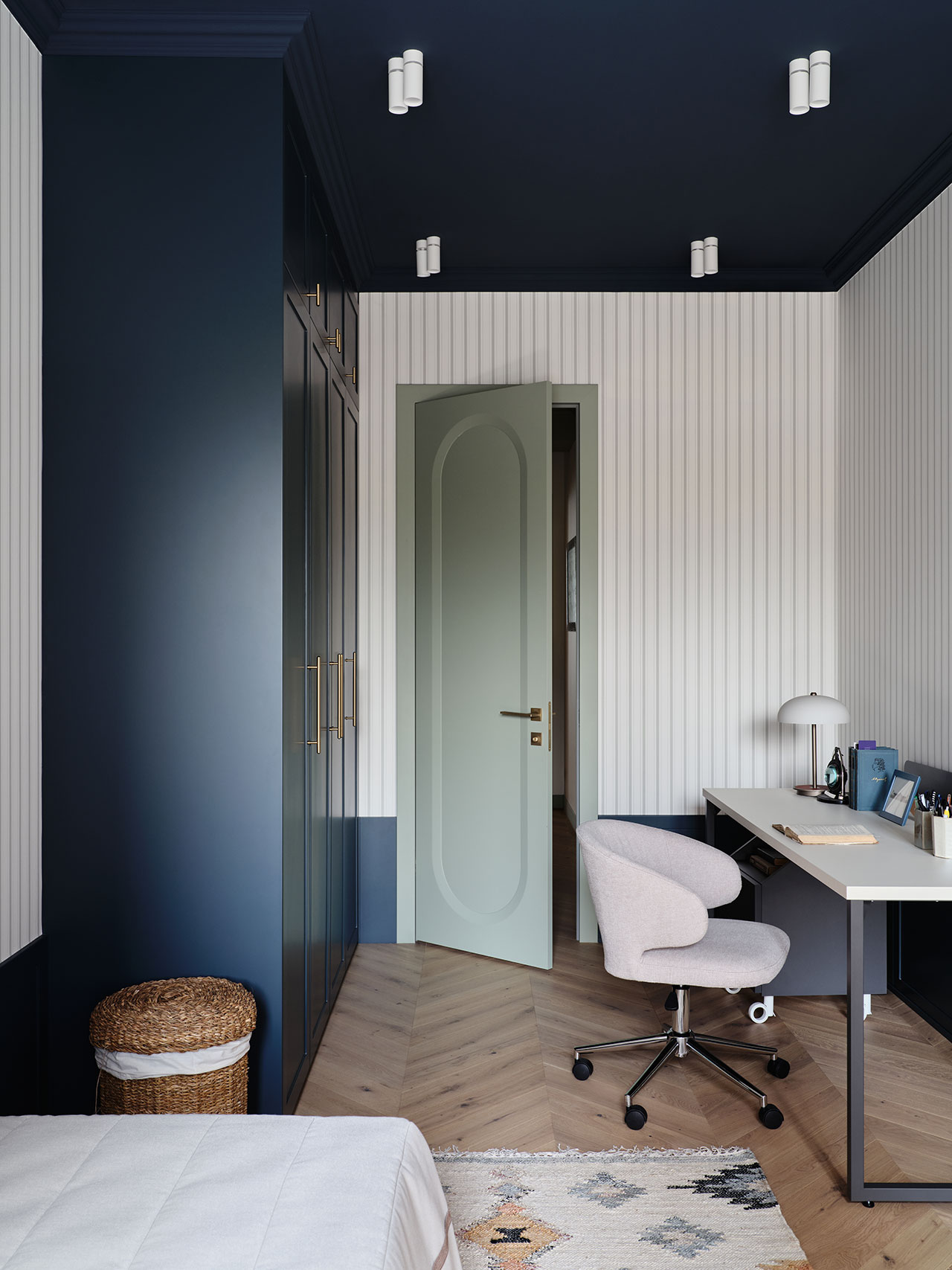
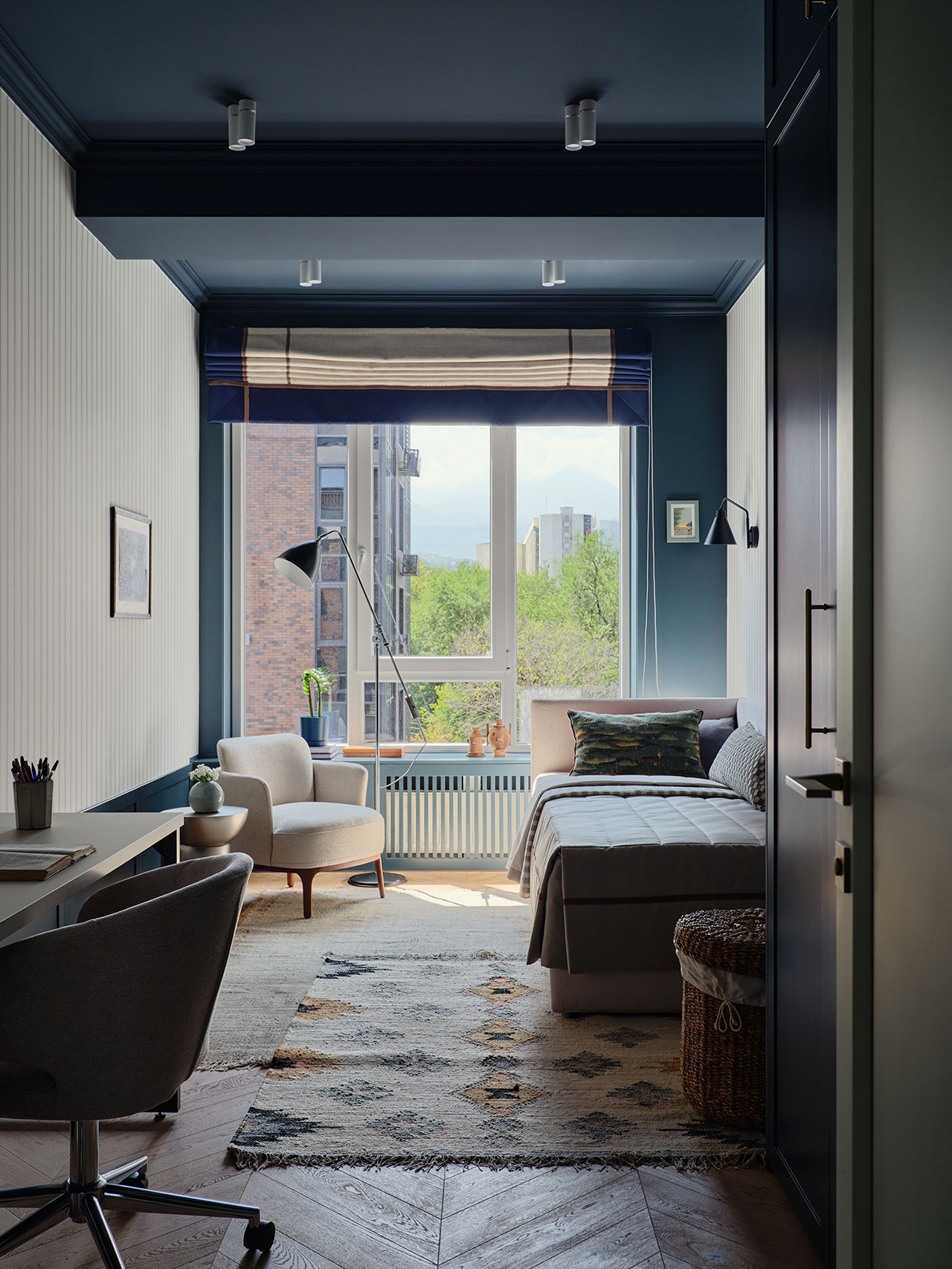
The layout follows a similarly measured logic. Originally an open plan with structural columns and a narrow entrance hallway, the apartment was reorganized into public and private zones. The kitchen, living room and dining room form a generous family scene for cooking, reading, entertaining, watching movies or listening to music. Beyond the double glass doors, the bedrooms retreat into a more intimate realm beyond a symbolic threshold.
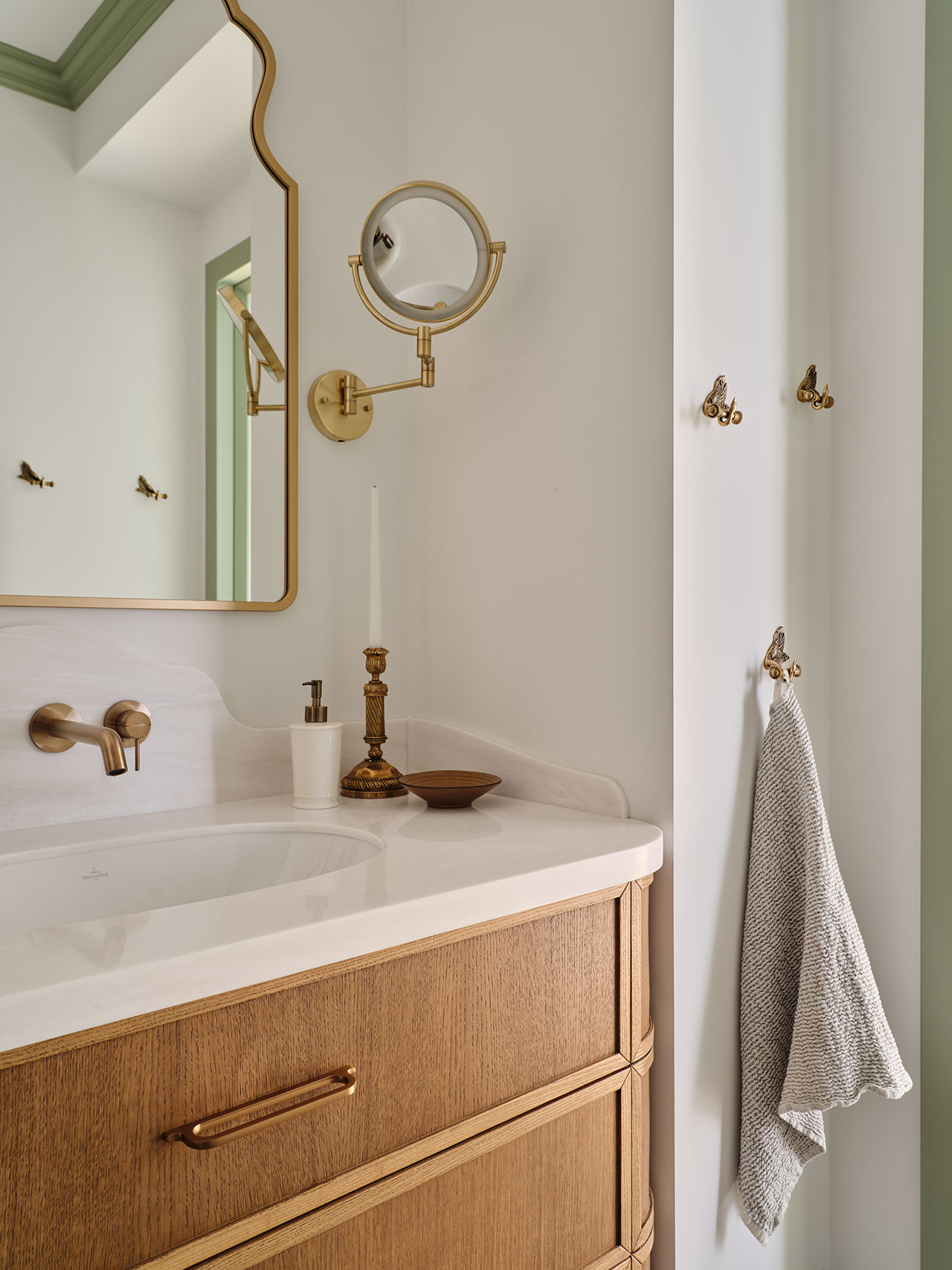
Paris was an important reference, though not in a literal or over-the-top style. The city offered a state of mind: soft light, sophistication, intelligence, rhythm and the ease with which new and old can coexist. To this Parisian sensibility, Mamedov added Italian warmth: sunshine, sensuality, softness and a little more emotional volume. However, the apartment never leaves Kazakhstan.
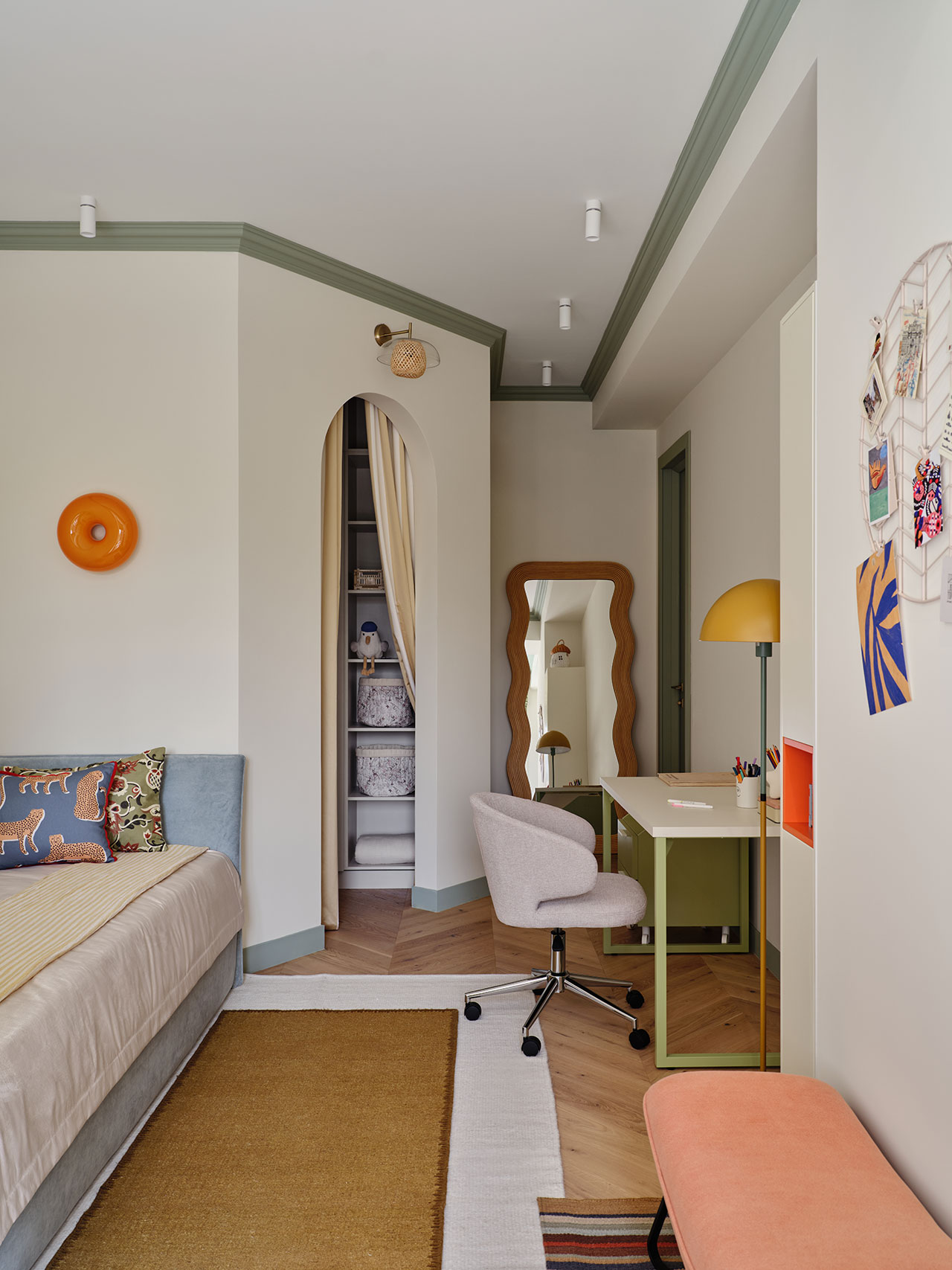
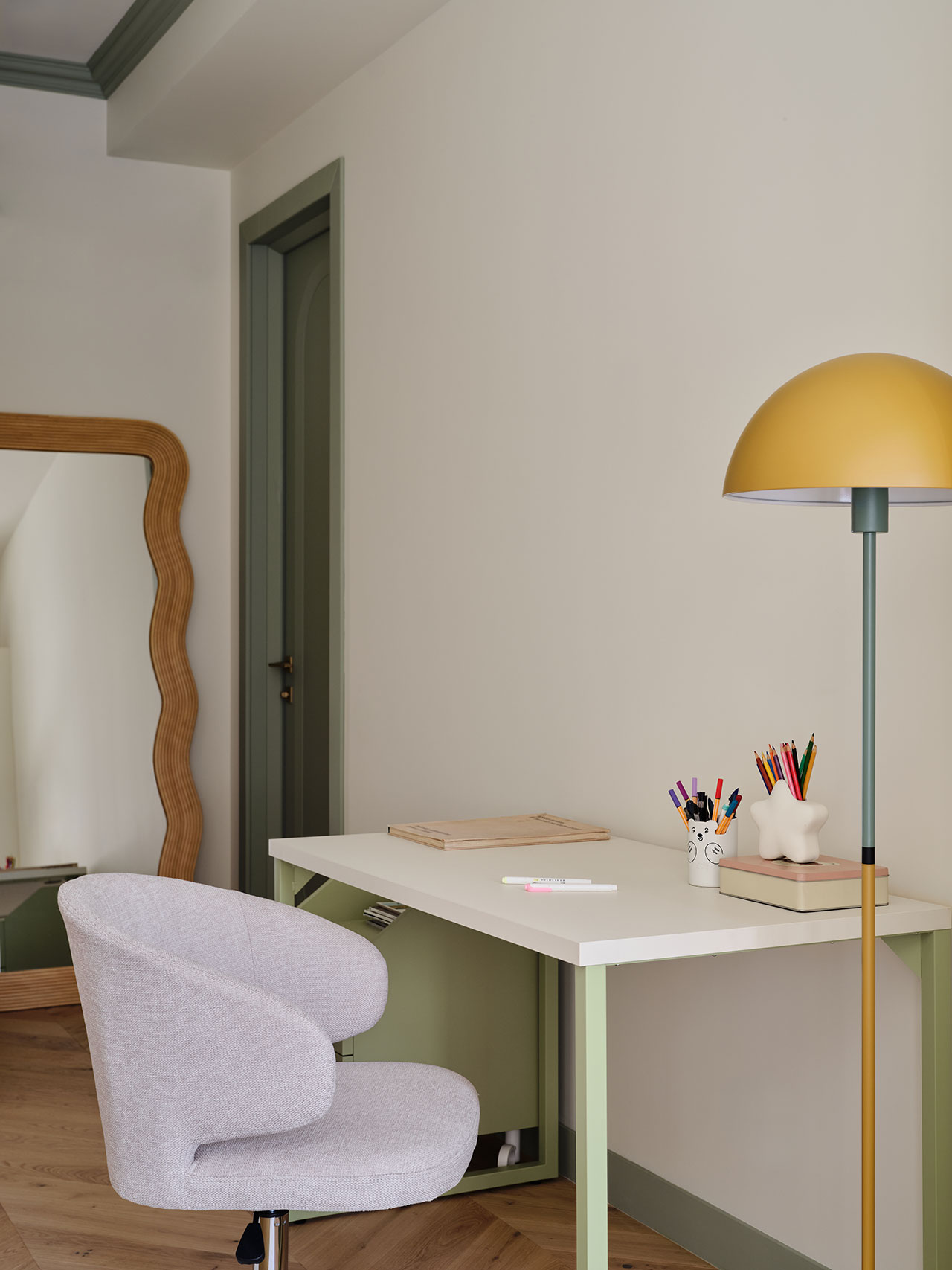
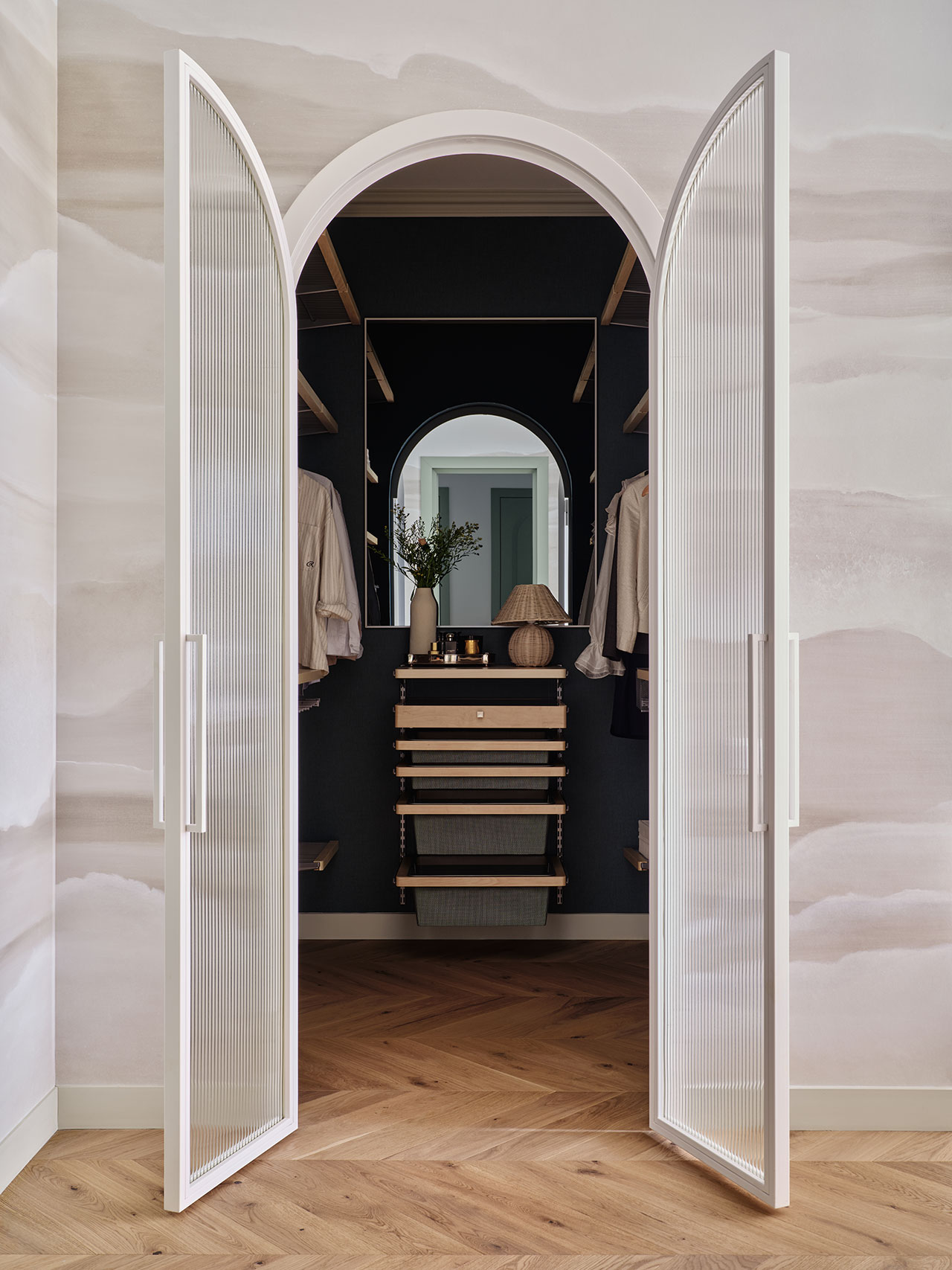
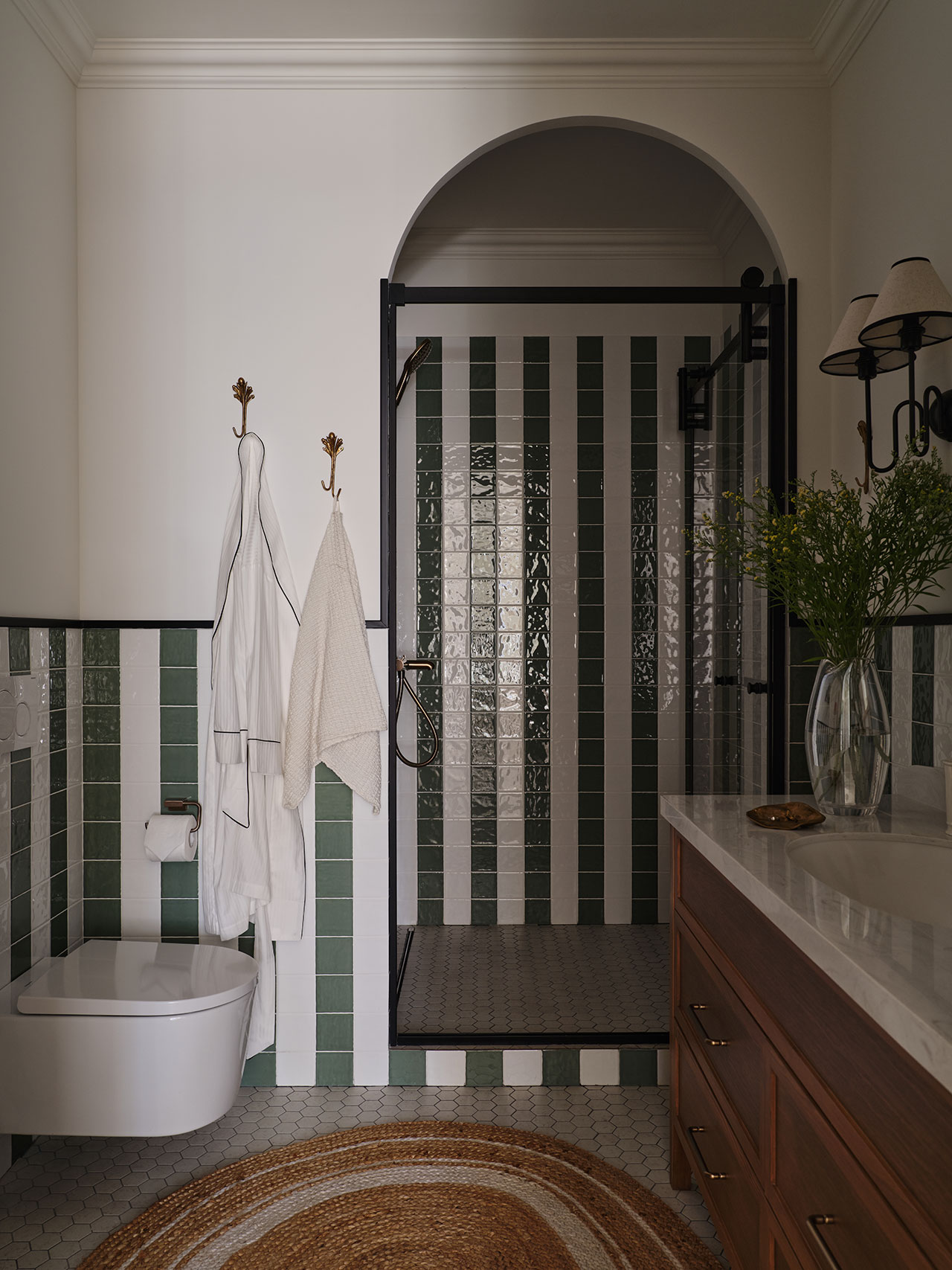
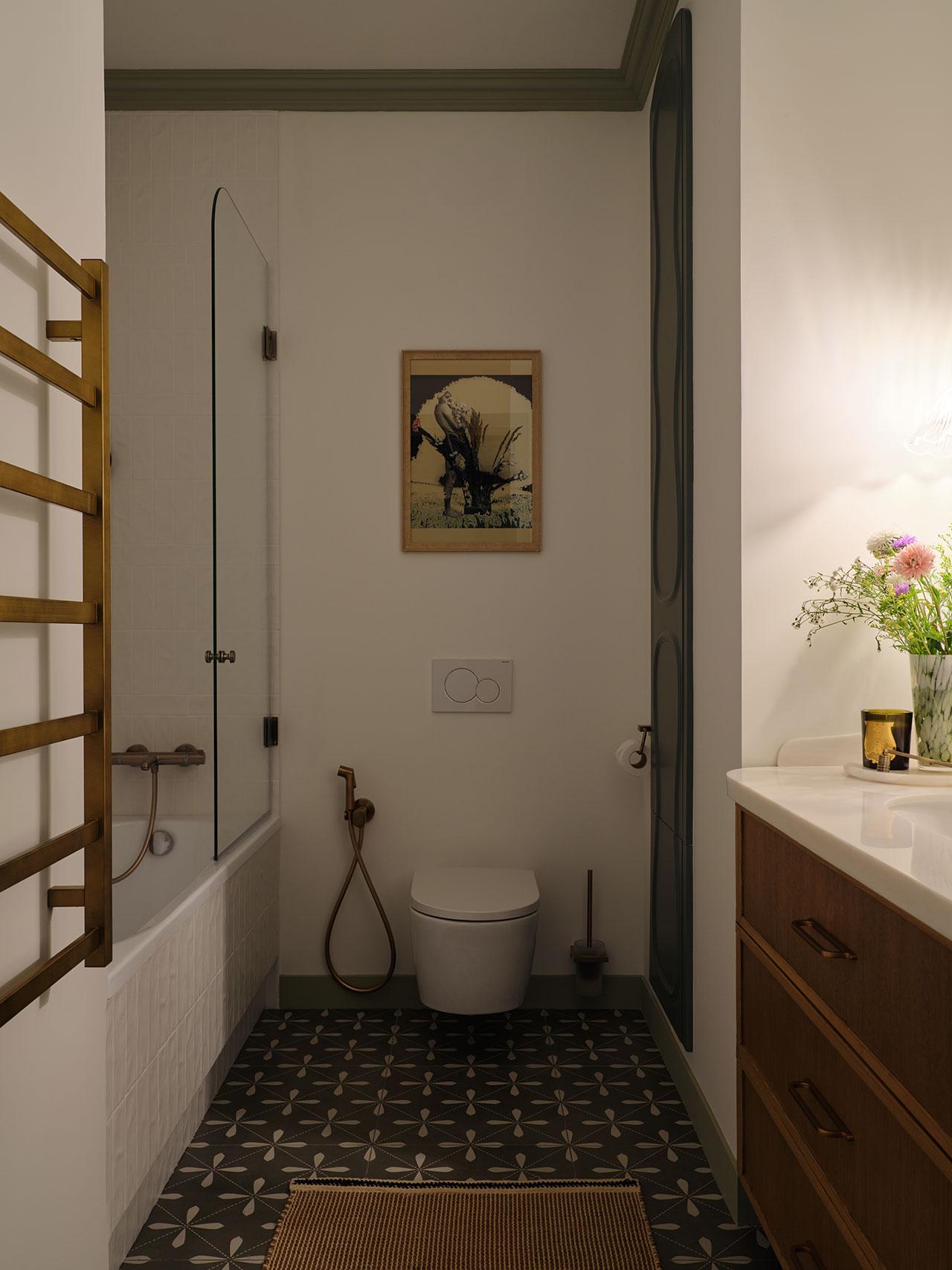
French herringbone parquet, natural fabrics, ceramic tiles, rattan, rattan, wool, cotton, silk, wood and metal create a home that feels layered and alive. The furniture and objects were gathered from many places, but the composition avoids the clutter of over-defined eclecticism. Each piece seems to have arrived through conversation, travel, memory or instinct.
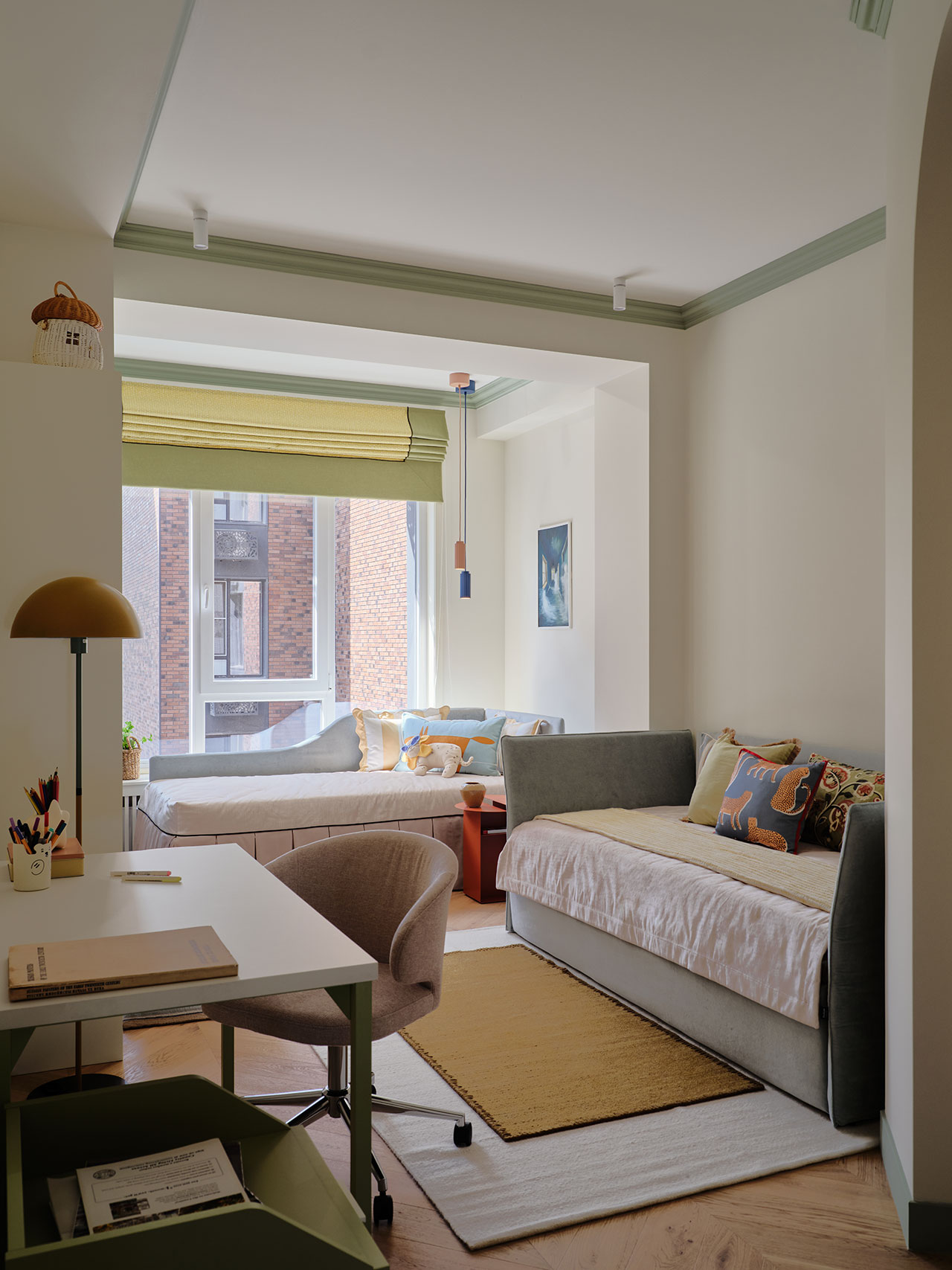
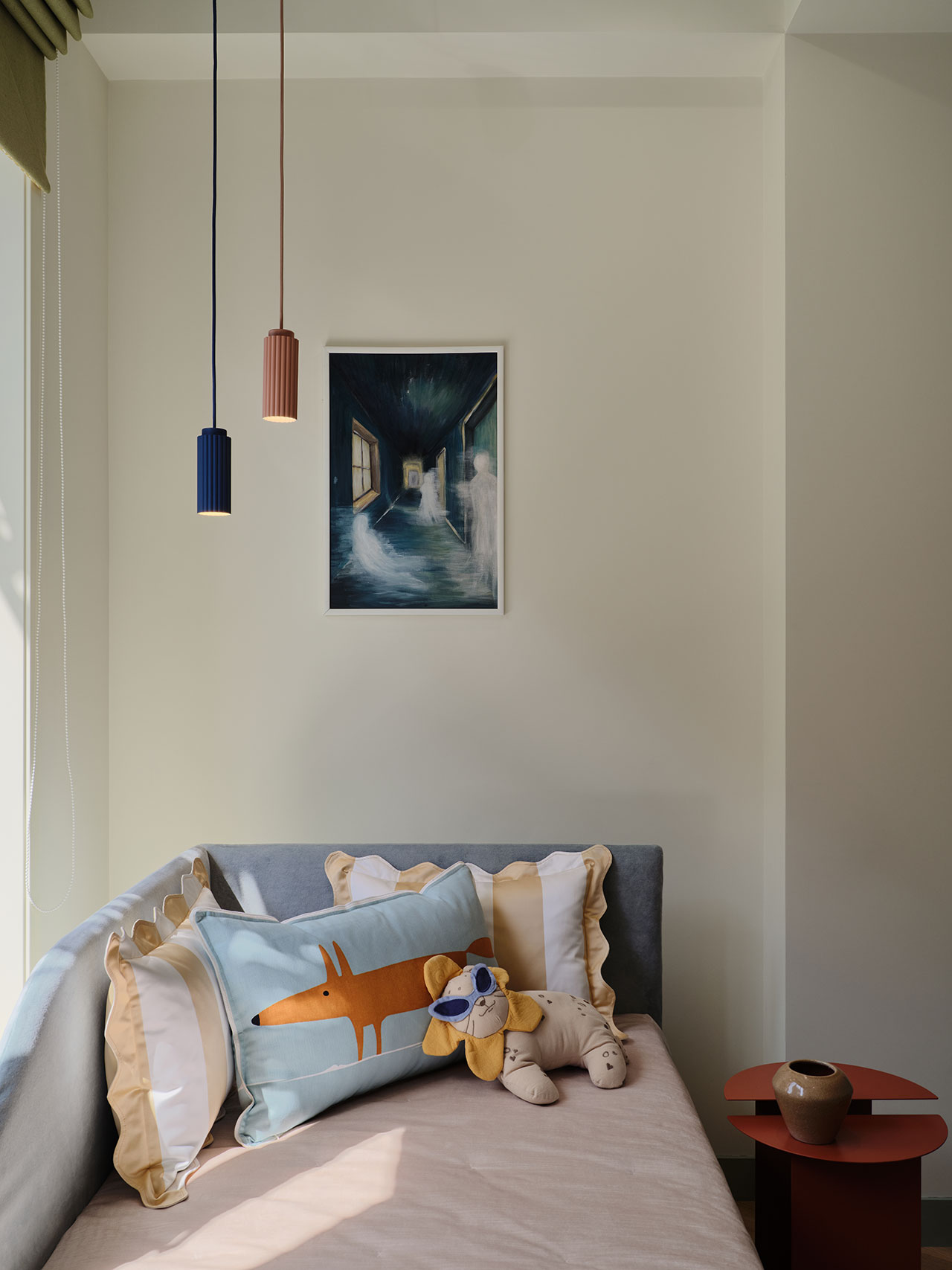
A custom rug made in India from Mamedov’s sketches sits alongside pieces from Saba Italia, Gubi, Louis Poulsen, Thonet, Fritz Hansen, &Tradition, Potocco, HAY and more, while local craftsmanship frames the apartment with custom cabinets, benches, vanity units and other bespoke elements.
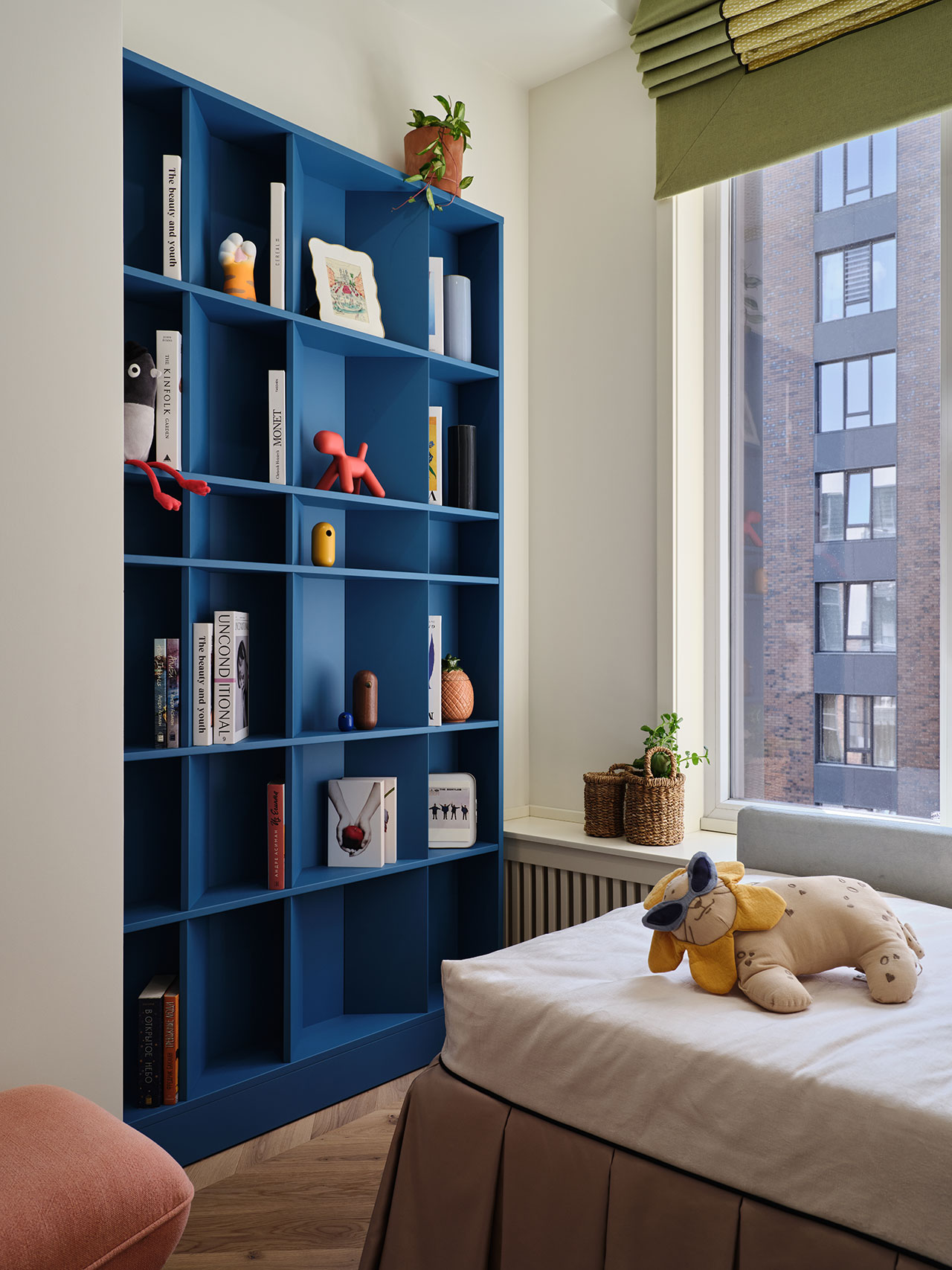
This apartment feels less like a finished picture than an ongoing situation, its beauty in the way the many elements create space for life to continue to unfold. It leaves room for new art, new routines, new conversations, new memories.
To see this and other works by Fariz Mamedov, visit tktktk.
Photo by Damir Otegen.