


During design-related events, new materials have become a kind of background noise. Biobased, recycled, regenerative, circular: the vocabulary has settled into common usage to the point where it has lost almost all descriptive power, and what remains truly rare is to see a material innovation take the next step – to break out of the realm of technical claims and into design culture.
Ambition back From plants to plastic strictly related to this concept, and the installation presented by the Dutch design studio Hoogvliet Jongerius in collaboration with Releaf by Avantium and edited by Nicole Uniquole at Masterly – The Dutch during Milan Design Week 2026, explains that it is not enough to document a technology through samples, cross-sections or processing diagrams. It is necessary to explore the conditions under which a next-generation material can be translated into objects that people understand, touch and ultimately want, and how this new material can become part of industrial production. Materials without application easily become just a research style exercise.
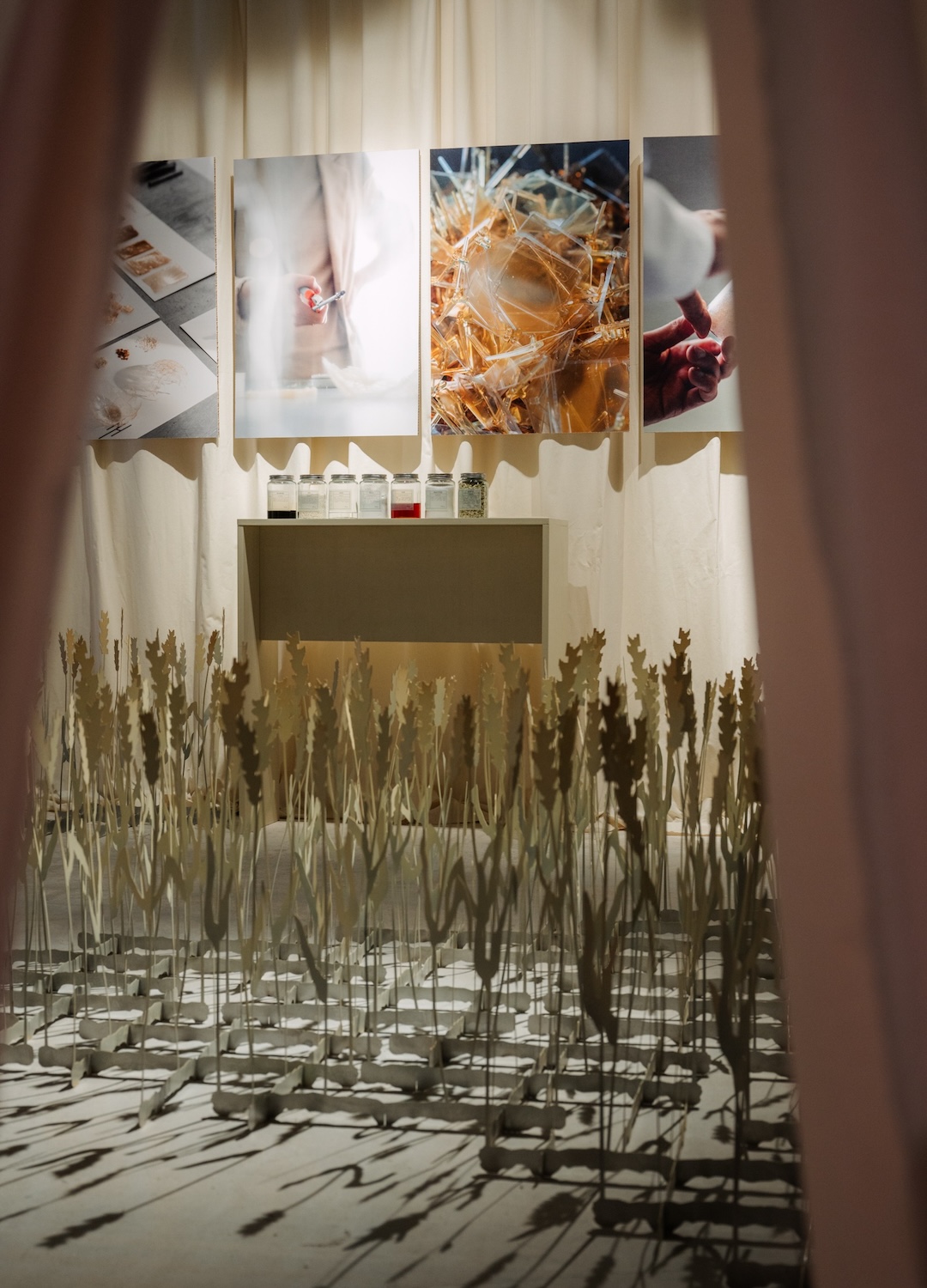
Releaf Exhibition at Masterly – The Dutch © Avantium
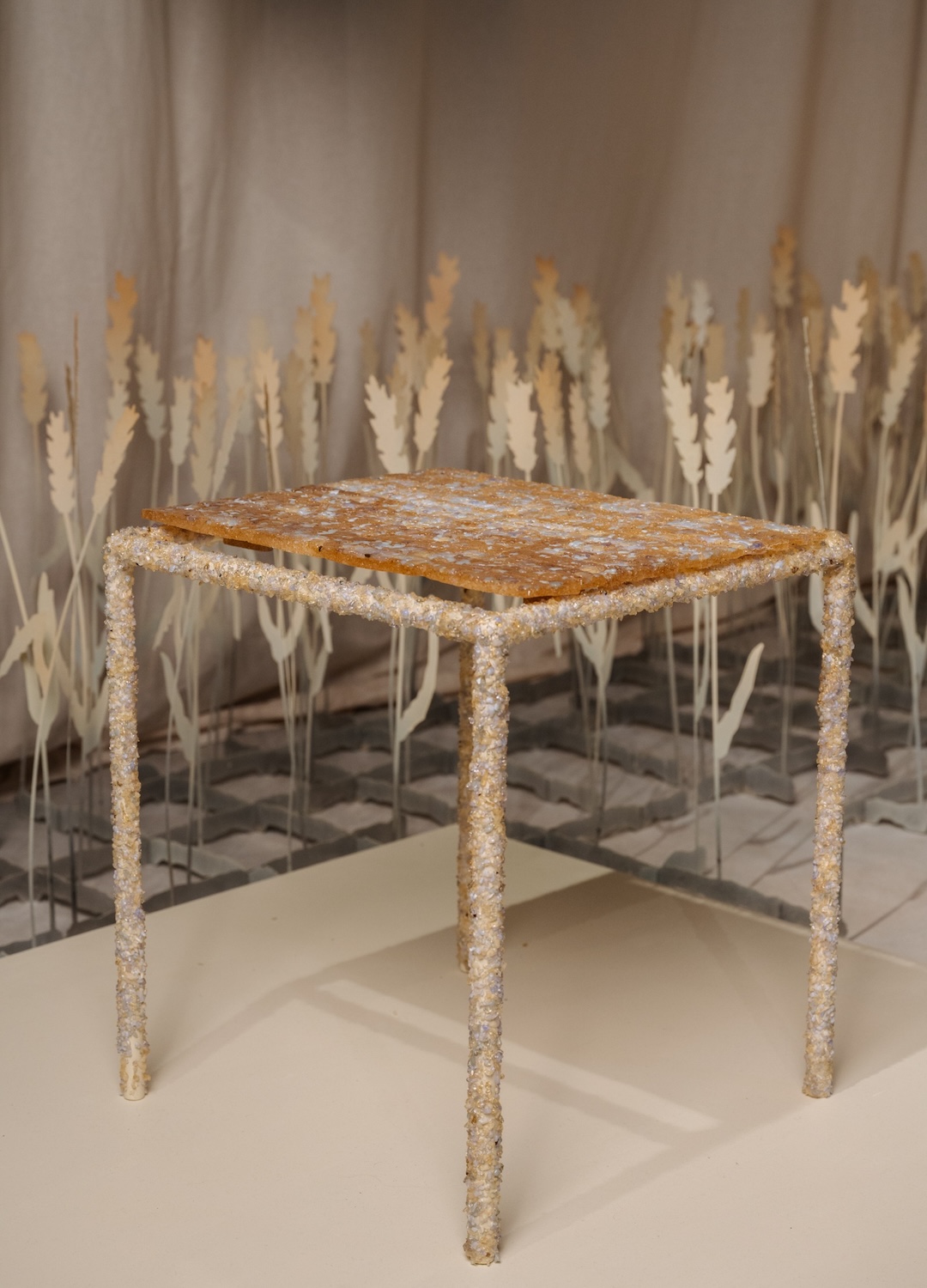
Coffee Table by Hoogvliet Jongerius at Releaf ©Avantium
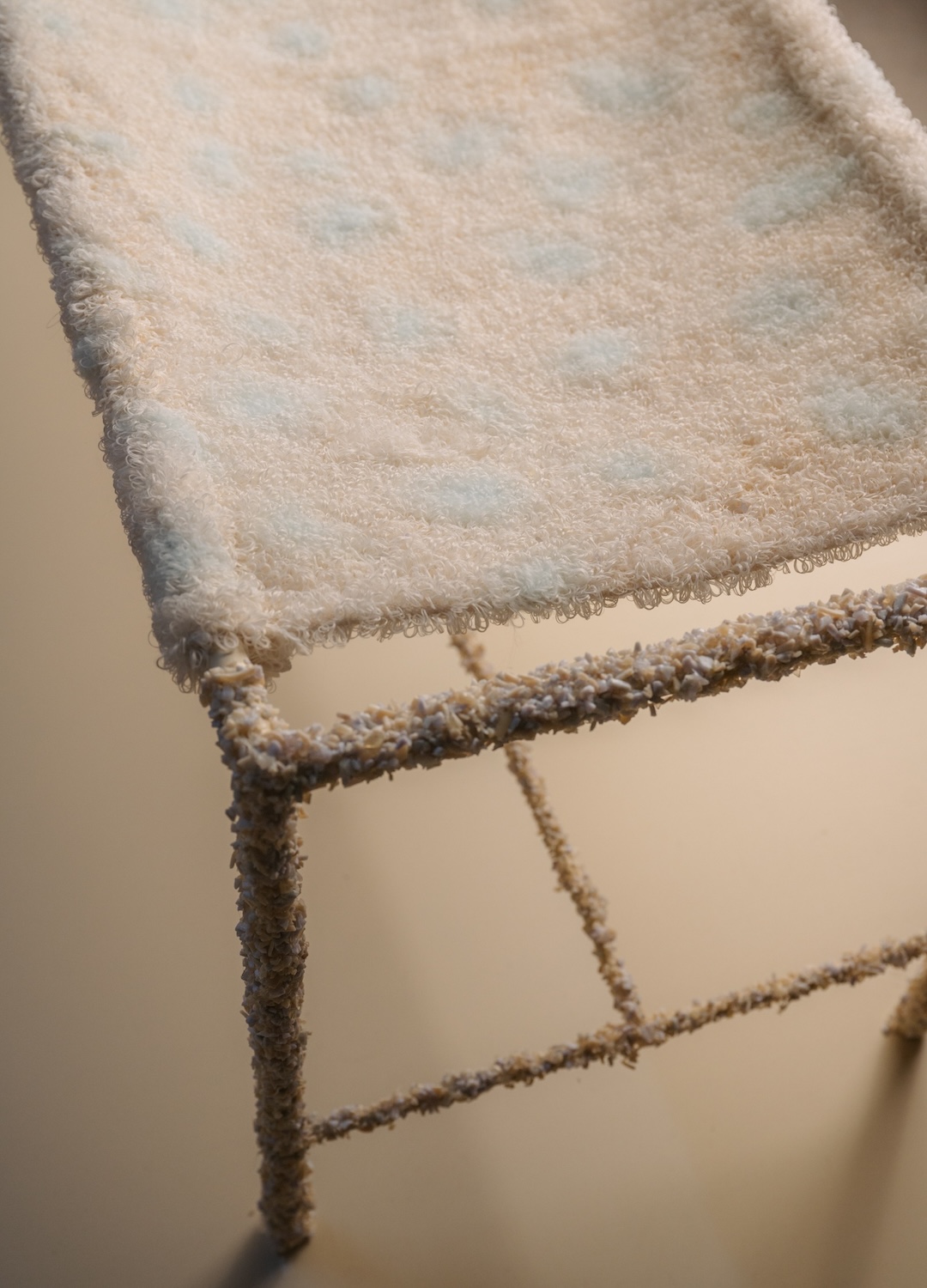
Bench (detail) by Hoogvliet Jongerius at Releaf ©Avantium
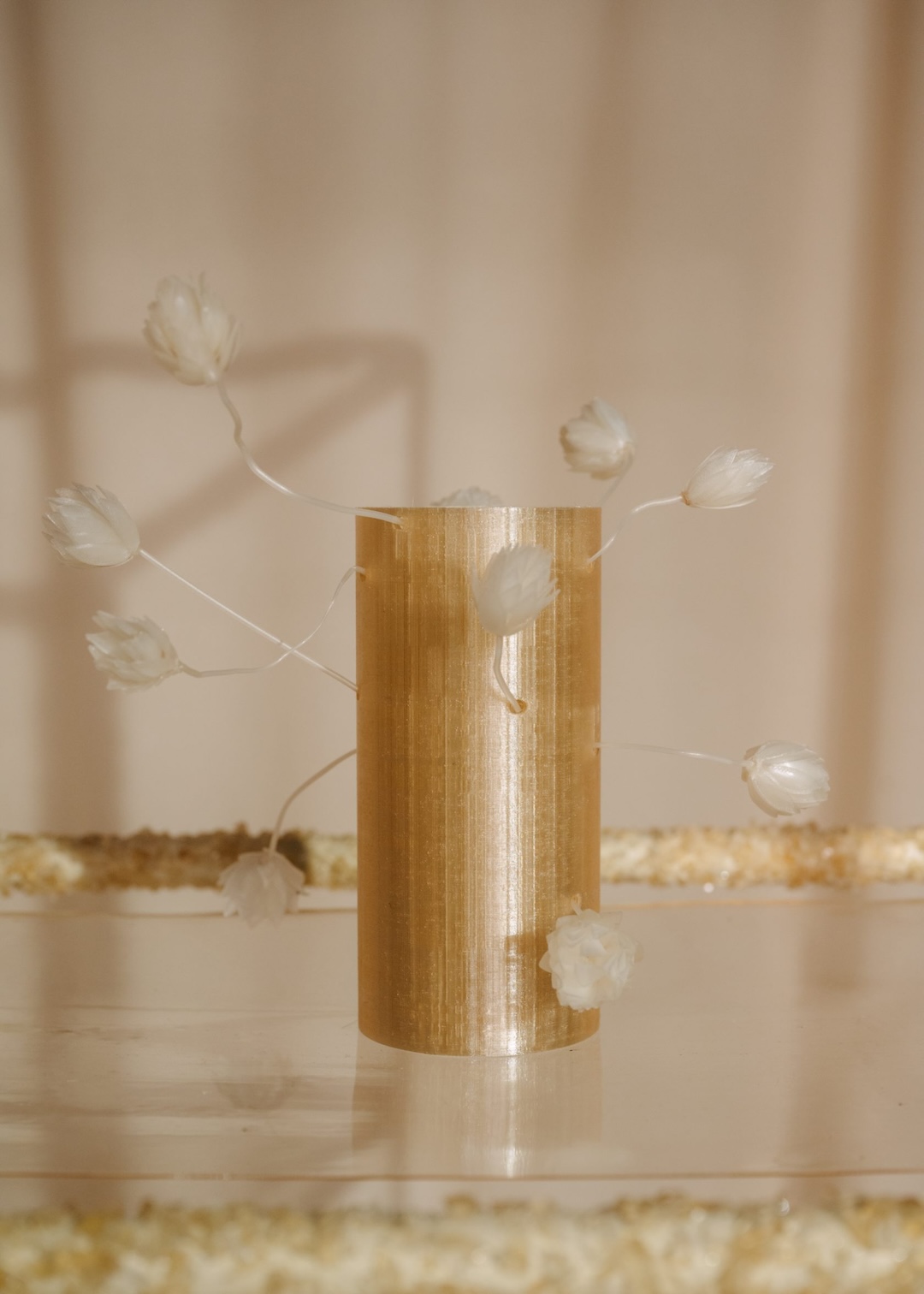
Vase by Hoogvliet Jongerius at Releaf ©Avantium
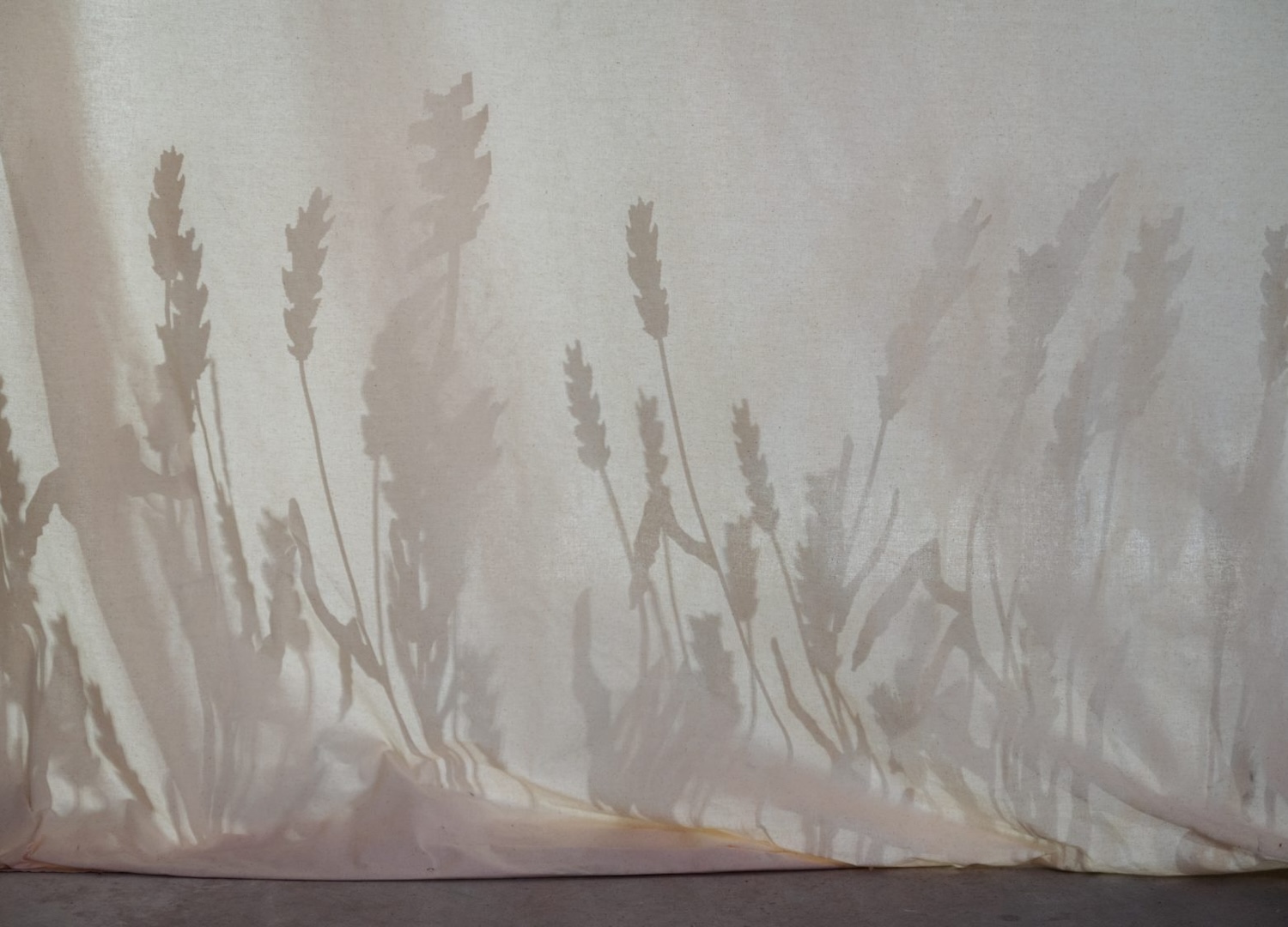
Releaf Exhibition at Masterly – The Dutch © Avantium
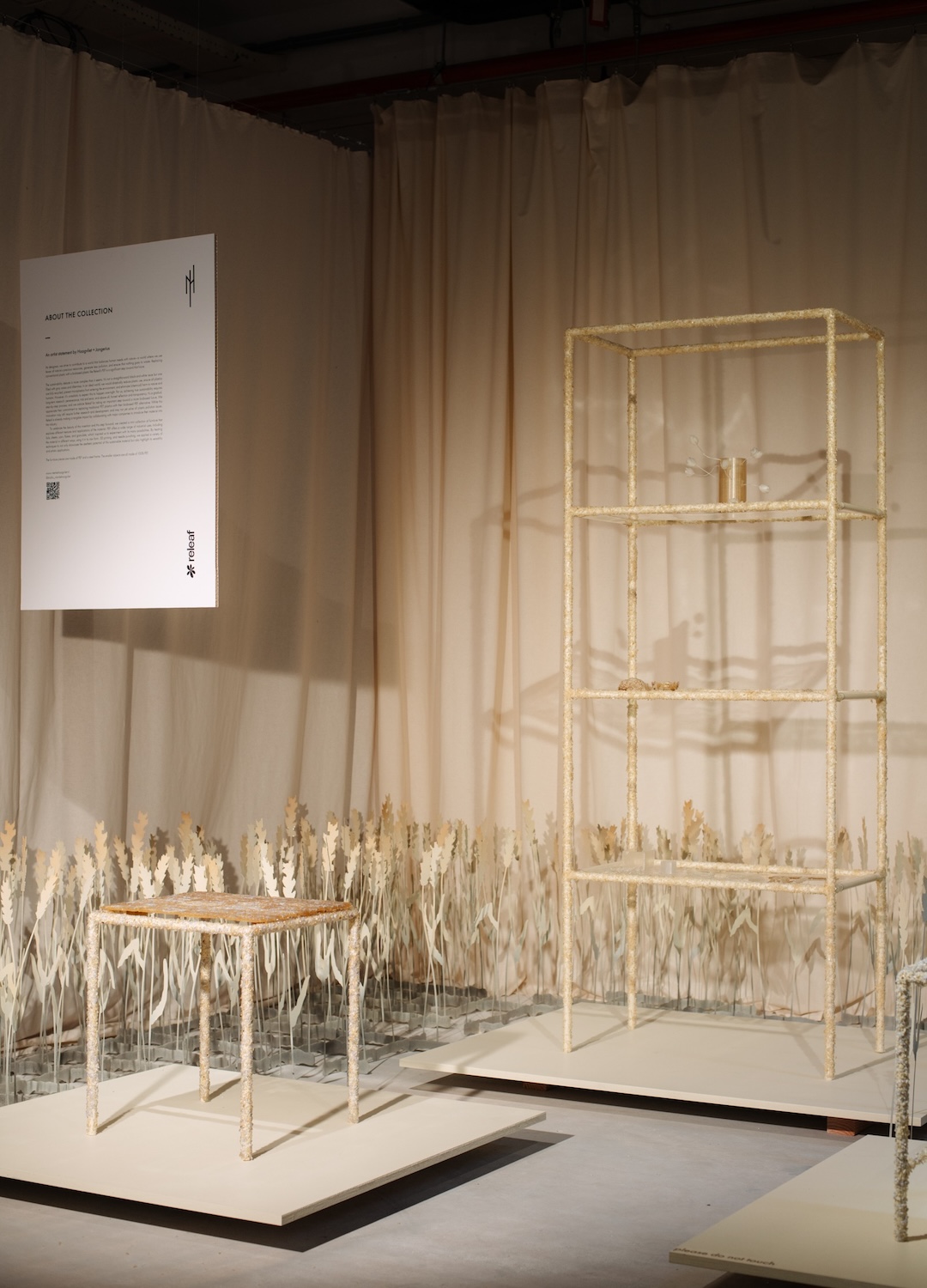
Releaf Exhibition at Masterly – The Dutch © Avantium
Thus, in the center of the installation is located Reliefthe trade mark by which The front PEF market – polyethylene furanoate – a plant-based polymer derived from renewable raw materials and developed as an alternative to conventional mineral-based plastics. Its barrier properties have often placed it alongside PET in packaging applications, where it combines recyclability and a significantly lower carbon footprint with the performance requirements of industrial sectors spanning textiles, packaging and consumer goods. The Milan presentation, however, decides to shift the conversation elsewhere: Releaf is not being tested as a packaging material but as a design material.
From prototype to actual production
The collection, developed by Hoogvliet Jongeriusincludes a cabinet with decorative PEF surfaces, a yarn-covered bench, a side table with molded flake and a family of stackable bowls. Relatively simple objects, almost archetypal, with a choice of simplicity that is not considered a limitation, but embraced as a decision: the collection allows the material itself to be read, with the full range of expressions it can create and figure in the everyday domestic landscape of each of us.
The collaboration between Nienke Hoogvliet and Tim Jongerius it is placed exactly in balance between research and industrial production. On the one hand, Hoogvliet defines herself as an “artist”, working at the intersection of ecology, material culture and industrial innovation to develop objects and installations that suggest alternatives rather than simply documenting problems. On the other hand, Jongerius brings to the collaboration a practice rooted in product design, art direction and spatial installation, with a particular sensitivity to process and technique.
With their complementary spirit and approach, the two designers channeled their complementary approaches into an ongoing research – testing of material Relief in heating, 3D printing and needle punching, moving between its industrial forms to map its aesthetic and functional range.
Material flexibility
This flexibility is perhaps Reliefit’s the most exciting quality because, unlike many sustainable materials that arrive already marked by a recognizable aesthetic – rough, deliberately imperfect, visibly recycled – PEF seems less austere. It can become a fiber, a film, a rigid surface or a molded object. it can be structural or decorative. it can enter into existing productive and creative processes without imposing a new visual language as a prerequisite. In design terms, this flexibility matters because it opens up the material in areas that would otherwise remain closed to it.
The challenge facing sustainable plastics is one of cultural acceptance, rooted in the way plastic itself has been perceived for decades: first a symbol of progress, affordability and limitless possibility, then a symbol of environmental excess. Each new generation of polymers inherits this double register, where being biological and non-recyclable is not enough nowadays, because in order to gain relevance, these materials must also create emotional engagement and aesthetic value – they must, to some extent, become desirable and embedded in the cultural and industrial pathways of production.
The contribution from Hoogvliet Jongerius suggests that designers can act as translators between industrial innovation and public perception, turning technical samples into furniture and household objects and returning material research to a human scale. Visitors may not be familiar with the chemistry of polymers, but they are familiar with texture, color, touch and use: through design, a proposition of abstract matter becomes something tangible and, potentially, something worth desiring.
PEF: practical and poetic
Time matters. During Milan Design Week 2026, discussions around materials moved increasingly away from innovation and towards questions of longevity, circularity and resource management, with materials ceasing to function simply as a means of production and becoming, in their own right, a matter of design discourse. In this context, Relief occupies a special position: unlike many experimental biomaterials that remain confined to limited editions or research prototypes, PEF is developed with the express aim of industrial scalability, which turns the installation from a speculative exercise into an exploration of applications that could eventually reach a wider market.
Whether PEF will become a mainstream material remains an open question and so does its history sustainable innovation it is well stocked with promising technologies that have never made it past the niche adoption threshold. What From plants to plastic it demonstrates, however, that the future of materials will depend on both perception and performance – and that design, in this equation, is not a component of technical research, but one of the conditions that determine whether this research will ever become relevant.



