


Most design objects are inherently designed for permanence. Industrially produced objects are made to last, their form is fixed, the materials are durable and overall, a promise against time. Yuya Zu‘small Genesis series, presented at Isola Design District during Milan Design Week 2026completely rejects this assumption. Her works are made to change, to refuse fixity and, in fact, to fail.
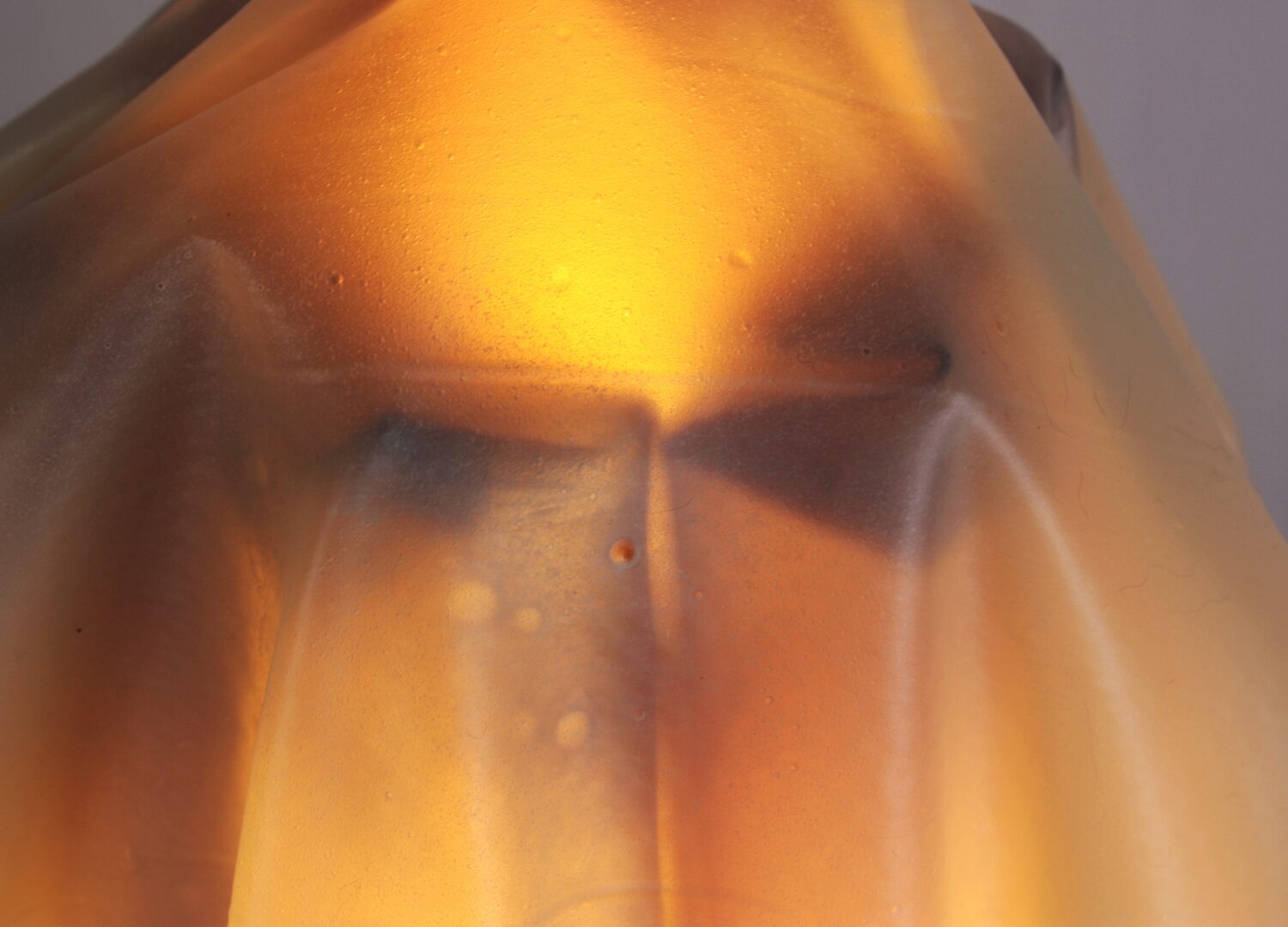
Genesis consists of 7 light objects, consisting of 4 table lamps, 2 pendant lamps and a floor lamp, each molded from a self-formed bioplastic composite of starch, gelatin, glycerin, water and edible pigments. These substances are the materials of kitchens and living systems, substances that dissolve, soften and react with their environment.
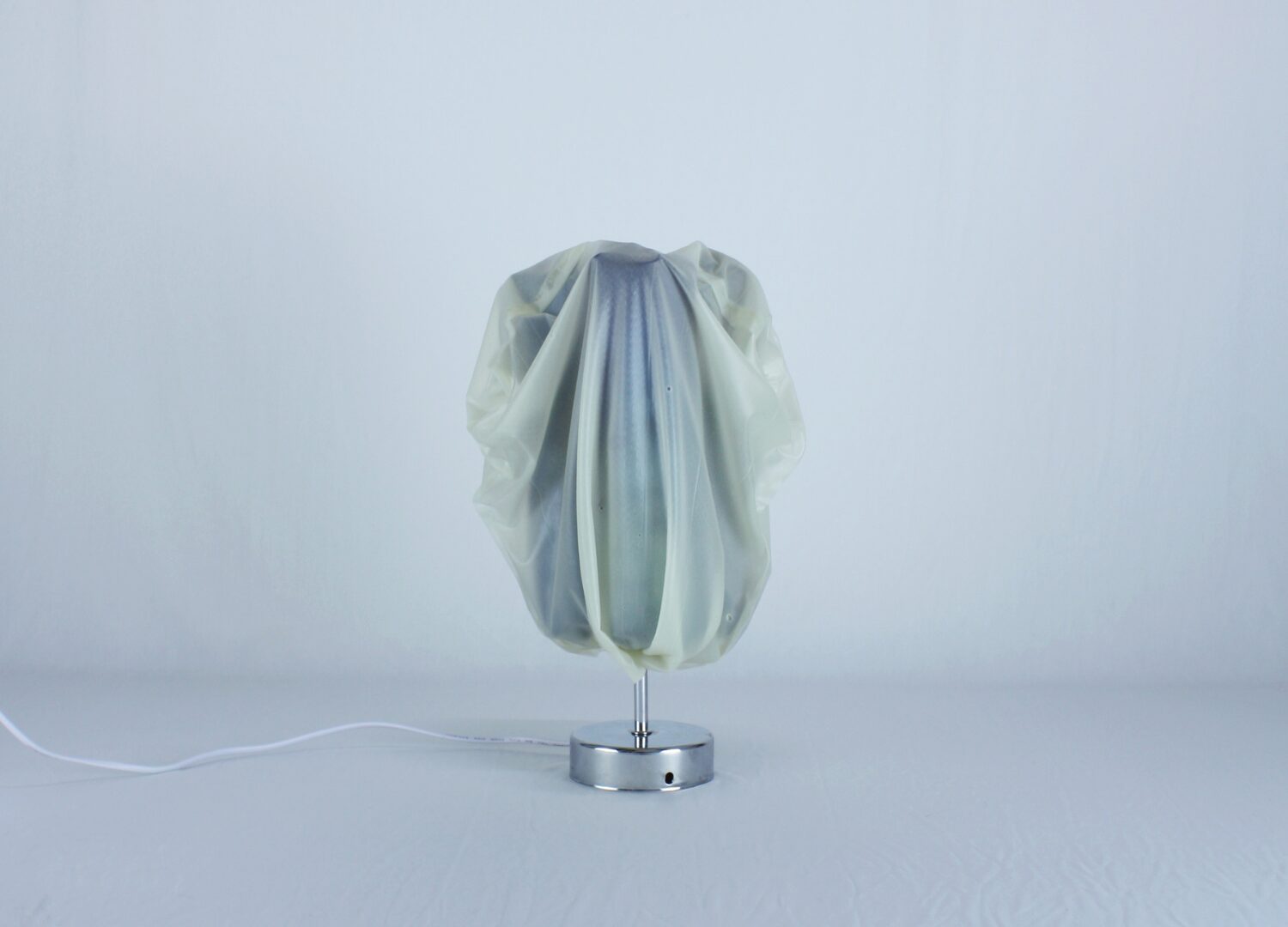
Genesis © Yuya Zhou
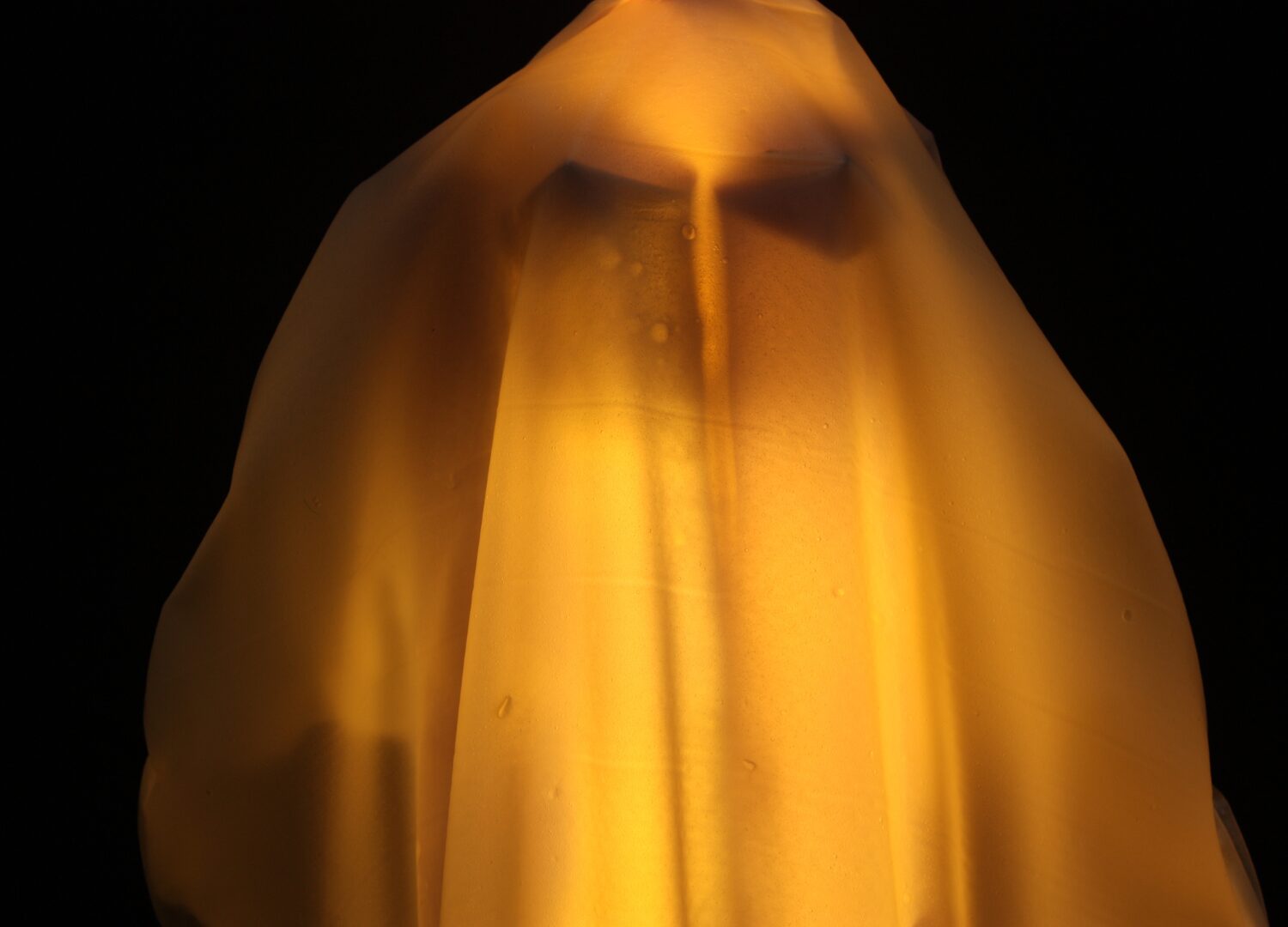
Genesis © Yuya Zhou
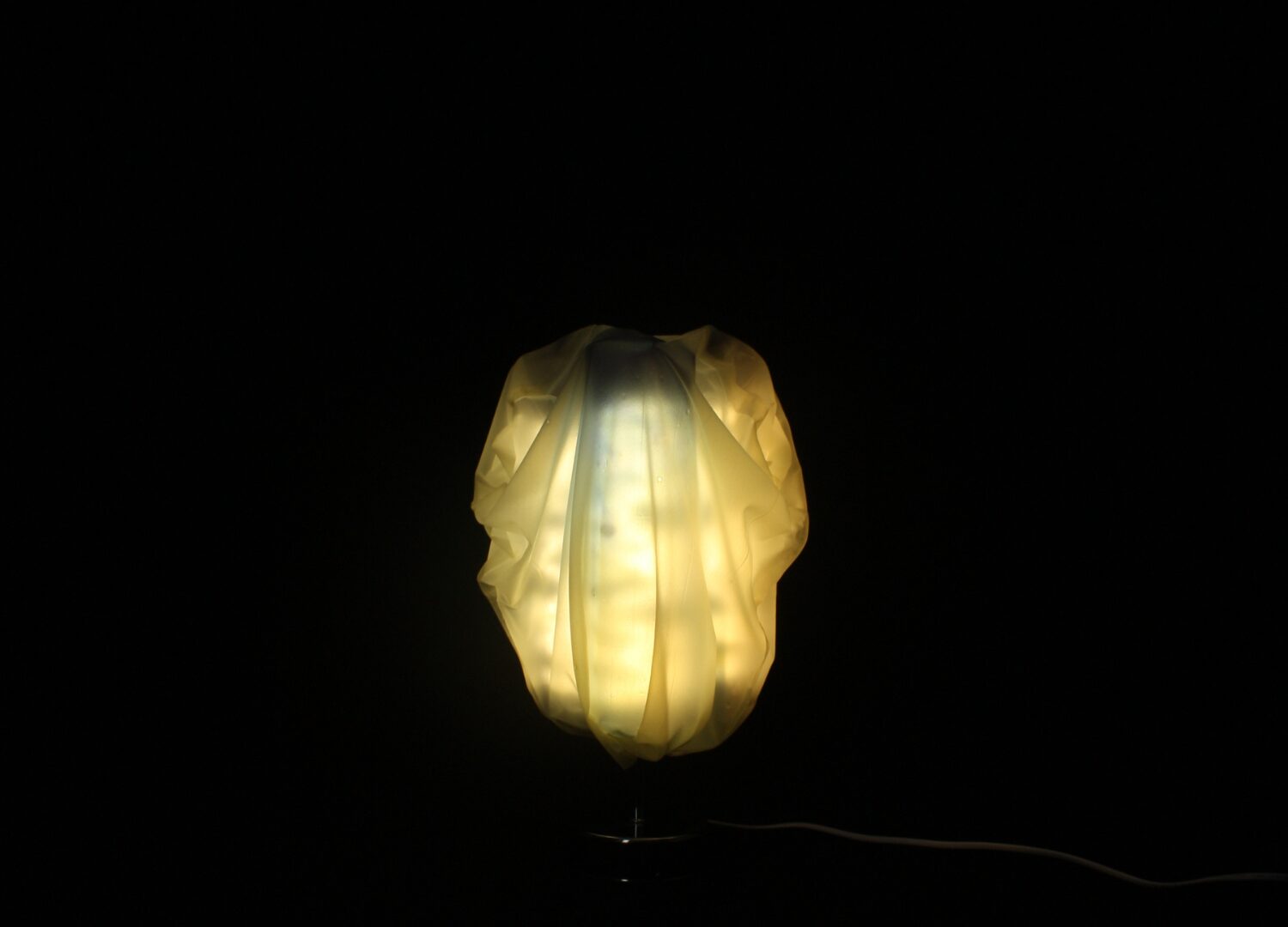
Genesis © Yuya Zhou
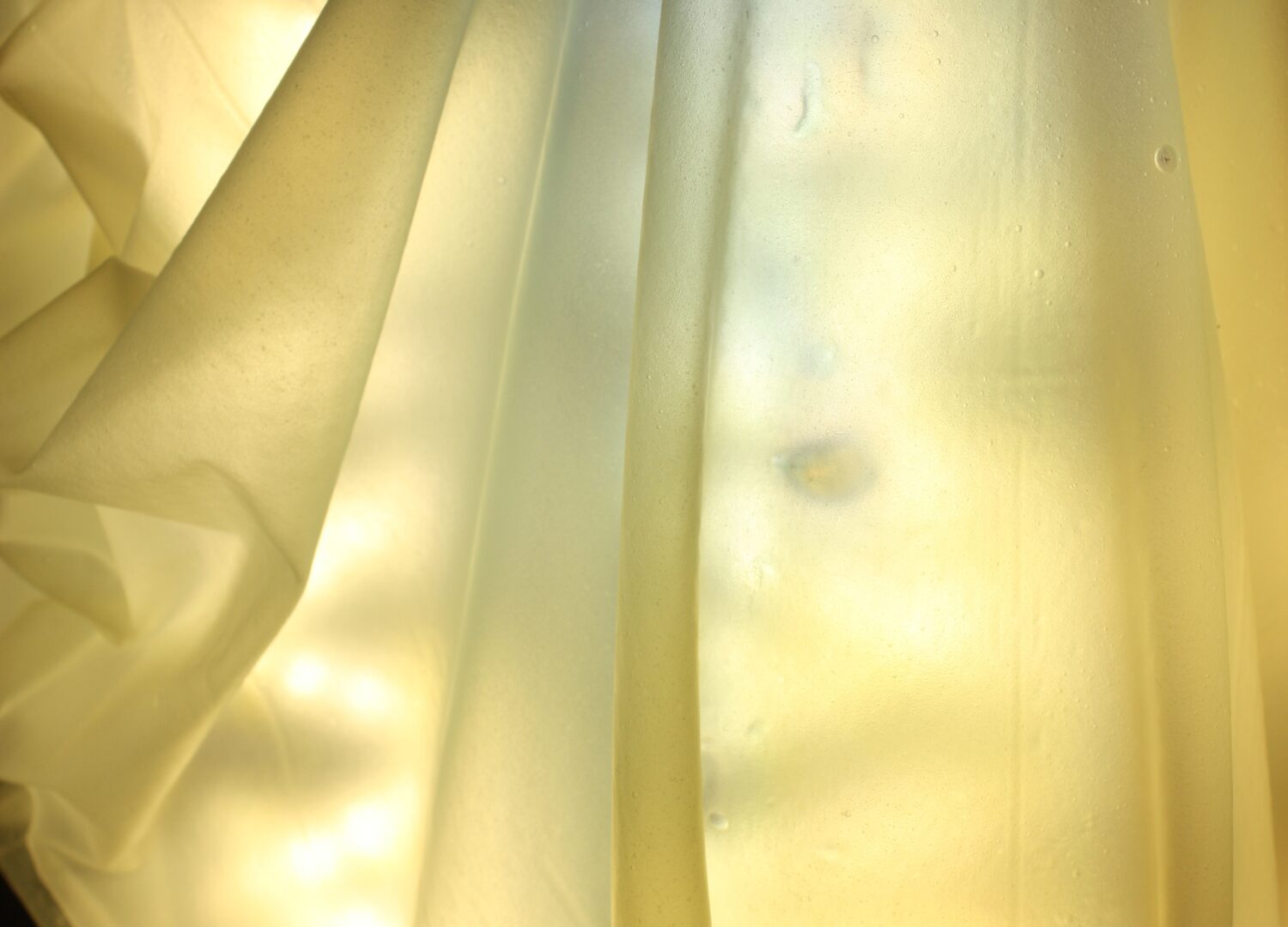
Genesis © Yuya Zhou
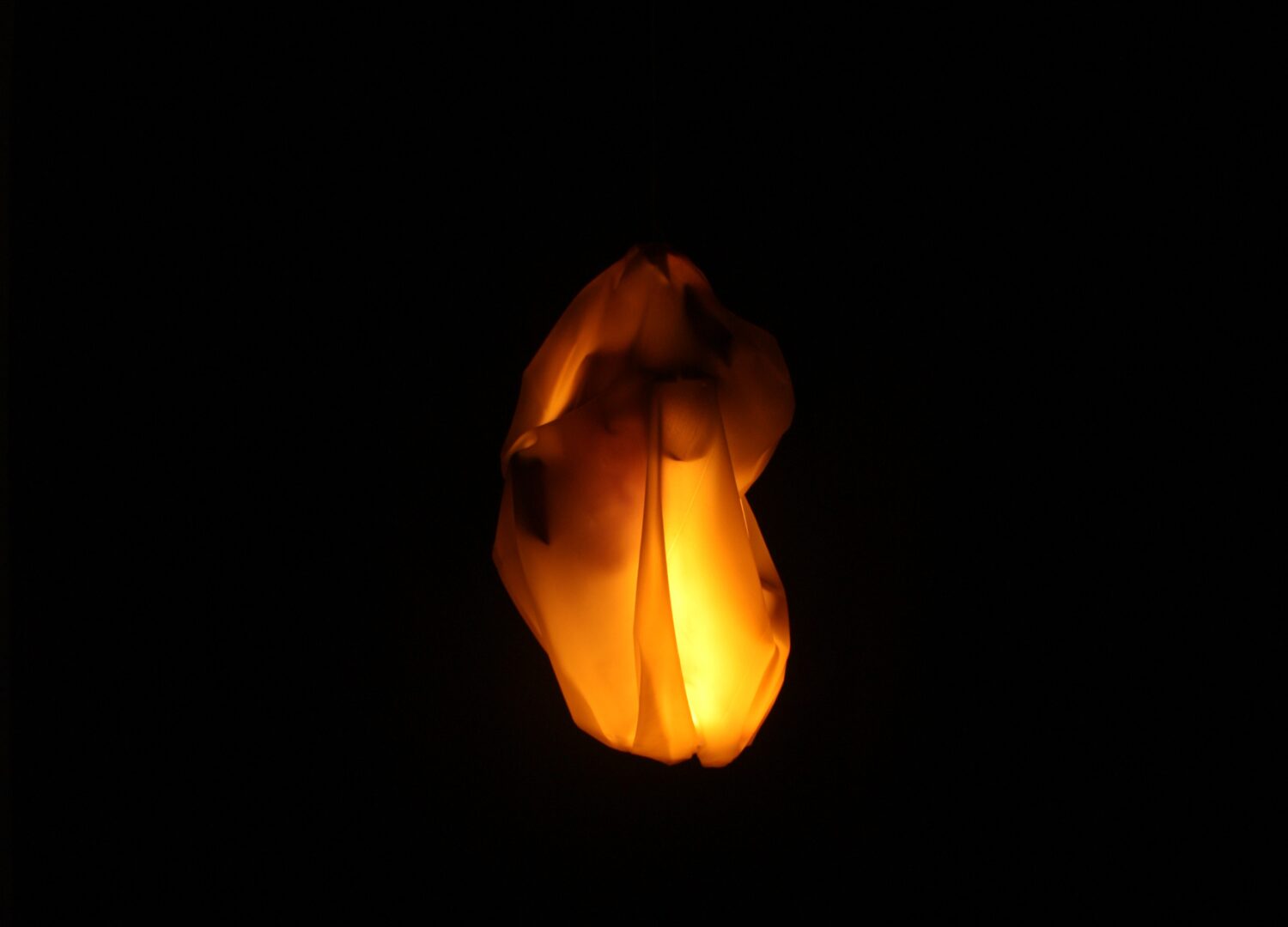
Genesis © Yuya Zhou
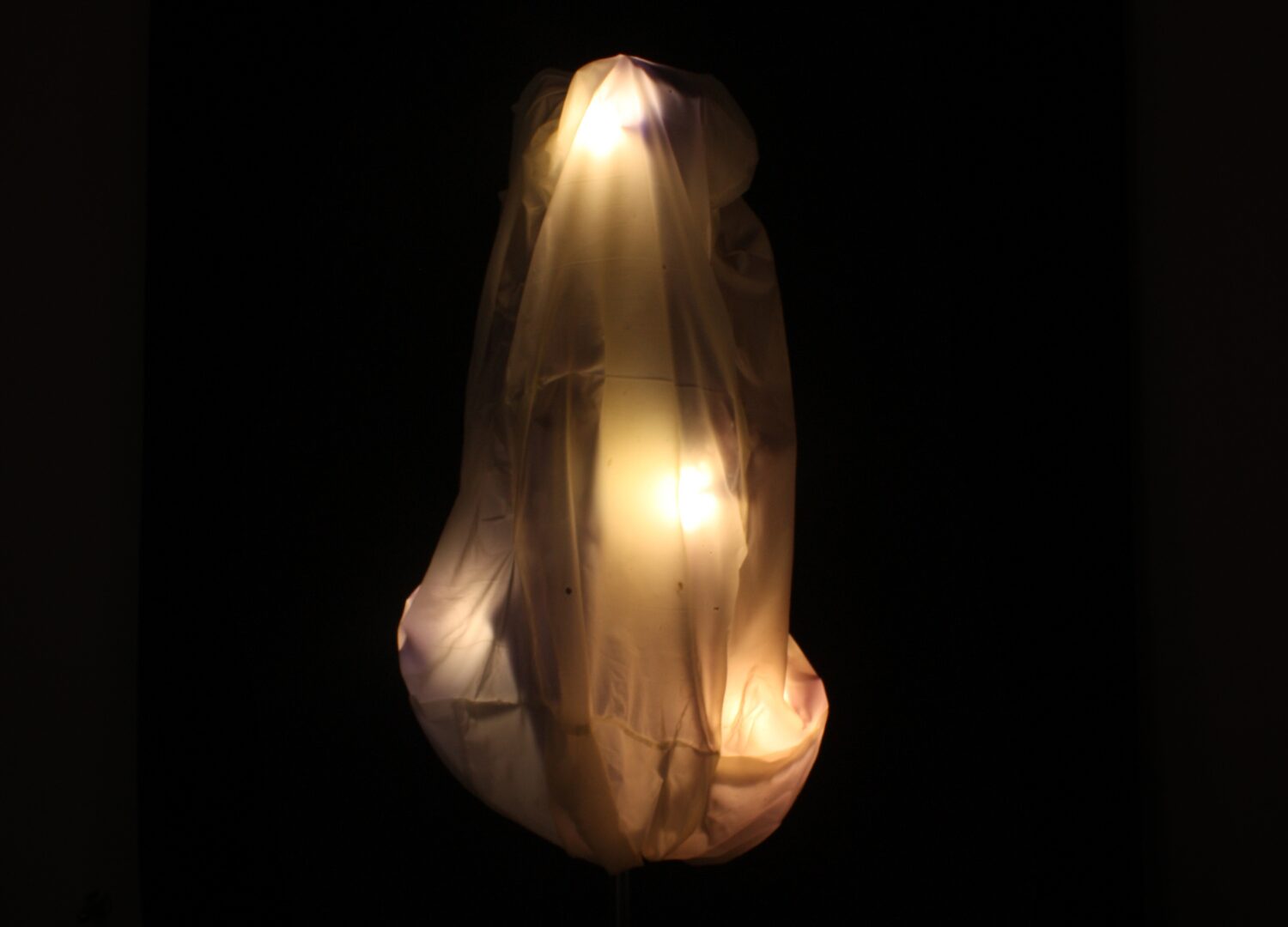
Genesis © Yuya Zhou
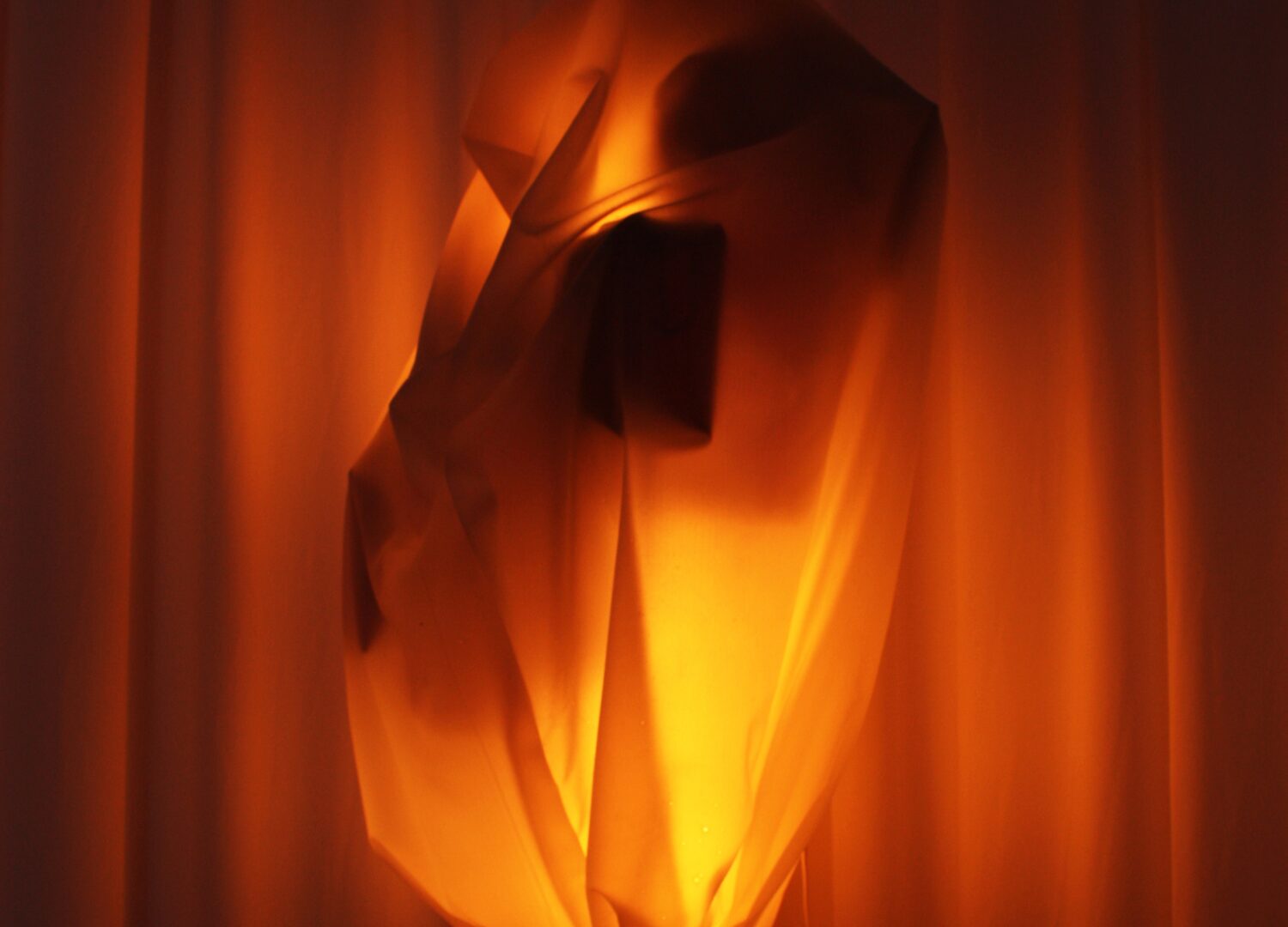
Genesis © Yuya Zhou
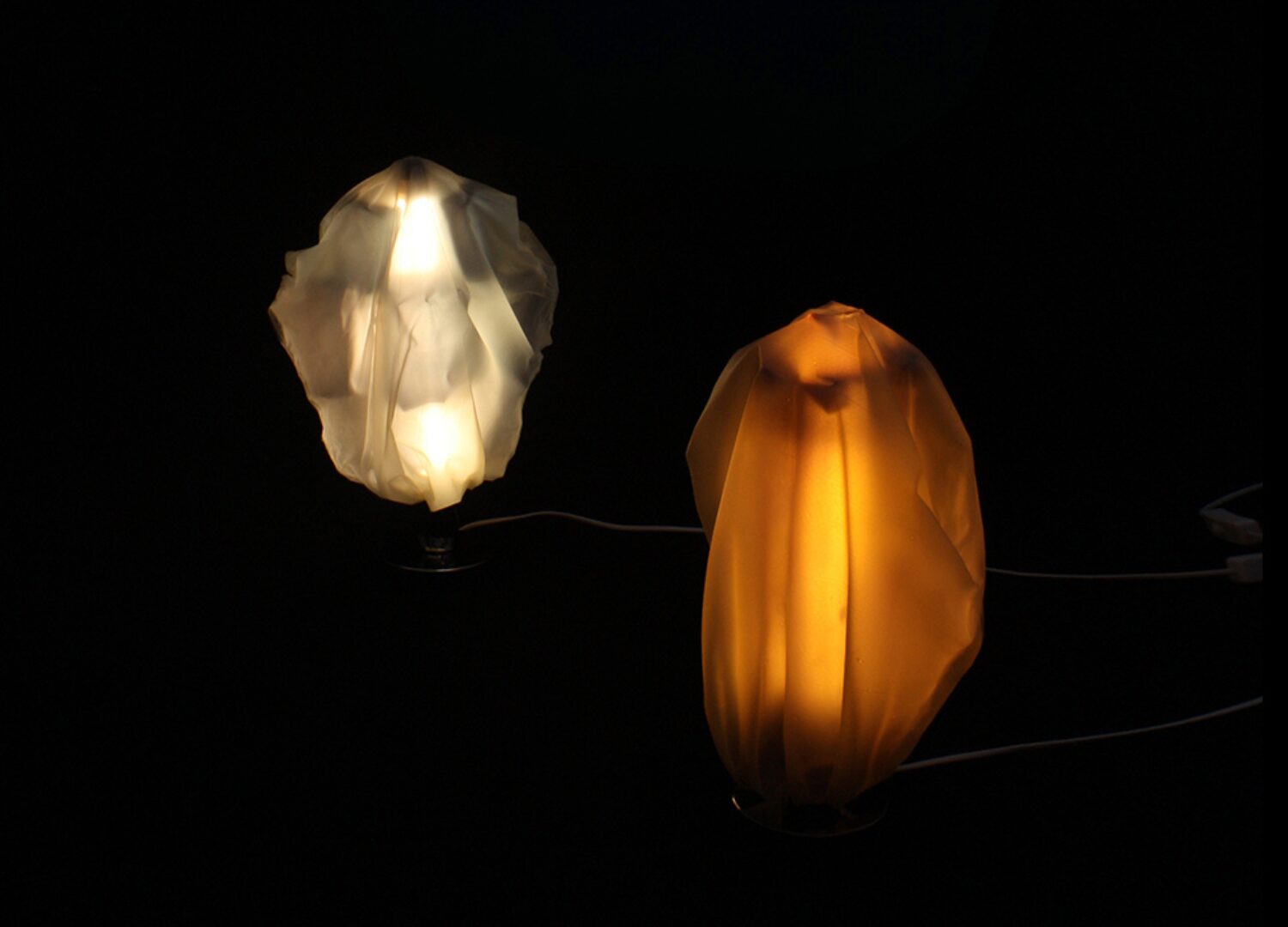
Genesis © Yuya Zhou
Genesis © Yuya Zhou
Genesis and the Design of Transience:
Sensory depth
The resulting material resembles latex, retaining a certain transparency and viscosity. Each bulb holds within it a number of floating air bubbles that often occur when casting biomaterial, which were deliberately contained. When light passes through, these microvoids scatter and diffuse it unevenly, creating a warmth and visual complexity reminiscent of amber or honey.
Controlled volatility
Zhou grounds the work in Taoist cosmology, specifically the idea that existence is not a state but a process, that what we call a thing is really a moment in a continuous cycle of formation and dissolution. Bioplastic is not designed for stability but for what Zhou calls “controlled volatility“: By adjusting the proportions of its components, it shifts the material between softness, elasticity, fragility and structural tension. After construction, environmental conditions continue the work, creating distortions or color changes.
This also means in practice that no two pieces are identical and no single piece will remain the same even with itself. The works are not editions in the conventional sense, but become individual even if they follow the same processes, defined by the designer as “non-repetitive results of process, matter and time”.
Seeing the work in progress
The 7 pieces are organized as a sequential life cycle rather than a collection of fixed designs. The first works in the series are softer and more fluid, emphasizing openness and dispersion, with light moving loosely through the material. Later pieces develop denser structures, stronger visual depth and compression, as if the matter itself has accumulated experience. Going through the series is also Zhou’s process, reading her narrative and watching a time-lapse of the material’s development.
The curatorial framework
Genesis was presented at an exhibition called “There is no room for waste”, which brought together projects focused on circular materials, waste transformation and experimental approaches to matter. of Zhou The series is placed in conversation with the wider movement in design about thinking after extracting material, a shift from materials they are chosen purely for their functionality and for materials that bring their own logic, history and behavior to work with. What is very modern and important in this series is that the designer does not present her material as a solution, but as a completely different proposal based on new aesthetic and conceptual principles, instead of a banal plastic alternative.



