


The world of interior design is witnessing a true natural fiber renaissance. Historical materials such as rope, straw, wicker and rattan are powerfully reclaiming the interior spaces of the house, after many years of unfair confinement on balconies, terraces or in winter gardens. This return, however, should not be interpreted as a mere nostalgia operation or a timid homage to the retro style of decades past. Instead, it responds to a deep and widespread contemporary desire to reconnect with the natural world through the introduction of tactile, warm elements that are inextricably linked to the wisdom of exquisite craftsmanship.
The most exciting and complex challenge when you decide to introduce these organic elements into the living room is knowing how to dose them with absolute geometric precision. The danger of slipping into a messy rustic effect, or an overly beachy vibe that doesn’t suit a main house, is always around the corner. If interpolated with criteria and an overall visionOn the other hand, woven furniture manages to break the typical coldness of ultra-modern lines and industrial materials, giving widespread warmth and an extraordinary, unexpected visual depth to the entire environment.
The game of contrasts: how to combine rough with minimal
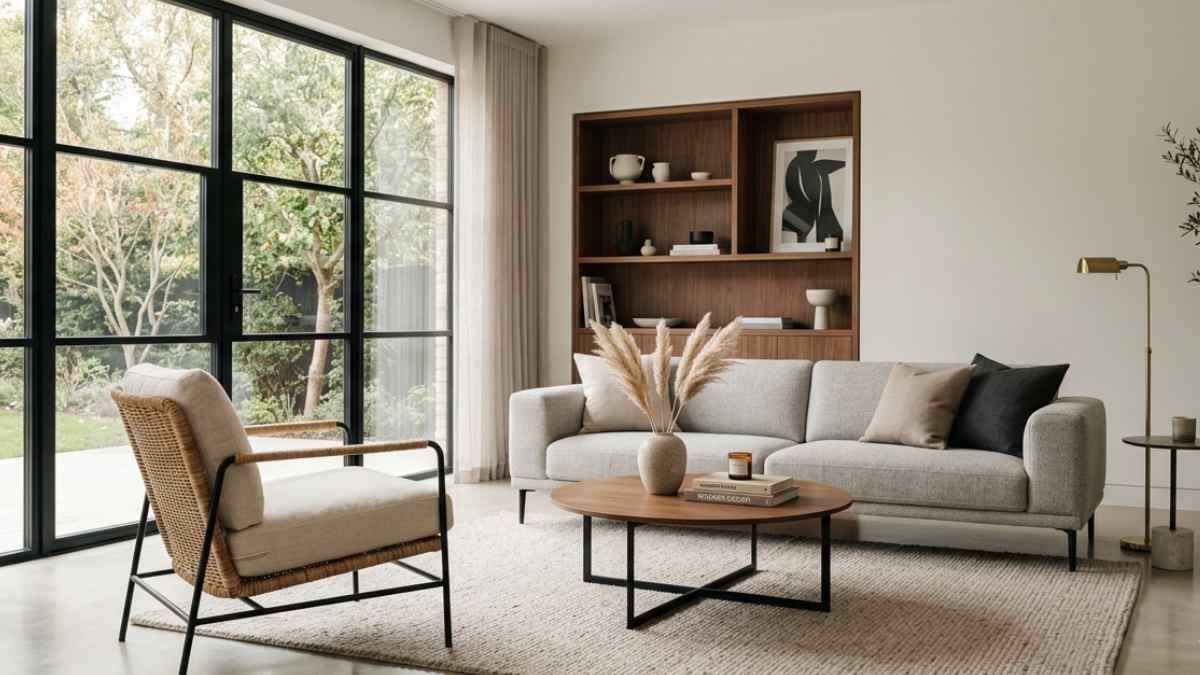
The fundamental secret to achieving perfect visual balance in the living room lies solely in the skillful play of material contrasts. The golden rule to follow is to always approach the rough, three-dimensional and inherently organic texture of weaving on surfaces that are smooth, shiny or characterized by a cold nature. In this context, an iconic choice of furniture, which acts as a true manifesto armchair, is represented by a cane seat supported by a matte black metal structure.
A piece of this type dialogues beautifully if placed next to a gray minimal cut fabric sofa or on a resin concrete floor with a continuous finish. This calibrated alternation creates a refined and never ordinary stylistic tension, where industrial rigidity enhances, by contrast, the visual softness of natural fiber.
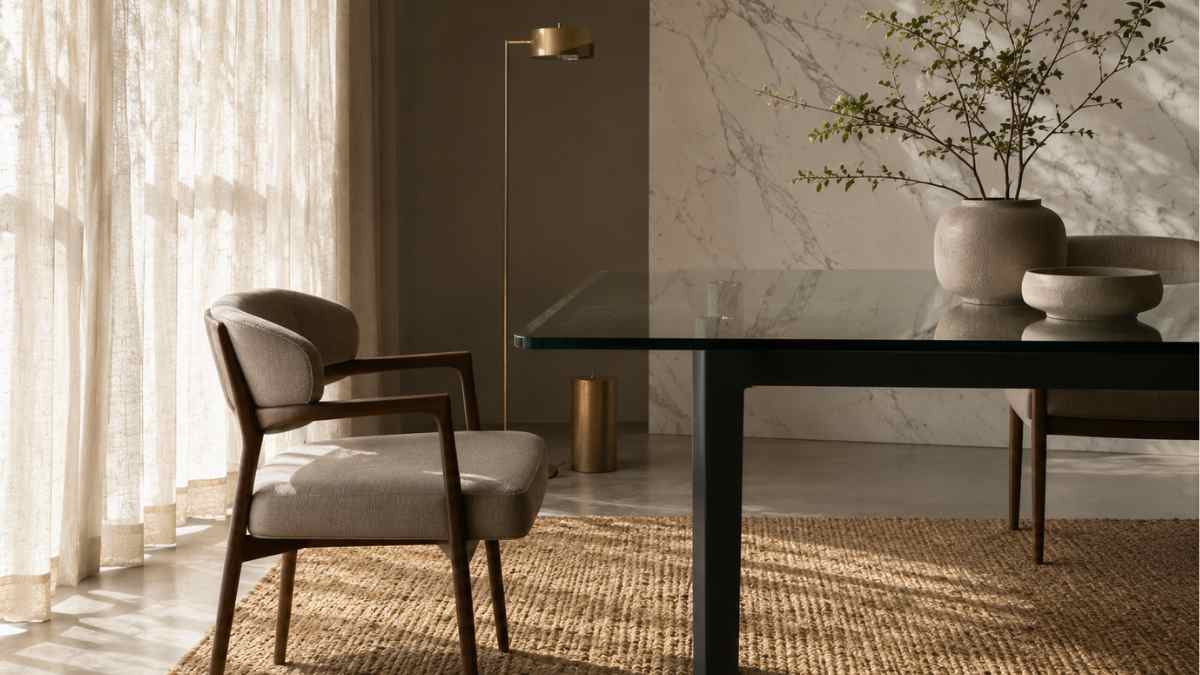
Likewise, even small furnishing accessories play a key role in this transition of styles. Replacing classic geometric chandeliers with large hanging lamps made of woven rope, or placing a large raw jute rug under a clear crystal dining table, allows light to filter freely through the textures. The result of this measure translates into a play of soft, warm and dynamic shadowscapable of visually mitigating the austere rigidity and geometric rigor of the most radical minimalism.
The rules for an atmosphere of luxury between palettes and proportions
To ensure that the environment maintains a consistently elegant, cultured and luxurious atmosphere, the fundamental quality lies in the strict selection of neutral color palettes and the formal cleanliness of each element selected. In fact, different natural fibers express the maximum of their innate finesse when preserved in their original colors. ranging from warm shades of sandy beige to golden shades of pale honey. These essences are perfectly integrated in environments dominated by dove-colored walls, curtains and raw linen covers or when combined with dark and noble wood details, among which Canaletto walnut undoubtedly stands out.
Every natural material requires a precise color and structural counterpoint to best express itself. The ambient warmth of honey-coloured rattan or straw finds its ideal contrast in the strict solidity of black iron, the purity of white ivory or the classic elegance of walnut.
At the same time, jute and rope in shades of sand enhance their essence when combined with the ethereal transparency of crystal, the material modernity of brushed concrete or the sophisticated neutrality of gray, from pearl to charcoal. Even natural fabrics like gray or burnt brown linen find a new dimension of value when combined with the solidity of opaque marble and the subtle, warm glow of polished brass.
Interior designers recommend an essential precaution to avoid compromising the final result: it is fundamental avoid stacking too many interlocking pieces in series within the same room. In fact, uncontrolled overlap risks saturating the space, turning the environment into a chaotic display. Instead, isolating a single quality element allows you to turn the piece of furniture into a distinctive focal point with great visual impact, rather than reducing it to simply filling the available space.
An oasis of comfort for a timeless stay
The careful inclusion of natural fibers in contemporary design clearly demonstrates how high-end interior design is never fueled by excess or ostentatiousness, but rather by whispered accents and cultured details. It is not at all necessary to revolutionize the entire decoration of the house or replace the main pieces of the living room.
Often, a single iconic element is enough, placed in the right context and surrounded by the right material contrasts, to radically transform the living room from an aseptic or purely functional space to a welcoming, relaxed and absolutely timeless oasis of comfort.



