


Snake plant drooping, turning yellow or turning mushy? Here are the best ways to revive a dying snake plant and help it recover.
This post contains affiliate links. As one Amazon Associatewe earn from qualifying purchases that support our site. You can check out our Amazon storefront here for all the essentials you’ll need.

Snake plants have earned a reputation as one of the toughest houseplants you can grow. This is exactly why many gardeners are surprised when a snake plant suddenly begins to turn yellow, lean or collapse. But when they’re stressed, they usually give you clear signs of what’s wrong. Check out what causes Snake plants to drop and steps you can take to help them get back to health!
What causes snake plants to die?

Most dying snake plants can be traced to a a handful of common problemswith excess humidity topping the list. You see, these plants naturally grow in areas where the soil dries out quickly, so they struggle when their roots stay wet for long periods.
A pot without proper drainage, heavy soil or frequent watering can all create conditions that slowly weaken the plant.
Light and temperature can also be the reason for the drop. Snake plants can tolerate lower light better than many houseplants, but they still need enough light to stay healthy and produce new growth. Cold drafts, sudden temperature changes and other environmental stressors also add to the problem.
Ways to revive a dying snake plant
1. Save the rotten roots before they spread

If your Snake plant is yellowing, drooping or going soft, start with the roots. Root rot is responsible for more snake plant deaths than any other issue, so eliminating it should always be a top priority.
Healthy roots should appear white, cream or light in color and feel firm to the touch. Rhizomes, which are the thick underground stems that produce roots and new growth, should also feel firm.
Pro tip: Black, mushy roots, soft rhizomes or a foul smell are clear signs of rot. Remove any damaged parts with clean pruning shears before proceeding to the next step. Here it is how to do it right!
We recommend you buy this pair sharp pruning shears which will make the process of removing rotten roots much easier.
A sharp pair of pruning shears makes it much easier to cleanly remove rotten roots and damaged foliage
2. Remove damaged growth to help the plant recover

If the roots are good, turn your attention to the foliage. One of the quickest ways to support a struggling snake plant is to remove leaves and stems that are already beyond repair.
Leaves that have become mushy, collapsed, or severely yellowed will not recover, so leaving them attached encourages the plant to waste energy on tissue that is already beyond repair.
What should we do? Using clean scissors or loppers, cut off damaged leaves as close to the base as possible. If the rot has spread to the crown or rhizome, cut those sections back to healthy, firm tissue as well.
The plant may look sparse afterwards, but removing the damage gives the healthy parts a much better chance of recovery. Pruning is also very good for bushier snake plant growth!
3. Transplant back into fresh, well-drained soil

Old soil often stays wet longer than it should, especially if it has been compacted over time, so putting the plant back in the same mix often results in the same problem returning. That’s why it’s better to reload. You can check out our guide to transplanting snake plants for help!
Choose a cactus or succulent mix or amend regular potting soil with perlite, pumice or coarse sand to improve drainage. Here it is soil recipes with snake plants you can try!
We suggest you buy this Soil Sunrise cactus and succulent pot mix to prevent future root rot problems.
Pro tip: Go for a terracotta pot with drainage holes. Unpolished clay actually draws excess moisture away from the soil, giving rotting roots a chance to dry out.
Here it is terracotta pot with drainage holes which are often recommended for snake plants.
4. Correct overwatering and allow the soil to dry out properly
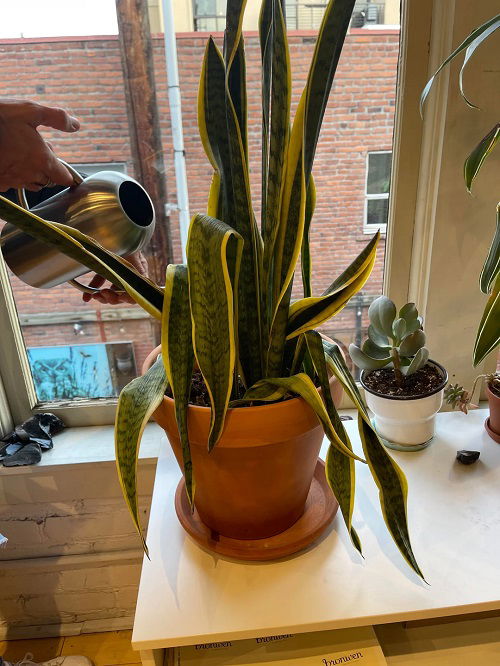
Snake plants recover much faster when the watering problem is corrected. These plants store water in their thick leaves and prefer soil that dries out between waterings. In most homes, overwatering causes far more problems than underwatering.
A proper watering routine is often the turning point in a snake plant’s recovery. Even a healthy root system will struggle if the soil is constantly wet.
Here’s the secret! Instead of watering on a schedule, test the soil first. Insert your finger or a wooden skewer a few inches into the potting mix. If there is still moisture, wait.
Buying this soil moisture meter is your best option to prevent accidental overwatering.
Water well only when most of the soil is dry, then allow excess water to drain completely. Check these out snake plant watering tips for more information!
5. Give it more light to fuel the new growth

A snake plant hidden in a dim hallway or a windowless bathroom simply does not have the energy to heal. You see, recovery requires energy, and that energy comes from light. Snake plants tolerate low light conditions better than many houseplants, but grow stronger and recover faster when given bright, indirect light.
What should we do? Place the plant near an east-facing window or other location that receives plenty of filtered daylight. Avoid harsh afternoon sun if the plant sits in a dark corner for a long time, as sudden exposure can burn the leaves.
If natural light is limited, you can always go ahead and buy one Light increases the LED to support healthy new growth.
With better light, healthy roots and proper watering, new growth usually follows. Just don’t keep your snake plants inside one of these points!
6. Separate healthy offsets from a dying plant
Sometimes the mother plant struggles, but the smaller pups that grow from the rhizome are perfectly healthy. In this case, separating the healthy hedges is one of the fastest ways to preserve the plant.
Simply remove the plant from its pot and look for pups with their own roots attached. Using a clean knife, separate them from the damaged part and place them separately. You can get help from our guide!
Even if the original plant continues to decline, healthy sections and stem cuttings are often established quickly and continue to grow without interruption. And pretty soon, you’ll have another snake plant!
Snake plants have a reputation for being nearly impossible to kill, and in most cases, that reputation is deserved. In many cases, fresh growth begins to appear within a few weeks, proving that a struggling Snake plant is often much more resilient than it appears.
Show your love and care for your snake plant with the help of this bookwhich is all you need to know about all the tips to grow a majestic snake plant.



