
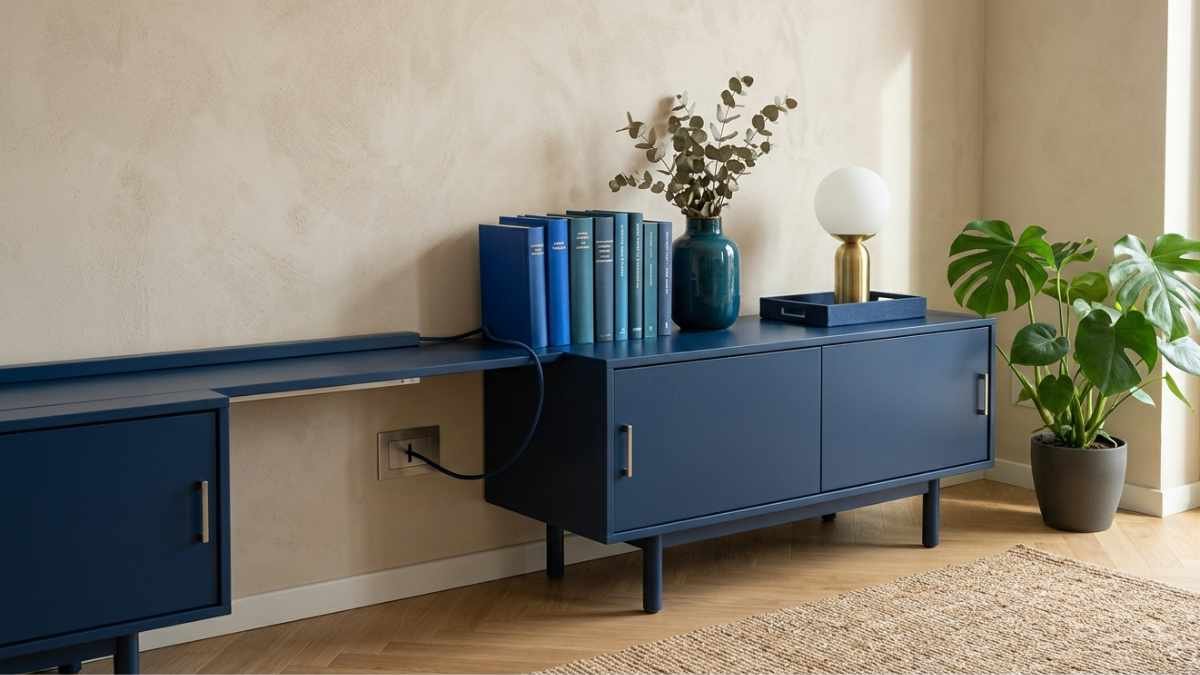

Blue is undoubtedly one of the most loved colors in interior design, yet it is often avoided because it is considered difficult or difficult to manage. Painting the walls takes time, a firm decision and, not infrequently, is faced with the fear of getting the wrong shade or quickly getting tired of the result. However, there is a much smarter and more flexible way to introduce this sophisticated color into domestic environments: introducing it through mobile elements and targeted details, without permanent interventions in structures.
The result is amazing because you get the same characterthe same depth and elegance of a painted wall, but with infinitely more freedom of action. This strategy allows you to test the effect of the color, adjust its intensity and easily change it over time, adapting it to the evolution of your taste or the seasons. Embracing the use of blue through furniture and accessories offers ultimate control over a home’s color palette, turning each addition into a conscious and sophisticated style statement.
Why Blue Always Works (Even in Small Doses)
Blue’s timeless appeal lies in its innate ability to evoke feelings of calm, serenity and relaxation, making it ideal for spaces dedicated to rest and peace. In addition to its psychological properties, blue is an extremely refined color, able to immediately highlight the aesthetics of any environment, from the most classic to the most modern. Its versatility is excellent and it can be combined extremely easily in neutral tones such as white, gray and beige, creating elegant and never banal contrasts.
In addition, it works beautifully in combination with natural materials such as wood, with the shine of metals and with the materiality of stone. Blue is one of the few colors that has the necessary power to be the absolute protagonist of a room, but at the same time knows how to subtly play the role of color accent, enriching the space without overwhelming it. This dual nature makes it a valuable tool in the hands of those who want to personalize their home with balance and good taste.
The blue sofa: the focal point that changes everything
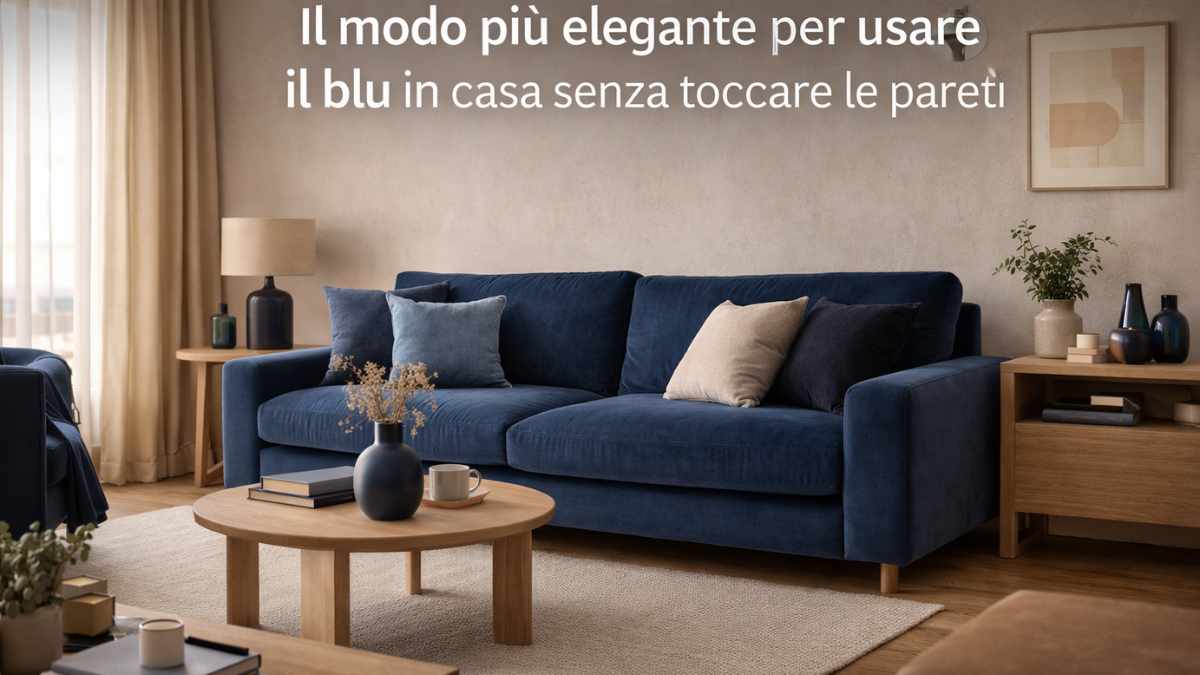
Introducing a statement piece of furniture is perhaps the most daring and effective way to use blue without touching the walls. A sofa in a deep shade such as petrol or classic navy immediately becomes the undisputed focal point of the living room. When the rest of the room is kept in neutral tones, the visual impact is strong and dramatic.
The environment looks straight out of an interior design magazineeven if the other furniture is simple and necessary. In terms of materials, opaque fabrics give a modern and sober look, while velvet is the ideal choice for those looking for a more “rich”, tactile and luxurious effect, able to capture the light and create exciting shades. A blue sofa is not just a seat, but a real statement of intent that gives personality and depth to the entire living room.
Textiles: the simplest (and most underrated) way
Using fabrics represents the most accessible, versatile and often underrated approach to decorating with blue. Cushions, curtains, throws and rugs offer endless customization possibilities and can be replaced very easily. Through fabrics, the intensity of blue can be modulated with great precision, adapting it to different areas of the home and personal preferences.
Focus on a mix of different shades rather than limiting yourself A single layer of blue is a critical aspect to get an elegant result. Pairing navy velvet cushions with powder blue linen throws and a rug that fades from cobalt to gray creates a rich and vibrant color layering, giving depth and dynamism to the environment. Blue curtains, especially if they are made of light and natural fabrics, filter the light in an evocative way, gently coloring the atmosphere of the room.
Kitchen: small details, big impact
Even in a functional environment like the kitchen, blue can be successfully introduced through targeted details that do not require structural changes. Blue chairs or stools around the table or center island create a pleasant visual contrast and define the dining room in style. Exposed appliances, such as a blender or toaster in a vibrant shade of blue, add an unexpected pop of color.
Coordinating accessories such as tea towels, pots, vases and flatware displayed on open shelves help create a cohesive color narrative. Blue in the kitchen works divinely in combination with wood light, which reduces its coldness, with the cleanliness of white and the modern steel of the appliances and workbenches, creating a fresh, welcoming environment full of character.
Bathroom: the blue that always looks more elegant
The bathroom is the ideal environment to push the use of blue, a color that is eminently reminiscent of the element of water and cleanliness. Placing towels, bathrobes and bath rugs in various shades of petrol blue or navy instantly transforms the space, giving it a more sophisticated and luxurious look. The environment immediately becomes more elegant and relaxing with a spa effect direct and sought after.
Coordinating soap and shower gel bottles, toothbrush holders and other accessories in ceramic or blue glass complete the look, eliminating the visual clutter of commercial packaging. Even a simple set of blue towels folded neatly on a shelf or hung neatly can make a big difference, enhancing the bathroom’s aesthetic without requiring construction work.
Objects and furniture: the “scattered” blue that creates balance
An approach much loved by designers is to use blue in a ‘scattered’ way through small objects and furnishing accessories to create balance and visual rhythm within the room. Polished ceramic vases, table lamps with blue bases, paintings with blue as the protagonist, picture frames, and even books with blue covers strategically placed on shelves and tables contribute to the harmonious spread of color in the space.
The trick is to repeat the color in different parts of the environmentcreating visual references that guide the eye and give coherence to the whole. This technique allows you to subtly introduce blue, adapting it to even the smallest spaces, and create a dynamic and personal decorative composition.
The combinations that work best
To further raise the level of design, it is necessary to pay attention to color combinations. Blue is a color that loves contrasts and harmonies, and certain combinations guarantee particularly elegant and modern results. The combination of blue and beige creates a warm atmospherecozy and modern, perfect for the living room or bedroom. Classic blue and white is synonymous with cleanliness, freshness and a renewed nautical style, ideal for bathrooms and kitchens.
The union of blue and wood enhances materiality and naturalness, giving an organic and relaxing touch to the rooms. Finally, the combination of blue and black is the most sophisticated and bold choice, capable of creating dramatic, deep spaces with great visual impact, suitable for those who are not afraid of dark shades and want a decidedly chic look.
Mistakes to avoid
Despite its versatility, decorating with blue without touching the walls hides some pitfalls that you should be aware of to avoid disappointing results. A common mistake is to use a single flat and uniform blue for all elements, a choice that risks flattening the environment and making it monotonous. It is always better to focus on a palette of shaded blues and different textures.
Another frequent mistake is not repeating the color in the space perhaps introducing a single blue pillow into a completely neutral room: the result will be that of a foreign element without a frame. Combining blue with the wrong colors, such as oversaturated or muddy hues, can reduce its brightness. Finally, exceeding the number of blue elements can overload the environment, turning an elegant accent into an intrusive and suffocating presence. Balance and thoughtfulness are the keys to flawless and sophisticated use of blue in your home.



