


In outdoor furniture showrooms the light is always perfect, diffused, the same in every corner. No display case replicates what actually happens to a pillow left for three months on a south-facing porch, with the sun beating down from eleven to four and the surface of the fabric reaching temperatures well over forty degrees. In this leap between the showroom and the actual balcony, many people discover, with some dismay, that the sofa bought for its weight in gold turns a dull gray after the first summer.
The problem isn’t the rain, it isn’t the humidity, it isn’t even the blustery wind that carries the salt straight inland. The real test for outdoor furniture in the Mediterranean is direct sunlight, which in the central summer months hits with an intensity that simply doesn’t exist in Northern Europe, where much of this furniture is designed and tested.
What happens chemically under a bright sun
UV rays don’t just heat the surface of a material, they break its molecular bonds. In synthetic polymers this translates into progressive breaking of the chemical chains that hold the color and structure together, a process technicians call photodegradation and which is manifested first by the opacity of the surface, then by the fading of the color, and finally by a brittleness which makes the material brittle to the touch. Low-end polyrattan, which at first contact appears as thick and durable as quality rattan, betrays this weakness in the very first months of direct exposure, losing its elasticity to the point of breaking under minimal pressure.
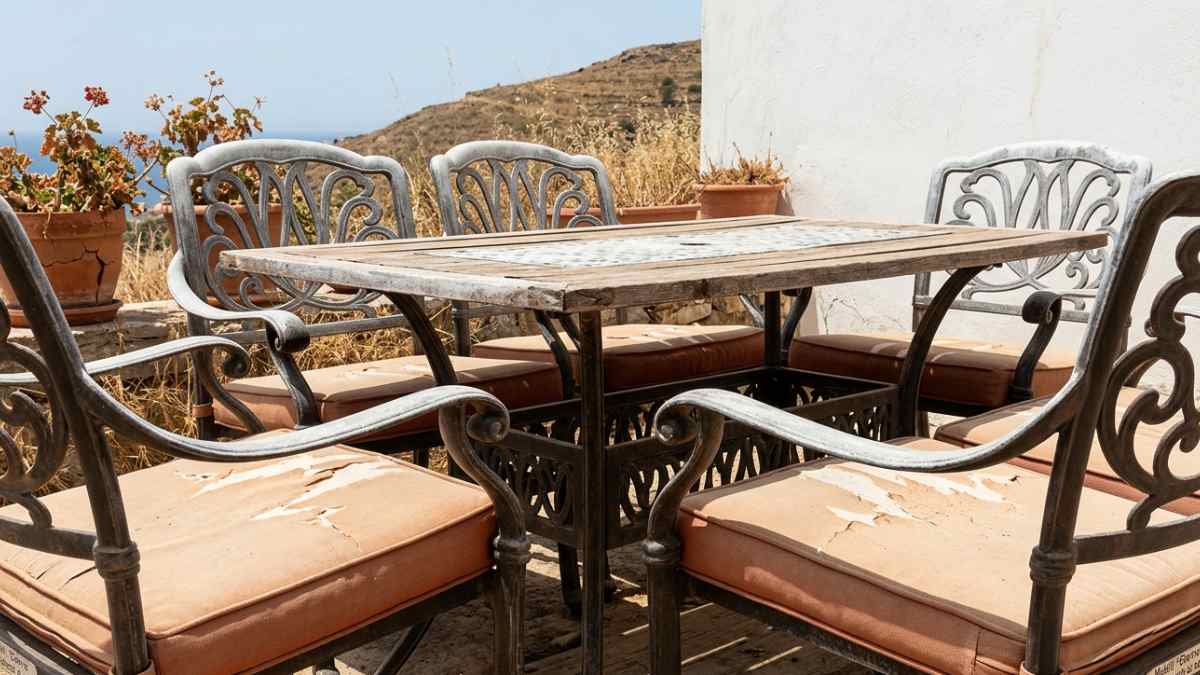
The sector has a precise tool to measure this resistance before the furniture even reaches the store: the xenotest, regulated by the European standard EN 15187, which simulates accelerated aging using xenon lamps capable of reproducing the entire solar spectrum. A material truly intended for the Mediterranean should pass hundreds of hours of this test without significant color variation, not the minimal twenty hours that are sufficient to pass the most basic checks.
You can’t tell the difference until you touch it
The technical turning point, when choosing resin or polyethylene furniture, is to verify that it is a material colored in mass and not simply painted on the surface. In the first case the pigment is mixed with the polymer before extrusion and forms part of the material structure at every internal point. In the second case, a scratch, or months of abrasion from the sand-laden wind, is enough to re-emerge the rough paint under the paint.
Brands like Dedonwhich has developed a proprietary UV-resistant fiber that has been specifically tested for tropical and Mediterranean climates, or Vondomwhich produces furniture from colored rotomolded polyethylene with UV stabilizers built into the mix, offer a specific guarantee against this type of degradation. It’s not a detail for material experts: it’s the difference between a piece of furniture that ages evenly over ten years and one that stains in patches from the first summer.
The fabric that does not fade because the color is in the thread
On cushions and seats the conversation is repeated with similar logic. Common polyester, while water-repellent, has limited resistance to direct exposure and tends to lose color saturation over the course of a vigorous season or two. The technology that really solves the problem is hissolution painted acrylicin which the dye is introduced while the fiber is still in a liquid state, before spinning: the color penetrates the heart of the yarn instead of being deposited only on the outer surface.
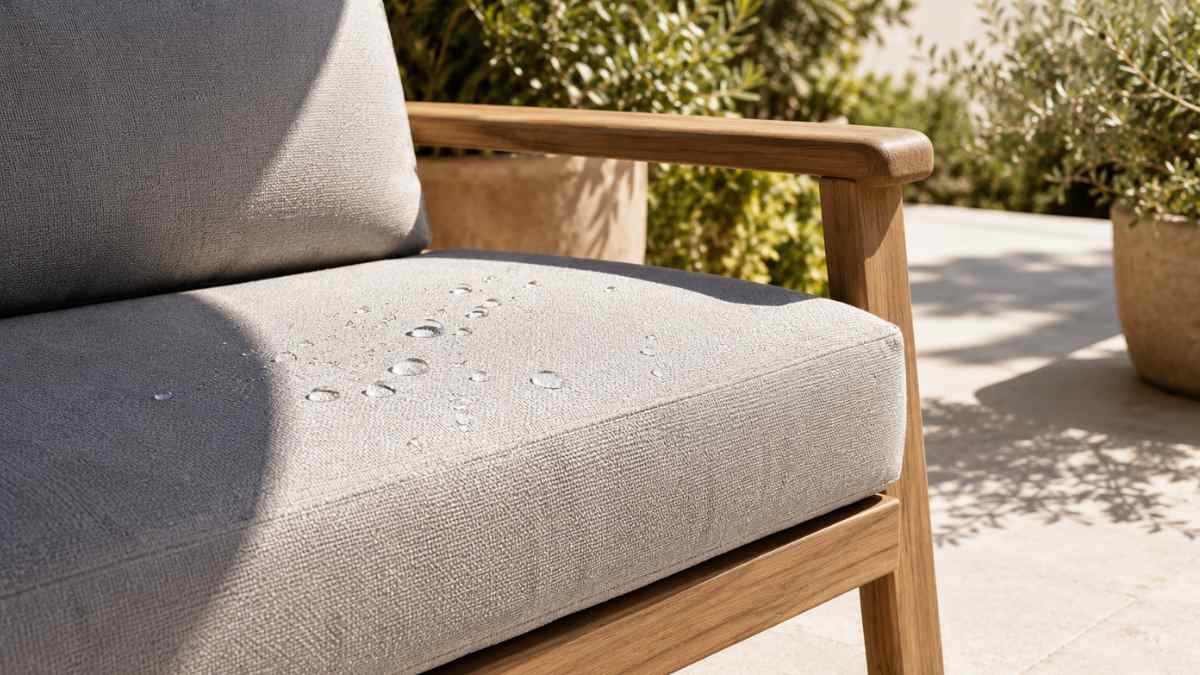
Sunbrella remains the technical reference for this fabric category, with collections tested to maintain color saturation even after thousands of hours of direct sun exposure, while Race incorporates these threads into the lines of the outdoor cushion by combining them with quick-draining foams designed to not retain water after a temporary summer shower.
Metal and wood follow different, but equally strict rules
Those who prefer metal must contend with two distinct variables: rust resistance and heat build-up management. An epoxy powder coating, such as the one that Fermob Applied to your steel seats, it provides a solid barrier against oxidation, but in high-radiation areas the choice of color is almost as important as the quality of the paint: light-colored finishes repel heat, while dark ones can reach temperatures that are not comfortable to the touch as early as mid-morning.
In wood, first-choice teak remains the most reliable material thanks to the high content of natural oils that make it waterproof without additional treatments. Wheelwhich specializes in teak outdoor furniture from its factory in the Marche region, lets the wood naturally develop its silver gray patina in the sun, an aesthetic change that in no way compromises the furniture’s structural robustness, unlike cheaper materials such as acacia, which without regular maintenance tends to crack within a few years.
The right question to ask before you buy
The most concrete way not to be fooled by the showroom appearance is to ask the seller directly if the material has passed UV resistance tests certified according to the EN 15187 standard and for how many hours. A vague answer or the complete absence of this data in the data sheet is already information in itself: means that the manufacturer has not tested the product for climates like those of southern Italy, Greece or southern Spain, but for markets with much less aggressive radiation.
A south-facing terrace is unforgiving technical shortcuts, but rewards those who know how to recognize them before buying. The difference between a piece of furniture that looks new in the tenth summer and a piece of furniture that fades with the first one is not seen by picking up the armchair in the store: it is seen in the technical data sheet, in that often overlooked line that talks about pigments, resins and simulated exposure hours.



