


Starting with vehicles that became symbols of Italian design, in its 95 years of activity, Pininfarina has gradually expanded its design language far beyond the automotive sector. It entered the nautical world as early as the 1970s and 1980s when shipowners first commissioned the studio to design new vessels. Today, its portfolio ranges from small tenders and three-meter boats to large 90-meter yachts, including motor and sailing yachts.
Similarly to product design and architecture, Pininfarina adopts a 360-degree approach, representing a natural evolution of its design journey, based on the study of lines, efficiency and design. One of the first iconic works created in this field was Atibuilt by Fincantieri in 1991, which set the world record for the fastest motor crossing of the Atlantic Ocean – a record that remains unbeaten to this day.
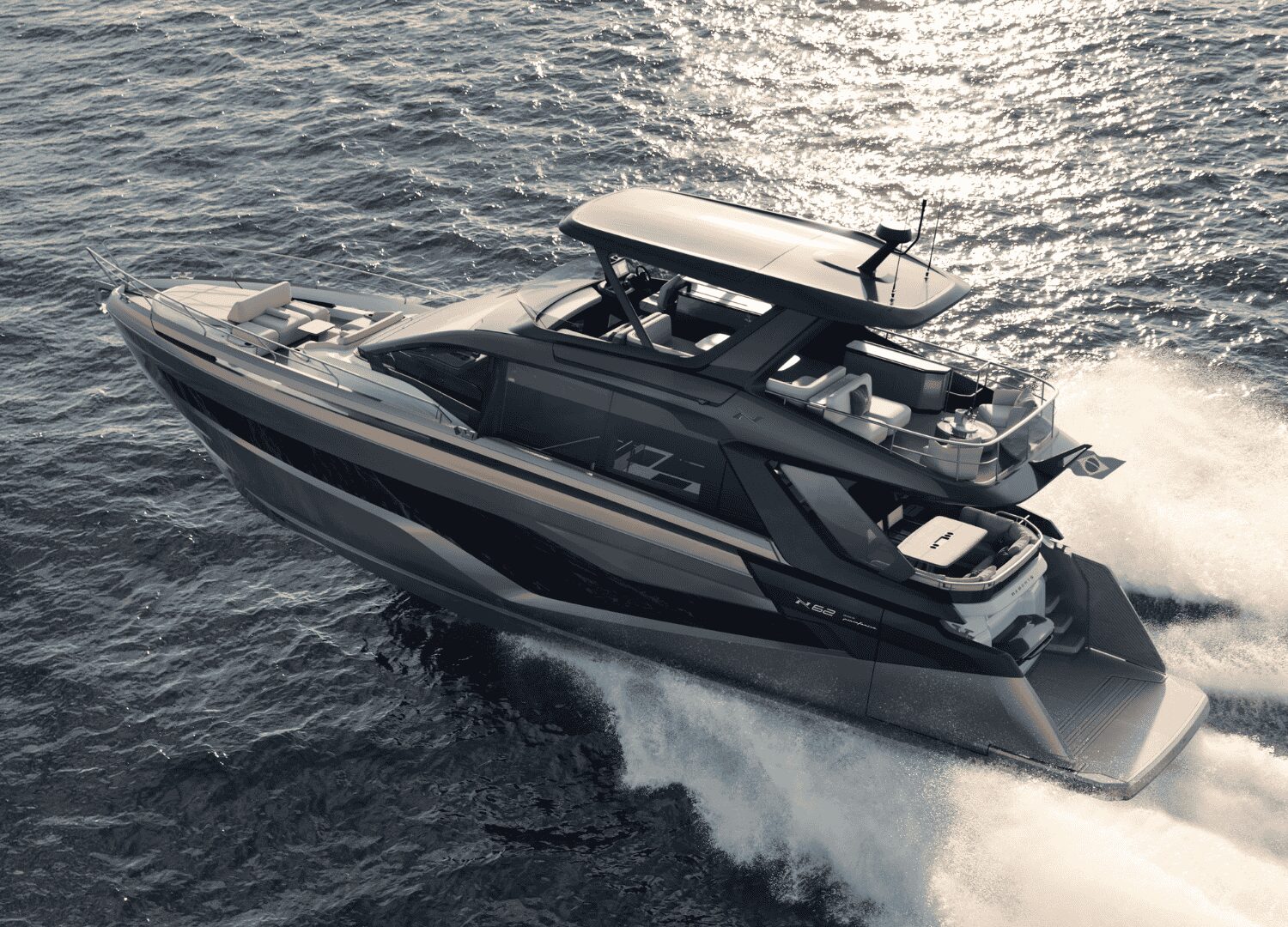
NX62 © Pininfarina
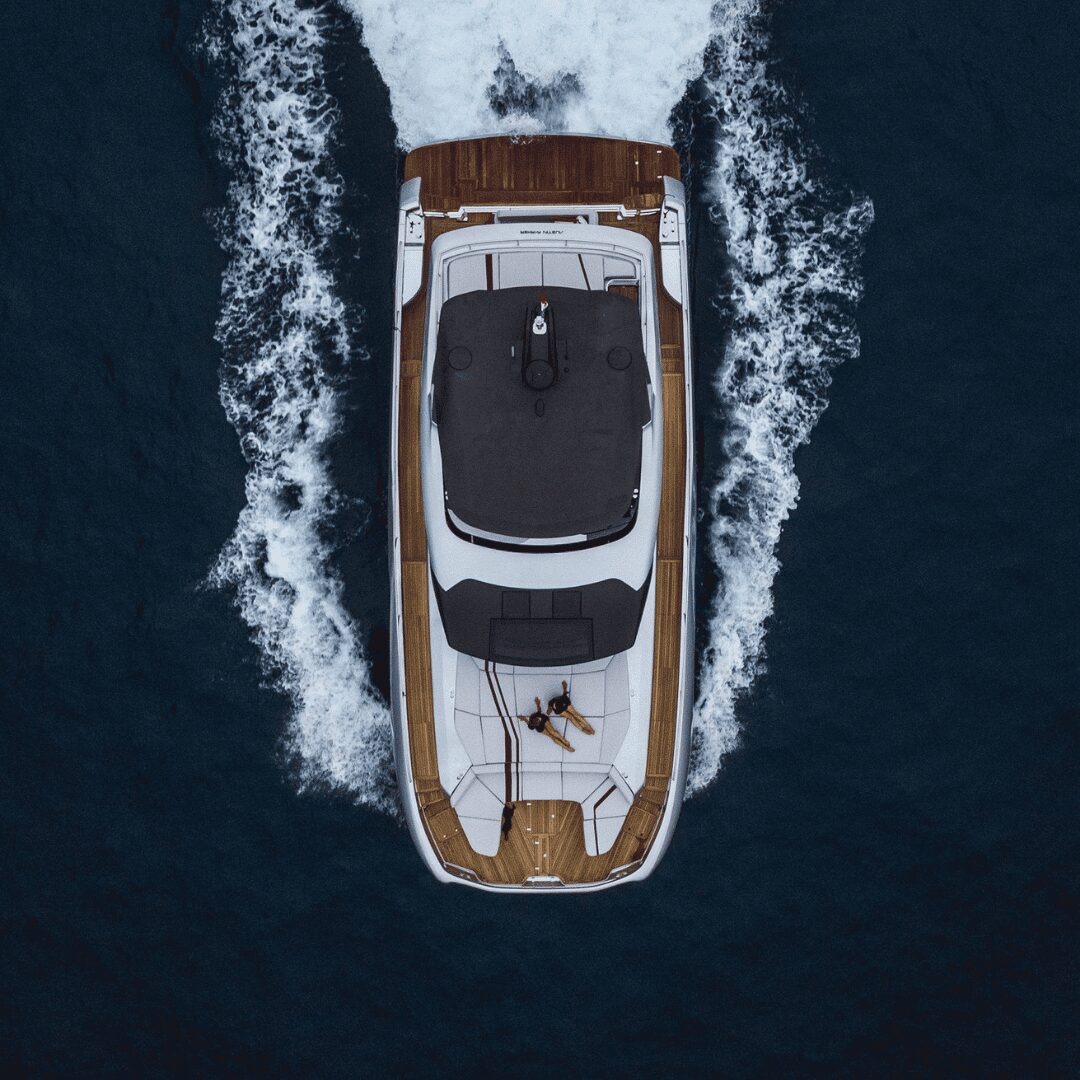
Austin Parker Unica 58 © Pininfarina
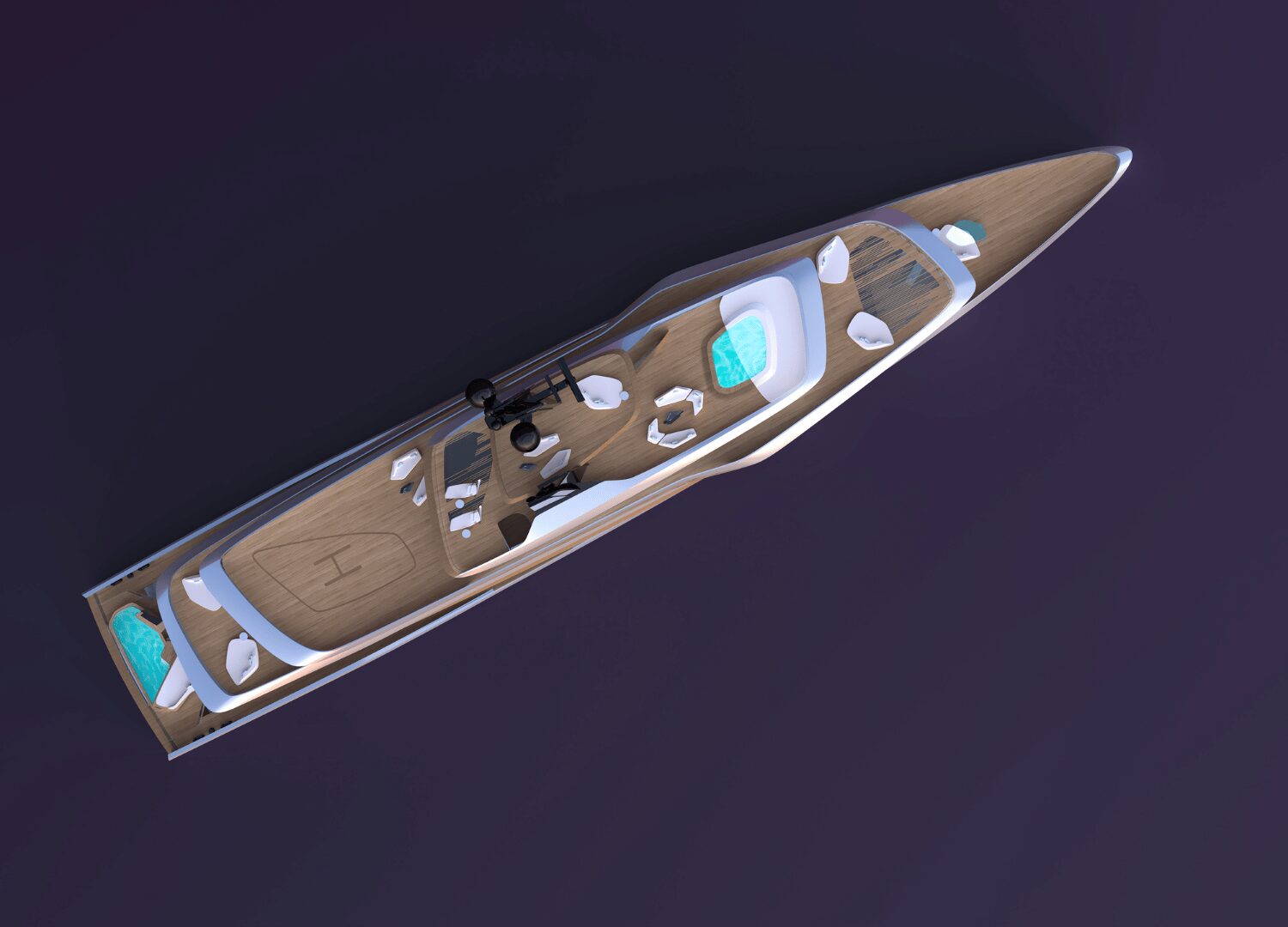
Cairo 80 © Oceanco
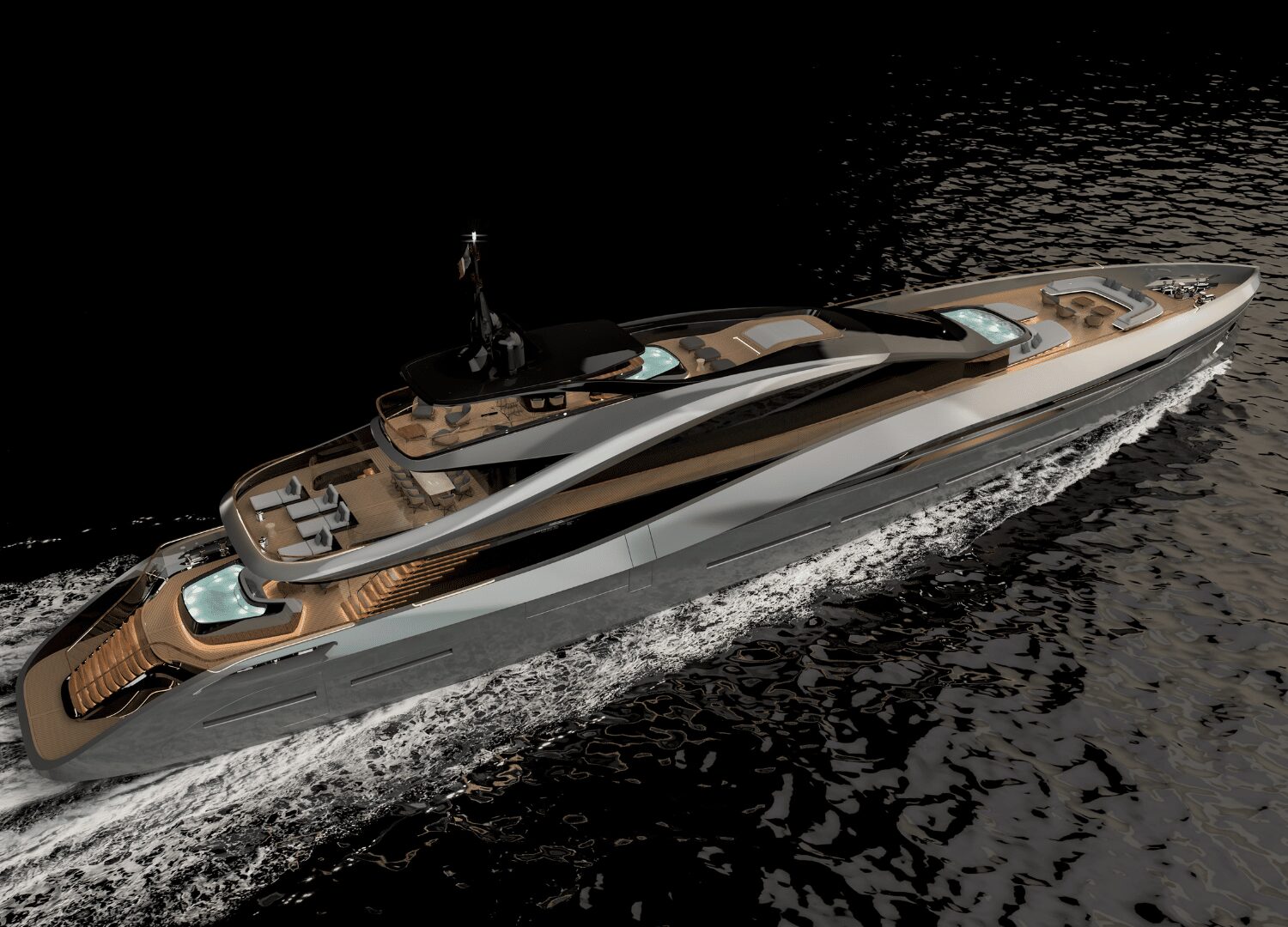
Super Sport 65 © Rossinavi
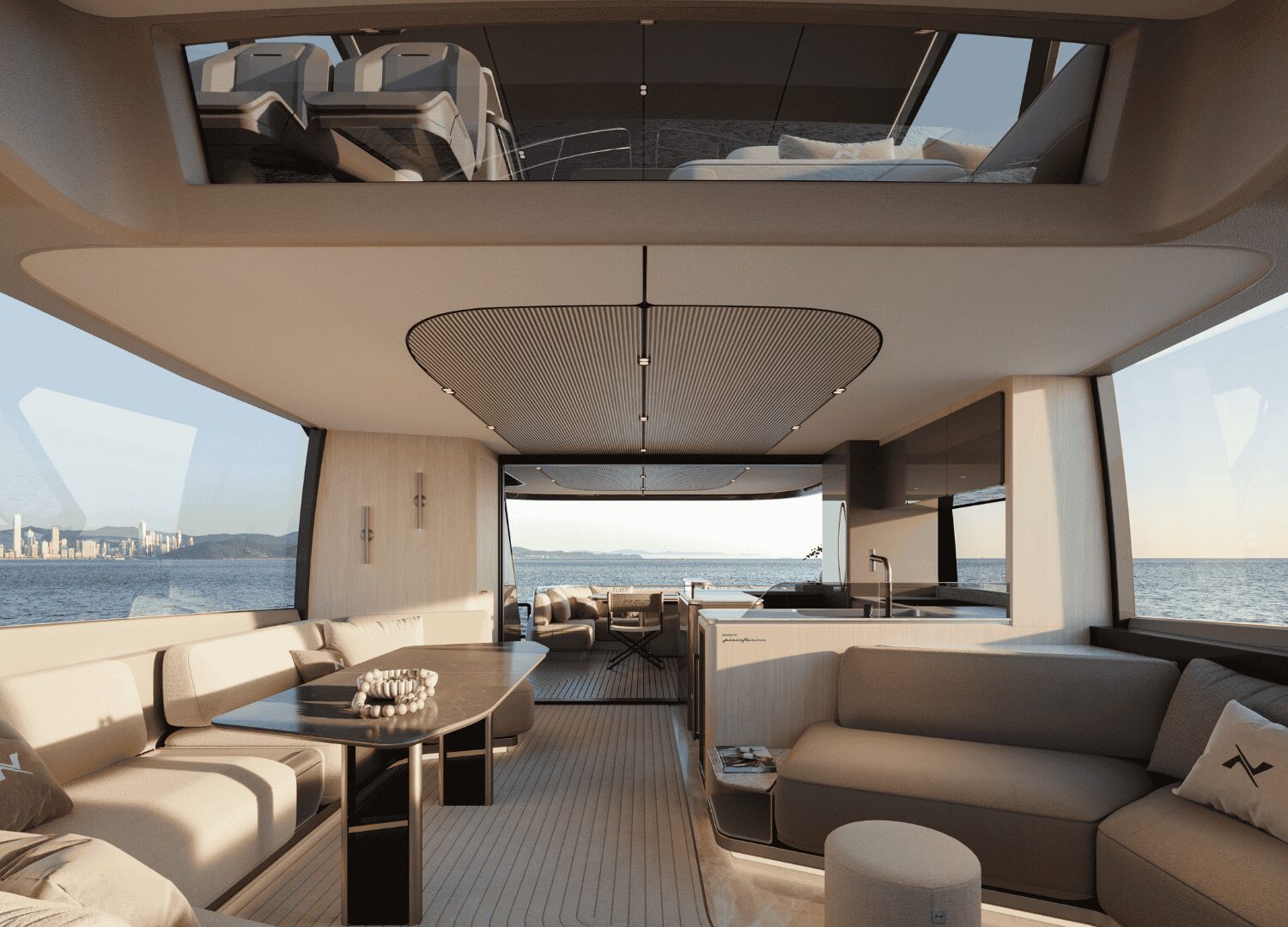
NX62 © Pininfarina
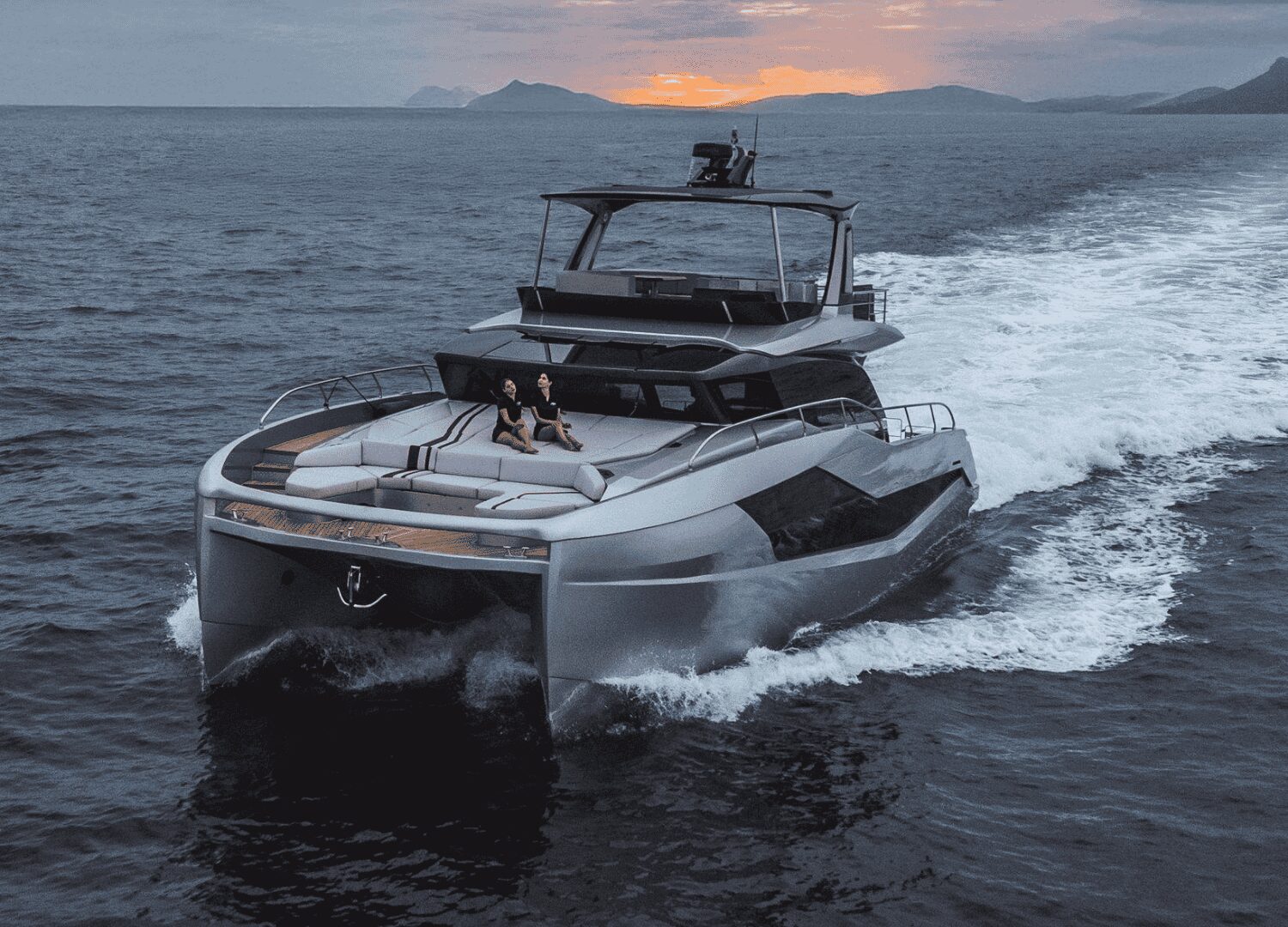
Austin Parker Unica 58 © Pininfarina
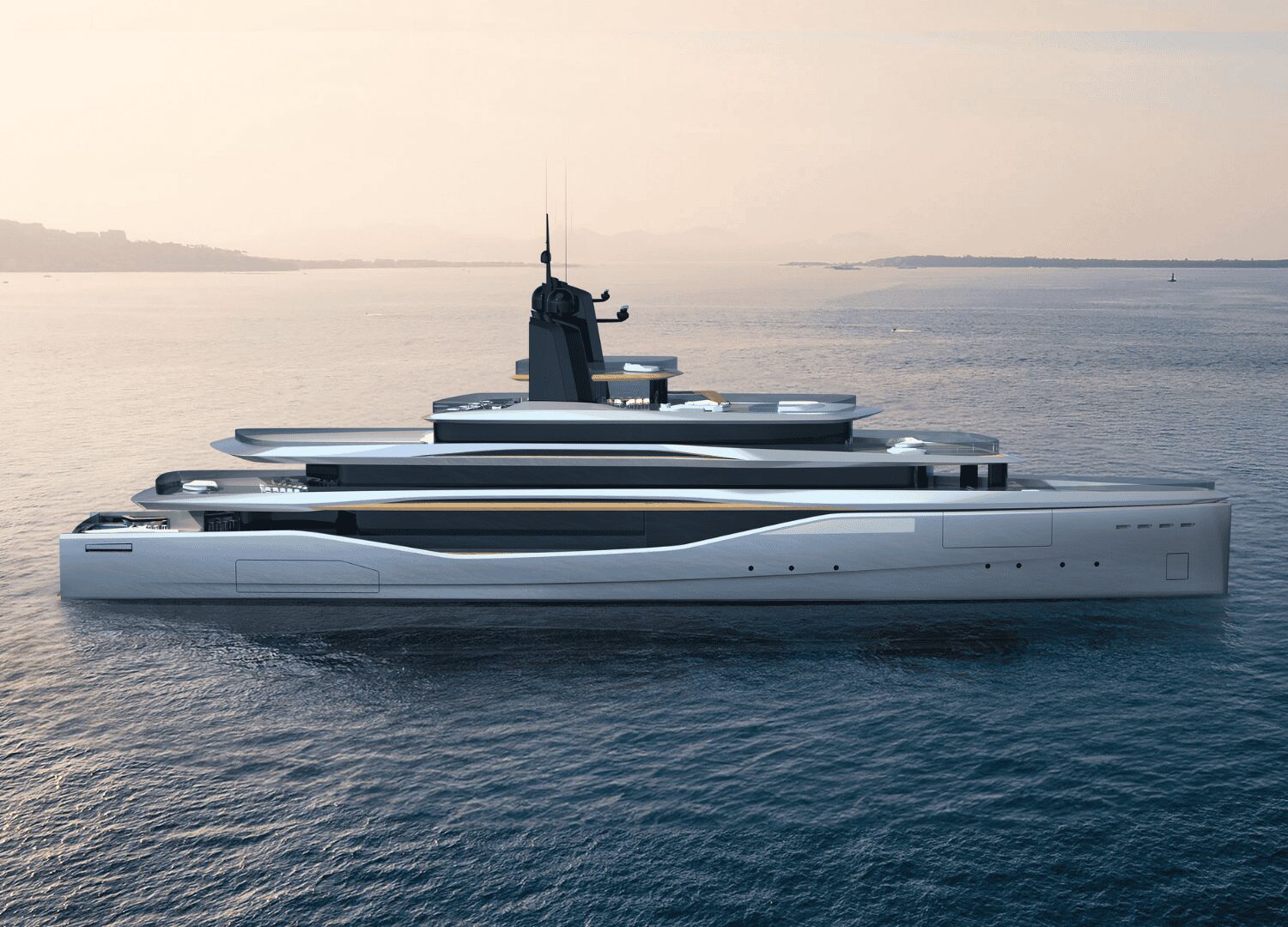
Cairo 80 © Oceanco
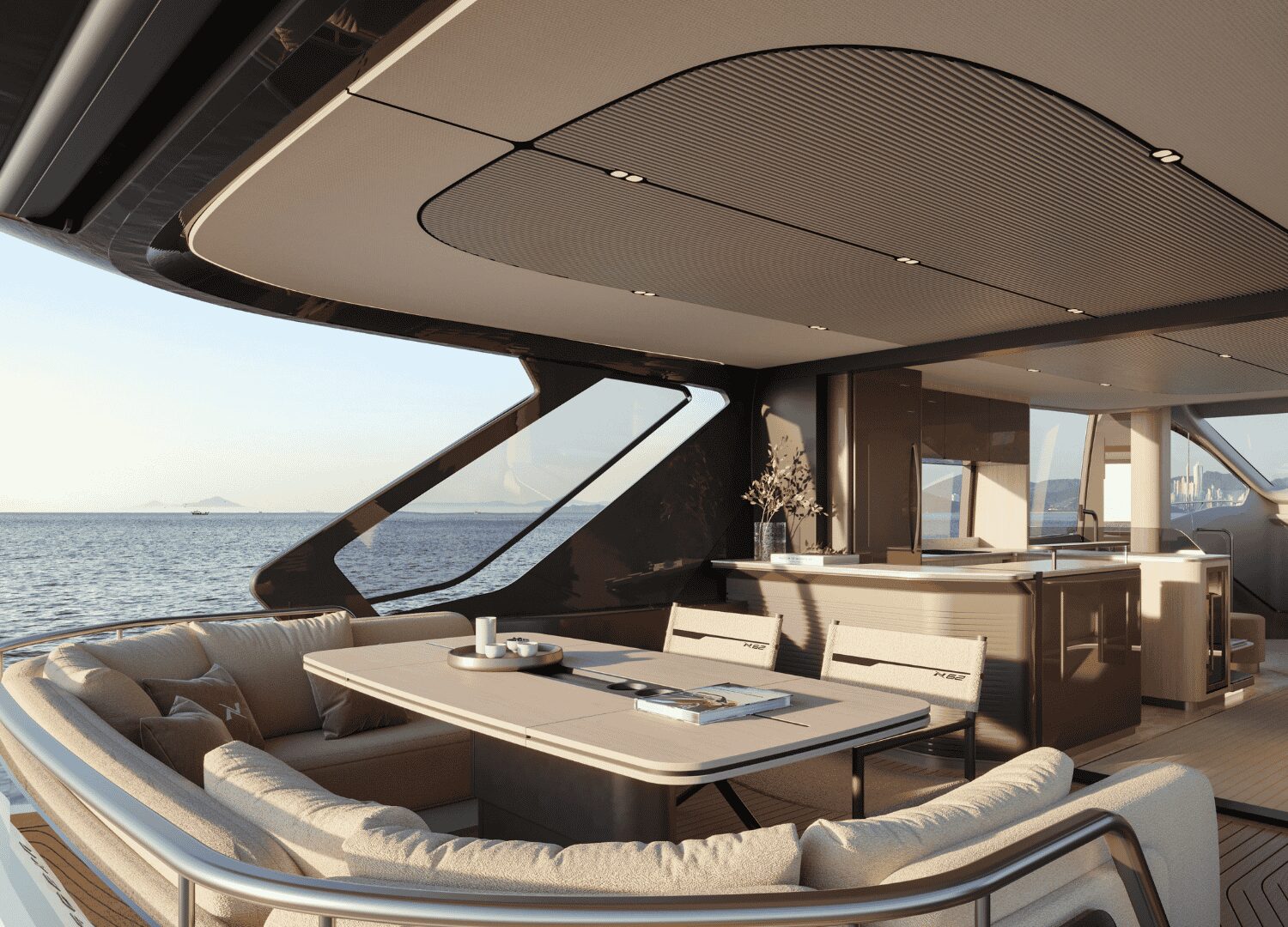
NX62 © Pininfarina
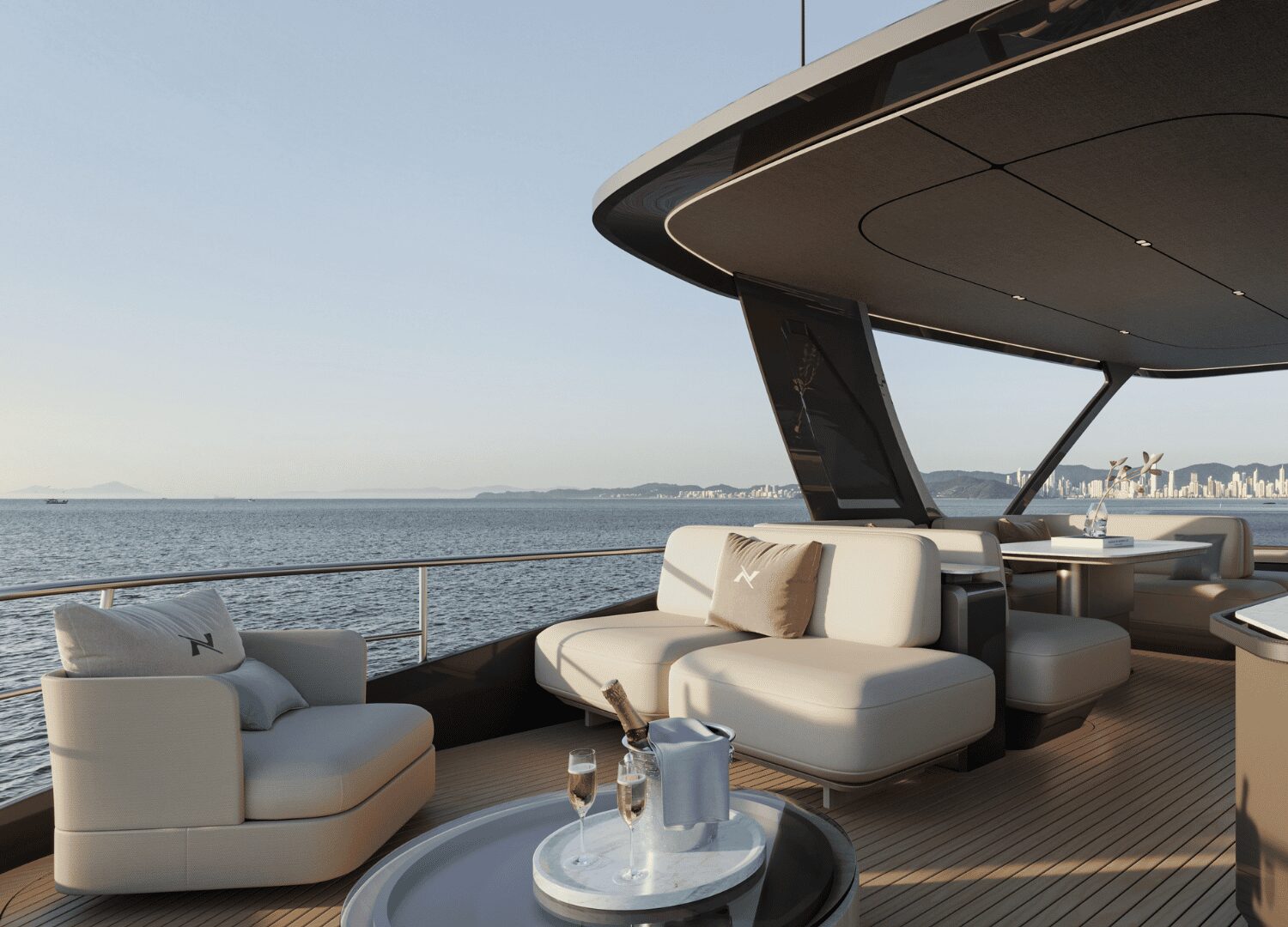
NX62 © Pininfarina
Pininfarina’s signature in the marine sector:
Method and cross-pollination
As a vessel is an object that naturally includes multiple disciplines, Pininfarina builds on its in-house teams by creating a dedicated team of yacht designers supported by architects, interior designers and automotive designers. This working method follows one of the core principles of the studio: cross-pollination, i.e. the ability of professionals from different disciplines to work together to create innovative projects.
Pininfarina’s work covers every stage of the design process, from concept development to production support. The process usually starts with the General Layout – the functional layout developed together with the shipbuilders – before proceeding to the allocation of spaces, from which the volumes, deck heights and finally the outer shell of the yacht are developed. The interior and the exterior are designed almost simultaneously, in a continuous dialogue: any modification made to the exterior inevitably affects the interior spaces and vice versa, in an iterative process very similar to that of architecture.
This approach is adapted each time depending on the type of supply, whether it is serial production, custom or semi-custom projects.
“Whenever possible, Pininfarina prefers to develop both the exterior and the interior to ensure a consistent design language throughout the yacht. However, depending on the shipyard’s or owner’s requests, the studio also works exclusively on specific areas of the project.” explains the team.
Another type of work with the studio is repositioning. In this case, the yacht has not been designed from scratch, but updated and modernized while already in operation – for example by completely redesigning the interiors.
Where automotive and yachting meet: the hull lines
Once the layout is determined, the team develops the exterior volume that encloses the interior spaces, working on the overall proportions, surfaces, lines and character of the yacht. This is the stage where Pininfarina’s automotive heritage becomes more apparent: the sensitivity developed through automotive design leads the studio to pay extraordinary attention to the quality of surfaces and the way they interact with light.
Even seemingly small details are studied with extreme precision, because a curve in the digital model can become a line that stretches tens of meters on the real yacht. The studio’s goal is to create surfaces that work equally well both up close and in the overall perception of the yacht at sea.
This methodology can be appreciated in several semi-custom mega yachts designed by Pininfarina, such as Kairos 80 for Oceanco. Here, the studio sought to create an open and comfortable interior for the owner and guests, while shaping the exterior to evoke an oasis of calm and relaxation – every line contributing to the harmony and balance that define Pininfarina’s design language.
Innovation in the marine sector
In terms of innovation, alongside new technologies and artificial intelligence being used to improve the user experience – from home automation systems to connected monitoring devices – new low-impact environmental solutions are also increasingly prevalent, from hydrogen injection to supporting mega yacht propulsion systems to waste recycling systems.
In terms of materials, the studio conducts extensive research into more environmentally friendly interiors, working with companies across Europe that offer proven and traceable solutions – two qualities that are also highly valued by end customers. An example of this new approach is the use of cork panels instead of teak for interior floors.
Materials also affect another important aspect: the higher energy consumption of a yacht is linked to its weight. For this reason, the goal is to create lighter boats without compromising stability. To reduce fuel consumption, the studio increasingly relies on carbon fiber composites, lightweight sandwich panels and aluminum alloys.
These design decisions are also reflected in the production process, as evidenced by the three Super Sport 50, 60 and 65 models developed by Pininfarina in collaboration with Rossinavi. “With fibreglass, you can create shapes that are then produced using moulds, allowing greater design freedom. When you work instead with cut and welded metal sheets, each formal decision requires a different level of attention: the design must take into account the real feasibility of the shapes from the start, ensuring that each solution can actually be manufactured.” explains the team.
The multicultural nature of the industry
An interesting aspect of Pininfarina’s international experience in the marine industry is that a yacht’s primary function – and therefore its design – varies according to the region of the world for which it is intended. In Europe, yachts are generally associated with relaxation and elegance, designed to enjoy scenery and anchor in the quiet bays of the Mediterranean. In America, by contrast, yachts are seen as social spaces for larger groups and are expected to offer entertainment, generous outdoor spaces, swimming pools, and even barbecue and outdoor cooking facilities.
These cultural differences directly affect the design process: the layout, spatial organization and exterior architecture evolve according to how the owners actually use their yachts. An example of this approach is the NX62 Flybridgedesigned for the Brazilian shipyard NX Boats. For this project, the client requested numerous features, particularly in the stern area – the part of the yacht that is used most often – such as a crew cabin, folding side platforms, a 12-seat sofa area and a main saloon designed to make full use of the yacht’s entire beam.
The future of yachting
With its experience, Pininfarina believes that its ability to encourage interdisciplinary collaboration will continue to be its greatest contribution not only to the marine sector but to each individual project. Working simultaneously across different scales and disciplines – including automotive, architecture, product design, interior design and emerging technologies – allows the studio to identify innovations and then transfer them to the world of yachting.
This ability has become the true hallmark of Pininfarina and represents the key through which the group envisions the future of the marine sector: one that is increasingly open, interdisciplinary and driven by the exchange of ideas across different sectors.



