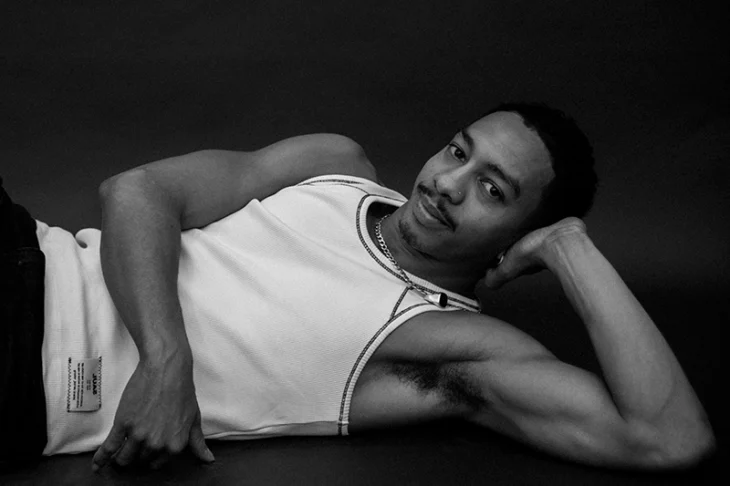
Saul Nash he builds his work through movement, using the body as both a starting point and a testing ground. Raised in North East London, he draws from a multi-layered cultural background and early experience in dance to shape a design language that moves between performance and technical menswear. Since launching his label in 2018, Nash has focused on clothing that responds to movement, resisting fixed ideas of sportswear while making room for fluid expression and identity.
In this conversation about DSCENEChief editor Zarko Davinic talks to Nash about the relationship between movement and construction, the role of personal narrative in shaping a brand, and the pressures of building an independent label today. The discussion moves through his training at Central Saint Martins and the Royal College of Art, his approach to performance as presentation and the balance between creative control and development in a system that requires continuous performance.
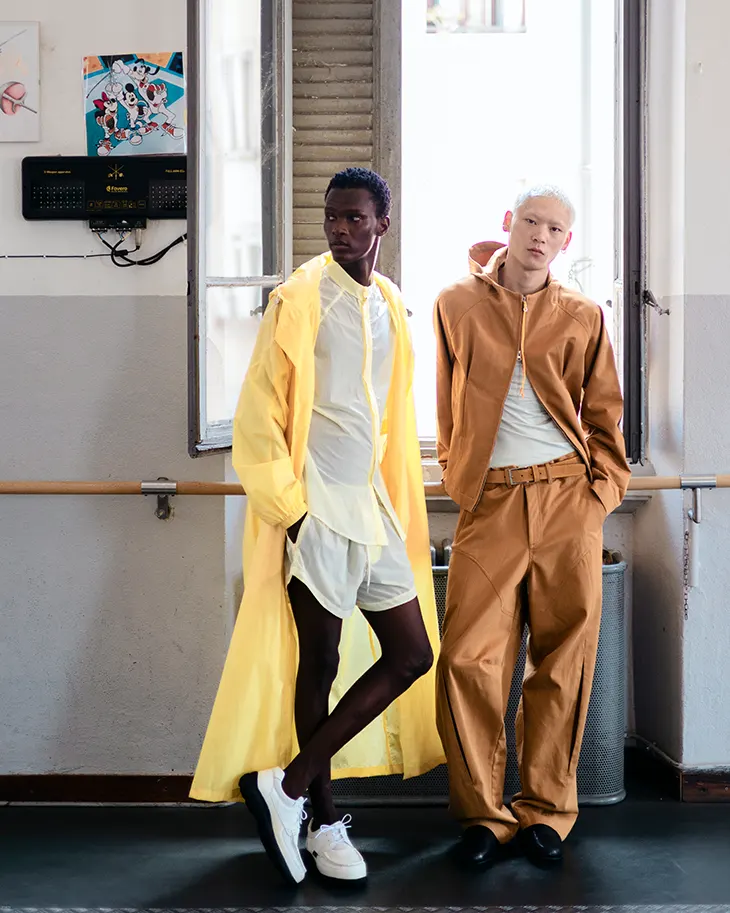
You grew up in North East London, with a multicultural background that includes Guyanese, Barbadian, Indo-Mauritian and English heritage. What parts of that upbringing are still within the brand today, visually, emotionally and culturally? – I think all of this has really shaped me and my work reflects the experience of navigating these identities within Europe. My work has always been about identity, looking at my own experiences while also extending outward to others who resonate with what we create. I can only tell my story and the brand has given me space to do that.
I can only tell my story and the brand has given me space to do that.
Before fashion, movement came first. When did you realize that dance wasn’t just an influence, but the actual design logic behind your clothes? – It came from my own interest in clothes and how I wanted to feel when I wore them. I’ve always been interested in clothes and how they move, but venturing into design gave me the space to explore it more deeply through cut and construction.
You studied at Central Saint Martins and then completed an MA in Menswear at the Royal College of Art. What did each institution give you and what did you have to unlearn to create a label that feels so personal? – I think I’ve always been someone who overthinks everything. Central Saint Martins taught me the concepts of world-building and storytelling, while the Royal College of Art gave me the space to be authentically myself and explore how this could manifest itself through design and craftsmanship. Because RCA was a graduate school, I started with the mindset of combining fashion and performance, but it was during this period of exploration that I really understood what that meant to me.
Being clear about what I want to say should come first.
Launched in 2018, the brand has quickly become known for technical menswear that defies traditional athletic codes. What was the earliest track or collection where you felt, this is the language, this is Saul Nash? – I would say it was during Fashion East. My early work with zippers was really about creating space for release within clothing. The hours of research, testing and testing that went into these past collections really set the blueprint for what our collections are today.
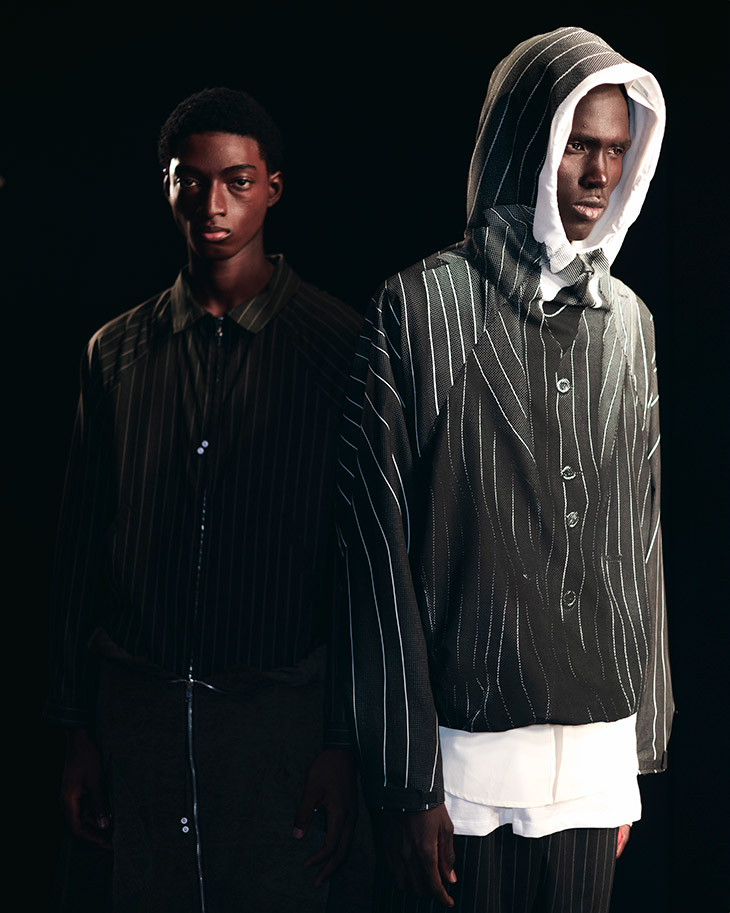
Your work often lies between sportswear and tailoring, with clothes designed for real movement. When you design, what comes first, the function, the silhouette, or the story you want the body to tell? – I would say it is a combination of all these things. Being clear about what I want to say should come first. This then stimulates the ideas that follow and becomes a vehicle through which movement and function can be expressed. I also believe that hardware is everything. The tactile feel of fabric really helps me visualize how I want a garment to move.
As a queer person, I have always wanted to create works that encourage all forms of expression.
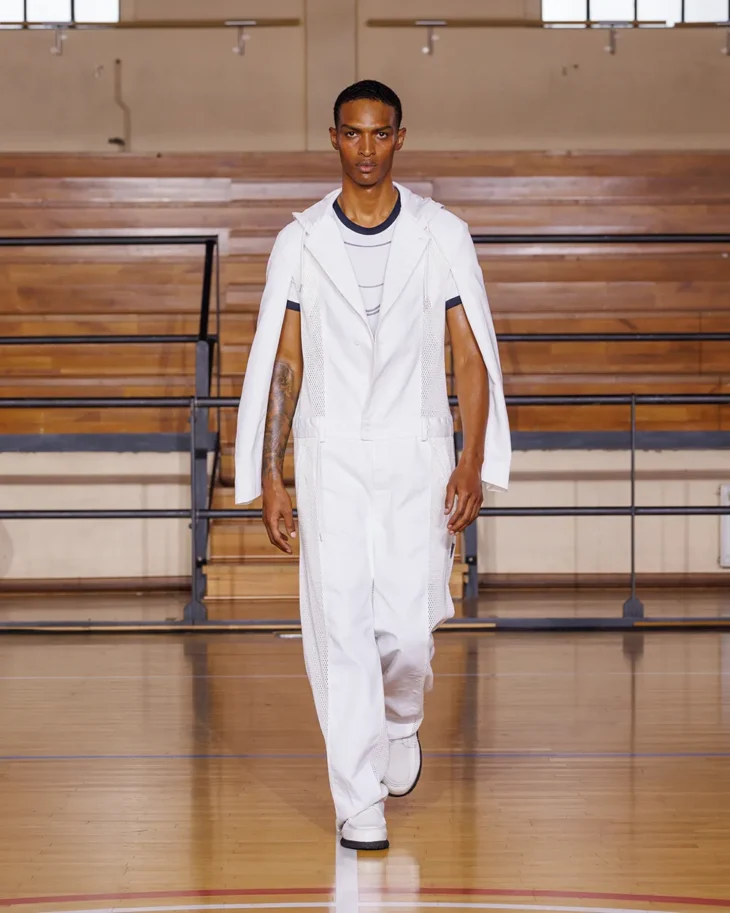
You’ve consistently made room for queer expression in your work, and your Milan Spring Summer 2026 show felt particularly focused on the relationship between gay men, the stereotypes placed on them, and that particular feeling of loneliness that can exist beneath visibility. What did you want the audience to understand in that moment and how did you translate that emotional intensity into clothes and movement? – I think my work has always provided a spectrum within which the people who wear it can find themselves. As a queer person, I have always wanted to create works that encourage all forms of expression. In spring 2026, the collection really explored the tensions and ambiguity within the embrace, the tension between the platonic and the romantic.
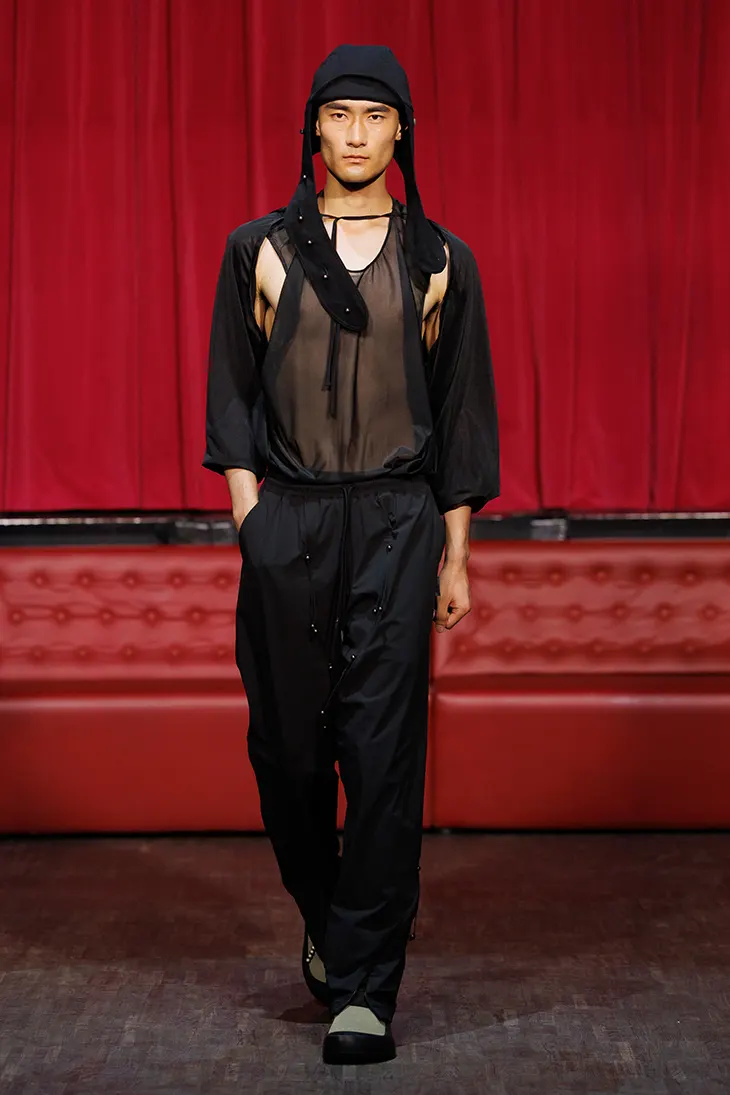
Just like the Milan show, your presentations often use performance and choreography rather than a conventional catwalk. What does rendering allow you to communicate that a standard runway format cannot? – The clothes are designed and created for movement, and I think it’s important to reflect that in the way the project is communicated. Performance becomes essential to show the way the garment is envisioned to be worn.
Material is everything. The tactile feel of fabric really helps me visualize how I want a garment to move.
You have received significant recognition, including the International Woolmark Award and the Queen Elizabeth II Award for British Design. How has this level of exposure changed your daily life as a designer and as a person? – I think I’m learning the importance of celebrating every victory. The great thing about these awards was that they provided a platform and space to further develop my practice, which was incredible for me. When it comes to pressure, I’ve always found it important not to let it get the best of me, because I think it’s important to stay authentic in my work and make the best decisions without feeling pressured to do things for others.
Moving to the business side, you are building an independent UK label in a market that can be unforgiving. Where does the pressure show most: funding, production, retail requirements, or the constant need to deliver something “new”? – I think the business is constantly evolving. As old opportunities close, new ones begin to arise, so I truly believe that to run a business you have to be adaptable. Business is all about trial and error, some things work and some don’t. I found that the way we adapted to it enabled us to keep moving forward. I am very grateful to be doing something that I want to do with my life.
It sounds easier said than done, but for me, my peace of mind is non-negotiable.
When the pressure mounts through deadlines, budgets, expectations and public scrutiny, what are your non-negotiables, creative and ethical, and what have you learned about protecting them as you continue to grow the brand? – It is important to remain calm. It sounds easier said than done, but for me my peace of mind is non-negotiable, so I encourage myself and my team to stay calm and methodically work through things instead of panicking, because fashion is hard enough without added stress. I also need to be able to go out and be inspired, so I try to make time for that. Without inspiration and experience, our work means nothing.