


Interior designers often use their studios as opportunities to express their fully formed aesthetic. Pat Austin has a point—it just didn’t come together at once. Instead of rushing to complete its Portland office, founders Candace Cohu and Ally Hasche spent the last three years allowing it to evolve naturally, testing ideas, collecting vintage pieces and fine-tuning the details as the practice itself grew.
This slower pace has resulted in a workspace that feels less like a static showroom and more like an extension of the studio’s design process.
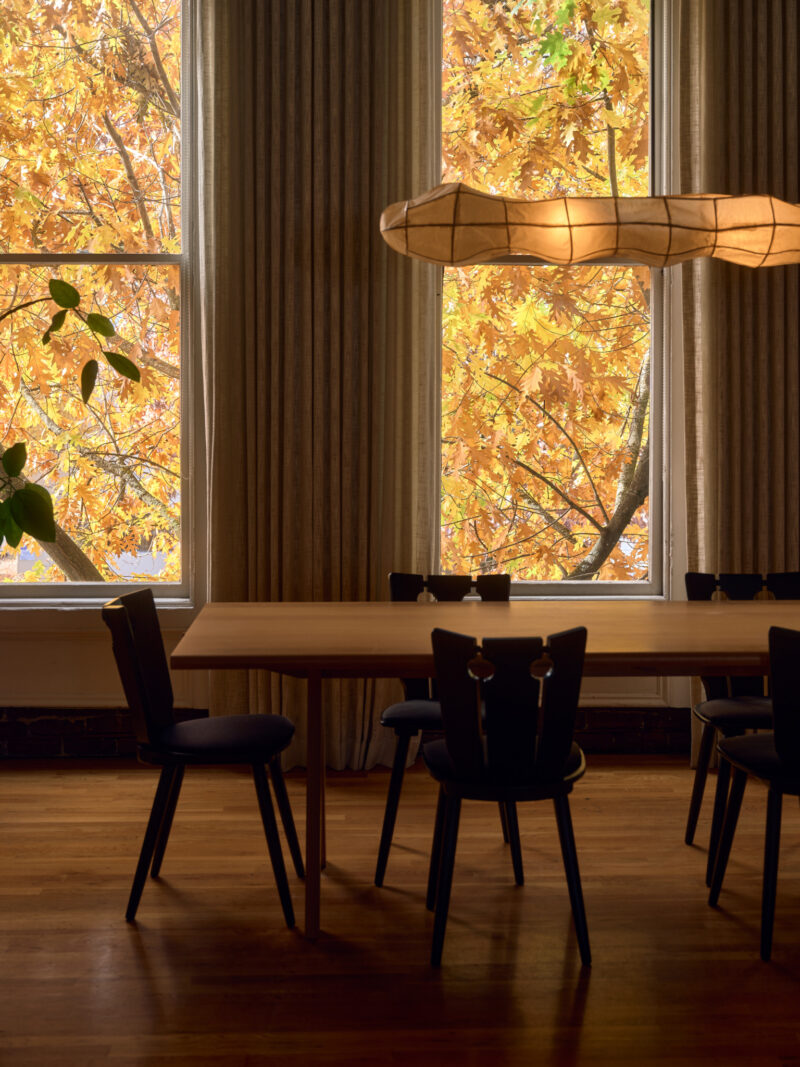
Photo by Pablo Enriquez
Located on Portland’s Central Eastside inside the Historic Cully Building, an 1884 structure with exposed brick walls and heavy woodwork, the roughly 1,200-square-foot office immediately stood out from the warehouse spaces the duo had envisioned.
“We toured a lot of open, warehouse-style spaces that lacked the warmth and character of our studio.” Cohu and Hasche explain. “We walked (into our current space) and it felt like an office in Chicago or New York. We loved the brick, the big windows and the big oak.”
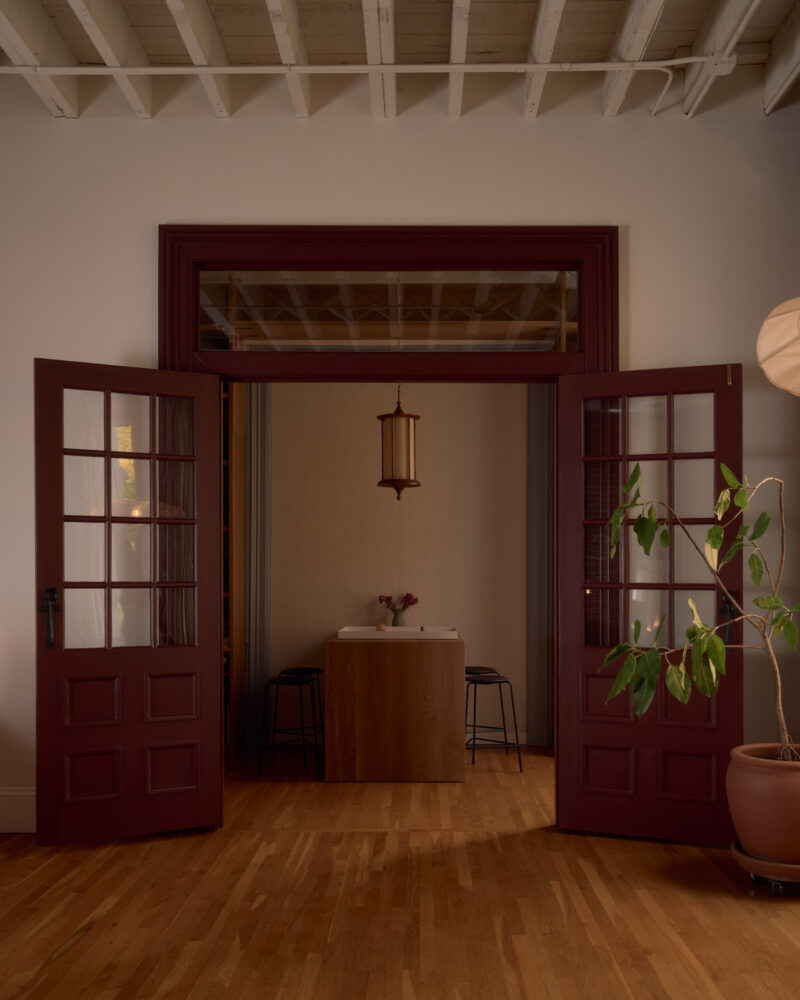
Photo by Pablo Enriquez
These architectural bones became the framework for an office to develop over time. A generous open workspace combines custom maple desks, a conference table and a home-style lounge, while a separate materials library provides space for quieter, focused work. Instead of immediately filling every corner, the designers allowed the office to grow alongside their practice.
“We were very careful about the pace of the process,” the duo share. “Of course we’re designers, which means we like to try different iterations of things, collect items, and take our time on decisions when we have that luxury.”
This philosophy is visible throughout the office. White walls create a tranquil backdrop for a rotating mix of vintage furniture, custom pieces, rugs and artwork. Earth-toned furniture and natural materials—including wood, stone, and woven fibers—create a sense of warmth, while rotating artwork and accessories allow the space to shift over time.
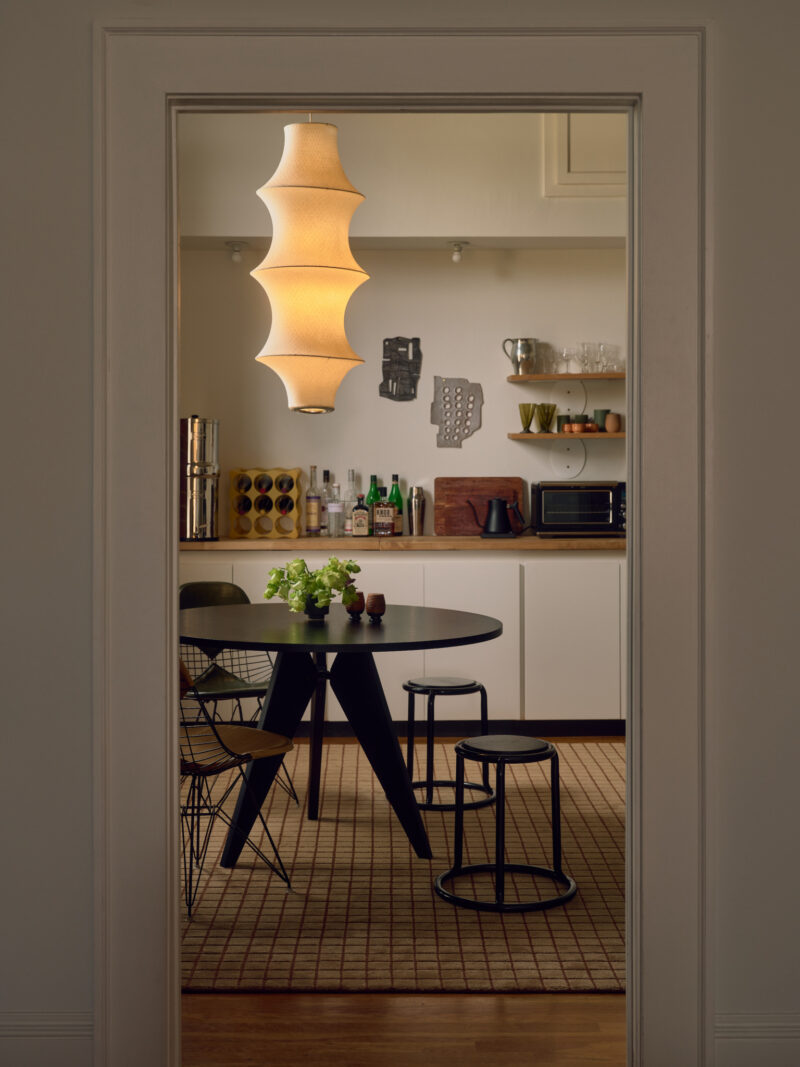
Photo by Pablo Enriquez
“The space came together easily as a reflection of us and our appreciation for eclecticism,” they say “It feels fluid and able to evolve while also feeling artful and warm.”
Much of this development happened gradually. After moving into the building in 2022, the team continued to improve the office before completing a major round of updates in late 2025, including custom wallpaper, drapes, a sculptural medallion above the conference table, fresh paint and a coated acoustic wall in the materials library. Rather than treating these additions as a final renovation, they became another chapter in an ongoing process of experimentation.
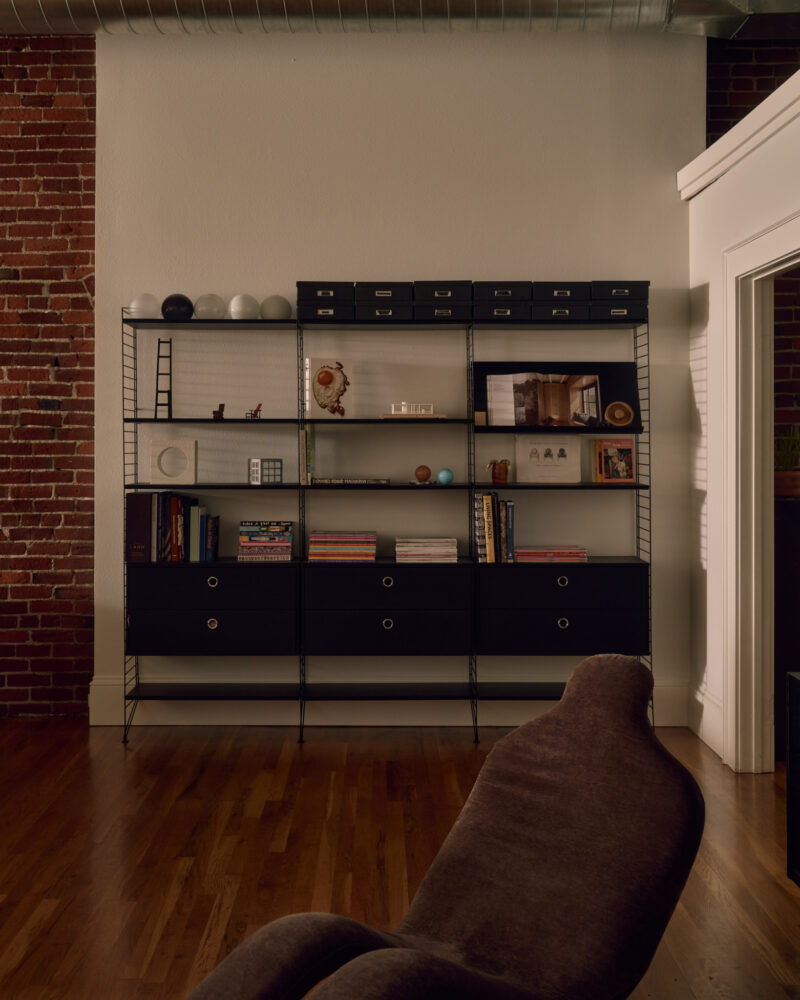
Photo by Pablo Enriquez
“We always wanted the office to feel more residential than commercial,” say Cohu and Hasche. Comfortable seating encourages informal conversation, while the kitchen serves as a daily gathering space. Together, the spaces support both focused work and collaboration without feeling overly crowded.
This spirit of experimentation extends beyond the interior practice. The office also serves as a home base for Burithe carpet collection launched by Cohu, Hasche and studio director Max Pluenneke. Inspired by trips to the South of France, the collection extends the studio’s ongoing interest in natural materials, earthy palettes and craftsmanship.
“Pat Austin and Patti work together in a very harmonious and symbiotic way,” says the team. “Our knowledge of interior design influences the way we approach carpet design, but it has also opened up new ways of thinking.”
Nearly four years after moving into the Historic Cully Building, Pat Austin’s office continues to evolve alongside the practice. Formed through careful additions rather than a sweeping transformation, the space reflects the designers’ belief that the best interiors often emerge over time, through experimentation and thoughtful refinement.
Editorial Transparency: This article was developed with the help of artificial intelligence tools, which may have been used for research, description, editing or copy improvement. Reporting, fact-checking and editorial decisions were made by Design Milk’s editorial team.



