When Amanda Martocchio she was 11 years old and on a family trip to a museum, she began sketching a work by the Spanish baroque painter Murillo, when a crowd quickly gathered to watch her. “That’s when I realized my artistic ability was the source of all the attention, and I loved it,” she says.
By the time Martocchio entered college, she had already decided on her chosen field and went on to earn a bachelor’s and master’s degree in architecture. Early in her career she settled in New York, where her projects included a combination of large-scale cultural spaces and commercial buildings.
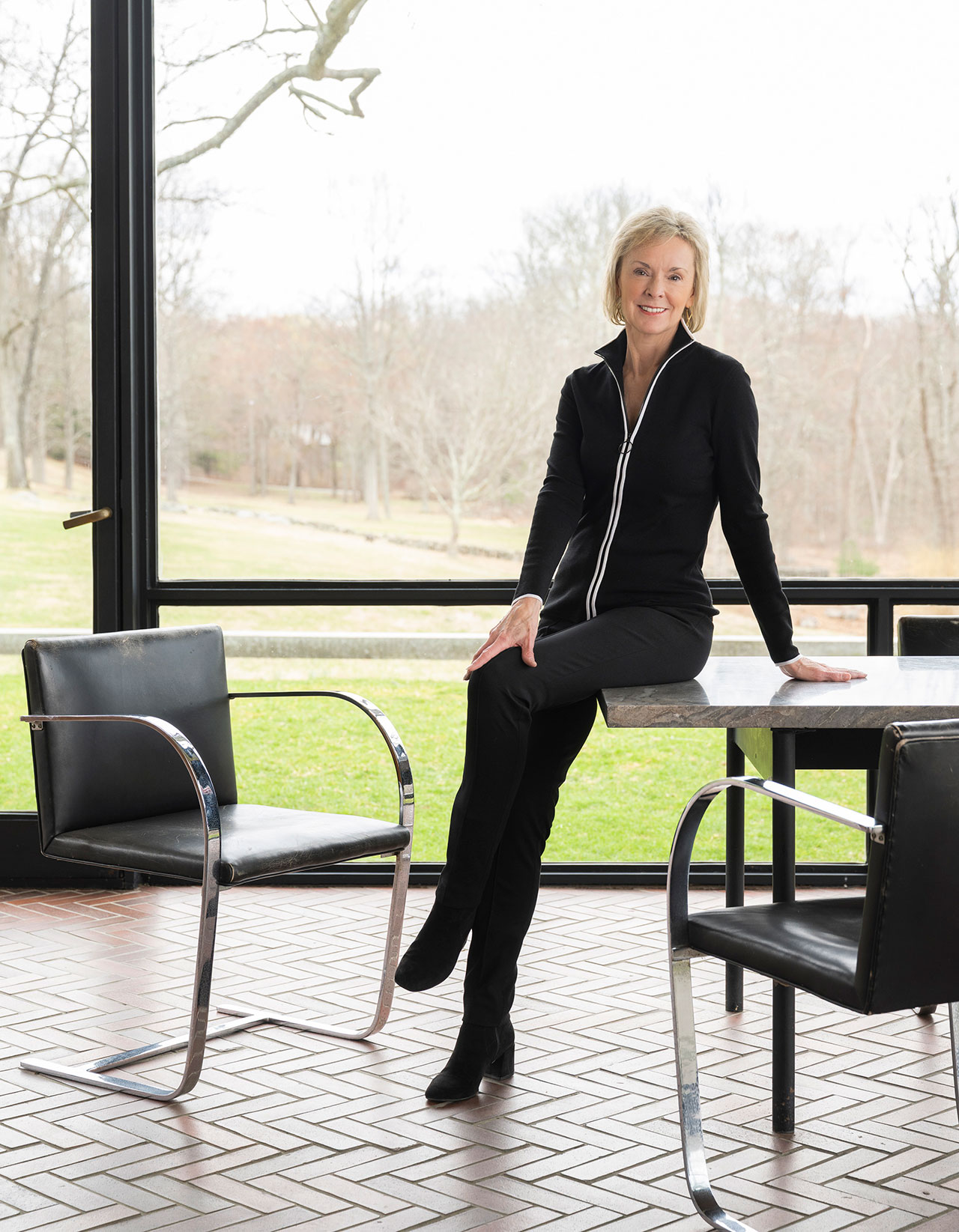
She founded her company, Amanda Martocchio Architecture (AMA)in Connecticut, inspired by the local heritage of mid-century modern design. With sustainability at the fore, Martocchio strives to create living environments that are not only beautiful but also enhance the sense of well-being for the occupants.
One of Martocchio’s most prized possessions is her well-worn sketchbook. She carried it everywhere when she toured the Greek islands as a student at Cornell University. When she glances at the pages now she remembers the youthful optimism of those summer days.
Martocchio doesn’t automatically turn to her cell phone to capture an idea. He prefers to put pen to paper. “I love index cards, they’re part of my bedtime routine,” she notes. “I’ll jot down an unfinished idea, which allows me to go back to sleep. When I wake up in the morning, I’m usually happy to see what I’ve created.”
Today, Amanda Martocchio joins us for Friday five!
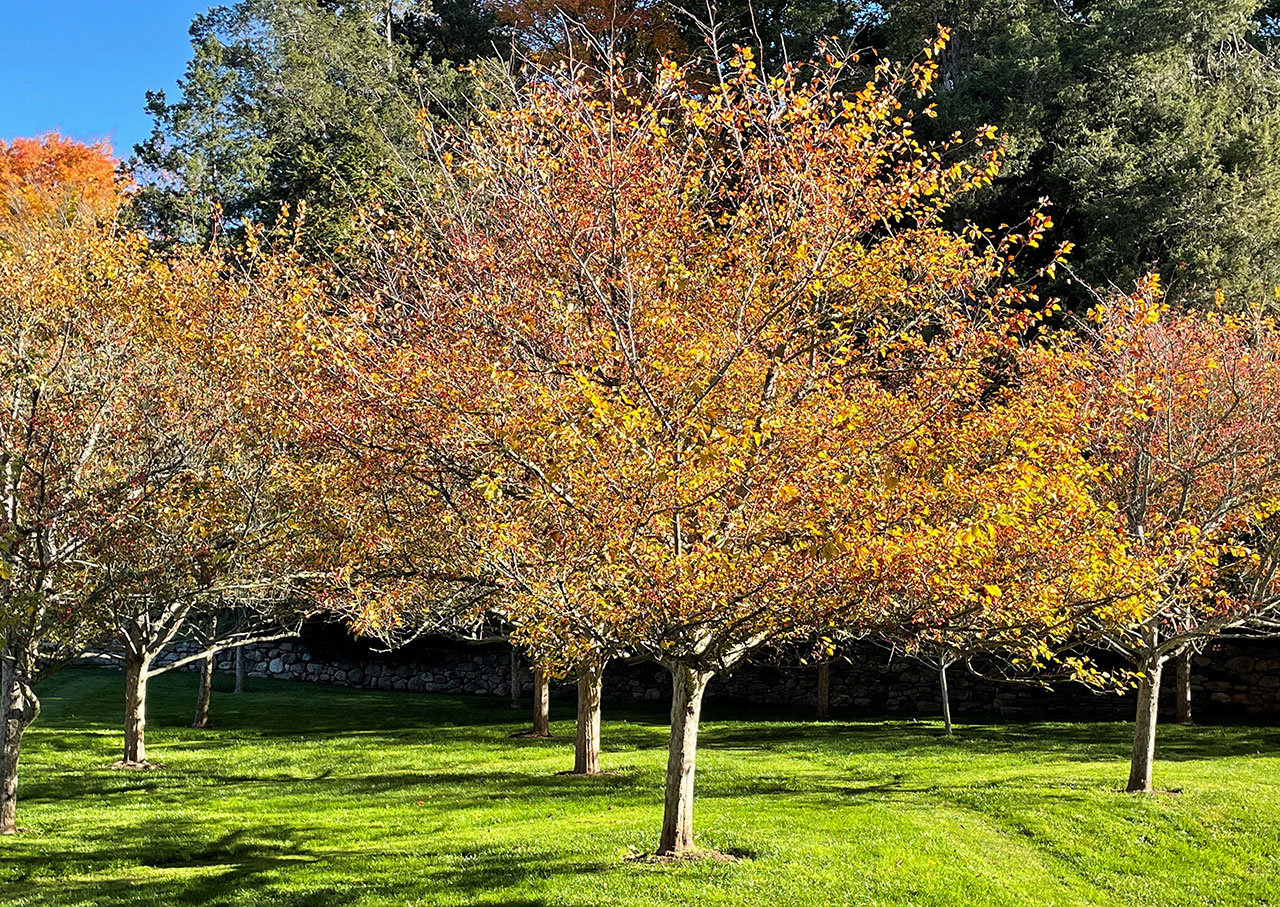
1. Hawthorne Orchard
When we first moved from NY to CT, we planted an orchard of Hawthorne trees. Now, 20 years later, the diagonal grid of trees and mowed paths delights me in all seasons: red berries in winter, white blossoms in spring, abundant shade in summer and brittle yellow leaves in autumn. I am inspired by their generous gift throughout the year and knowing that we raised them from tiny seedlings.
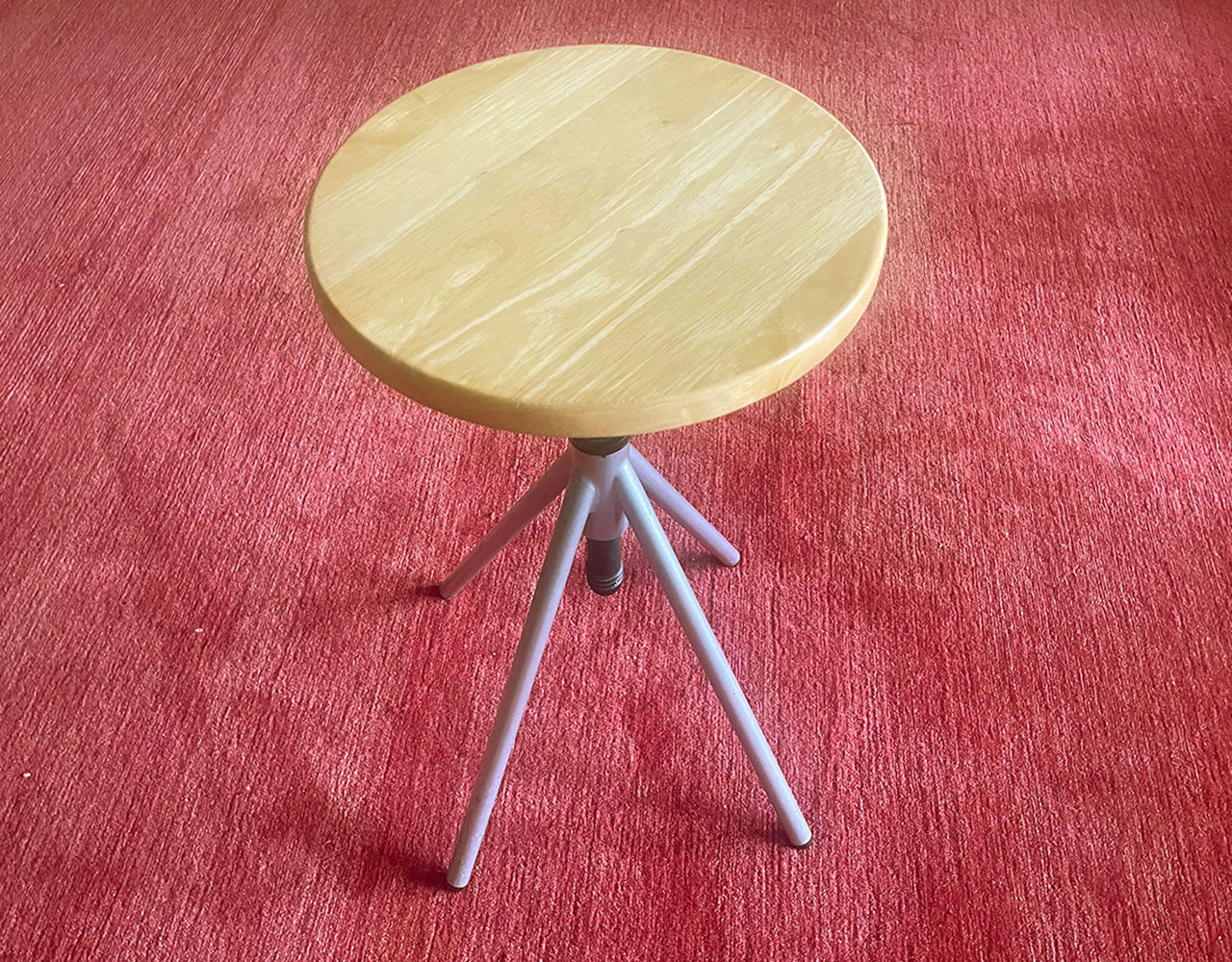
2. My Jen’s Risom Stool
I had the honor of being a friend and collaborator of the Danish furniture designer, Jens Risom. Jens designed the table for the dining room in one of the houses I designed. He told colorful stories of his early days: meeting FLW, launching the first furniture line for Knoll, and showcasing enduring design values of simplicity and craftsmanship. In appreciation of our friendship, he gave me his swivel stool, a prized possession, before he died at the age of 100.

3. Julia
Julia puts everything in place for me. Born with medical and developmental challenges, she makes us laugh with her silly sense of humor and makes sure we don’t take life too seriously. Thanks to her teaching, our world celebrates differences and empathizes with everyone’s challenges.

4. Painting by Joan Snyder
I had never been overwhelmed by a painting until I walked into a gallery at the Harvard Art Museum and saw Joan Snyder’s “Summer Orange.” It literally took my breath away. The painting still hangs in the gallery, but I am lucky to have one of her most recent works, ‘Summer Becomes a Room’, hanging on my wall, which inspires me daily.

5. Rockies
Growing up in the Rocky Mountain West, my childhood centered around family hiking, campfires, skiing and fly fishing. Our favorite hike was to the top of the Maroon Bells, above the tree line. Nature offered adventure and beauty. While vast natural spaces and majestic mountains are less ubiquitous in my life in suburban Connecticut, I pursue every opportunity I have as an architect to celebrate and protect the natural world and bring it into our everyday lives through architecture.
Projects by Amanda Martocchio Architecture:
1. Greenwich Harbor House – Entrance
Caption: Every material in Greenwich Harbor House was chosen for long-term durability, thermal performance and minimal maintenance, from paneled siding to triple-glazed windows and four inches of continuous exterior insulation. Deep overhangs manage sun exposure, while louvres create a pergola for creeping vines that soften the exterior and filter light inside. A Zen garden of raked shells surrounds organic shapes filled with mounds of Irish moss and site rocks and a topiary tree.
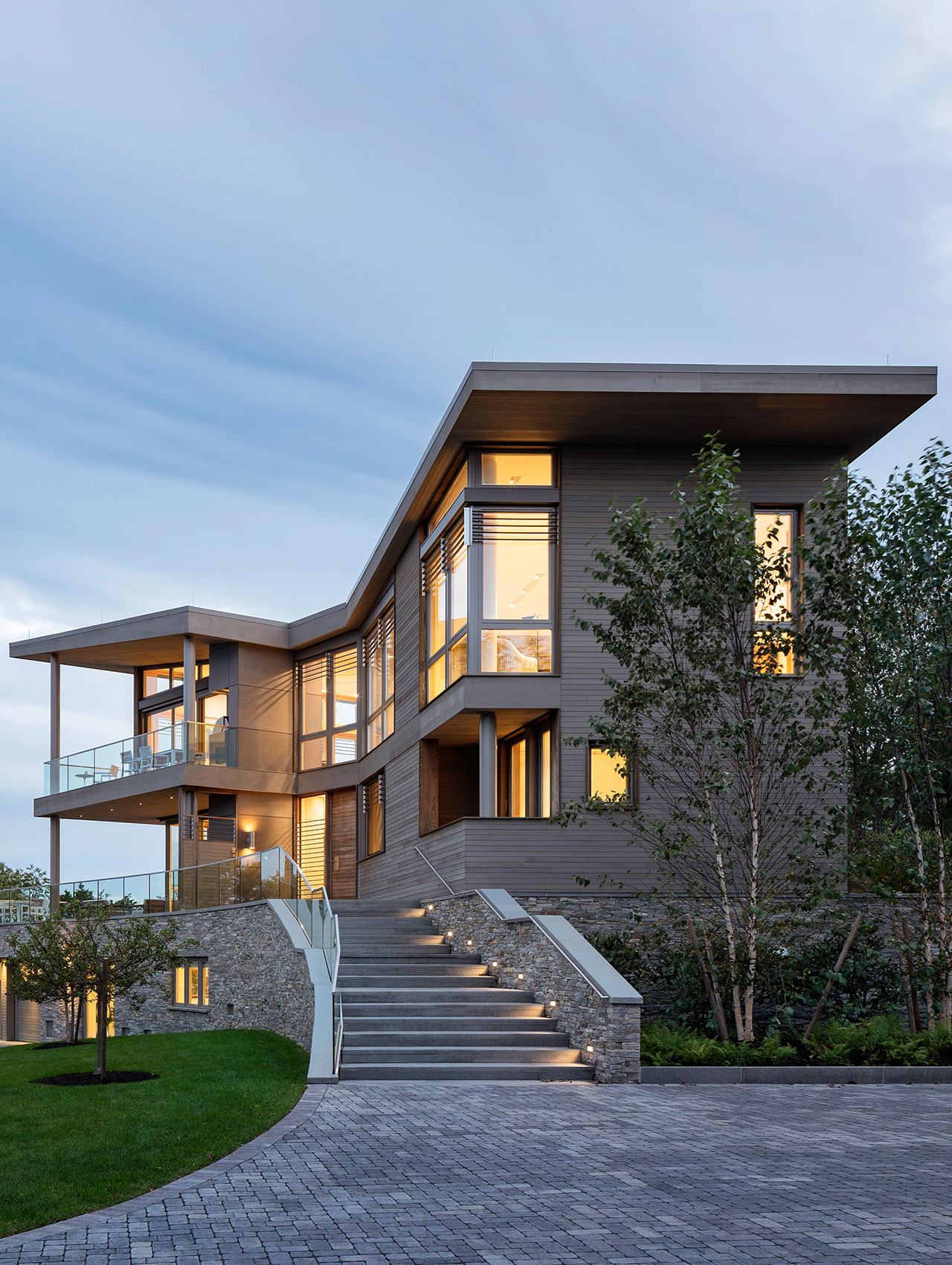
Photo: Michael Moran
2. Sailor’s Retreat
The gathering strategy at Sailor’s Retreat in Newport follows the curve of the trail approach and the waterline of the adjacent saltwater marsh. The House Cylindrical Wheel form was created by the site. Floodplain regulations pushed living spaces far above quality, making stone plinth both a structural and synthetic anchor. Cedar, aluminum windows and bird-friendly glazing complete a palette calibrated to the coastal environment and neighboring bird sanctuary.
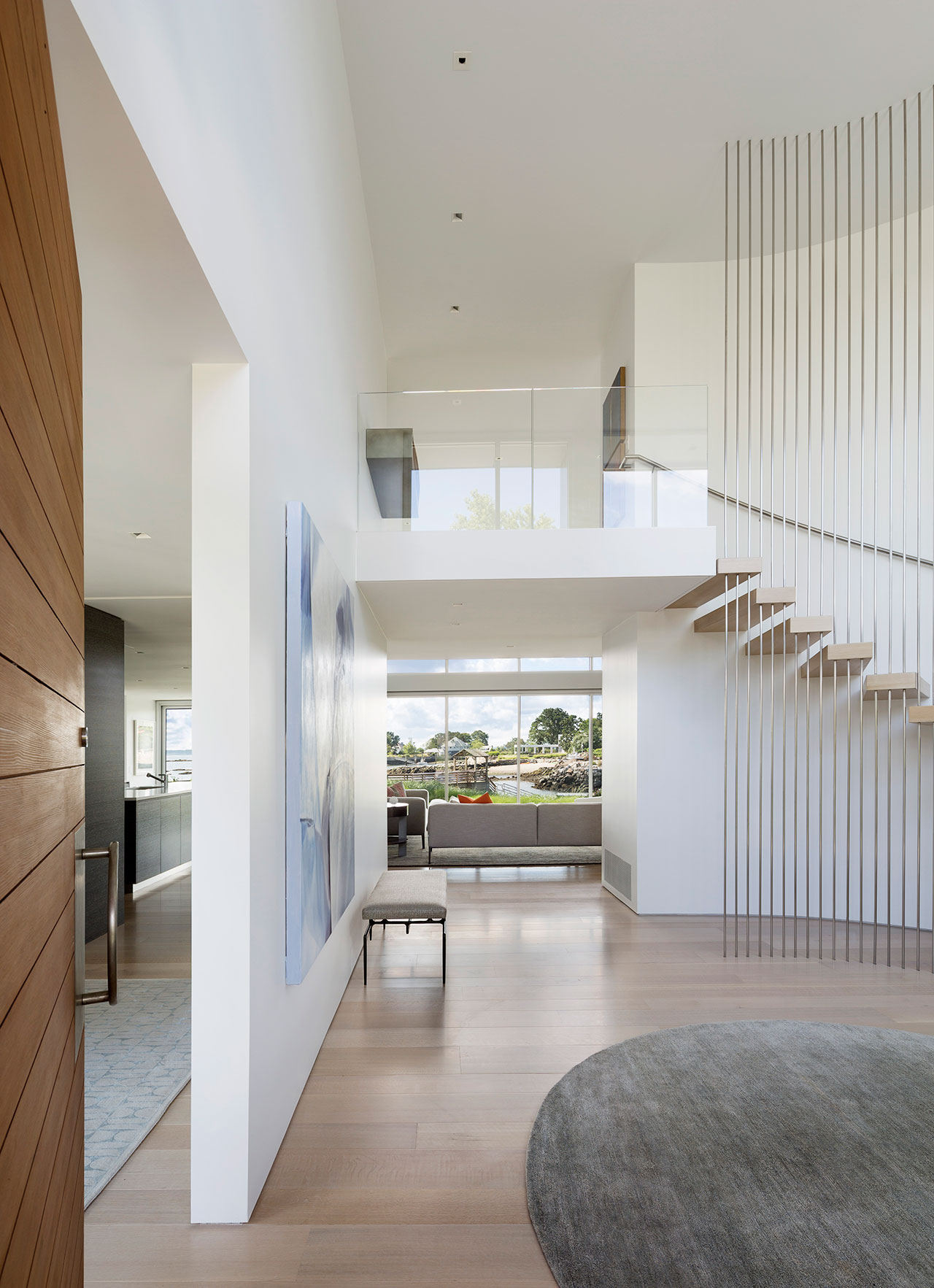
Photo: Michael Moran
3. Rye Quay – Interior + Staircase
In this beach house in Rye, New York, the entry staircase, with open cantilevers from the curved wall and suspended by floor-to-ceiling steel rods, leads to the stair landing, which features a glass balustrade overlooking a double-height volume on either side. Upon entry, your eye is drawn straight through the living space to the Long Island Sound. The renovation reconfigured the layout of the existing house to open it to the water, combining an energy-efficient thermal envelope with a serene, carefully curated interior palette, developed by AMA and Gary Cruz, that integrates seamlessly with the architectural environment. The project received a Design Award from the Westchester + Hudson Valley AIA.
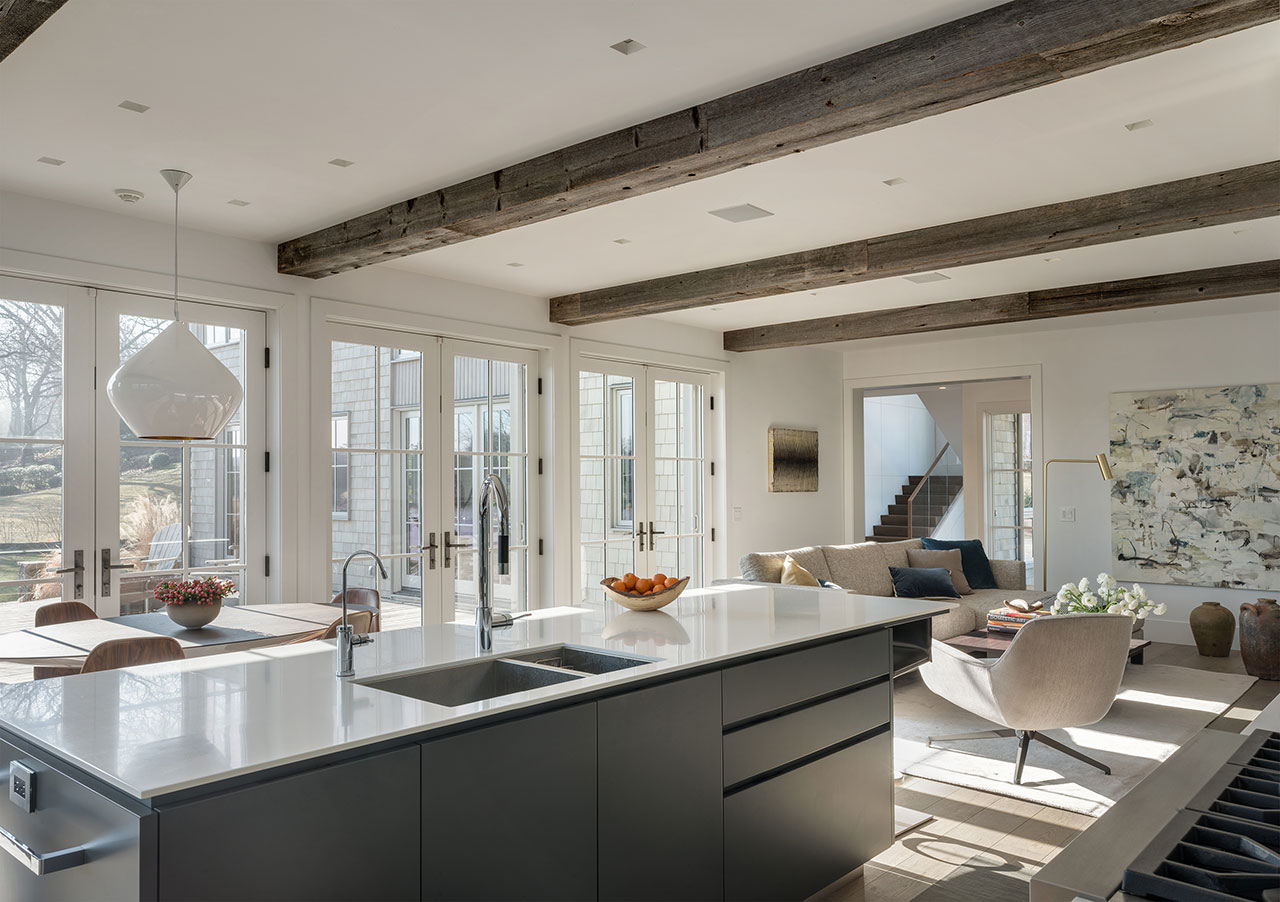
Photo: Michael Biondo
4. Coves End – Kitchen/Dining/Lounge
Reclaimed wood beams, a dark kitchen island, and a white quartz countertop line the wall of French doors that connect this kitchen to the oceanfront patio at Coves End in Darien, CT. Moving the constantly active food preparation to the center of the house was the organizing move of the renovation, unifying the living space and making the river view visible from almost every angle. The interiors, including furniture, lighting and contemporary art, were curated by AMA and Gray Cruz to enhance the architectural vision.
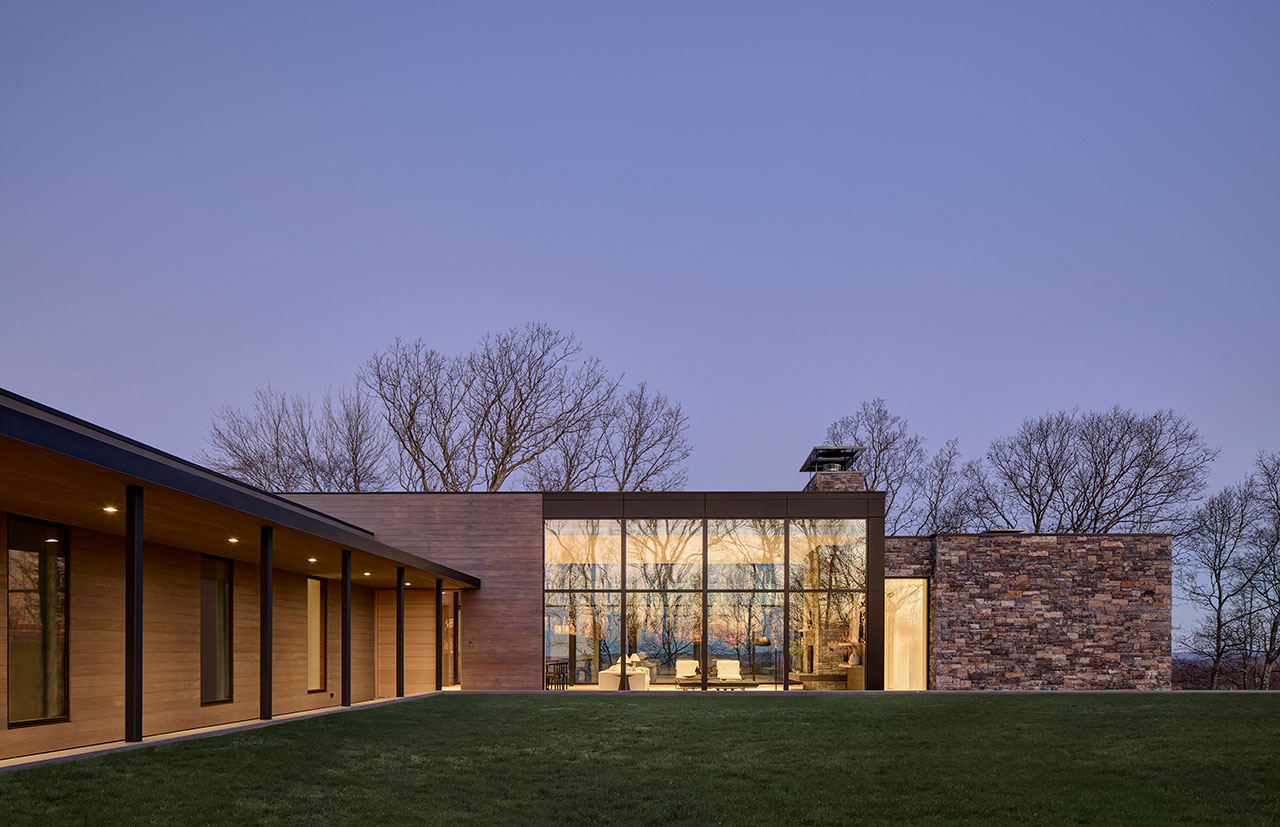
Photo: Michael Biondo
5. White Oak Farm – Exterior facade at dusk
Perched atop a forested hillside in Dutchess County, White Oak Farm is rooted in customers’ lifelong connection to this land, a 150-acre retirement farm they envisioned to ecologically restore. The 7,500 SF home sits on the edge of the woods, perched on the hill among mature oaks, its jumbled stone and pre-weathered framing blending quietly into the landscape.
6. Greenwich Modern – Façade
Greenwich Modern’s street-facing facade is a composition of contrasts: dark zinc volumes matched with light paneling, a cantilevered entrance ledge and a warm wood revolving door signaling the refined interior. Clerestory glazing wraps the roofline, drawing daylight deep into the single-level plan while maintaining privacy from the street.