
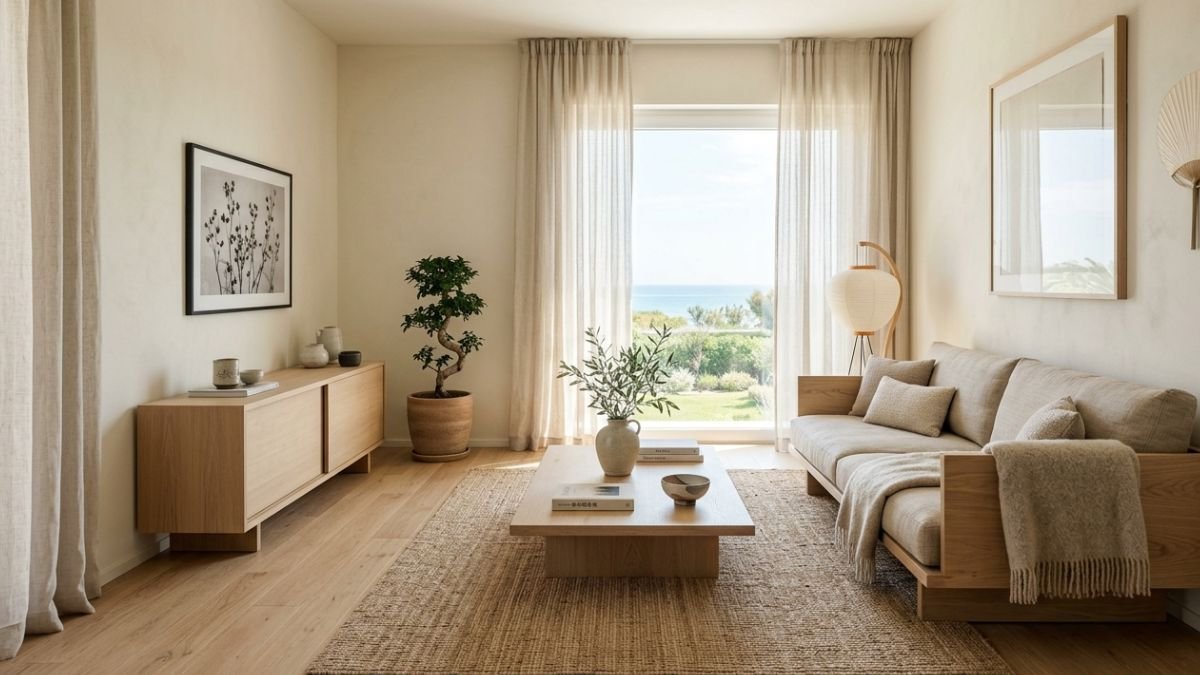

Japandi’s rise to the global furnishing scene marks a profound shift in the way we conceive of life, shifting the focus from display to conscious abstraction. In an increasingly frenetic and digitized world, the home becomes a haven of calm where the purity of lines and the quality of natural materials offer a necessary counterweight to daily stress.
This aesthetic philosophy is based on the concept of ‘wabi-sabi’, which celebrates imperfection and authenticity, combining it with the Scandinavian philosophy of ‘hygge’, which focuses on comfort and hospitality. The result is a visual language that manages to be strict and warm at the same time, eliminating the unnecessary, leaving room for a functional beauty that never tires the eye and never goes out of style.
The durability of natural materials and the color palette
One of the pillars that will ensure Japandi’s dominance in the next decade is the obsessive attention to the choice of raw materials. Light-colored woods such as oak or ash are mixed with darker and deeper spirits typical of the Japanese tradition, creating a sophisticated contrast that gives a three-dimensional character to the environments without weighing them down.
The color palette abandons the cold white of classic minimalism to embrace warmer and earthier neutral tones such as beige, silky gray and stone tones. These colors, combined with organic materials such as linen, jute and bamboo, they create a tactile connection with the nature that immediately improves the perception of relaxation within the living and sleeping area.
Incorporating green plants with a simple architectural structure such as bonsai or ferns completes the project, bringing a breath of life that cleanses the air and spirit. This balanced aesthetic allows the design to adapt to different housing typologiesfrom small urban apartments to large country villas, always guaranteeing a coherent and high-level result.
Functionality and open spaces for a new concept of class
Japandi design promotes space management based on efficiency and freedom of movement, preferring a few carefully selected pieces of furniture to a multitude of inexpensive accessories. Each object must have a precise function and a defined position, favoring a mental order that drastically reduces visual confusion and facilitates the daily maintenance of the house.
The use of low furniture, characteristic of Japanese culture, helps to perceive the ceilings as higher and the rooms as larger, while the large Scandinavian windows maximize the entry of natural light. This architectural approach reinforces the structure of the property itselfmaking Japandi the choice of choice for those who want a home that always feels spacious, bright and deeply modern.
Choosing this style means investing in an environment that is not afraid of the passage of time, as it is based on principles of harmony and quality that go beyond current fashions. It’s a trend that will continue to evolve, promoting a lifestyle more slowly, consciously and in full harmony with the harmony needs of modern man.



