
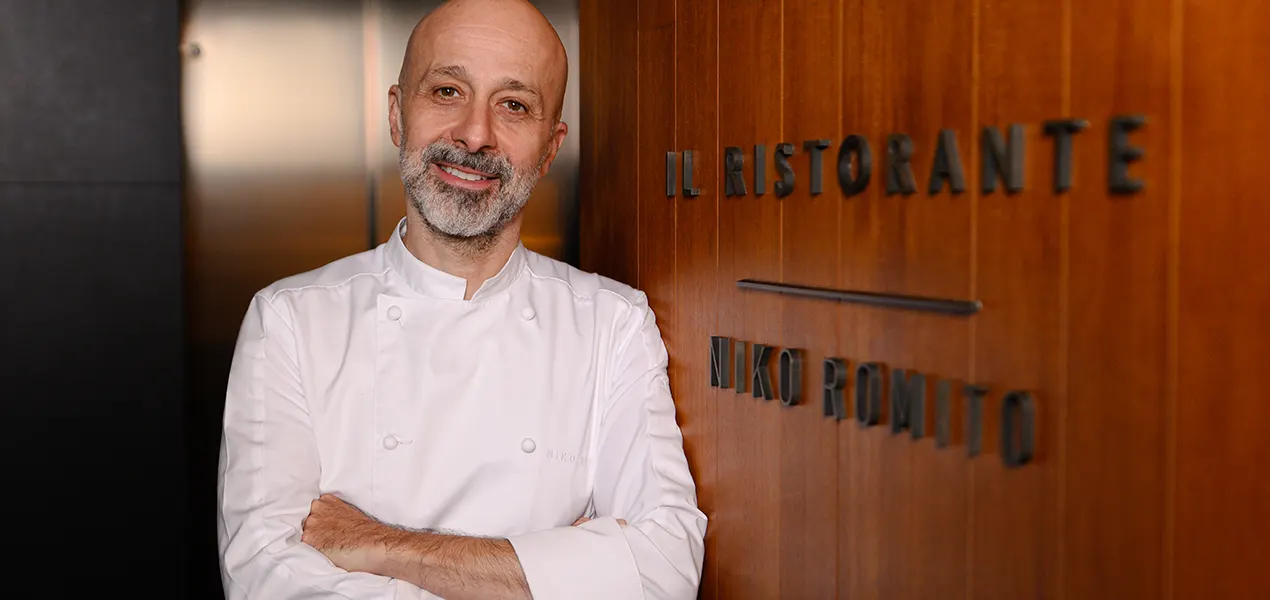

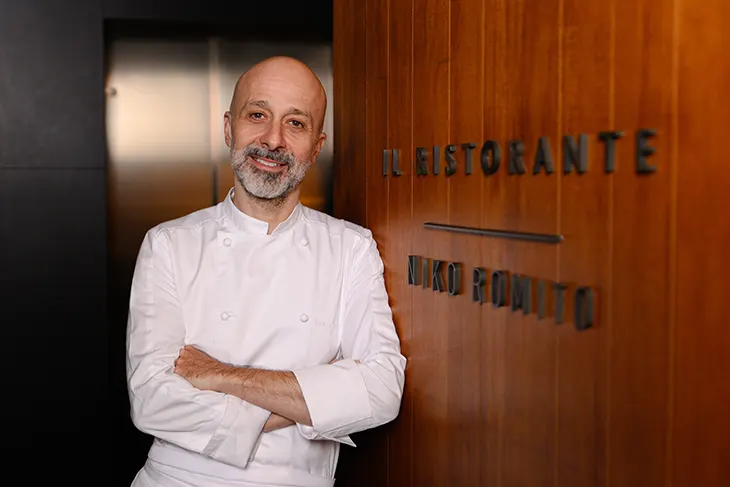
During Milan Fashion Week, we spent an evening at The restaurant Niko Romitowhere in Bvlgari Hotel Milanwhere the experience extends beyond the plate into a carefully structured environment of design, service and pace. Romito’s approach to Italian cuisine is revealed through clarity and control, where every dish has a defined purpose and nothing is overdone. His work focuses on precision, whether through technique, ingredient selection or the balance between intensity and restraint.
In this conversation, Romito reflects on the evolution of his practice, from his late entry into cooking to building a global restaurant concept based on a clear culinary framework. He talks about perfecting classic Italian dishes without losing their identity, developing a language of abstraction, and crafting menus that consider both taste and physical well-being. The conversation moves between personal history and technical process, offering insight into how his kitchens maintain coherence between sites while responding to the space.
Before Michelin stars and international restaurants, what was the moment when you personally fell in love with cooking and do you still recognize that feeling in your work today? – I discovered my passion for cooking relatively late. I was 25, studying Economics at the Sapienza University of Rome, when my father fell ill. He had just transformed the family patisserie into a trattoria, so I returned to our little hometown of Rivisondoli in Abruzzo to manage it, as long as I could find a buyer, I thought. But that’s when I unexpectedly fell in love with cooking and decided to take over the restaurant myself.
After 25 years, my passion remains as strong as ever. Over time, I have developed different projects and explored various expressions of the same values and philosophy, which continue to push me to learn, experiment and grow. It’s an incredibly exciting profession, and that original feeling is still very much alive today.
Imagining a modern yet classic Italian kitchen feels natural to me.
You have often spoken about creating a modern canon of Italian cuisine. How do you keep this framework alive and responsive while staying true to its core principles? – Italy has an extremely rich culinary heritage, recently recognized by UNESCO. Sometimes tradition is seen as something fixed, to be kept unchanged. But culinary history shows us that evolution, exchange and adaptation have always been part of history.
Imagining a modern yet classic Italian kitchen feels natural to me. Our local tradition is so long and diverse that I am constantly discovering recipes that inspire new creations, allowing me to stay true to our roots while expressing them in a modern way. I respect the essence of tradition, but I approach each ingredient with my own vision, using innovative techniques and new knowledge, not to impress, but always in the service of taste, lightness, elegance and precision.
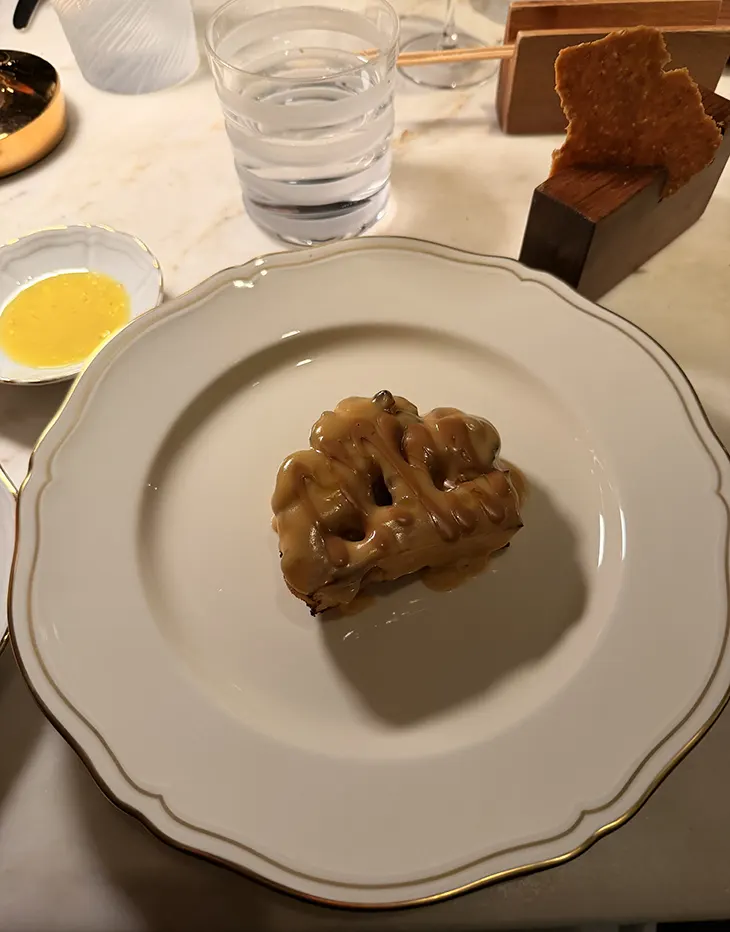
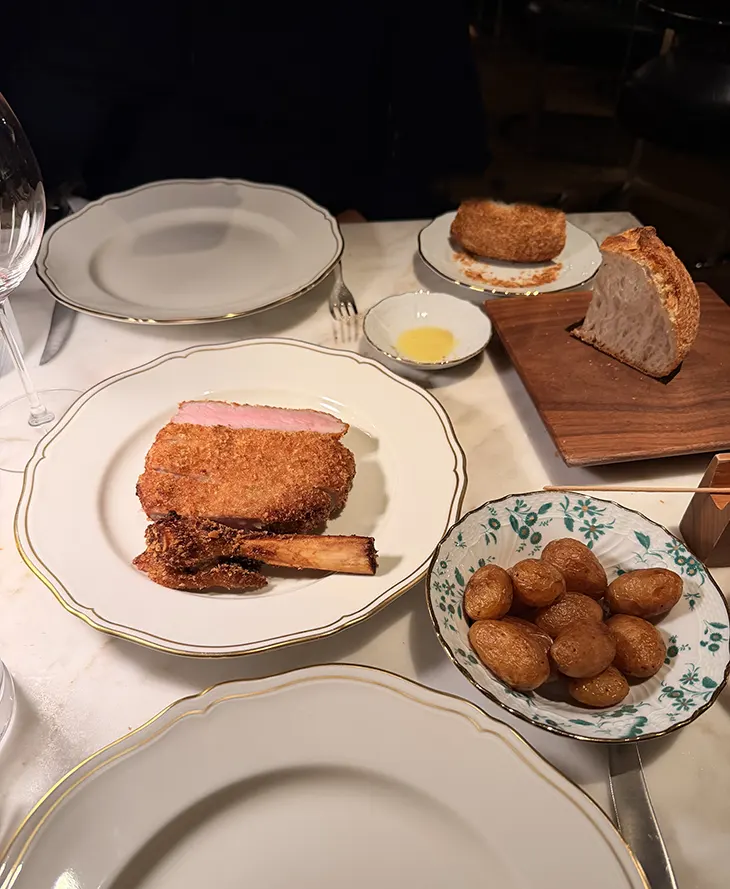
Your reinterpretations of dishes like lasagna, veal Milanese and tiramisu are both familiar and rigorously accurate. How do you decide which elements of a classic are essential and which can be revised? – I always think about what can be improved without losing the essence of a dish. Take the cutlet for example: it was one of the first dishes I envisioned for this project. I studied all the best publications in Milan, asking myself what worked and what didn’t. This led me to a recipe that is structurally different, but still captures the soul of the dish.
In my version, I steam the veal first to make sure it stays juicy, tender and evenly cooked. Then I brush it lightly with butter, brush it with egg white and panko, and quickly fry it in vegetable oil. This creates a crispy crust while keeping the interior juicy. In the traditional preparation, frying directly in butter often makes the meat heavy or unevenly cooked. My method is lighter and more precise, but always preserves the “soul” of the cutlet.
I respect the essence of the tradition, but approach each ingredient with my own vision.
Many of your dishes are made through subtraction rather than addition. How did restraint become such a central part of your culinary language? – It was a natural process. I started my career without formal culinary training, experimenting and learning through practice. Being self-taught made the path more difficult, but it also allowed me to find my personal expression more quickly.
When I transform raw materials, I try to remove anything that might mask the true flavor of an ingredient. The technique becomes a way to reveal unknown aspects, be it flavors, aromas or textures. It is about achieving the essence of the product by eliminating the unnecessary.
You often talk about lightness not only in terms of technique, but as a physical and emotional experience. How does this idea shape the way you design a menu? – The search for taste naturally led me to lightness and I soon realized how important it is, not only for the perception of flavors, but also for the well-being of the body. Health is often thought to be at odds with taste, but to me they are complementary.
This philosophy now guides the way I design menus: each dish balances intensity and purity, creating an experience that is as delicious as it is physically and emotionally satisfying. Today, I also pursue research projects to better understand how cooking processes affect the nutritional properties of a dish, with the goal of making healthy and delicious food accessible to as many people as possible, starting with hospital and school canteens.
I’m always thinking about what can be improved without losing the essence of a dish.
Il Ristorante operates in very different cultural contexts, yet the kitchens follow a common philosophy. How do you maintain integrity and consistency while allowing each site its own pace? – The heart of this project is coding. By establishing a clear “protocol” for taste, we ensure integrity and consistency in every Il Ristorante. But consistency isn’t a cage, it’s a foundation. Once the technical framework is established, each kitchen can find its own rhythm, working with local ingredients and letting them guide how each dish is transformed. We don’t just export recipes. we export a way of thinking.
Over the years, the project has grown significantly. Today, we have eight locations around the world, each in a different country with its own seasonal produce and local flavors. While the menus remain constant and our recipes never change, authenticity is essential, they also embrace diversity, allowing each kitchen to make the most of both local and Italian ingredients.
Your roots in Abruzzo remain a quiet but constant presence in your cooking. In what ways does your personal story continue to guide your decisions as a chef? – My personal story has shaped my professional path. I grew up in a family where the quality of materials was always paramount. The cuisine of Abruzzo is based on simple but nutritious products and beyond the recipes or the local ingredients I use, it has given me an approach: respect for the purity, authenticity and essence of each ingredient. This philosophy continues to guide every decision I make as a chef.
We don’t just export recipes. we export a way of thinking.
When you’re not working professionally in the kitchen, what do you really like to eat? – I love simple food and good produce: vegetables, soups, a simple pasta dish or excellent bread with a few slices of raw prosciutto or anchovies. Working with Bvlgari has allowed me to travel extensively, discovering different culinary cultures that I love to experience.
Of course, I also appreciate meaningful, creative culinary experiences, but only when they are meaningful. I don’t enjoy “in-between”, pretentious food without substance.
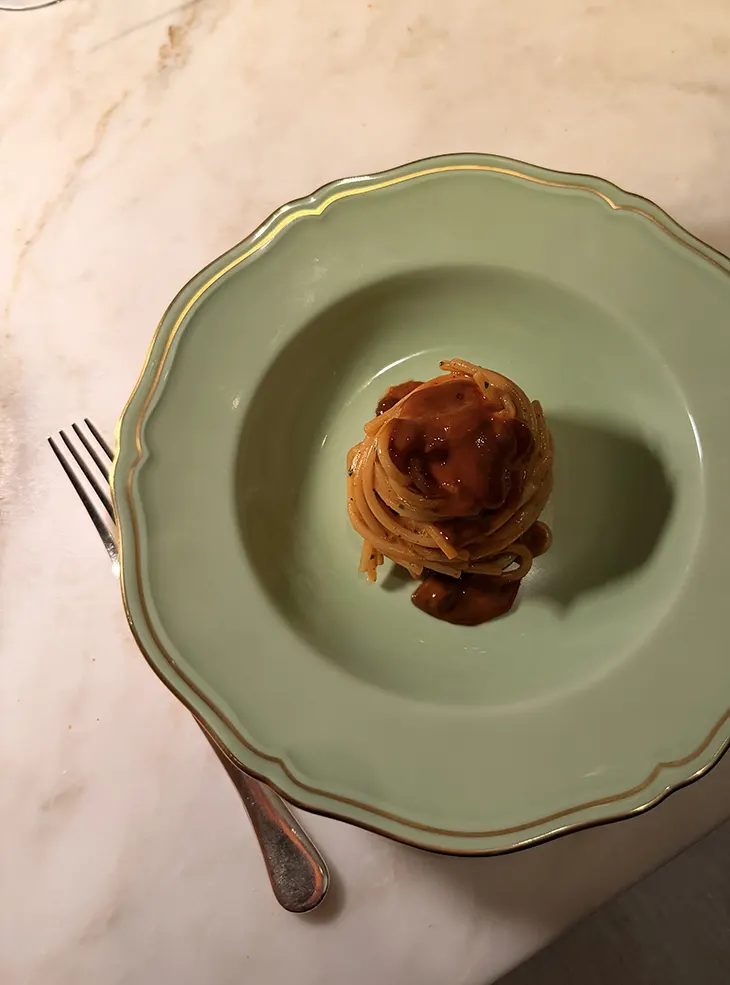
Are there ingredients (humble or luxurious) that you feel particularly close to and that you find yourself working with repeatedly on different menus? – Vegetables are especially important in my kitchen. Creatively and technically, they are challenging, yet working with them has allowed me to explore new paths, uncover unexpected aspects and develop a deeper understanding of each component. They are naturally more complex than animal proteins, containing multiple flavors, acidity, bitterness, sweetness, which can be accentuated through transformation. Texture is equally important and precision is essential: a few seconds or a few degrees can completely change the result.
I have always liked to transform common ingredients, products that are considered “ordinary”, like a simple tomato, into something new, highlighting them in an unexpected dimension. Encountering a familiar ingredient in a dish, but discovering hidden aspects of flavor or texture, can also evoke strong emotions.
I want my kitchen to evoke memory and emotion.
When guests leave Il Ristorante – Niko Romito, what do you hope is left with them? – I want my kitchen to evoke memory and emotion, so that guests leave feeling like they spent a few hours in Italy, either discovering something new or reconnecting with a personal memory stirred by a dish. I focus on pure, intense flavors and light, balanced dishes so that guests feel good after the meal and easily remember the flavors.
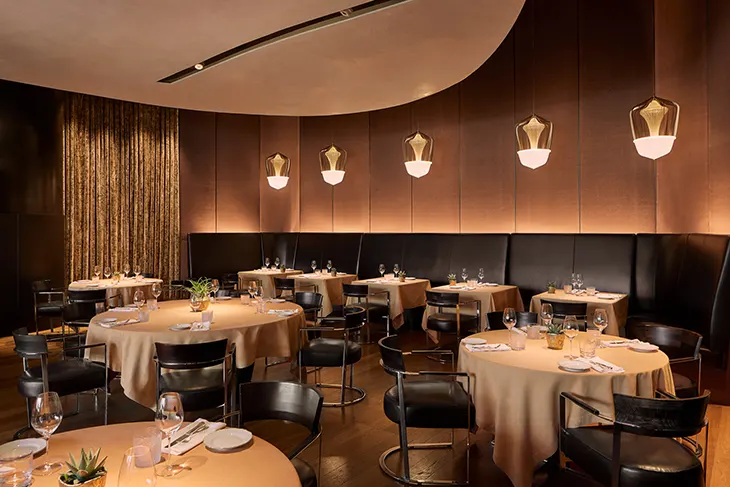
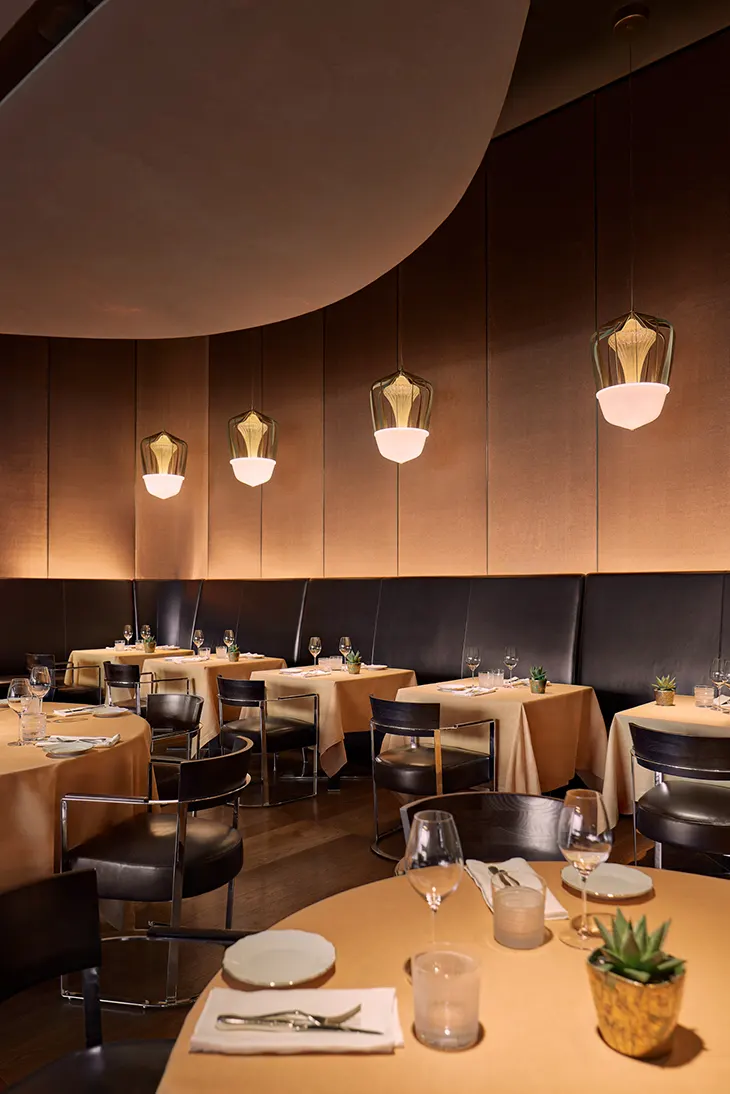
As a hotel restaurant, we must represent both a culinary destination and a place of comfort. The experience should speak to foodies while also welcoming those seeking warmth and intimacy. Il Ristorante Niko Romito is more than just food, it’s a complete experience, from the beauty of the design and tableware to the attentive, professional service, creating moments that stay with guests long after they’ve left.
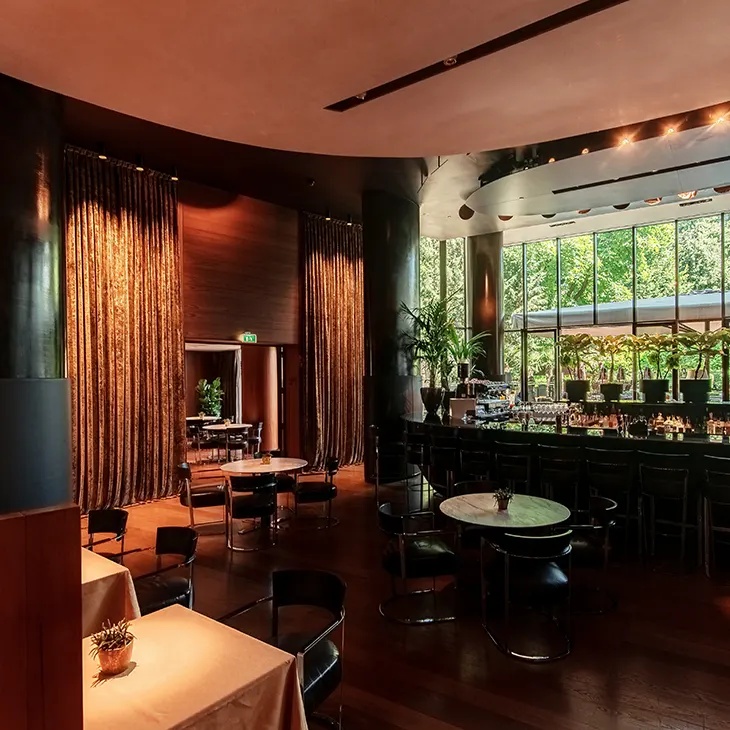
The Restaurant – Niko Romito – Milan
Bulgari Hotel Milano, Via Privata Fratelli Gabba, 7b, 20121 Milano MI, Italy
+39 02 8058 05230
bulgarihotels.com



