

How many times, when opening the condominium statement, did you wonder if all the expenses were really due?
The division of condominium expenses has always been one of the most common sources of conflict between neighbors, with discussions often ending up in front of a judge. In this area, the SC recently intervened with the no. 4827/2026, clarifying a principle that is as simple as it is often ignored: those who do not use the condominium stairs are not required to pay the costs for their cleaning and maintenance.
A decision that brings the fundamental concept of efficient use of the commons back to the center of the debate, with immediate practical consequences for many condominiums across Italy.
The principle of actual use
The heart of the decision revolves around a criterion already provided for in the Civil Code, but which in practice is often applied roughly. According to the Court of Cassation, the cost of cleaning and maintaining stairs should be apportioned according to floor height: those who live on high floors pay more because they use the stairs more than those who live on lower floors.
This criterion results from the combined application of two fundamental rules: art. 1123 of the Civil Code regulating the distribution of expenses based on use and art. 1124, establishing the proportionality criterion linked to floor height. The underlying logic is unquestionable: more intense use of stairs causes more wear and tear, and it is right that those who use them more should contribute a proportionally higher amount.
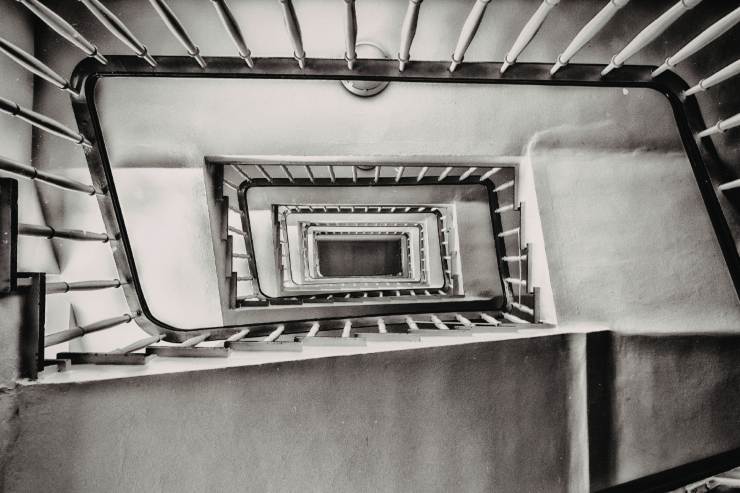
But the principle also works in the opposite direction: if the use is completely absent, the obligation to contribute also disappears. In the particular case considered by the Court, a condominium unit was excluded from the stair panel because it was accessible only from the outside and did not use either the entrance or the condominium’s stairs.
Millesimal tables and assembly: when a review can be requested and who decides
The sentence stems from a more complex case, which involved a condominium owner’s request to review thousands of boards. Some attics had been incorporated into the apartments and turned into habitable spaces, increasing the total area of the units and thus changing the proportional value of the properties: an objective change in the reality of the building that justified the revision of the tables.
At this point, the Court of Cassation has drawn an important line: revision is possible when the condition of the building specifically changes, not when someone simply wants to call into question an agreement already made between the parties. An often underestimated aspect concerns the powers of the condominium assembly: it cannot modify the legal criteria for the distribution of costs by majority vote, but only with the unanimous consent of all members of the condominium, under penalty of invalidity of the resolution, which can be challenged at any time.
It is worth remembering that the same principle of efficient use applies to the cost of stair lighting: the cost of lighting follows the criterion of floor height, so those who live high benefit from the light for a longer time and therefore pay more.



