


Most of us don’t think about first aid and the medicine box until we do really is needed. And when that moment comes—someone is bleeding, sick, or panicking—the last thing you want is to be digging through expired pills and mystery ointments.
Organizing a proper first aid and medicine kit is one of those small household chores that make a huge difference in everyday life. Is it fast, practical and honest? It energizes the main “I’ve got my life together.”
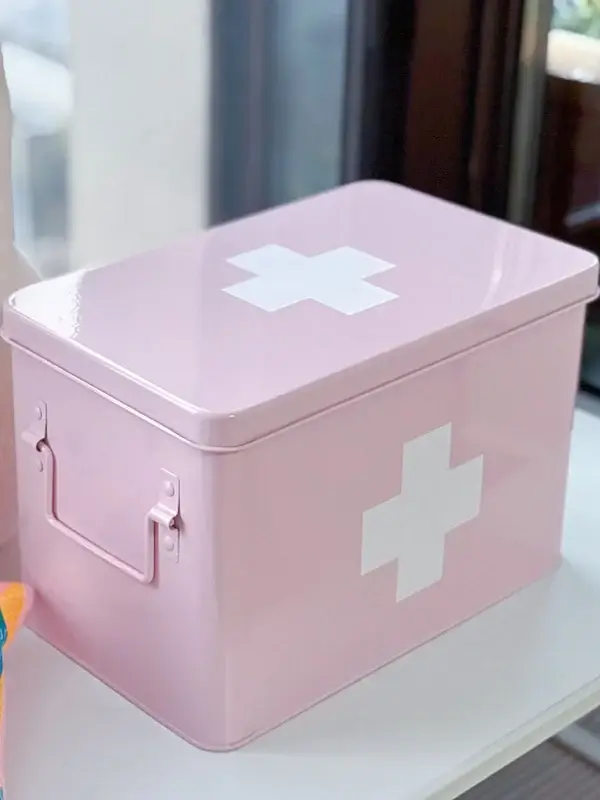
Image: Pink Vintage First Aid Kit
Here’s how to do it the right way.
Start with the right container

Image: 4 Tier Medicine Storage Box Cabinet
Before you organize anything, you need a box that makes sense.
Look for one that is:
- Easy to open
- Sturdy yet lightweight
- Big enough for medicine and supplies
- Ideally clean or easy to label
A storage box with a handle or a separate bin works best. If your home has multiple floors, consider a master kit plus a smaller backup kit upstairs.
Leave everything (Yeah, everything)
This step is non-negotiable.
Place everything on the counter and:
- Check the expiration dates
- Throw away empty or nearly empty items
- Get rid of anything you don’t recognize or wouldn’t actually use
Expired medications don’t help anyone—and clutter slows you down in emergencies.
Group items by Real-Life Needs
Instead of overcomplicating things, organize your box the way you would look for items when you’re stressed.
Recommended categories:
- Pain & Fever: painkillers, fever, thermometers
- Wound care: bandages, gauze, antiseptic, medical tape
- Cold & Flu: cold medicine, nasal spray, throat lozenges
- Digestive relief: antacids, anti-nausea drugs
- Allergies: antihistamines, allergy creams
- Tools: tweezers, scissors, gloves
Use small bins or zip-top bags inside the box and label them clearly.
Make it safe (especially if you have kids)

Image: First aid medicine storage box
If there are children living in your home:
- Store the medicine in a child-resistant or locked container
- Keep the box away
- Clearly label medications with dosage instructions
Even without kids, this step helps avoid mistakes during stressful times.
These little additions turn a basic kit into something really useful:
- Emergency contact numbers
- A small flashlight
- Instant cold packs
- Pen and notebook
- A printed list of medications or allergies
These are things you don’t think about until you need them—then you have them very I’m glad it’s there.
Store it somewhere you can get to it quickly
Choose a location that is:
- Easy to remember
- Easy access
- Away from heat and humidity
Good spots include a bathroom cabinet, laundry rack, or kitchen cabinet (separate from food).
Do a quick checkup twice a year
Set a reminder every six months to:
- Replace the expired medication
- Refresh the essentials
- Reorganize if things have gotten messy
It takes 10 minutes and keeps everything ready when it matters.
Because it’s worth doing now

Image: Clear Medicine Organizer Box with Handle
Organizing a first aid and medicine kit isn’t exciting—but it’s one of the most practical home upgrades you can make. It saves time, reduces stress and helps you handle minor emergencies calmly and confidently.
You will be the future very Thank you for doing it today.
Discover more from Decoholic
Sign up to get the latest posts sent to your email.



