
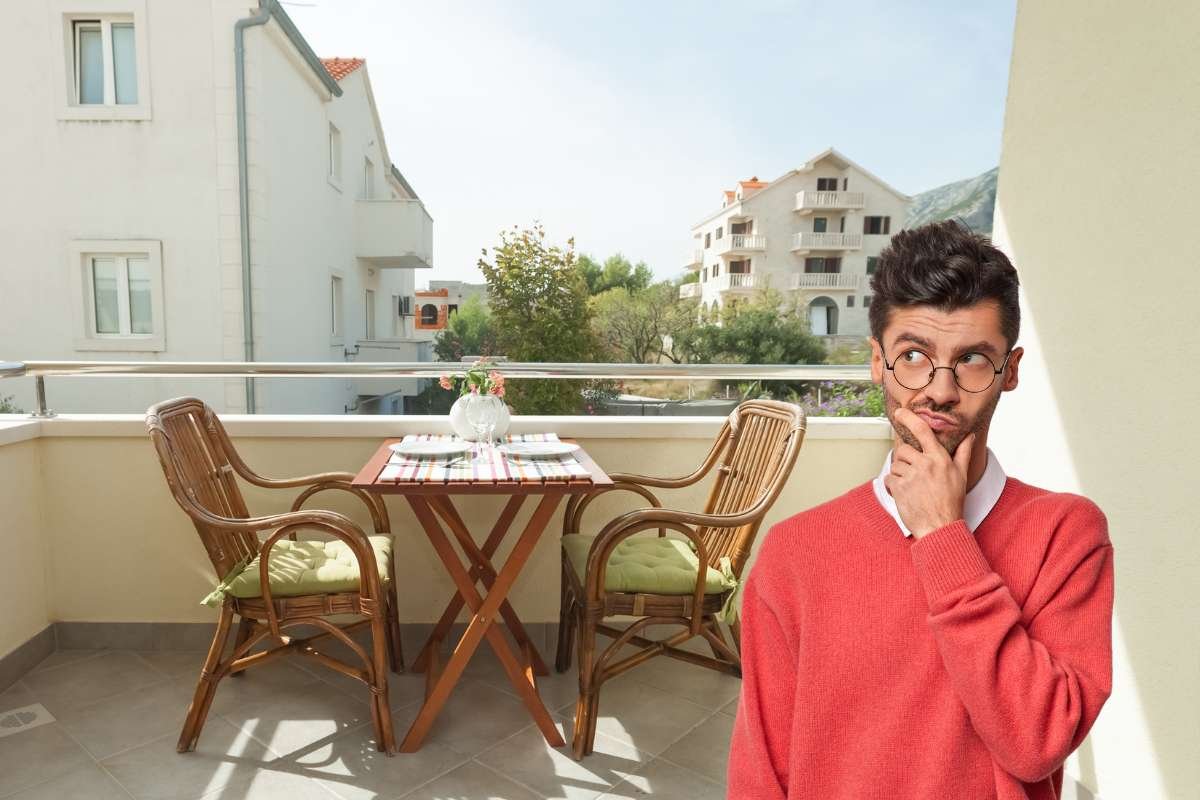

A porch in the shade is often viewed as a structural defect, something to be endured rather than exploited.
In fact, with the right choices, it can turn into one of the most welcoming corners of the house: cool in summer, harvest in spring, able to provide an atmosphere that sun-exposed terraces are hard to recreate.
The key is to understand the specifics of this type of space and work with them, not against them. Colors, materials, vegetation and artificial lighting become fundamental tools to create an environment that not only compensates for the lack of natural light, but turns it into an aesthetic and functional strong point.
Colors, materials and furniture: the basis of everything
The first mistake you make with a terrace that does not get much sun is to choose dark colors or heavy materials, convinced that the light is already missing. It is the exact opposite of what should be done. A light and warm palette with tones of sand, warm white, beige and pearl gray acts as a sounding board for diffused light, amplifying it and restoring brightness even in the less generous hours of the day.

These neutral backdrops can be paired with bold but balanced pops of color: a moss green pillow, a terracotta vase, a midnight blue blanket. The contrast enlivens without weighing it down. On the furniture front, the choice falls best on pieces with light and visible structures: natural rattan, woven wicker, powder-coated iron in light tones are valuable allies.
Adding linen or raw cotton fabrics, cushions, outdoor rugs and runners help create that tactile feeling of warmth that the sun can no longer provide. It’s not just aesthetics: it’s a matter of sensory perception.
Plants, artificial light and intelligent distribution of space
One of the most underrated aspects of a shaded patio is the selection of vegetation. Many people abandon plants because they are convinced that nothing will grow without direct sun. In fact, the plant world offers species that are extremely suited to the shade: ferns, hydrangeas, begonias, calatheas, ivy and aspidistra not only survive in these conditions, but express themselves at their best away from direct exposure.
The secret is to combine large-leaved varieties with smaller plants and play with heights, knives in the ground, raised vases on stools or shelves, vertical wall compositions to create volume and dynamism without crowding. Artificial light, then, is not an alternative: it is programming.
Garlands with warm light, portable lanterns, wall lights with orange LEDs and adjustable floor lamps allow you to create different levels of lighting, multiplying the evening effect and making the terrace usable even after sunset. Finally, it is worth thinking about the distribution: even in a small space, defining a conversation area, a green corner and perhaps a small surface for dinner or aperitifs turns a balcony from a storage space into an extra room in every way.



