

The bedside table is one of the most rigid elements in the bedroom. Always the same, always in pairs, always predictable. But precisely because it’s so formulaic, it’s also the perfect place to start to really change the vibe.
Replacing the traditional nightstand is not just an economical choice. It is a design intervention that affects proportions, visual lightness and general style. It doesn’t take much to move from an anonymous room to a more modern, personal and visually interesting space.
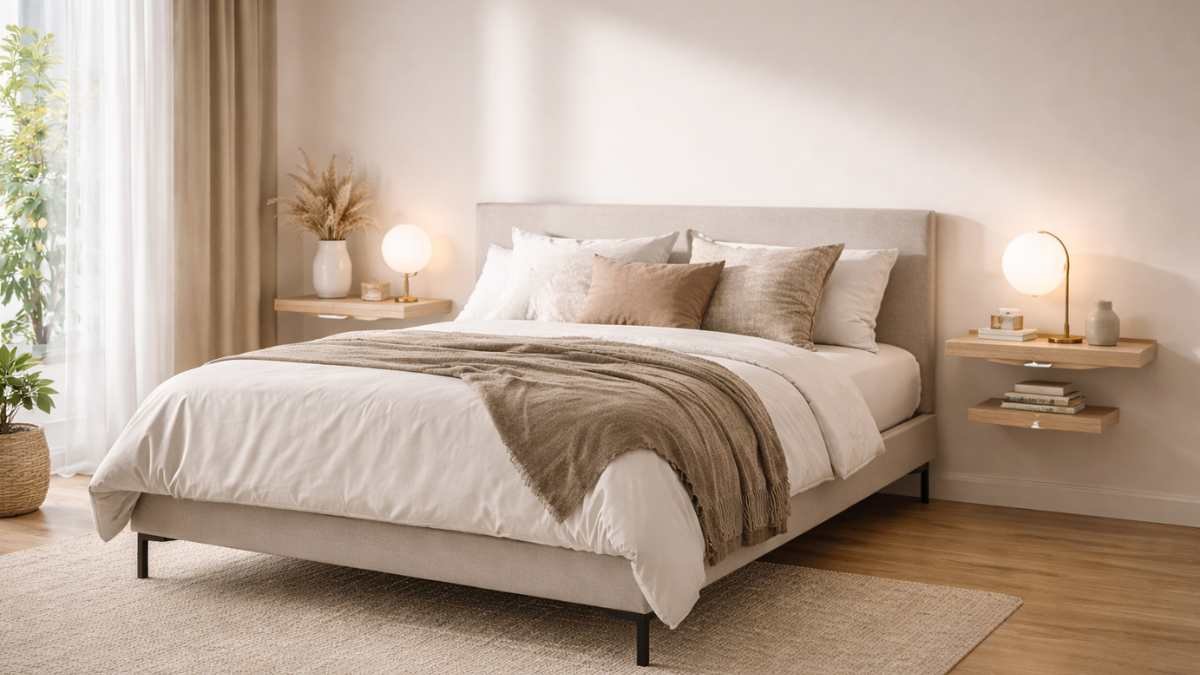
Hanging shelves: the minimal option that expands the space
In a small room or with important furniturethe hanging shelf is the most effective solution. The elimination of the volume on the ground is immediately released visual field and makes the environment more airy.
Imagine a room in neutral tones, with gray or warm white walls, a light fabric bed and light colored curtains. Placing a thin shelf in the same color as the wall creates continuity and almost disappears. The result is clean, essential, very close to a modern minimal aesthetic.
If, however, the room has light wood details, an oak or ash shelf can become a natural accentideal for Scandinavian style. In both cases, the surface remains functional but does not invade the space. This solution works especially well when you want to get a “modern hotel”, neat and light effect.
Stool: the informal detail that warms the environment
A stool immediately introduces a different language. It is less constructed, less rigid, more spontaneous. Ideal for rooms that want to avoid the “catalogue” effect. In a room with a warm palette, wooden floor and soft fabrics, a natural wooden stool, perhaps slightly rough, creates awelcoming and relaxed atmosphere. It works very well in boho, Nordic or Japandi environments, where the natural element is central.
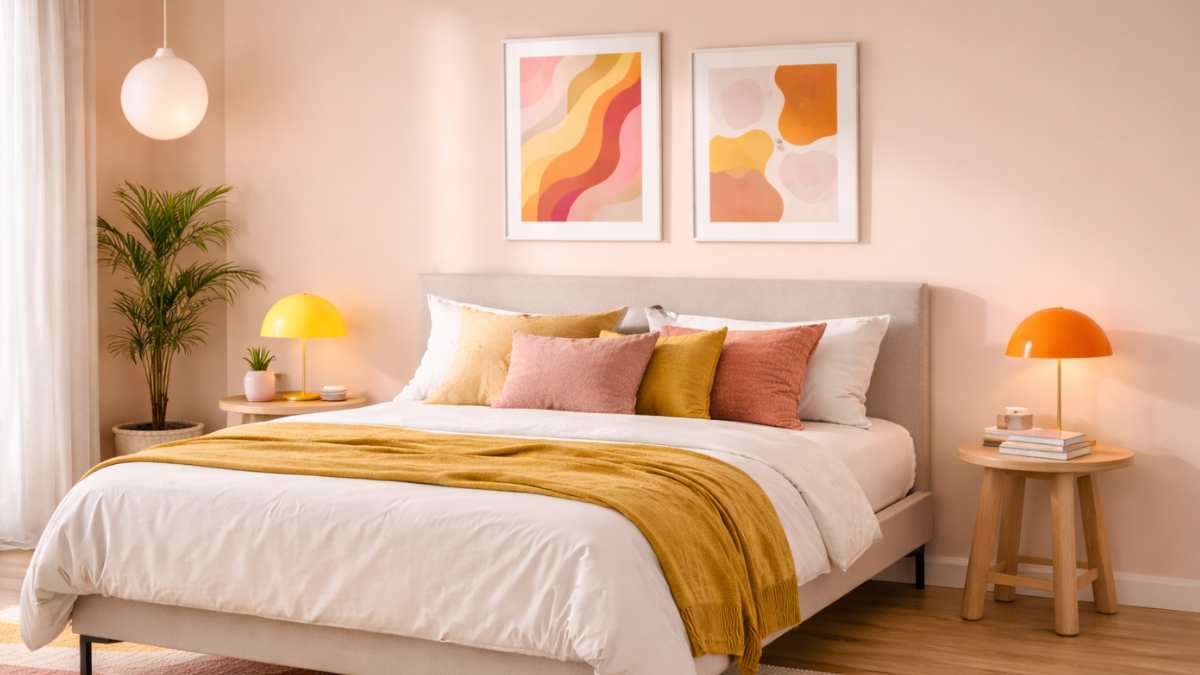
If, however, the room has a more urban feel, with light gray or cool white walls, a stool in black metal or with a thin structure can give a light industrial touch, without weighing it down. The advantage is that it doesn’t look like a nightstand. It seems like an option.
Book stacks: a personal and visual solution
This is a bolder choice, but also more distinctive. It works in rooms that want to say something, not just be tidy. In a space with neutral walls and few elements, a stack of books with covers consistent in tone – beige, ivory, brown – can become real decorative element. It is not accidental: it is built.
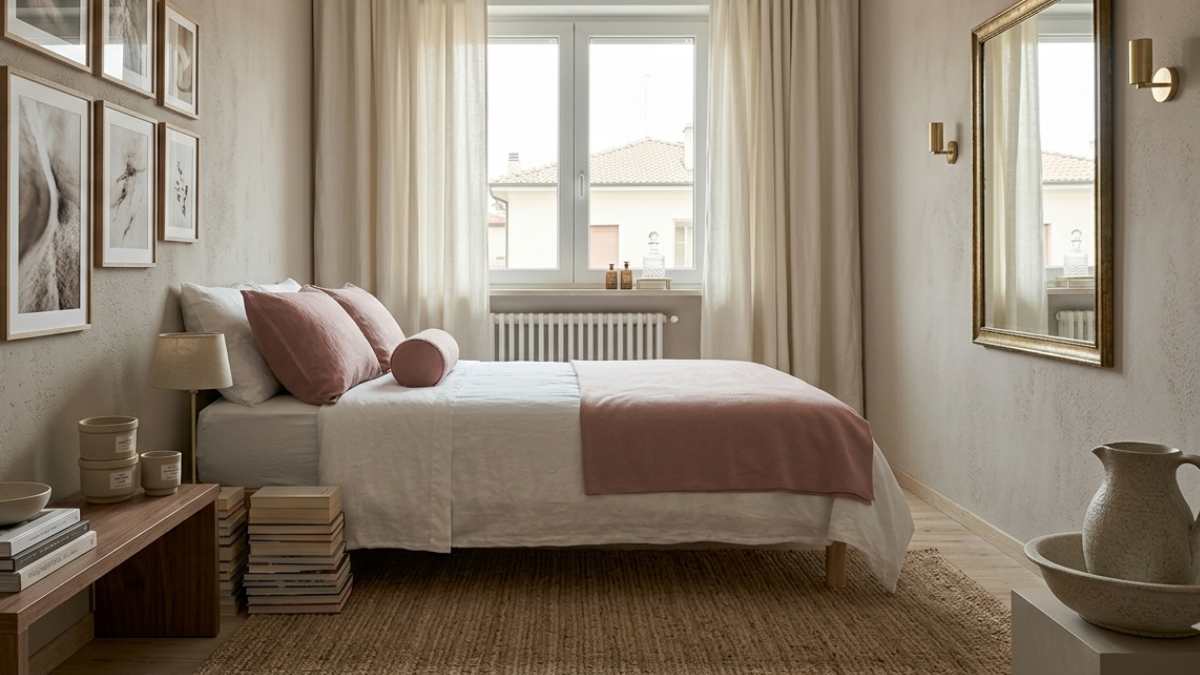
In a more creative room, with paintings, fabrics and colours, you can play with different contrasts and volumes, allowing a freer and less designed side to emerge. It is a solution that works above all on one side of the bed, perhaps in combination with something more stable on the other, to avoid overly improvised effect.
Coffee tables: elegance without rigidity
The coffee table is perhaps the most balanced alternative. It maintains a similar function to the bedside table, but with much greater aesthetic freedom. In an elegant room, with a light palette and refined fabrics, a round coffee table in gold metal or glass creates a distinctive bright spot and sophisticated. The curved shapes help break up the bed’s rigidity and make the whole more fluid.
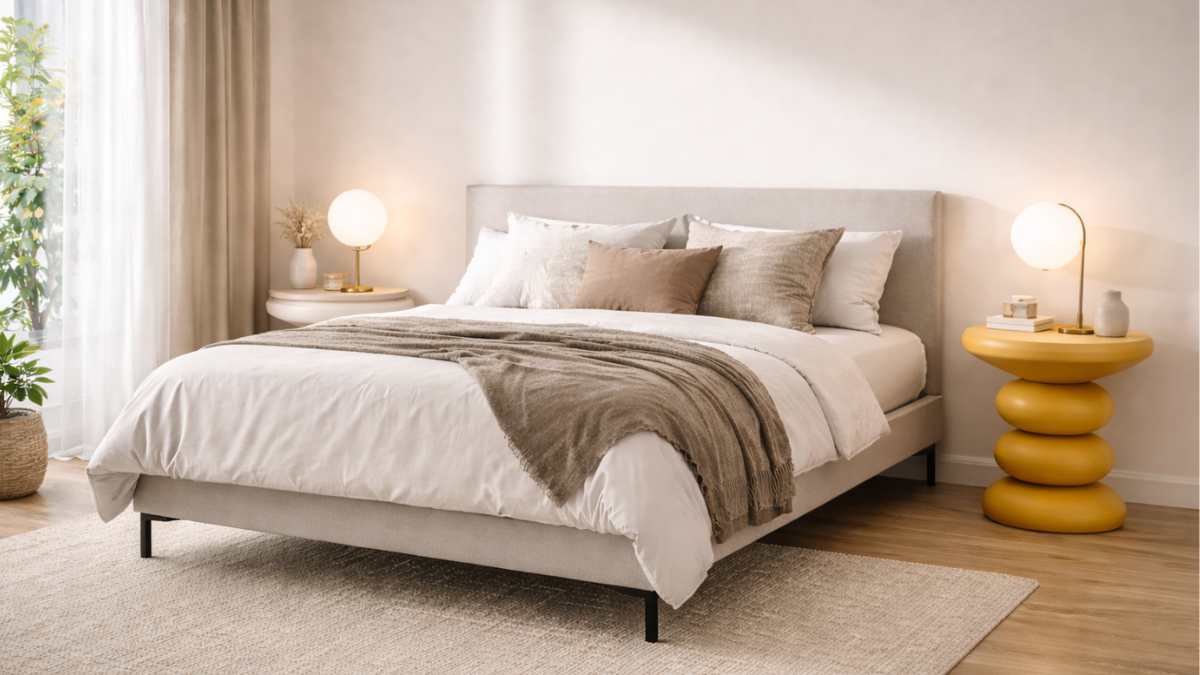
In a more modern space, a coffee table made of light wood or with a minimal structure can be incorporated without creating gaps. The important thing is to avoid models that are too bulky: the visual lightness remains the priority. This solution is ideal for those who want to change without getting too upset.
Recovered items: the unpurchasable character
Here the situation changes completely. It’s no longer just about function, it’s about identity. A wooden box, perhaps slightly worn, placed in a room with neutral tones and natural materials, immediately creates a interesting contrast. A small trunk at the foot of the bed, used laterally, adds depth and restraint.
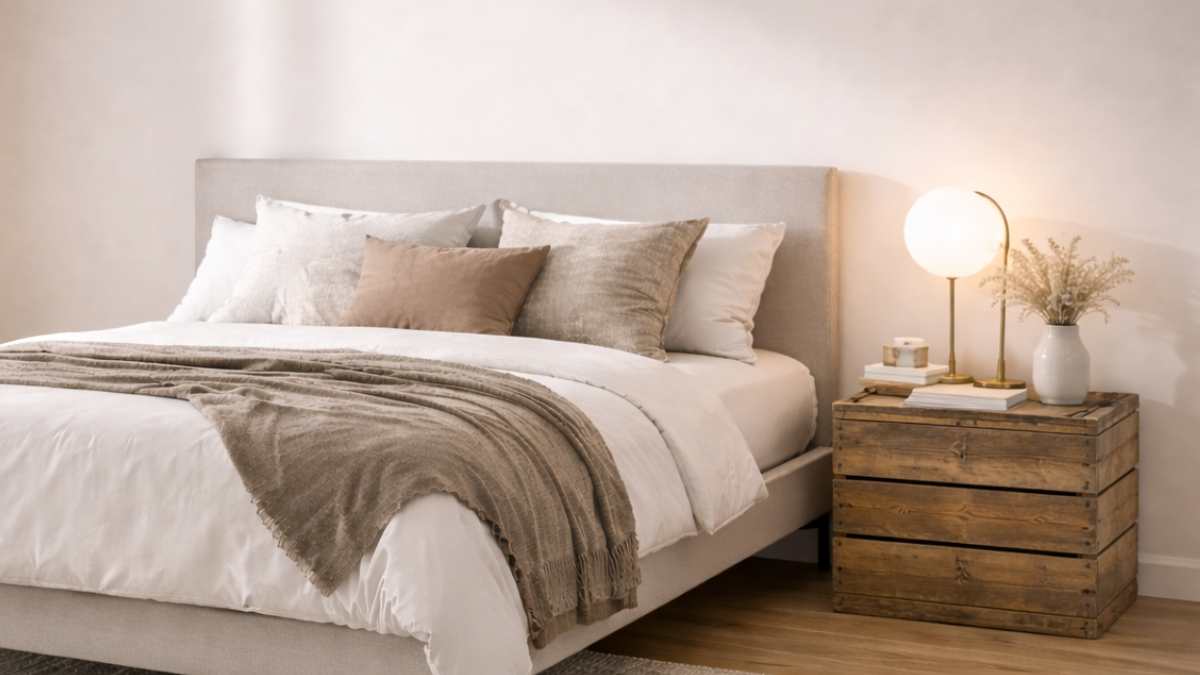
In a more modern room, even a simple container, such as a rigid box or cube, can work if placed in a color-coherent manner. These solutions are not perfect. And that’s exactly the point. They are making the room less predictable, more real.
Breaking symmetry to really change
The real leap in quality is not just changing the bedside table, but changing the way you use it. It is not necessary to have two identical elements on the sides of the bed. A shelf on one side and a stool on the other or a light coffee table combined with a more material solution, create movement and depth. The room stops being static.
This is where the room really changes. Not when you add something, but when you stop following a fixed pattern. The classic nightstand is a safety feature. But it is also often the limit.



