
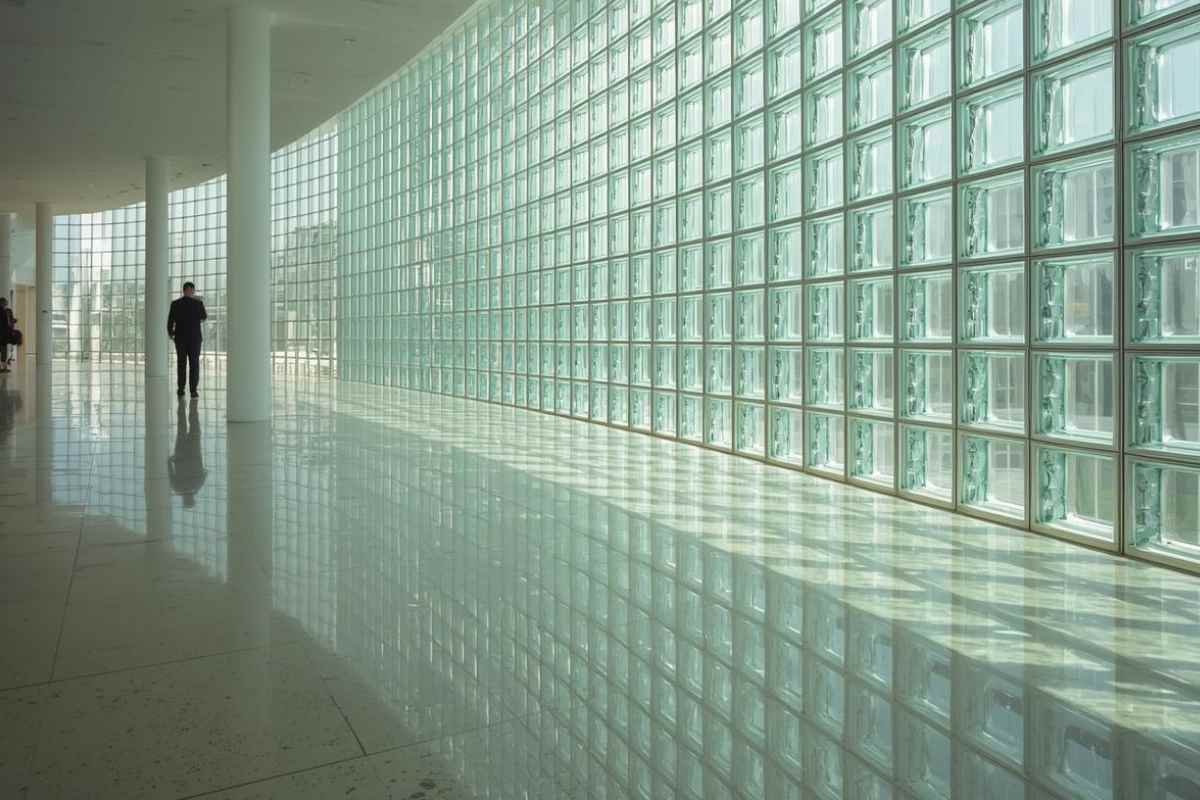

There is a material that seemed destined to remain in the memories of the eighties, among industrial lofts and post-modern bathrooms, and instead is quietly conquering the most modern and sophisticated homes.
We’re talking about glass blocks: those translucent glass blocks that filter light without sacrificing privacy.
Sidelined for decades thanks to new energy efficiency regulations and the fashions of the time, glass bricks are back as protagonists, first timidly in bathrooms, then more and more boldly in the living room, the kitchen, the dining room. A return that is not nostalgia, but true reinvention.
A material with a long (and fascinating) history
The origin of glass bricks is much older than you think. The first hollow glass blocks were developed as early as 1880 by the Swiss architect Gustave Falconnier, designed to regulate the microclimate of rooms and guarantee brightness without exposing the interior spaces to outside views.
They immediately seduced the great masters of modern architecture: Le Corbusier and Bruno Taut made it a characteristic element of their design language. Pierre Chareau’s famous Maison de Verre in Paris, still a pilgrimage destination for architecture lovers today, is the most prominent example.
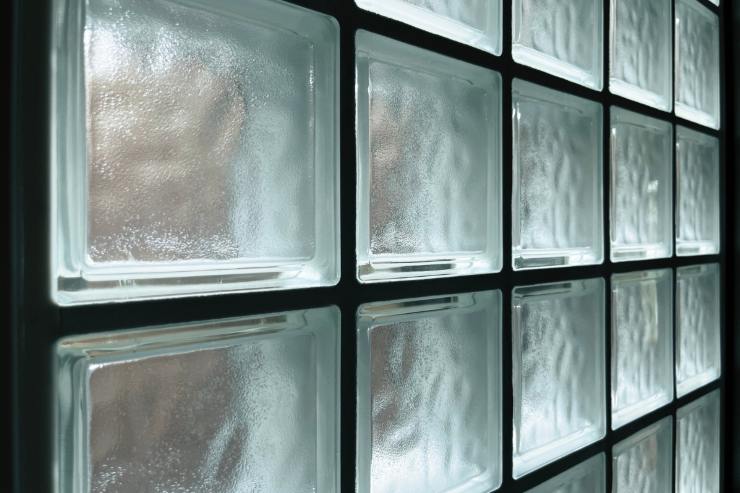
In the seventies and eighties, glass block exploded as a massive trend, appearing in facades, condominium staircases and bathrooms of all types. Then, with the tightening of thermal insulation regulations and changing aesthetic tastes, it ended up being forgotten. Today, however, history repeats itself: as is often the case in design, what has been put aside returns but this time with more awareness, more style and a new versatility that makes it suitable for every room in the house.
Why it works today (and not just in the bathroom)
The great advantage of the modern glass brick is its ability to divide spaces without closing them, letting light pass through the entire floor plan of the apartment. This makes it invaluable in modern homes, which are often characterized by open spaces that require soft and non-oppressive separations.
In the bathroom it remains unbeatable: easy to clean, waterproof, able to transform even the darkest environments. But it is in the living spaces that its renaissance is truly amazing. Designers like Karolina Rochman, in her Baltic Sea project in Sopot, Poland, used up to 1,500 glass lenses imported from France to create visual continuity between the entrance, living room, kitchen and dining room.
Studio Karhard in Berlin, however, transformed the glass block into the real backbone of a renovated apartment, separating the bathroom, sleeping area and kitchen with a long glass wall that plays with light and intimacy. The result is a material that today can be elegant, colorful, industrial or minimal: it all depends on how you use it.



