


Anyone who has more than five plants knows well the mental calculation that precedes each summer departure: how many days will they last before drying out, which of the neighbors and relatives still wants to act as a plant nurse and whether it is worth spoiling the refined aesthetics of the living room with an automatic system from an industrial nursery.
The commercial devices sold, almost always in black or transparent plastic, solve the technical problem but introduce the aesthetic: two small pipes and a square tank are enough to turn a neat green corner into a small plumbing construction site.
There are homemade alternatives that solve both problems together, harnessing millennia-old natural principles with materials that, instead of being hidden, become part of the furniture.
The jug and the cotton thread, the most elegant hydroponics
The basic principle is capillarity: a thread of raw cotton or jute, inserted with one end into the soil of the vase and the other immersed in a container of water, transfers the moisture drop by drop following the same mechanism by which a wick absorbs the melted wax of a candle. The thicker the wire, the greater the flow, a detail that must be calibrated based on the type and size of the vessel.
The advantage compared to automatic systems lies entirely in the container chosen for the stock: a colored glass carafe or a vintage ceramic jug next to the factory it functions as a furnishing accessory in every way, not as a technical accessory to hide. Simply place it higher than the jar, also taking advantage of a slight gravity difference that helps the capillary flow not to stop on hotter days.
Upside-down ampoules, when recycled glass becomes an atomizer
The most direct system remains the bottle turned upside down and partially buried in the ground: filled with water, it releases the contents drop by drop as the substrate dries, following the same principle of negative pressure that regulates an inverted hourglass. The drawback of recycled plastic bottles, apart from the aesthetic, is that the very wide neck often releases the water all at once rather than gradually.
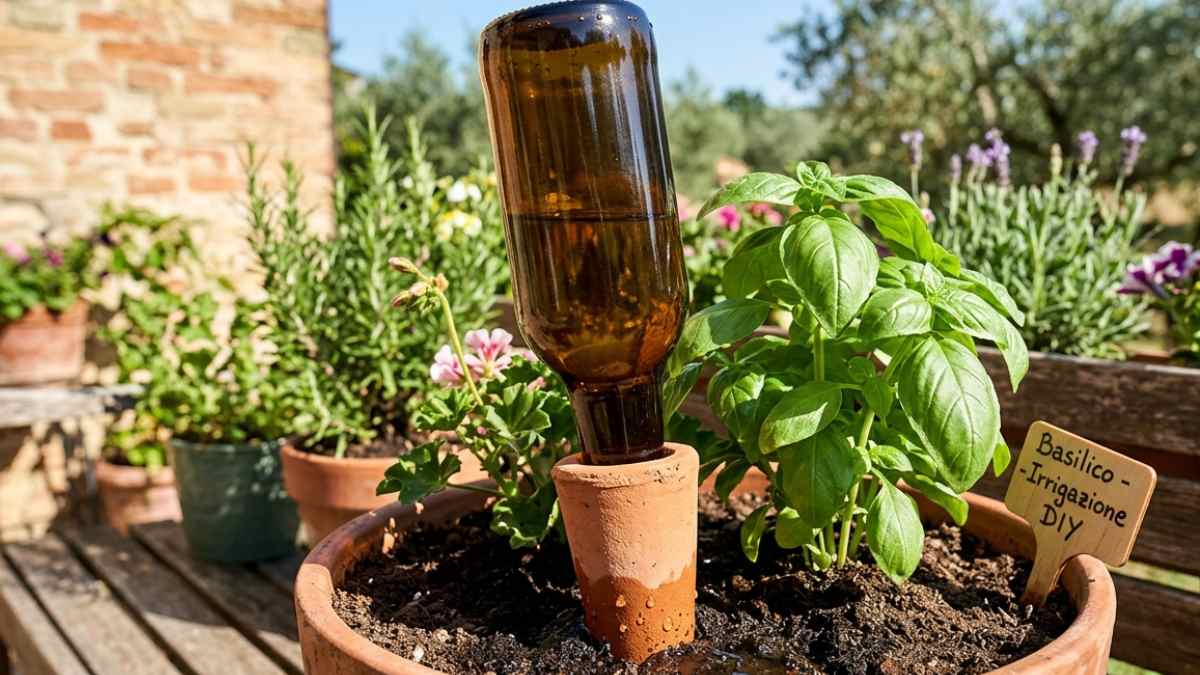
Small bottles of craft beer or fortified winewith a narrow neck and tinted glass, solve flow and vision problems together. Paired with a specific terracotta watering can, available at any well-stocked nursery, they fit into the vase like a small sculpture rather than recycled emergency waste.
The undergrounds all, an Egyptian system that still works
The oldest method among those available comes from Egypt and pre-Columbian Mexico: a small terracotta pot without glass, buried next to the plant and filled with water, releases moisture through the porous walls following the water tension of the surrounding soil, stopping automatically when the substrate is already saturated. With a jar of one or two liters, the typical autonomy ranges from five to seven days, a number confirmed both by small Italian producers such as Nicole Store and by the French professional models of Ceramica Jamet.
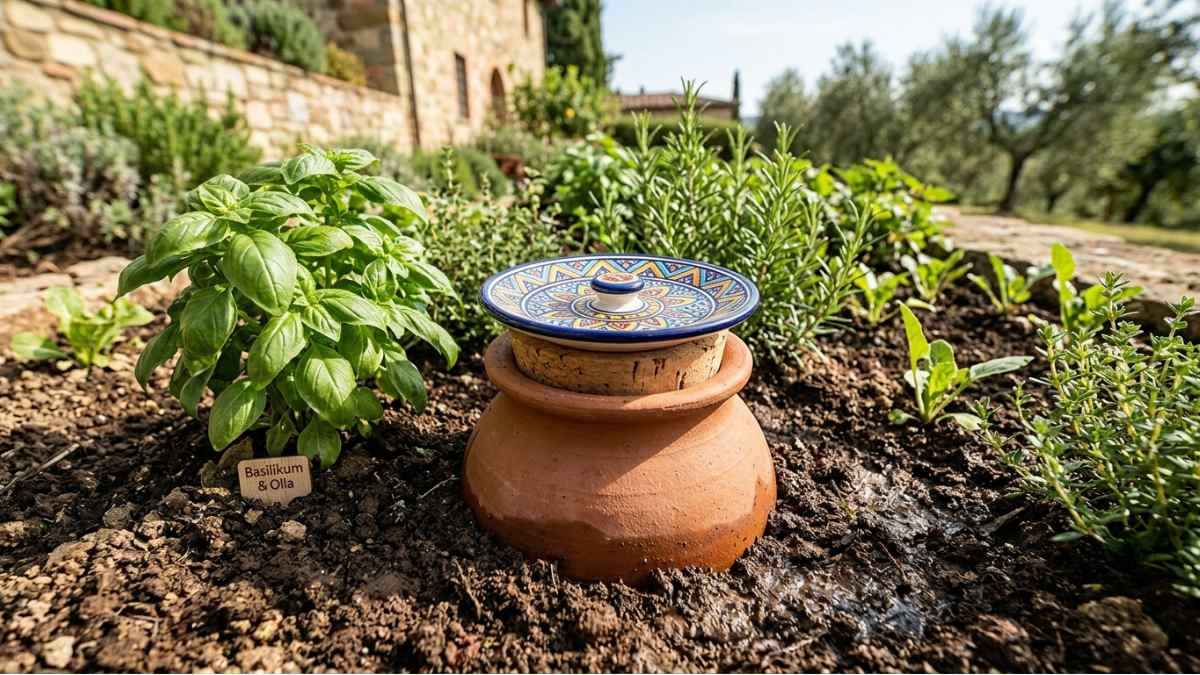
The aesthetic touch here is almost forced by the material itself: seal the drain hole with a cork and close the spigot with a hand-painted saucer that comes out of the ground like a little decorative feature rather than a drain pipe. Those leaving for more than a week can connect multiple ollas in series to a small external tank, a system that some manufacturers such as ClayolaEgypt guarantee a full month of autonomy using only gravity.
The water jelly, the hydration you barely notice
And natural gel made with water and isinglas or with agar agar as a vegetable alternative, it releases moisture extremely slowly thanks to its molecular structure that traps water molecules in a semi-solid network. Simply dissolve the agar agar in warm water following the proportions indicated on the package, pour the liquid mixture into small clear glass containers and allow it to solidify before placing on the soil surface.
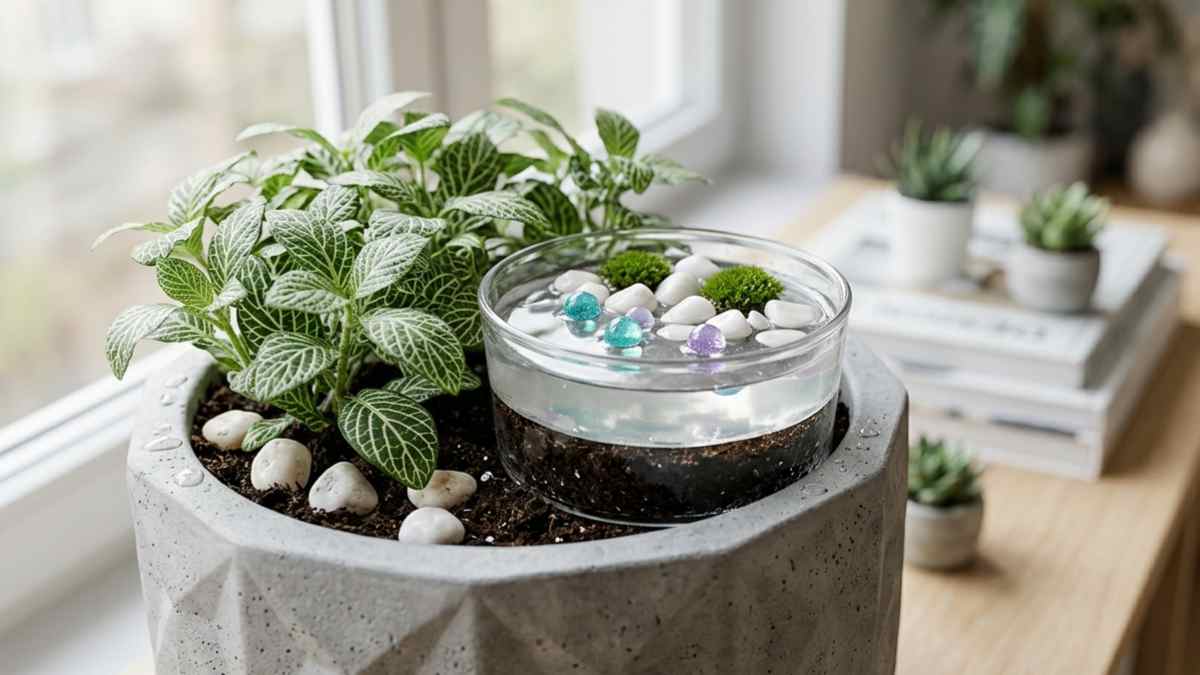
Decorate the surface with white pebbles or colored hydrogel it turns what would otherwise appear as a laboratory experiment into a small decorative element above the vase, perfectly in line with the aesthetics of the rest of the room.
The detail that decides whether the system really works
None of these methods make a little preparation unnecessary. Grouping plants in a bright room but without direct sun creates a more humid microclimate and reduces overall evaporation, when testing each system a week before from departure, observing how quickly the supply runs out, you avoid the worst surprise: coming home to find the gel intact but the plant still dry, because the flow calibrated in the store never exactly matches that of your balcony.
There is no doubt that there are other, much faster and more practical methods of watering when you are not at home, but these proposed ones have that something extra that is also beautiful to see. After all, we are still talking about Design.



