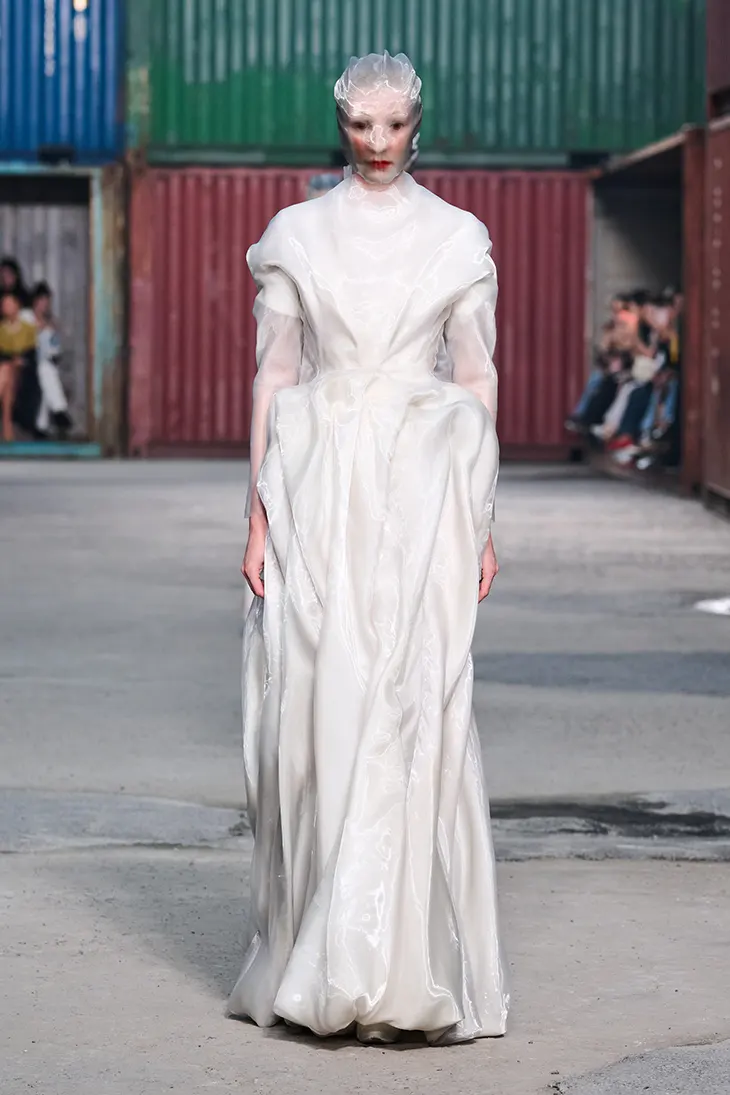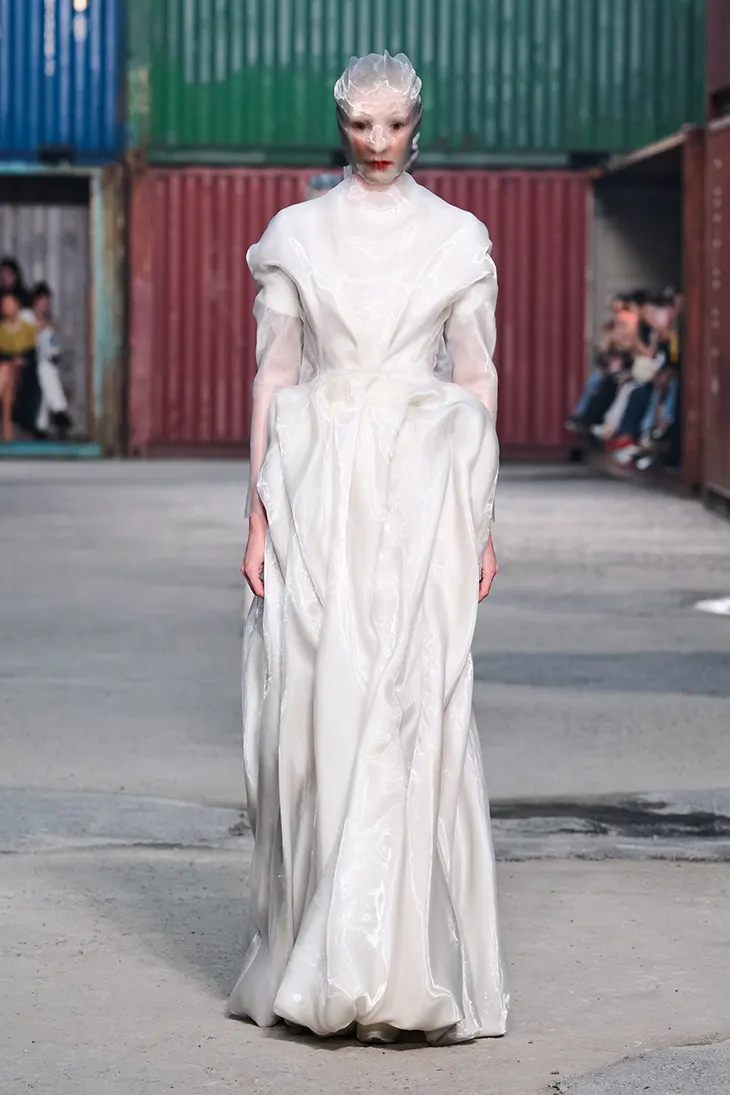

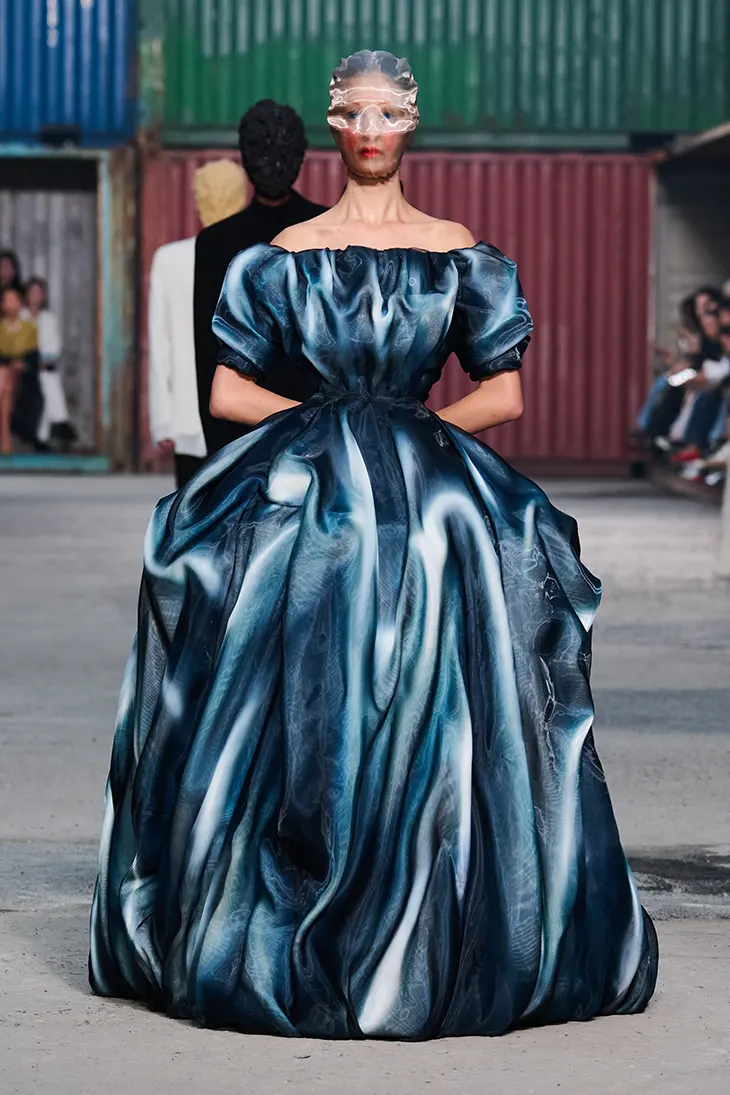
Maison Margiela stages the Fall Winter 2026 collection within a structured environment reminiscent of a Parisian flea market after hours, where objects exist in a state of repair, decay and transformation. The show brings together ready to wear and artisanal pieces in a format that harkens back to the house’s early presentation method. This decision sets the tone. She juxtaposes one-off couture works alongside garments intended for wider circulation, creating a dialogue between rarity and repetition that runs throughout the collection.
The collection is built through a reconstruction system. Clothing appears as if it has been recovered, altered or reassembled from fragments. Tailoring occupies a central position, yet every known form undergoes intervention. Tailcoats lose their structure, their tails are cut or dyed white bianchetto. Double-breasted jackets are paired with second-skin jerseys. Leather sits fused to tweed, velvet pressed to tailoring. These combinations eschew decoration and instead push the garments into new structural states. Each piece bears elements of manipulation, as if the process remains visible and unresolved.
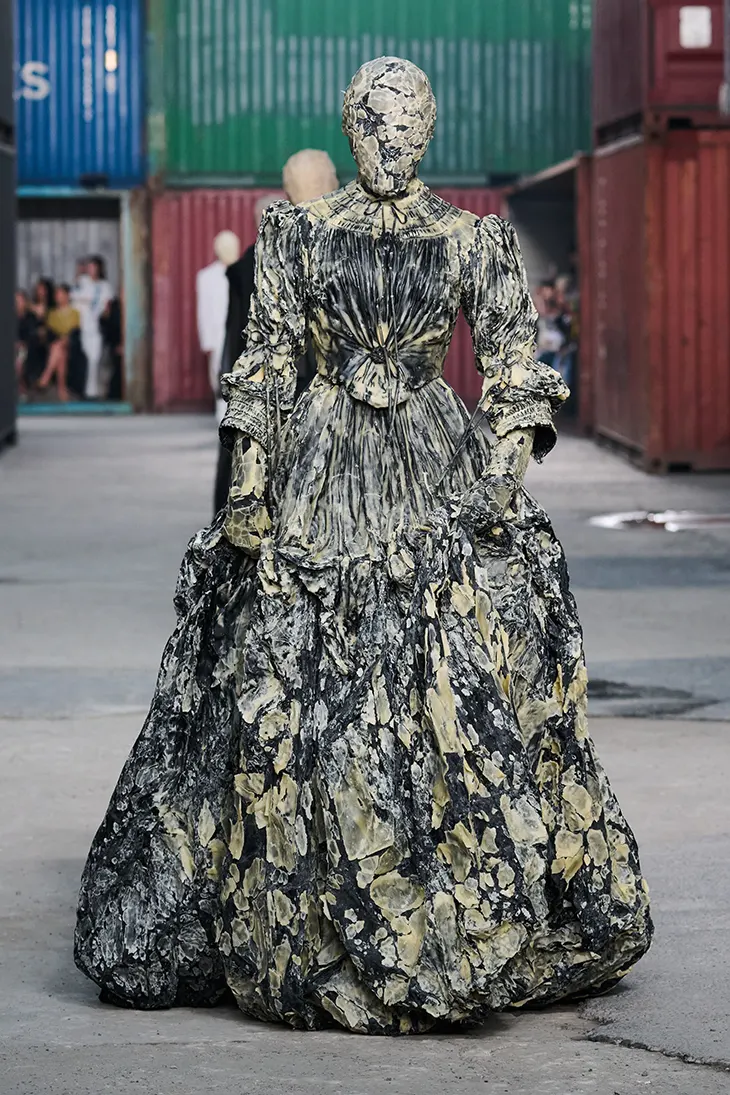
Material processing defines the strongest moments. Porcelain emerges as both a method of reference and a method of construction. Organza creates layered surfaces that reproduce its fragility, while real porcelain appears shattered and reassembled directly onto the garments. This approach also extends to the handling of vintage pieces. Dresses that no longer function as clothing are glued to new mounts and ripped apart, leaving only their imprint. The tapestries are restored through sequins, not to hide the damage but to mark it. These gestures transform wear and tear into a visible design language, where absence and residue replace intact form.
Historical references move through the collection with precision. Edwardian silhouettes guide proportions and posture, with high necklines, extended sleeves and long lines shaping multiple looks. In one case, a six-meter Edwardian painting becomes a dress without being cut, shifting the garment into an object that carries both image and structure. Another piece translates a mold of an Edwardian dress into a wearable form, including the imprint of jewelry. These works focus on the memory embedded in clothing, where clothing holds traces of a past existence rather than presenting a fixed identity.
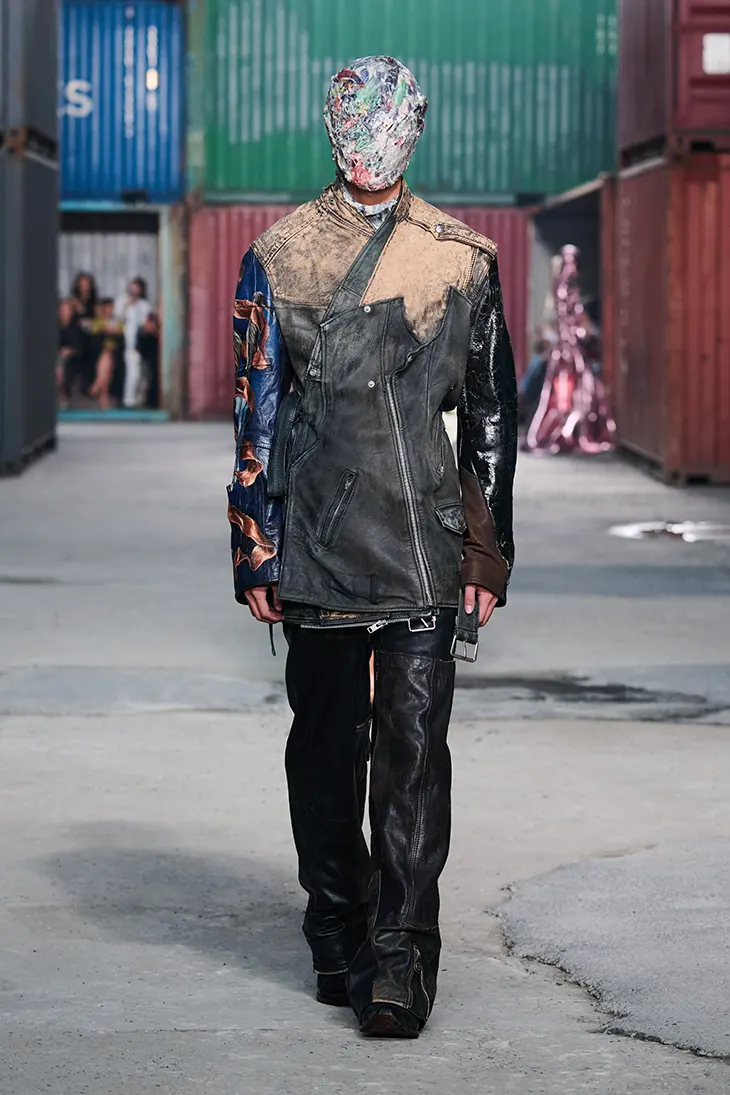
Draping further pushes technical experimentation. Some dresses hide their construction, removing any clear starting or ending point. Others introduce rigid furniture fabrics, glued to preformed forms and then opened along draped lines. The method creates a tension between control and interruption. Knitwear follows a similar logic. Sweaters appear altered, with painted surfaces or proportions shifted through elongated sleeves and irregular necklines. Boiled pieces of wool are sculpted through heat and cutting, reinforcing the idea that the garments remain in flux even after they are completed.
Accessories extend the same approach. Footwear arrives with exposed structures, including cut-out boots that reveal inner layers and designs with fewer heels that disrupt the balance. The bags feature surface treatments that echo the clothing, from tapestry prints that continue to distress over time to mirrored finishes and wrapped handles that reference vintage items. The jewels appear coated in wax or reshaped into crystalline forms, reinforcing the idea of objects found, altered and re-circulated.
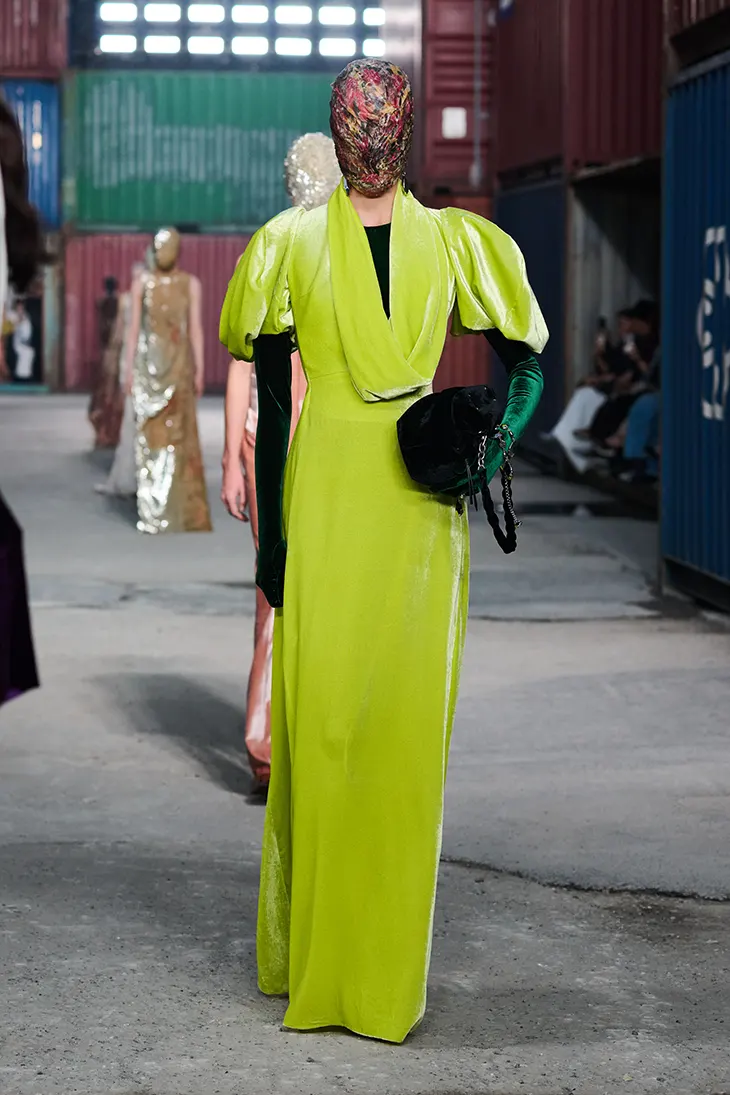
Throughout the show, the masks unify each look, removing identity and paying absolute attention to construction and material. The collection refuses a fixed reading. It works through fragments, processes and visible transformation. Maison Margiela presents a system where clothes never settle and where each piece exists between its previous form and its next iteration.