
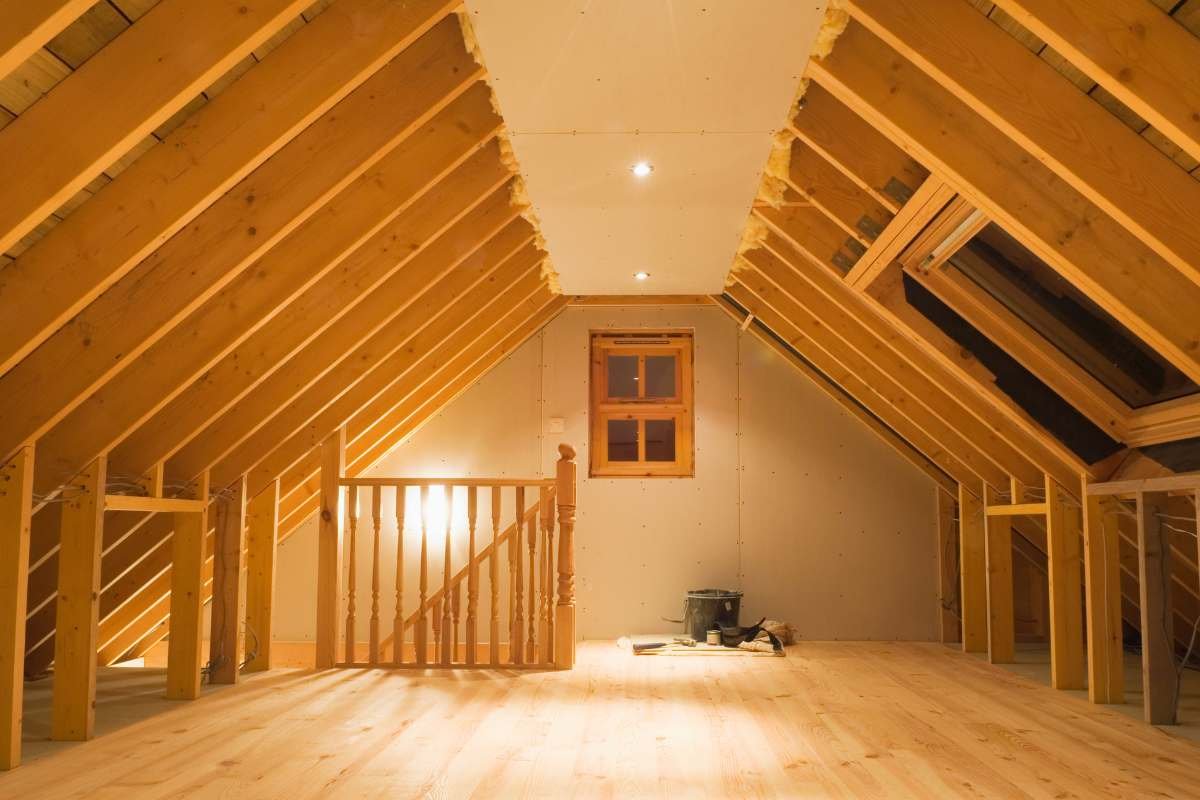

There is a way of living in the attic that goes far beyond simply reclaiming a difficult space.
This is what architect Marta Cammarano imagined for a Roman loft created inside a Coppedè-style building of the early twentieth century, one of the capital’s most exciting and sought-after neighborhoods.
The result is a bright, informal and surprisingly stylish pied-à-terre, where the real revolution is not in the walls, but in their absence. Rather than traditional dividing walls, the masonry and flooring narrate the space, guiding the eye and defining functions with a lightness that few projects can truly achieve.
The floor as the absolute protagonist: Neapolitan terracotta that redesigns the space
Anyone who thinks that a loft with pitched ceilings and variable heights is necessarily a problem to be solved has yet to see how it can become a strength in the right hands. In this Roman attic, the turning point came from a choice both simple and courageous: eliminating the large pieces of furniture that originally divided the space, making it closed and fragmented and restoring a complete and fluid visual continuity to the rooms.
What defines the different living areas, kitchen, bedroom and bathroom are not walls or partitions, but small walls and above all the great protagonist of the project: the Neapolitan terracotta floor. With a pattern reminiscent of the classic herringbone parquet with ribbon and ridges, the polished and natural terracotta distinguishes the functions without ever interrupting the breath of the space.
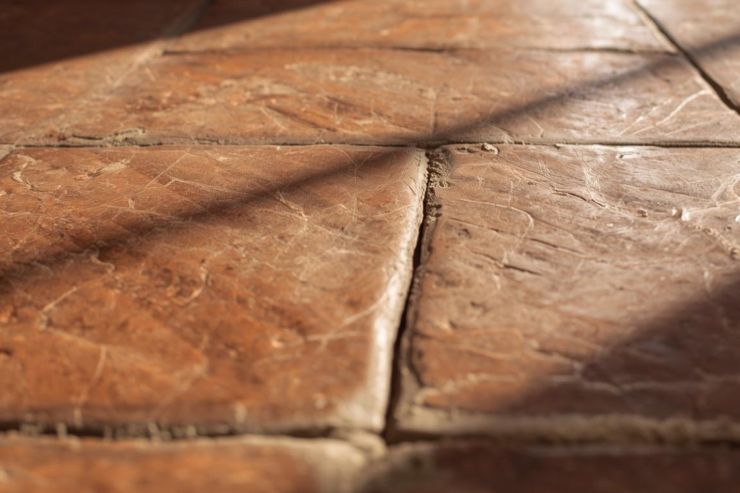
It’s an approach that works particularly well in lofts, where visual continuity is essential to avoid the suffocating effect that low ceilings can create. The color palette does the rest: terracotta and blue in all their shades interact in every corner, creating a warm and contemporary atmosphere at the same time.
Bespoke brickwork: when loft boundaries become furnishing solutions
One of the most fascinating aspects of this project is how every architectural constraint was turned into a creative resource. The corner sofa, for example, is not a piece of furniture bought in a store, but an element built directly on a masonry base located in the lowest area of the atticconceived as an integral part of the architecture of the environment.
A minimum thickness of 17 cm for the lining guarantees the necessary comfort without sacrificing the aesthetic coherence of the project. The kitchen also follows the same logic: custom-made with a structure covered in resin cement, it is as much a part of the wall as the wall itself.
In areas where the ceiling falls below the minimum height of 150cm for habitability, custom-made drawers and wardrobes closed by doors have been created, turning a technically useless space into valuable storage capacity. Even the bathroom follows this philosophy: the sink cabinet comes from a metal structure on top of which a tile-covered mattress has been built, with the sink built into it.



