Textiles are no longer a quiet substrate. It is infrastructure, technology, protection, climate strategy, logistics challenge and cultural brand all at once. A fabric may need to breathe, stretch, resist flame, withstand abrasion, reduce dependence on fossil resources, comply with safety standards, move through a digital supply chain and still arrive as something desirable enough to identify, buy, wear, install or live with. Simply put, textiles are now at the center of some of the most pressing questions facing design and industry: What can materials do? How can they get smarter? How quickly can innovation move from concept to implementation?
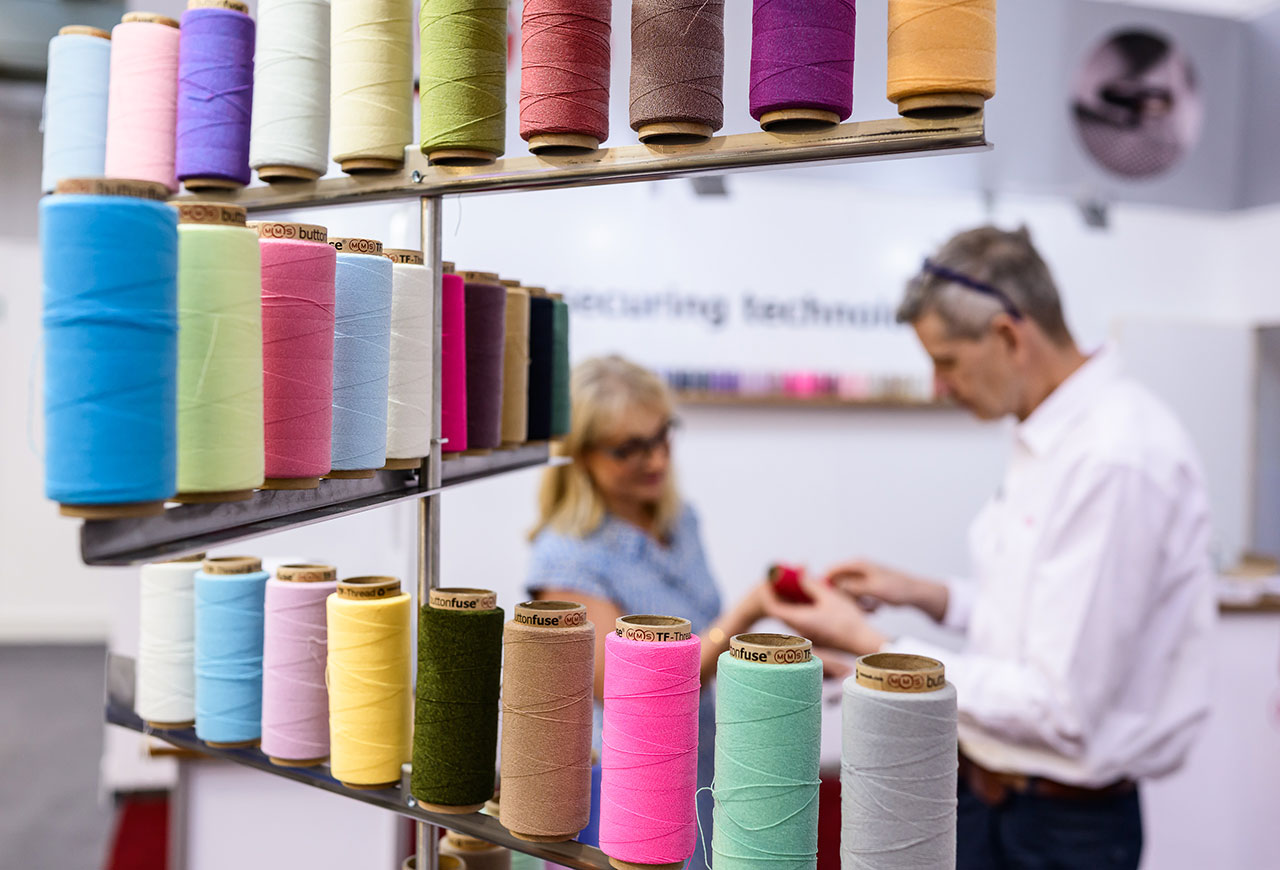
MMS UK Sewing Technology and Materials /// Photo: Jean-Luc Valentin, courtesy of Messe Frankfurt
For Messe Frankfurt, the answer lies in an ecosystem. Through Techtextil, Texprocess and Heimtextil, the organization has created a connected series of platforms that map the textile industry from fiber to end application, from advanced materials research to manufacturing technologies and from technical performance to market distribution.
At Techtextil and Texprocess 2026, more than 36,000 visitors and 1,700 exhibitors from 112 countries gathered in Frankfurt. In a moment defined by geopolitical uncertainty, cost pressure, sustainability requirements and supply chain disruption, exhibitions functioned less like static displays and more like working systems. Research institutions, technology providers, manufacturers, processors, brands and application partners were placed in close proximity, creating the conditions for ideas to move faster than potential into practice.
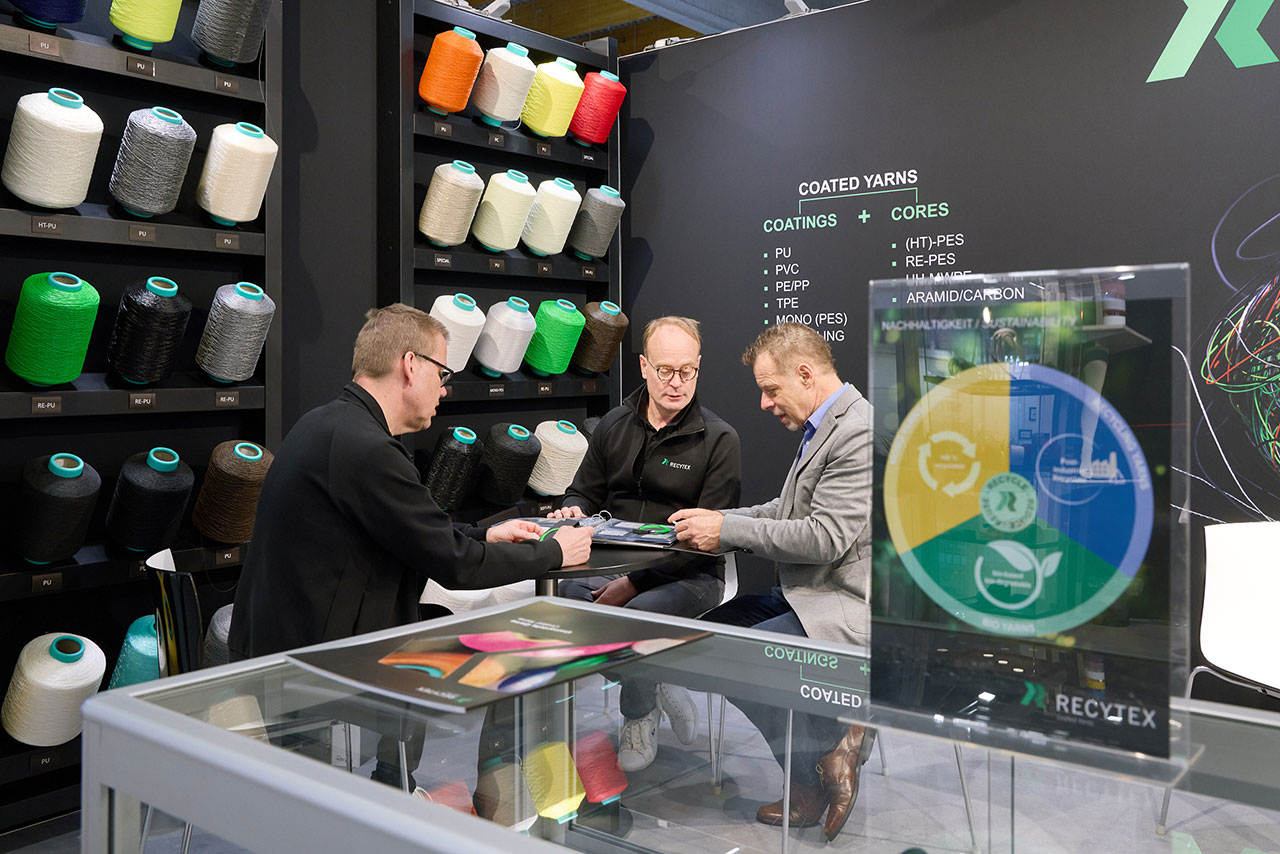
Recytex GmbH & Co. KG /// Photo: Jean-Luc Valentin, courtesy of Messe Frankfurt
Olaf Schmidt, Vice President Textiles & Textile Technologies at Messe Frankfurt, notes that the role of trade fairs is evolving because companies need new know-how, new partners and access to new ideas. Techtextil and Texprocess act as strategic partners for the industry bringing together players who would otherwise not meet. This connective tissue is critical. Innovation rarely happens in isolation. It emerges where disciplines collide: material science with clothing, artificial intelligence with cutting systems, biological chemistry with agriculture, industrial safety with fashion or recycling technology with consumer brands.
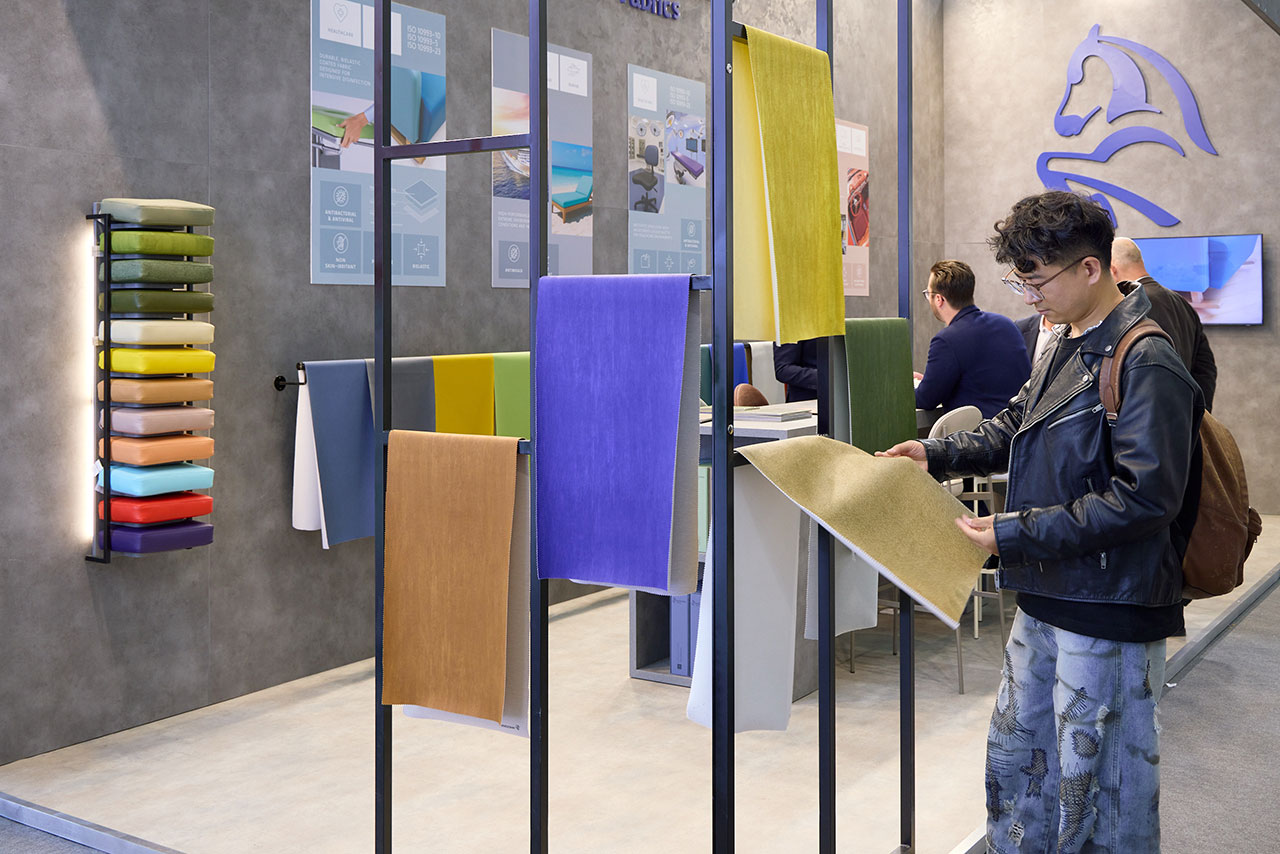
Coated Textiles Monteiro Ribas Revestimentos /// Photo: Jean-Luc Valentin, courtesy of Messe Frankfurt
At Techtextil, this convergence was visible through material innovation. The Nature Performance section brought together more than 110 exhibitors who focused on natural and organic alternatives to synthetic fibers, highlighting a shift in how performance is now defined. Durability, breathability, heat resistance and tear resistance are still necessary, but they are no longer enough. Increasingly, a high-performance textile must also answer questions about recyclability, biodegradability, CO2 savings and reduced dependence on fossils. Compostable technical viscose fibers for agriculture and scalable bio-based polymers were presented as industrially relevant solutions.
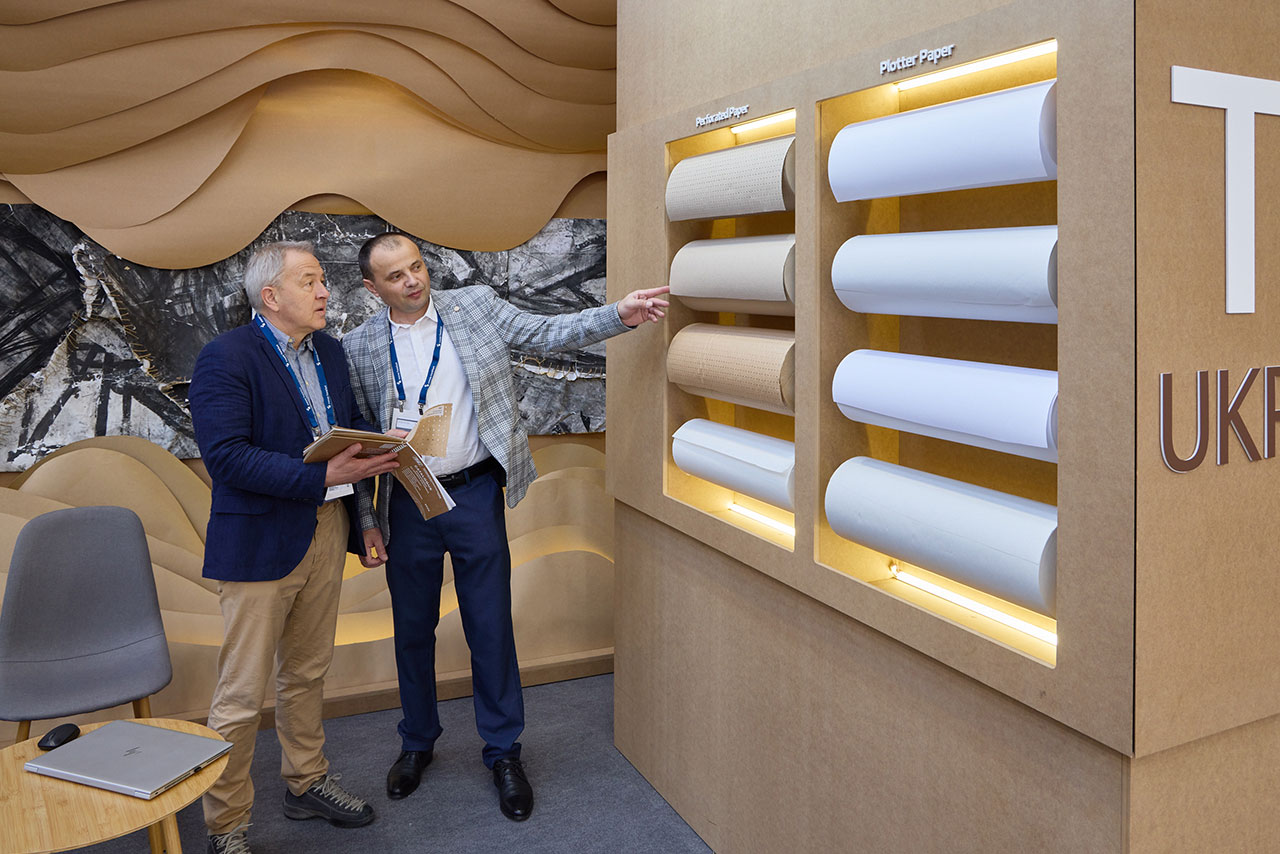
Private Enterprise ‘Technical and Industrial Service’ /// Photo: Jean-Luc Valentin, courtesy of Messe Frankfurt
The industry has moved beyond sustainability as a brand-friendly consideration. It becomes a technical expectation. Materials are being asked to perform both environmentally and mechanically, and Techtextil gives these developments a place to view, test, compare and connect with application partners across the board. Mobility, construction, medicine, protection, agriculture, sports and fashion are coming to the fore as advanced textiles expand far beyond traditional clothing.
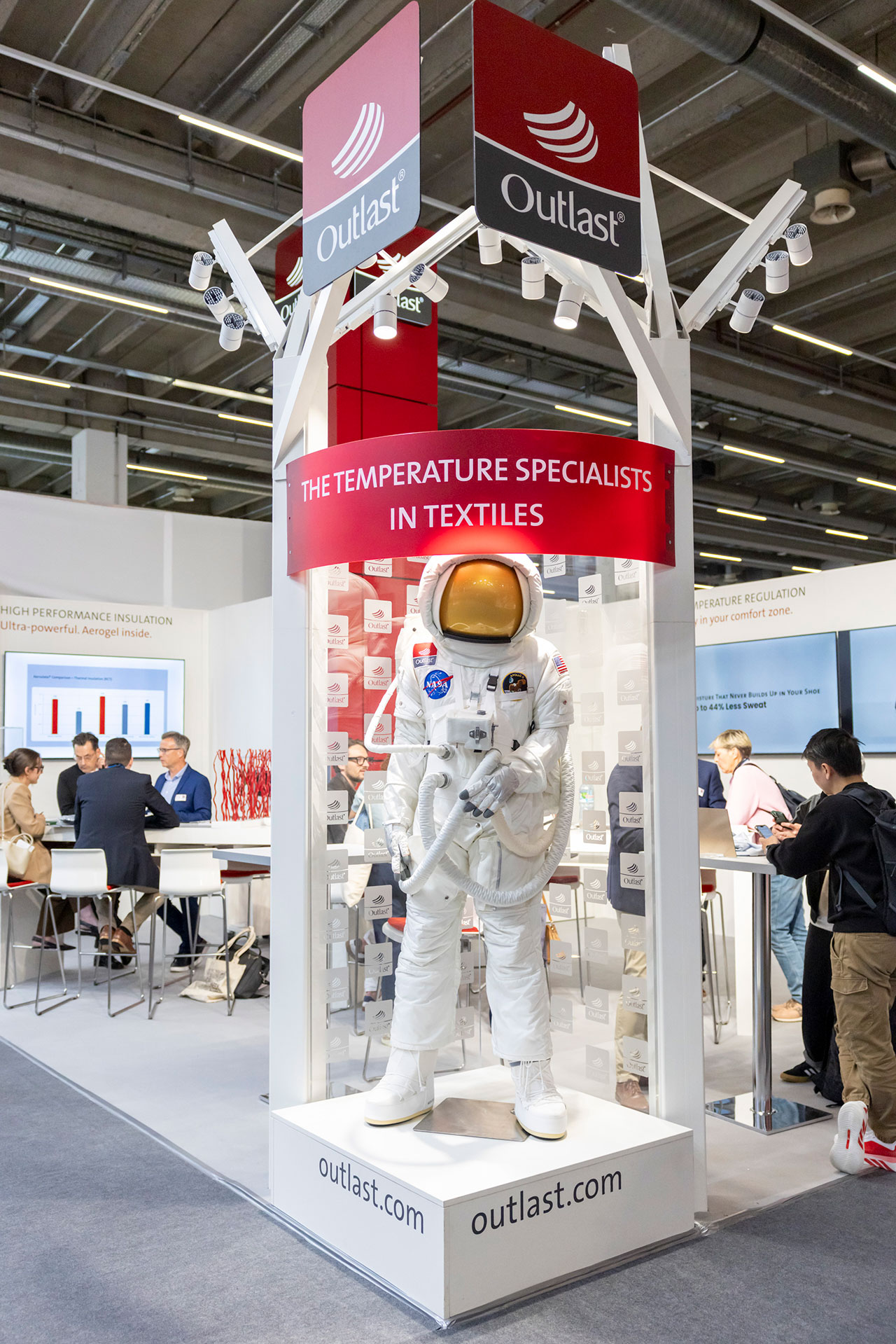
Outlast Technologies GmbH /// Photo: Thomas Fedra, courtesy of Messe Frankfurt
Performance clothing offered another clear message. At Techtextil 2026, the Performance Apparel Textiles segment has doubled compared to the previous edition, reflecting growing demand from the security, defense, civil protection, outdoor, sports, fashion, military and industrial security markets. These are not areas where materials can only be based on aesthetics. They require standards-compliant fabrics that protect, adapt, withstand and support the body under specific conditions. The future of clothing, in this context, is not just about dressing the identity. It’s about equipping people for increasingly complex environments.
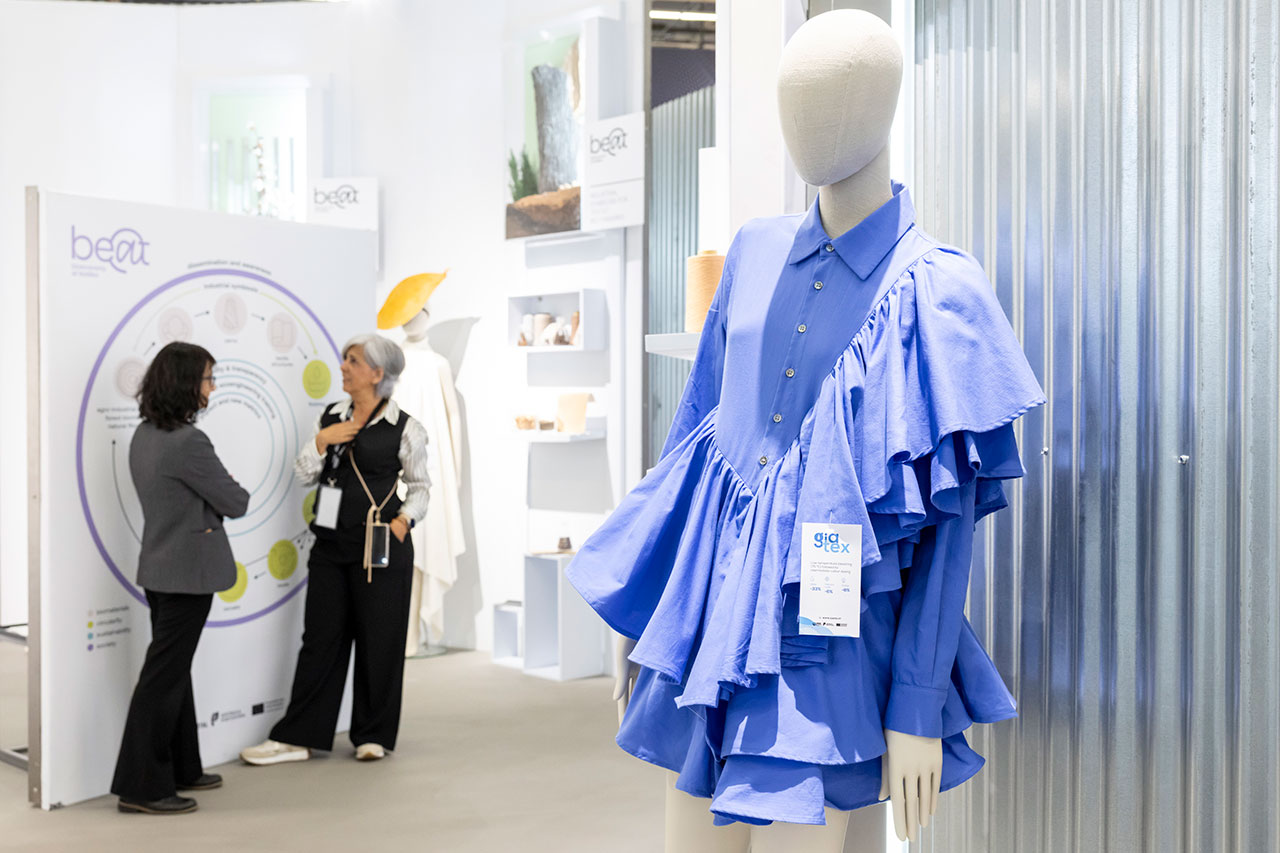
Research, Development, Training, Consulting CITEVE – Technology Center for the Portuguese Textile and Clothing Industries /// Photo: Thomas Fedra, courtesy of Messe Frankfurt
While Techtextil shows what materials can be made, Texprocess shows how they can be made. This is where progress shifts from fiber and fabric to system architecture. In the 2026 edition, connected solutions took center stage alongside machinery, linking design, resource planning, manufacturing, cutting, sewing, sourcing and logistics. AI has emerged as a functional tool supporting product development, real-time decision making, artificial image processing, automated cropping, intelligent interfaces and more efficient workflows.
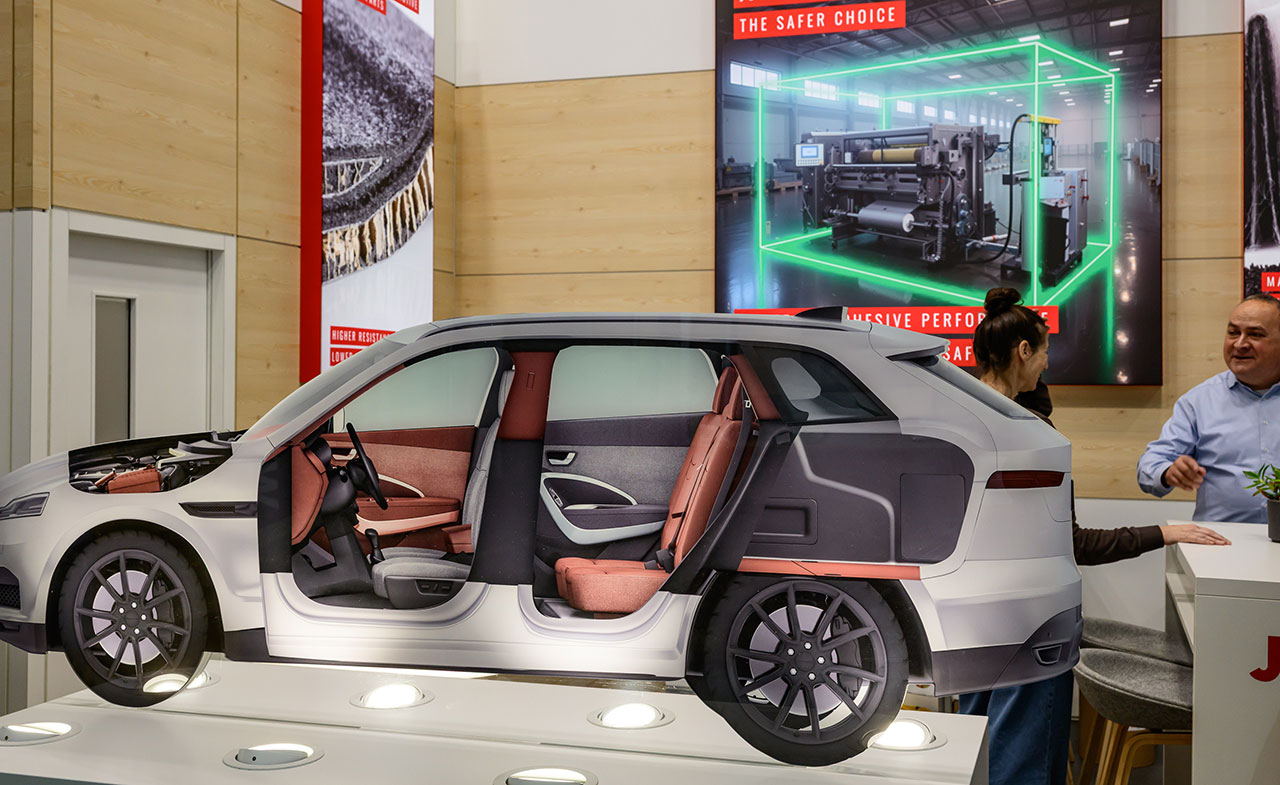
Bondtec Jowat SE /// Photo: Pietro Sutera, courtesy of Messe Frankfurt
Moving forward, competitiveness will depend less on individual innovations and more on integrated systems. Manufacturers under pressure to move faster, waste less and remain profitable need connected manufacturing models that can respond to demand in real time. This means connecting product development, procurement, design, manufacturing and logistics through digital workflows and actionable data. It also means moving away from linear systems to more flexible, resource-efficient models capable of adapting to volatile markets.
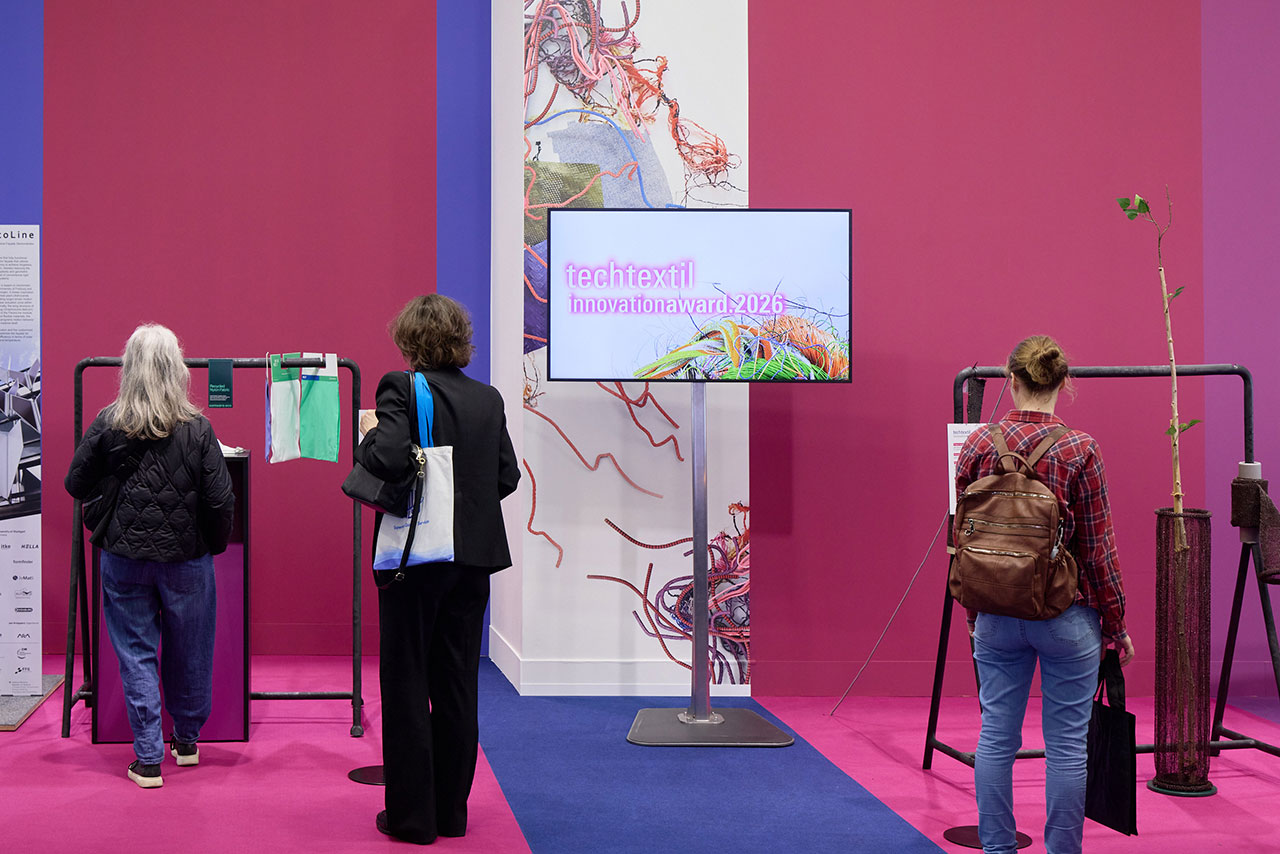
Innovation Award 2026 /// Photo: Jean-Luc Valentin, courtesy of Messe Frankfurt
At a time when so much of the industry is being asked to accelerate, Messe Frankfurt offers something both fast and grounded, where innovation is stress-tested against real markets, real systems and real production needs. Techtextil, Texprocess and Heimtextil are tools to make the next thing possible.
To learn more about these and other activations from the company, visit messefrankfurt.com.
Photo courtesy of Messe Frankfurt.