

Jiumo Wang creates an interactive device for children with OSA
Designer Jiumo Wang, together with researchers at ShanghaiTech University and Fudan University’s Eye and ENT Hospital, is developing Oneiro, an emotional healthcare design that redefines the pediatric medical experience through emotionally intelligent interaction. Created for children aged four to thirteen diagnosed with Obstructive Sleep Apnea (OSA), the project, presented during Milan Design Week 2026, addresses the fear and anxiety often associated with procedures such as nasal endoscopy, turning the waiting period before the examination into a moment of calm, dedication and creative engagement. It was designed as an early prototype for the All included companion hospital of 2050, the system explores how emotional care can be incorporated into future clinical settings.
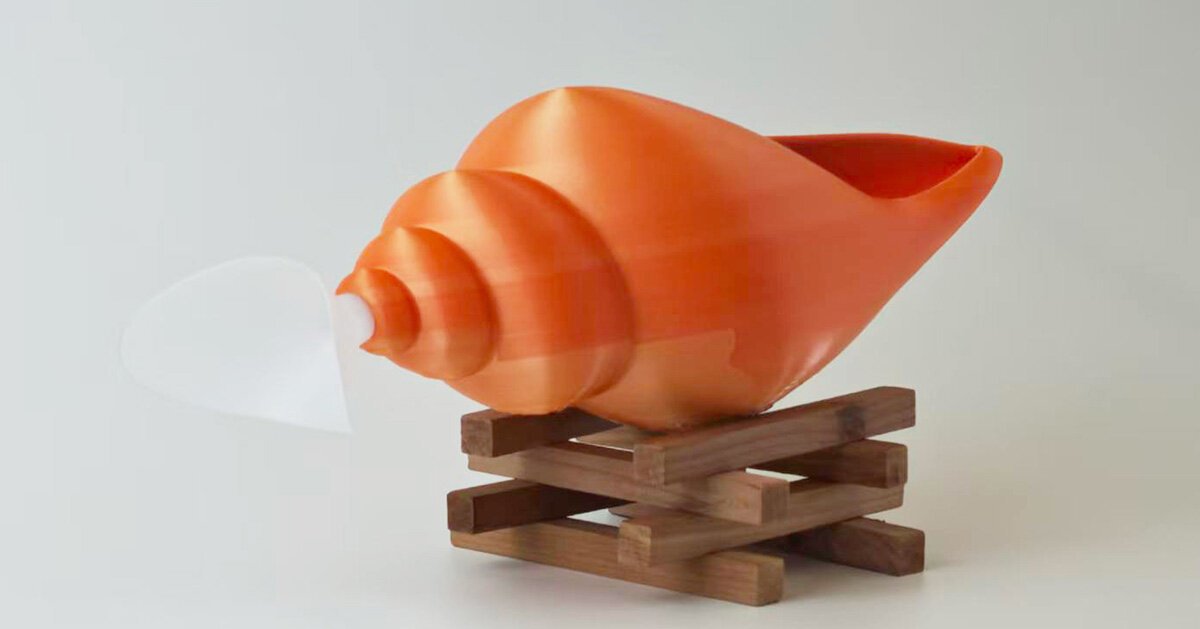
At the center of Oniros, which means “dream” in Greek, is an interactive shell-shaped device. Before their exam, children blow into a disposable mouthpiece and watch their breath transform into calming digital graphics that slowly evolve on the screen in real time. Instead of sitting anxiously in a waiting room, they become active participants in the experience, using their own breath to create peaceful virtual landscapes. Contactless interaction is simple, hygienic and easy to integrate into hospital environments while helping to reduce pre-treatment anxiety.

all images courtesy of Jiumo Wang unless otherwise noted
Oneiro redefines medical stress through breathing and play
Presented at Archivi Futuri at ZONAK in Isola, the project joined a wider exploration into the future of preservation, emotional memory and evolving technologies beyond 2050. Co-curated by Isola and Pietro Petrillo, the exhibition brought together international designers and studios exploring how cultural production, emotions and everyday experiences can be sustainable AI. Within this context, Oneiro has contributed to a softer vision of healthcare technology based on empathy, emotional resilience and care-centered interaction.
Oneiro positions children as co-creators of their own emotional experience, responding to three central psychological needs: immediate feelings of safety, autonomy through predictable interaction, and long-term emotional resilience. By turning breath into a means of creation, design reframes an act usually associated with stress into one associated with calmness and fulfillment. Jiumo Wang aims to support families experiencing stressful hospital visits while strengthening communication and trust between doctors and young patients. The system proposes a scalable framework for emotionally responsive healthcare environments where empathy becomes part of the technological infrastructure itself rather than an afterthought.
Looking toward future applications, the innovative design student and the research team envisions AI-driven personalization and the development of a digital emotional passport capable of tracking a child’s emotional journey through medical visits. Through this softer vision of healthcare technology, Oneiro proposes a future where clinical spaces operate through caring, emotional intelligence and empathetic interaction.

Oneiro transforms children’s breathing into calm digital environments

the cone-shaped device is designed to reduce anxiety in children with sleep apnea

Oneiro combines interactive breathing with emotionally responsive healthcare design

the shell-like form houses the device’s internal electronics and breathing system

presented during Milan Design Week 2026, Archivi Futuri at ZONAK in Isola | image © designboom

Children create evolving digital images in real time through guided breathing interaction

contactless interface integrates playful interaction into pediatric healthcare environments

Oneiro redefines pre-exam waiting rooms through smoother and more empathetic design
project information:
name: Oneiro
designer: Jumo Wang with ShanghaiTech University and Eye and ENT Hospital of Fudan University



