
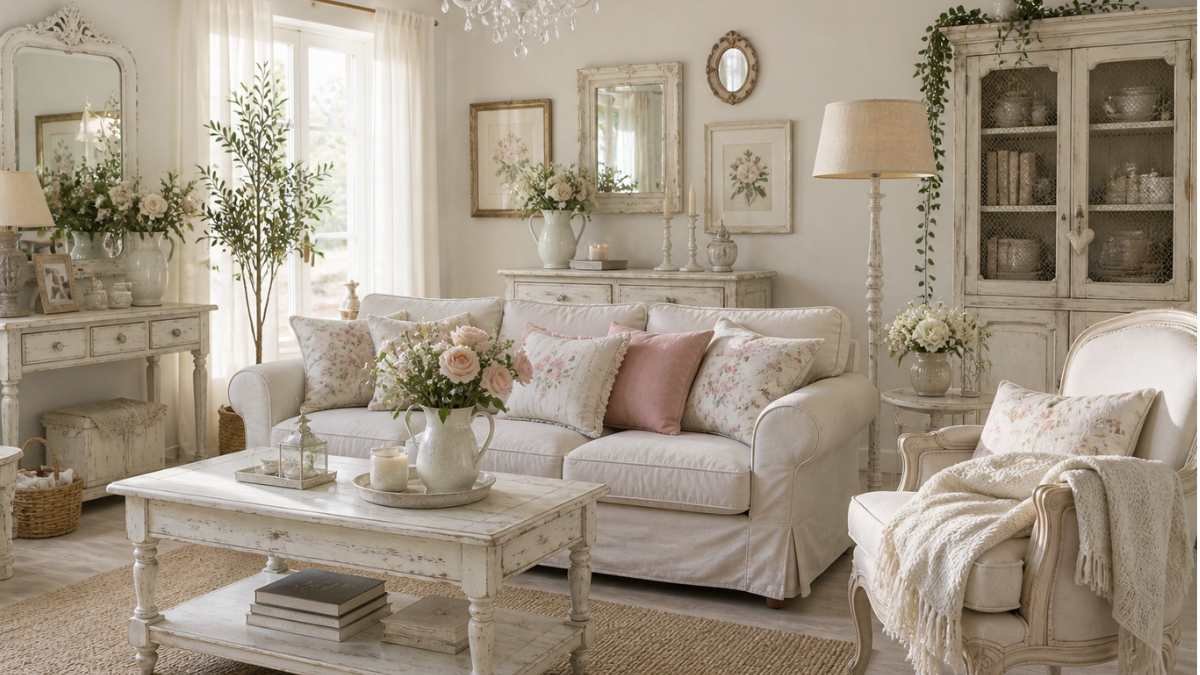

For years, shabby chic has been one of the most popular styles for home furnishings. Pickled furniture, light colors, light fabrics and a romantic atmosphere that made every room welcoming and comfortable. It was a style capable of transforming even anonymous spaces into environments full of character, with a recognizable and reassuring aesthetic.
Over time, however, something changed. Shabby chic has come to seem repetitive, almost predictable. Not because the style itself has become outdated, but because it has been replicated too many times without really evolving. The result is what you see in many homes: environments that should be warm and manicured, but which instead look dated, a little fake, lacking the naturalness that made them so interesting in the first place.
The truth it’s that shabby chic It has not gone out of fashion. It just needs to be reinterpreted, freeing itself from some errors that have become almost automatic over time.
When everything is too “white”
One of the most obvious mistakes is overusing white. White walls, white furniture, white fabrics, white accessories. The idea was to create brightness, but when everything is uniform, the space loses depth.
A completely white environment risks becoming flat, almost lifeless. Contrast is missing, visual rhythm is missing. The more current shabby, on the other hand, works in different shades, introducing warmer tones such as beige, dove gray or cream, creating a softer and more natural effect.
The “fake alive” phenomenon.
Shabby chic comes from recovery, from the patina of time, from objects that tell a story. When this effect is very artificially recreated, it is felt immediately.
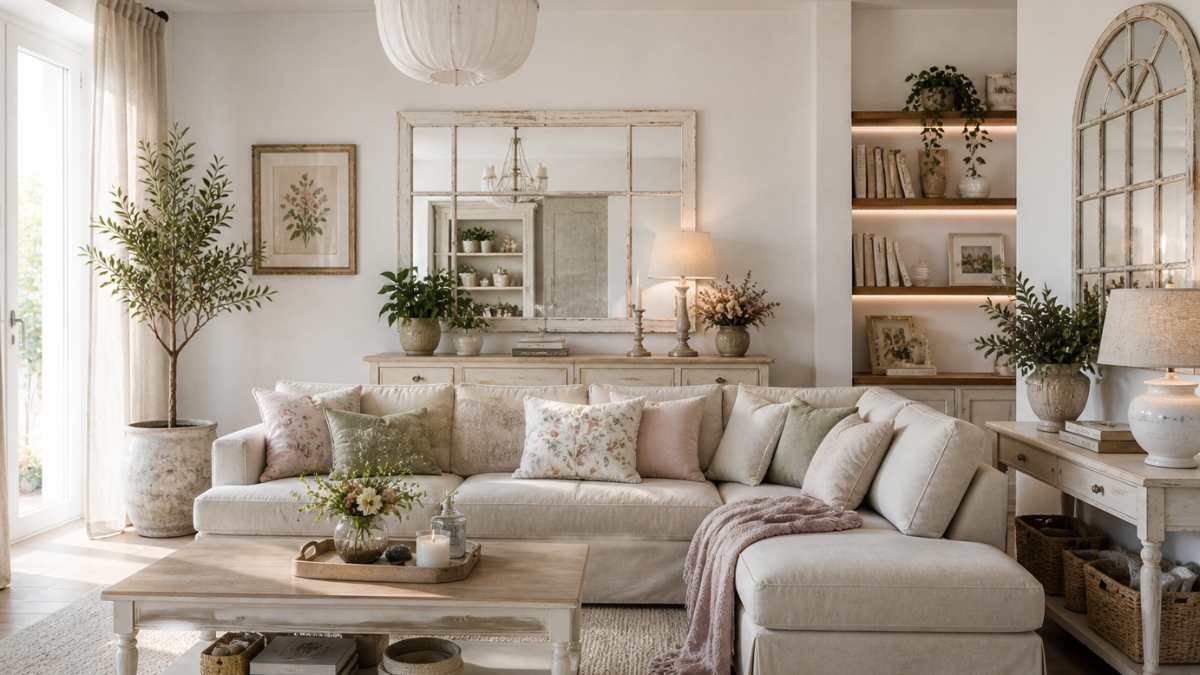
Furniture that is over-pickled, surfaces deliberately damaged in a uniform manner, details that are over-constructed. When “experience” becomes an effect, it loses authenticity. Today we seek a more subtle approach, where imperfection is trusted, not shown.
Too many frills
Another very common error is stacking. Photo frames, candles, towels, vintage items, all together in the same space. The idea is to enrich the environment, but the result is often the opposite.
When every surface is occupied, the space becomes confusing. It is no longer clear what to look at and the overall effect loses its elegance. Modern shabby, on the other hand, chooses. Few objects, but carefully chosen, also leaving room for space.
Excessively “romantic” fabrics
Lace, lace, very bold floral patterns. Elements that have defined style for years, but which today risk weighing on the environment.
The problem is not the fabric itself, but the excess. When everything resembles the same decorative language, the space loses balance. The more modern versions of shabby prefer simpler fabrics, with natural textures and less obvious colors, which accompany the environment without dominating it.
Furniture the same
A perfectly coordinated living room or bedroom, where every element seems to belong to the same set, can look neat, but also not very authentic.
Shabby is born precisely from the mix, from the encounter between different pieces. When everything is put together too much, you lose that spontaneity that makes the style interesting. Introducing a slightly different element, perhaps more modern or with a less ‘classic’ finish, creates movement and makes the space more credible.
The light is too cold
A less obvious, but very important fault concerns the light. Lighting that is too neutral or cold is often used, which does not enhance the materials.
Shabby chic needs warm, soft, diffused light. It is what highlights the surfaces, creates atmosphere, makes the space welcoming. The wrong light can make even the best furniture uninteresting.
The absence of contemporary evidence
Perhaps the biggest mistake is to stick to a “pure” shabby style, without contamination. Today this approach no longer works.
Introducing a modern element, even a small one, completely changes the effect. It can be a lamp, a coffee table, a black metal detail or a cleaner line. This contrast makes today’s style, less predictable, more interesting.
A style that needs to evolve
Shabby chic is not a style to be abandoned, but renewed. We don’t need to overturn it, but lighten it up, make it more substantial, closer to the way we experience spaces today.
When excesses are eliminated and small variations are introduced, shabby works again. It becomes less manufactured, more natural, more elegant.
Ultimately, it’s not the style that wears off, but the way it’s performed. And it takes very little to bring it back to a more current dimension without losing what made it so beloved.



