
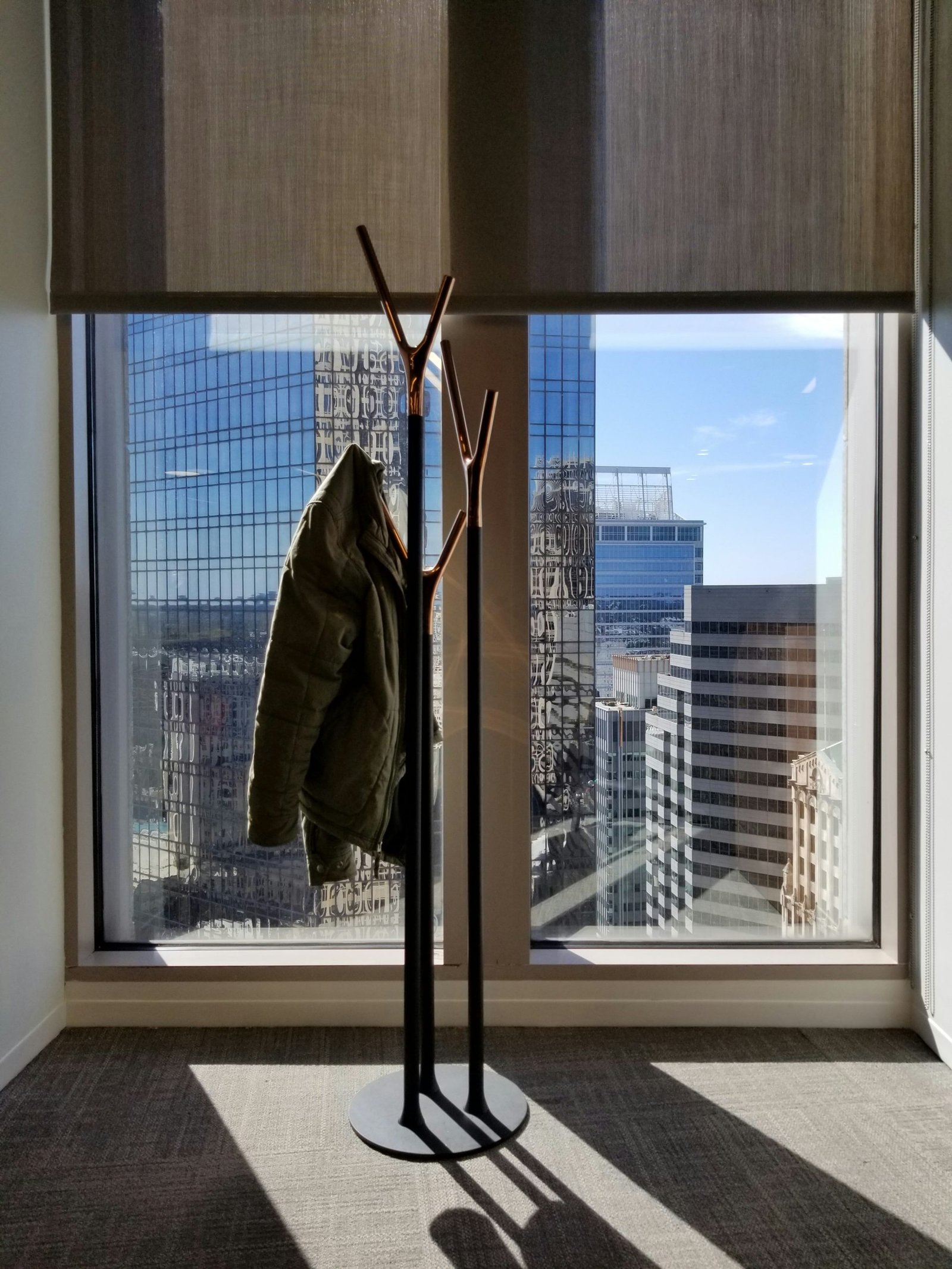

Roman blinds and curtains occupy the same area in an interior. Both are textile, add softness and warmth to a room, and both are associated with traditional or transitional interiors. However, they are not interchangeable — each has structural advantages and disadvantages that make one a better fit than the other, depending on the window, the room and how the space is used.
How a Roman Blind Works
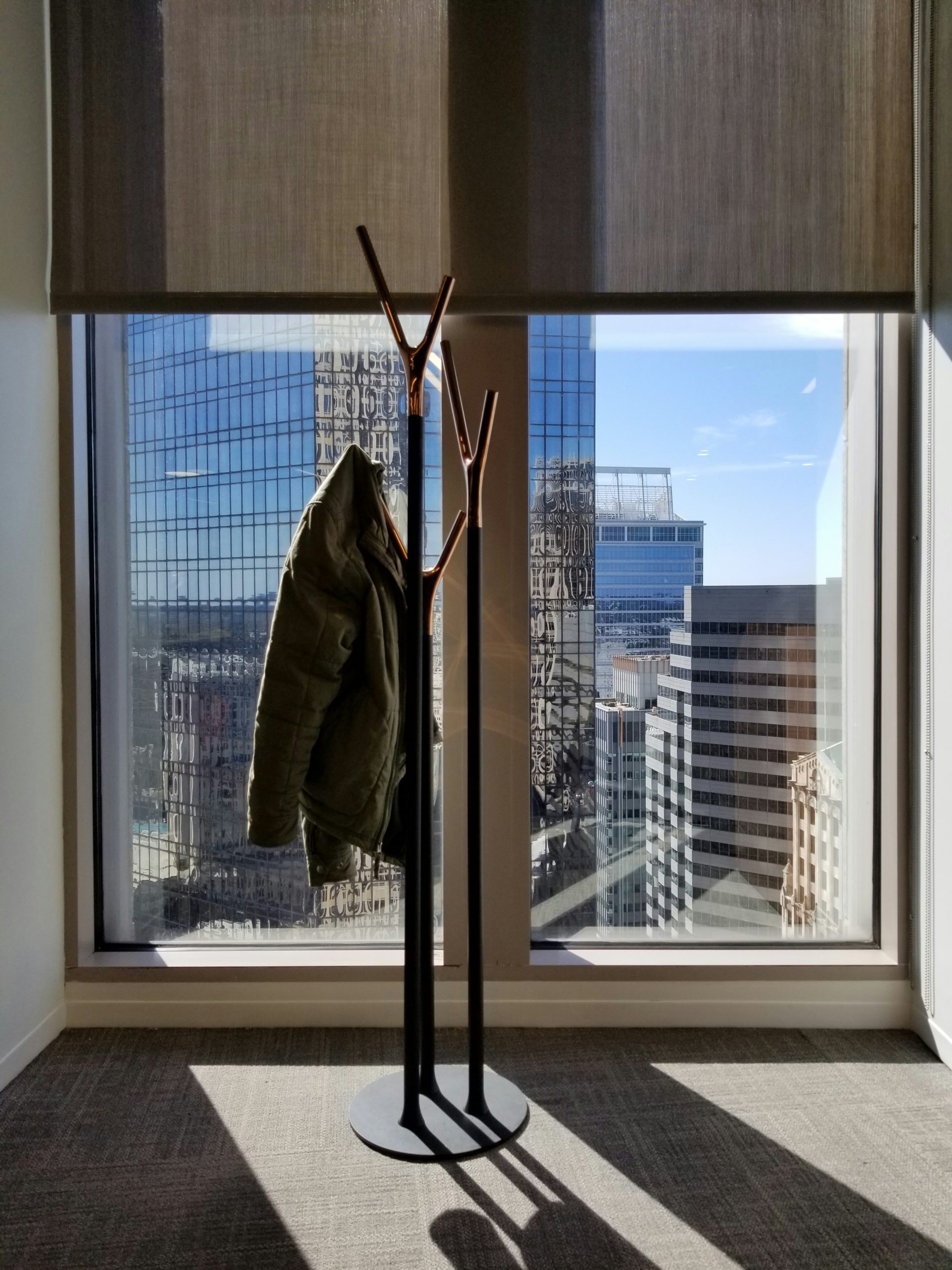
A Roman blind is a flat panel of fabric that is formed into horizontal folds when raised, using a system of horizontal rods and strings that run across the back of the fabric. When fully lowered, it appears as a completely flat, unbroken fabric surface. When raised, it folds into a structured stack of horizontal pleats at the top of the window.
The advantage of this construction is a clean, architectural look that curtains cannot provide. A Roman blind lowered level above a window reads like a piece of furniture rather than a piece of fabric hung on a pole — precise, tailored and purposeful. This suits rooms where the window is a focal point and the cover is part of the design of the room rather than its background.
Stack Size: Main limitation of Roman Blind

When a Roman blind is raised, the fabric folds in a stack at the top of the window. The depth of this stack depends on the drop of the blind and the number of pleats — for a full-height window, the stack can be 25 to 35 cm deep, shading the top of the pane even when the blind is technically up. For windows where it is important to maximize the area of the glazing when the blind is up – rooms with a view or rooms that depend on the top of the window for light – this is a significant limitation.
Curtains that pull on each side of the window completely clear the panes, allowing for maximum light and unobstructed views. For rooms where this matters, curtains have a structural advantage.
The style difference
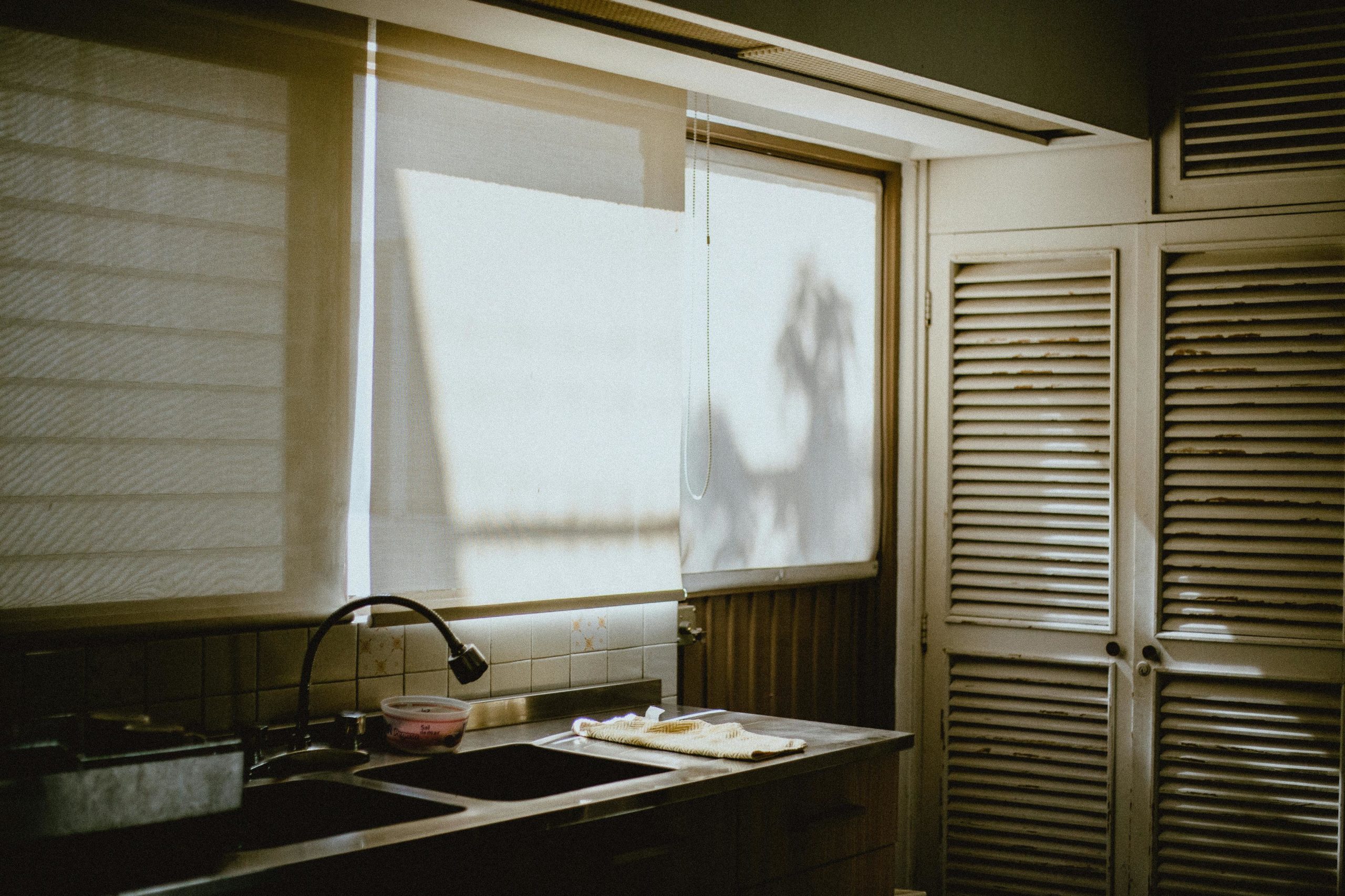
Roman blinds read as precise and tailored. The curtains read as loose and soft. Both can be executed in ways that change their character — a Roman blind in loose linen reads less precisely than one in stiff cotton. draperies with heavy hems and precise pleats read more structured than simple tabs. But everyone’s default aesthetic catalog is different, and choosing between them based on the direction a room’s interior is traveling is a more useful guide than comparing fabric choices.
For salons with bay windows, Roman blinds often provide a more cohesive effect than curtains, which can become difficult in the corners of a bay. A Roman blind can be made to fit each section of bay independently, sitting flat within each frame – visually cleaner than curtain rods angled around a bay.
Practical Considerations
Roman blinds require more care than curtains. The string and rod mechanism needs periodic inspection. the fabric cannot be easily removed for washing without disassembling the blind. Curtains are simpler to maintain, easier to wash or dry clean, and easier to replace when faded or faded.
The right choice depends on what the room requires. Where precision and fit suit the interior — and where stack height isn’t a concern — Roman blinds produce an effect that curtains can’t. Where softness, maximizing light or easy maintenance are priorities, curtains remain the most practical choice.



