

1. Create Compost Material

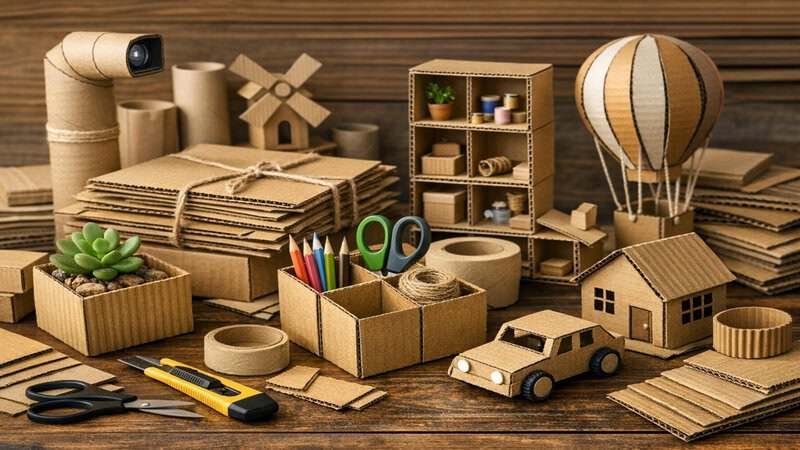
Cardboard, especially those without a glossy finish, can be easily composted. Chop it up into small pieces and add to the compost bin for a rich source of carbon (brown) that balances the green matter. Compostable cardboard it’s a simple way to enrich garden soil and reduce landfill waste.
2. Create children’s artwork

Cardboard can be turned into castles, robots or animals for children. Encourage creativity through hands-on crafting, which also promotes material reuse. The sturdy boxes are perfect for dioramas or painted wall art. Schools and parents regularly use cardboard for safe, affordable art supplies. (scholastic.com)
3. Organize drawers and shelves

Cut cardboard into strips and use them as DIY drawer or shelf dividers. They help separate socks, utensils, office supplies and more, bringing instant organization at no extra cost. This approach competes with store-bought solutions and reduces the need for plastic. (applegreencottage.com)
4. Make toys and scratching posts for pets

Cardboard is a favorite material for homemade cat scratching posts and hiding places for small pets. Cats love texture and dogs enjoy safe, destructible chew toys. We layer and glue sheets together for durability and shape them as desired. Cardboard pet toys are environmentally friendly and easily replaceable. (diy.alibaba.com)
For a visual guide to making a cardboard cat scratcher, you might find this video helpful:
Your browser does not support the video tag.
5. Protect floors and surfaces

When painting or moving furniture, cardboard serves as an excellent floor protector. Place flattened boxes on floors to prevent scratches or spills. Contractors often use this eco-friendly shield during renovations. Then recycle any soiled pieces or save them for your next project. (shunshelter.com)
6. Seed starters for gardening

Your browser does not support the video tag.
7. Packaging and gift wrapping

Reuse cardboard boxes for shipping parcels or as creative gift wrapping. Decorate with paint, washi tape or fabric scraps for a personal touch. The unique, recycled packaging adds charm and reduces disposable gift wrapping. (boxfactory.com.au)
For more creative ideas about repurposing gift wrapping, you might find this video helpful:
Your browser does not support the video tag.
8. Make Wall Art or Decor

Turn cardboard into custom wall art by cutting it into shapes, letters or geometric patterns, then painting and hanging them. 3D wall hanging or fake animal heads are simple DIY projects perfect for beginners. The lightweight nature of cardboard makes it easy to hang with minimal hardware. For more ideas about cardboard wall art, visit Architectural Digest’s DIY Home Decor Projects.
9. Insulate windows in a pinch

For temporary insulation during extreme weather, apply cardboard to window frames to block drafts and retain heat. While not a permanent solution, it is a practical, no-cost solution when needed—useful for emergency preparedness or unheated spaces. (homesteady.com)
For a visual guide to insulating windows with plastic, you may find this video helpful:
Your browser does not support the video tag.
10. Create Educational Tools

Turn cardboard into educational tools like flash cards, alphabet letters, or shape counting to support preschool education. These tactile manipulatives offer a hands-on approach for children to learn numbers, letters and problem-solving skills, often at a lower cost than store-bought alternatives. Durable and safe for young hands, cardboard tools encourage interactive learning. For more ideas on making educational cardboard toys, visit Inspire DIY preschool projects.
For a visual guide on making educational cardboard toys, you might find this video helpful:
Your browser does not support the video tag.
11. Make a laptop stand or desk organizer

Turn cardboard into a custom laptop stand by stacking and gluing pieces together to create a sturdy, ergonomic design. This DIY project not only elevates your laptop to a comfortable viewing height, but also allows you to design trays or compartments to organize lanyards, pens or sticky notes, keeping your workspace tidy. Recycled cardboard organizers are functional and sustainable. For inspiration and step-by-step instructions, check out this tutorial for making a portable laptop stand from recycled materials: (instructables.com)
For a visual demonstration of making a sturdy cardboard laptop stand, you may find this video helpful:
Your browser does not support the video tag.
12. Build playhouses or forts

Large cardboard boxes are ideal for making toys, forts or tunnels – let your imagination run wild. Easy to assemble, adapt and recycle when complete, these structures support creative play and physical activity indoors or outdoors. For detailed instructions on creating a cardboard playhouse, check out this guide from HGTV: (hgtv.com)
For a visual demonstration of the construction of a cardboard playground, you may find this video useful:
Your browser does not support the video tag.
13. Weed Blocker in garden beds

Place flattened cardboard under mulch as a biodegradable weed barrier in gardens. It chokes out unwanted plants and breaks down over time, enriching the soil. Gardeners prefer cardboard over plastic weed mats for its environmental benefits. (extension.oregonstate.edu)
For a visual guide to using cardboard as a weed barrier in raised garden beds, you may find this video helpful:
Your browser does not support the video tag.
14. Make a costume or mask

From masks to armor and accessories, cardboard is a staple costume material. It’s easy to cut, dye and customize for cosplay, school plays or Halloween. Professional and amateur costume designers often use cardboard for prototypes and finished products. For inspiration and detailed instructions on making cardboard costumes, explore the “Costume Ideas” collection on Instructables: (instructables.com)
For a visual guide on making a cardboard Pokéball costume, you might find this video helpful:
Your browser does not support the video tag.
15. Recycle your storage bins

Reinforce cardboard boxes, wrap them in fabric or contact paper, and turn them into stylish storage bins that rival store-bought options. These are perfect for organizing cupboards, toys or hobby supplies, helping to reduce clutter while reducing household waste. For inspiration and step-by-step instructions on creating fabric wrap storage bins, check out this guide from HGTV: (hgtv.com)
For a visual demonstration of making a beautiful and functional DIY cardboard storage organizer, you might find this video helpful:
Your browser does not support the video tag.
Conclusion

Creative reuse of cardboard not only keeps it out of landfills but also offers practical solutions for everyday life, for the benefit of both the environment and your household. With these 15 ideas, there’s something for gardeners, crafters, pet owners and more. Not only do they save money and resources, but many also offer fun DIY activities. The next time you unpack a package, consider the possibilities before throwing away the cardboard.



