
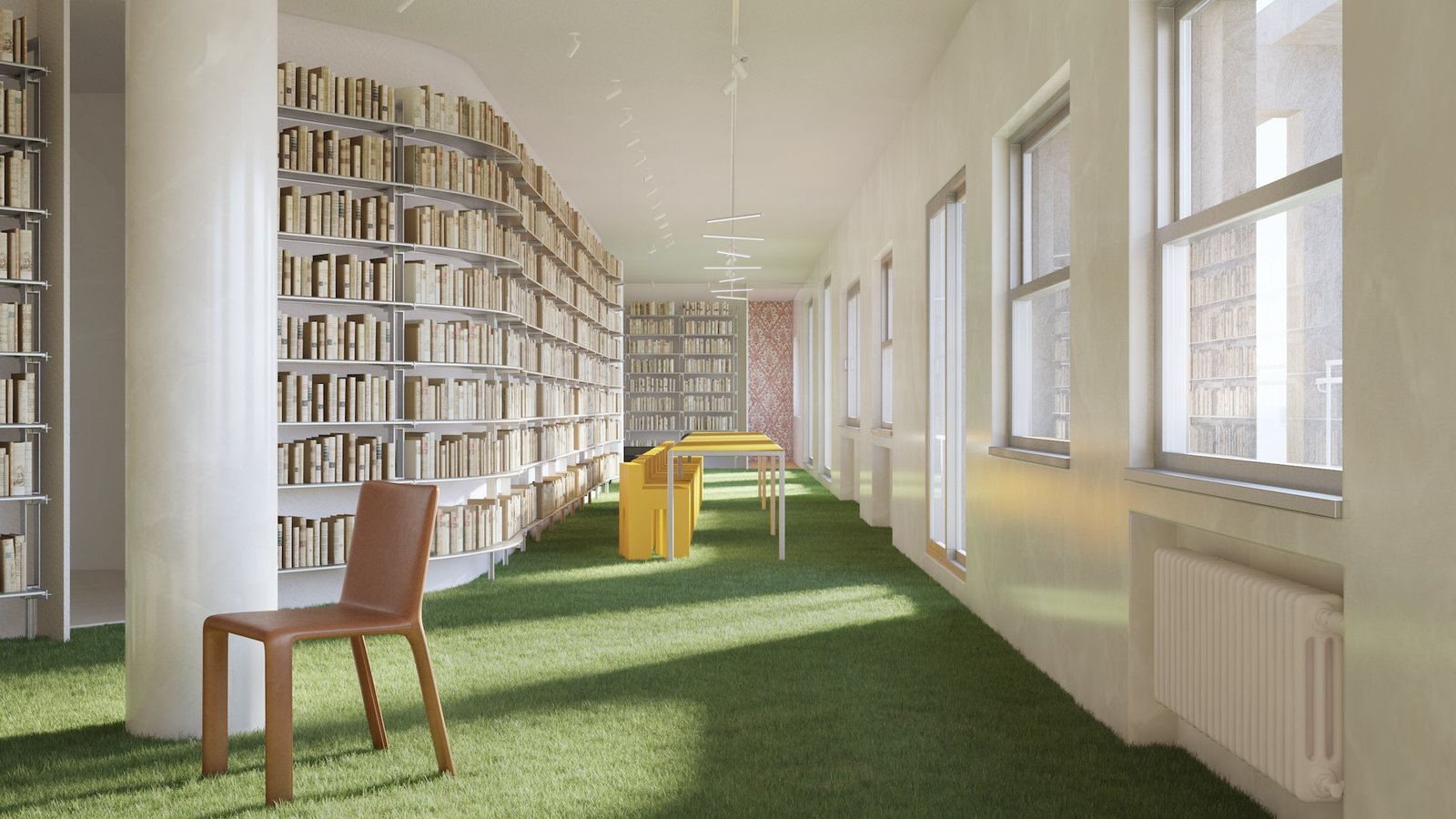

Can we turn what begins as a constraint – the need to house over 10,000 books from the collection of George Kerevan (Scottish journalist, economist and politician) – into a project-producing device? Can we find a way to translate what a design object is into an interior, a spatial system? And to be honest in the idea of a library, in constant development, with a social and intellectual path to follow?
In the dense choreography of Milan Design Week 2026, where interiors often collapse into image and objects into spectacle, Punk Witch by Annabel Karim Kassar stands out by doing something deceptively simple: reorganizing the space from the inside out. Housed in a former modernist exhibition space Breraoriginally designed by Armando Roncathe project proposes a radical inversion of domestic logic – we imagine a house around a library and not the other way around.
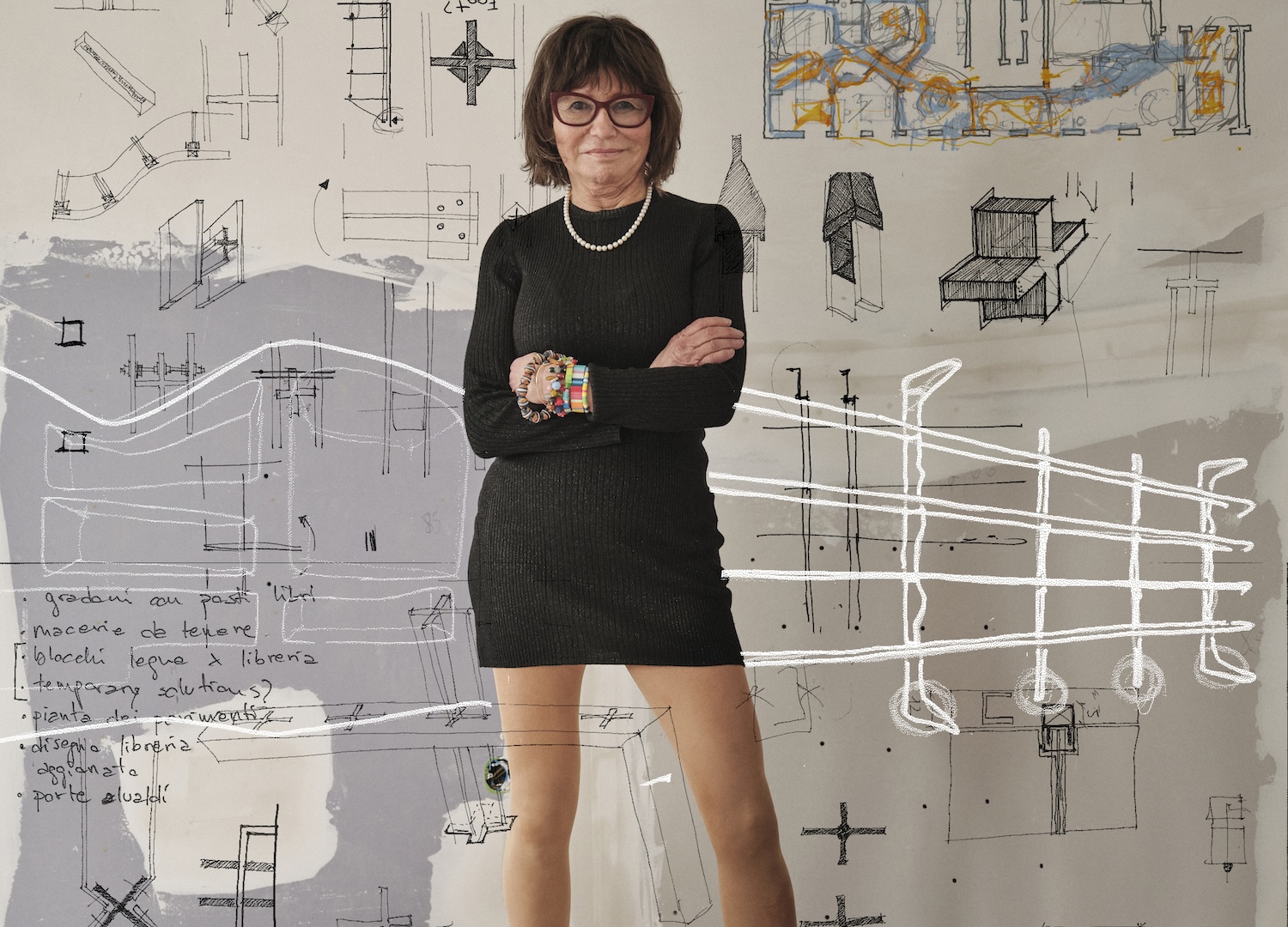
The portrait of Annabel Karim Kassar
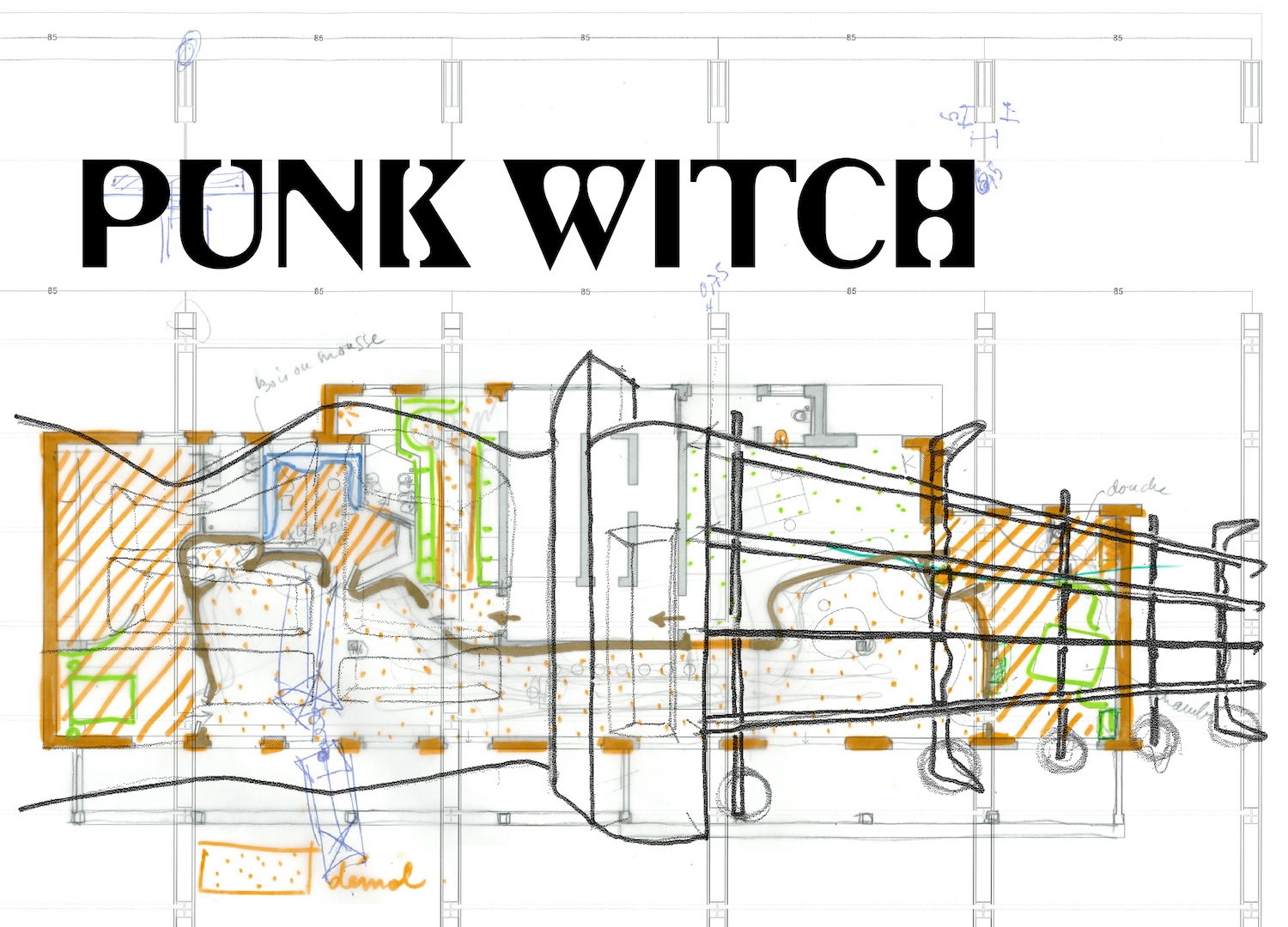
Punk Witch ©Annabel Karim Kassar
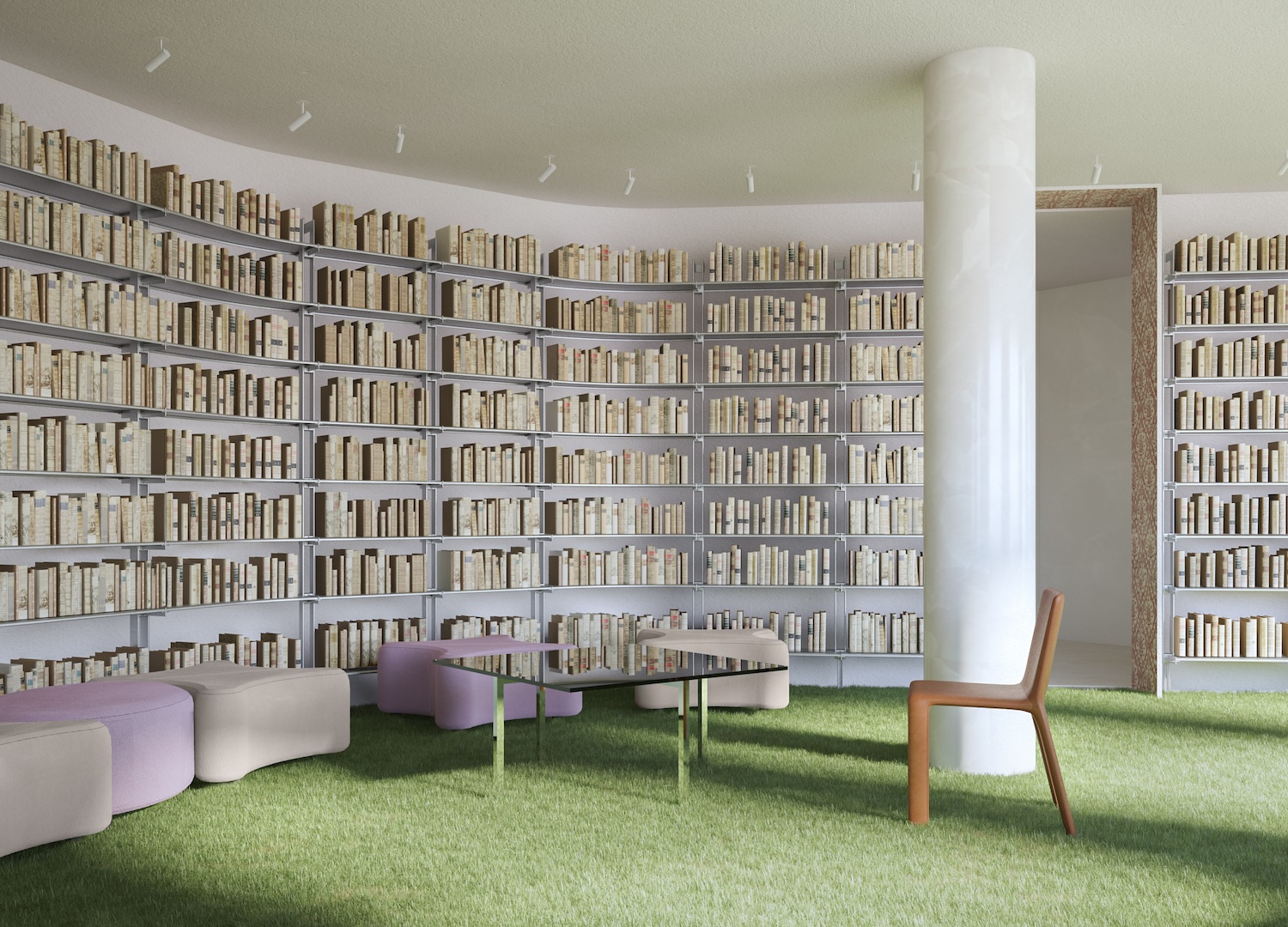
Punk Witch ©Annabel Karim Kassar
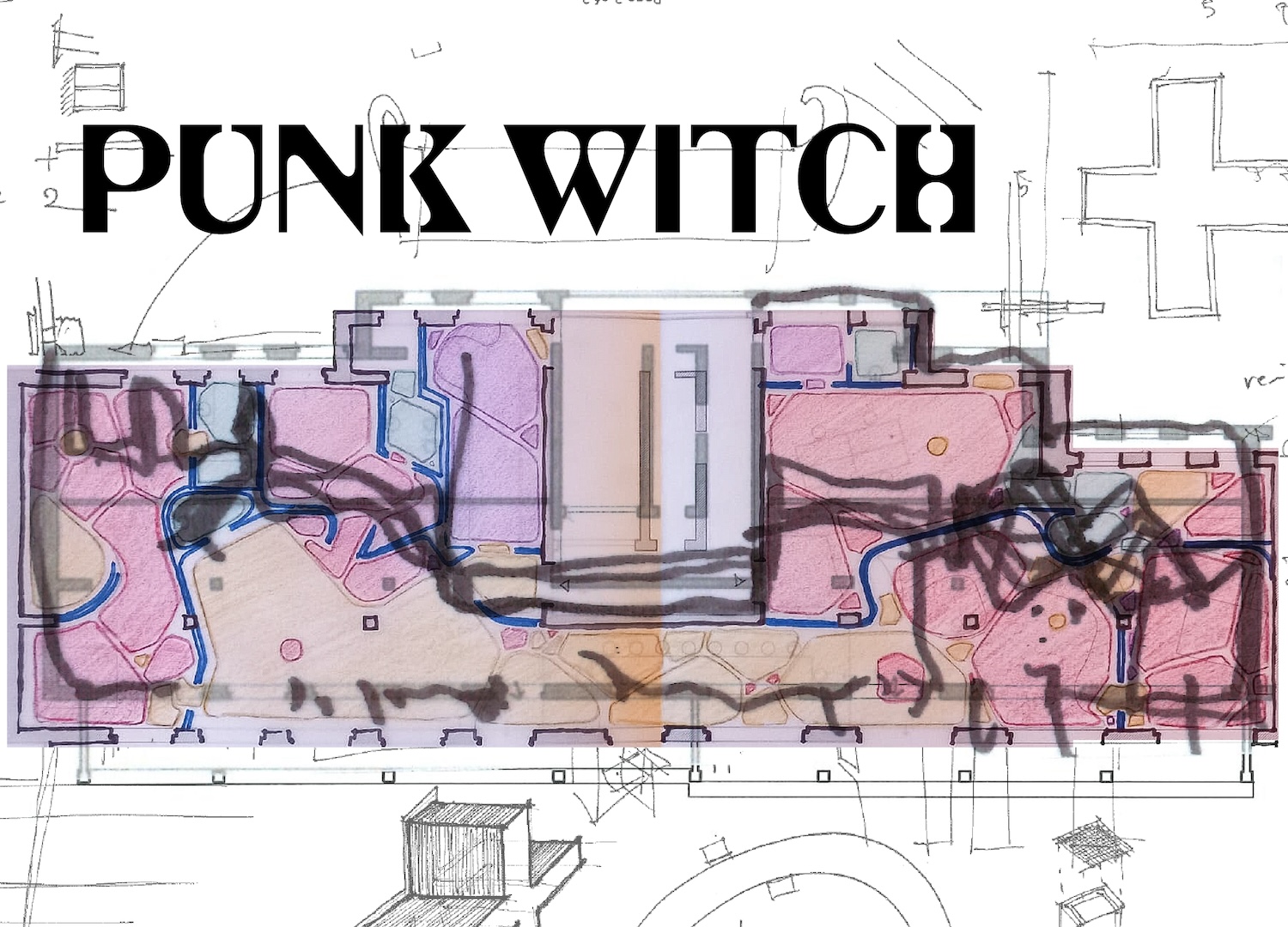
Punk Witch © Annabel Karim Kassar
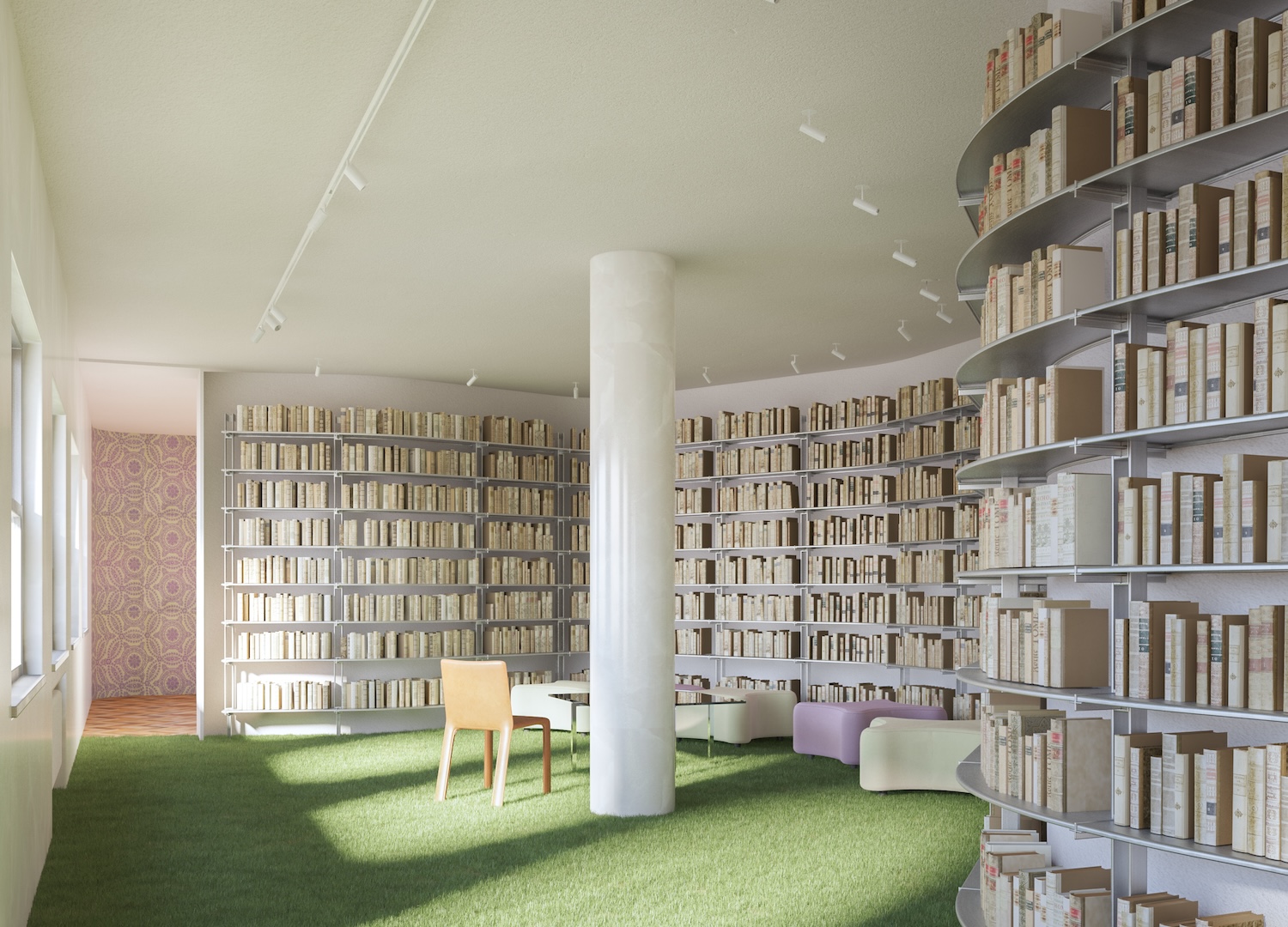
Punk Witch © Annabel Karim Kassar
The title itself sets the tone and “Torch” signals a rupture, a refusal of typological conventions, while “Witch» introduces something more elusive, almost counter-rational – an architecture that works through atmosphere, intuition and emotion. With this design, Kassar stages a situation in which knowledge, familiarity, and interaction collapse into one another.
The shelf defines the geometry of the space, producing rooms as a by-product rather than a starting point. Bedrooms, study areas and service areas are carved by its linear logic, creating a sequence that is neither completely open nor traditionally closed.
In this sense, the work quietly extends and subverts the legacy of modernism, and where modernist interiors often sought clarity through separation – function articulated in distinct zones – Kassar introduces density and overlap. Traffic is built into storage and thresholds are implied rather than fixed. Thus, the partition becomes a continuous field structured by alignment, contiguity and interruption.
This strategy resonates with earlier radical proposals that treated architecture as an open system rather than a fixed object. One might think of Cedric Price and his unbuilt Fun Palace, where program and structure were conceived as adaptable frameworks, or the speculative interiors of Superstudio, where the domestic environment dissolved into an abstract grid of infrastructure. Kassar’s work operates on a different scale and with a different sensibility, yet shares a similar intuition, that architecture can organize relationships rather than simply contain them. In this case, too, if the shelf provides the structural backbone of the work, the materials articulate its narrative.
Annabel Karim KassarHis practice has long been defined by a transnational sensibility – moving between France, Lebanon, Morocco, the UK and the UAE – and here that geography is translated into a multi-layered internal language. Textiles sourced from Lebanese markets sit next to handmade elements from Tripoli, and hand-painted tapestries produced in Saint-Pandelon are placed in the French tradition of “dominoes” – not decorative gestures but time markers, incorporating different cultural rhythms in the same space.
In the end, the collaboration with a Swiss ceramist Berengere Lux reinforces this approach, because her works, defined by layered surfaces and intense tactility, extend architectural logic to the scale of objects and boundaries can thereby blur – and furniture, become landscape, surfaces become carriers of depth.
Kassar has often described her work as a producer “speech architectures” – spaces that communicate through texture, light and spatial sequencing rather than formal rhetoric. This places her at an interesting intersection between the discipline of architecture and a more installation-based, almost scenographic approach. We clearly recall her 2022 Lebanese House installation at the Victoria and Albert Museum in London, where the architect is already collecting the cultural and political experience of space. Witch promotes this research further, moving from representation to inhabitation.
Mainly, the project does not stop at the spatial organization, describing the actual form of use – in front of the library, a composition of seven meters of stainless steel and wooden tables hosts The Milan talksprogram curated by Francesca Grassi and directed by Kerevan. Writers, architects and thinkers – including Nigel Coates and Amedeo Balbi – are invited to engage with a deliberately open question: Is Europe still creative? The format, intentionally informal, is structured around a shared breakfast rather than a conventional talk, where the spatial configuration – table in front of bookshelf – turns the library into both background and participant, suggesting that knowledge is not static but activated through exchange.
This emphasis on interaction recalls another lineage of experimental practice, one in which space is understood as a platform for social production. From the participatory environments of the 1960s to the more recent debates around relational architecture, the focus is shifting from object to event, and Kassar’s contribution is to ground this aspiration in a tangible, habitable context – neither purely speculative nor fully functional.
The project’s final gesture is perhaps its most disarming, the replacement of carpets with grass. This subtle, almost understated, shifts the entire reading of space, and interiors become landscape, domestic life takes on an ecological dimension, the boundaries between inside and outside are ambiguous, open to interpretation and use. A condition that extends beyond the apartment itself, using the Punk Witch to create a dialogue with the parallel installation of Kassar, Garden of Hesperidesin the Orto Botanico di Brera. If the first constructs an architecture of knowledge, the second unfolds as a spatial narrative between myth and landscape mapping a trajectory across the city, connecting interior and exterior, archive and imagination.
Within its wider context Milan Design Week – still very much oriented towards objects, brands, controlled experiences – Annabel Karim Kassar’s work feels deliberately misaligned, where there is no single focal point, no immediately readable image. Asking for time, for movement, for reading, for listening, it repositions the domestic interior as a place of production rather than simply a human retreat, where knowledge is situated and entirely defines the environments and ways of living within them.
A hybrid condition – part home, part library, part forum, where thinking is part of life and reflects part of shaping a space. The question, then, is less whether Europe is still creative, as suggested by the conversations hosted in the space, and more whether architecture can still function as a critical tool for organizing that creativity.



