
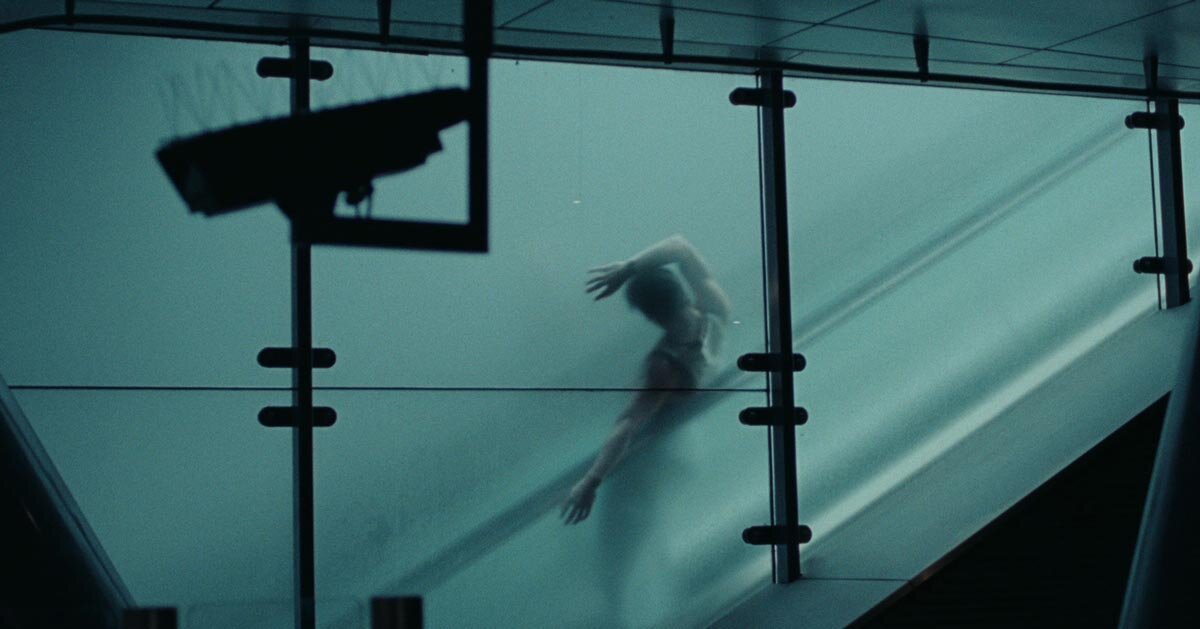

using choreography to navigate restrictive urban space
Silent Embrace is short film by Luuk Walschot which examines the relationship between the human body and the built environment, focusing on how urban design shapes movement, behavior and presence in the city. The movie takes place Amsterdamwhere elements of so-called hostile architecture have become increasingly visible in the public sphere.
Rather than approaching the subject through explanation, the work uses choreography and physical interaction to explore how bodies respond to restrictive spatial conditions. Benchesobstacles and urban lighting are not presented as neutral objects, but as elements that guide, limit and redirect use. Through movement, the film reveals the adaptations required to inhabit spaces not designed for resting or prolonged occupation.

Silent Embrace explores the relationship between the body and urban space | all images courtesy of Luuk Walschot
Urban design shapes rhythm and movement in a silent embrace
The city is treated as an active structure rather than a passive setting. Its surfaces and objects act as points of resistance, shaping the rhythm and direction of the body in motion. In this context, Silent Embrace, conceived and directed by Luuk Walschot, highlights how design decisions affect everyday experience, translating wider social conditions into spatial form.

The film takes place in the public environment of Amsterdam

hostile architecture appears throughout the cityscape

the body interacts directly with the counters, barriers and lighting



