


An interesting, design-based response to some of AI’s biggest issues, such as data scraping, power consumption, and systematic disdain for creative work, comes from two young graduates of London’s Central Saint Martins. And it’s not another manifesto, but a real object that uses artificial intelligence in a very different way, with a certain anti-export stance. Like all novelty items, IMAGO it is difficult to categorize.
Part organic synthesizer, part deep listening device, designed and built by Domenico Di Paolo and Kieran Feechan – designers as well as electronic music enthusiasts – and is currently appearing at CSM’s Graduation Show (June 18–21), after appearing at Alcova during Milan Design Week. It was developed in conversation with a community of musicians, technologists and researchers, focusing on the big question plaguing the entire creative community: is there a way to take what’s really interesting about AI and forcefully reject the rest?
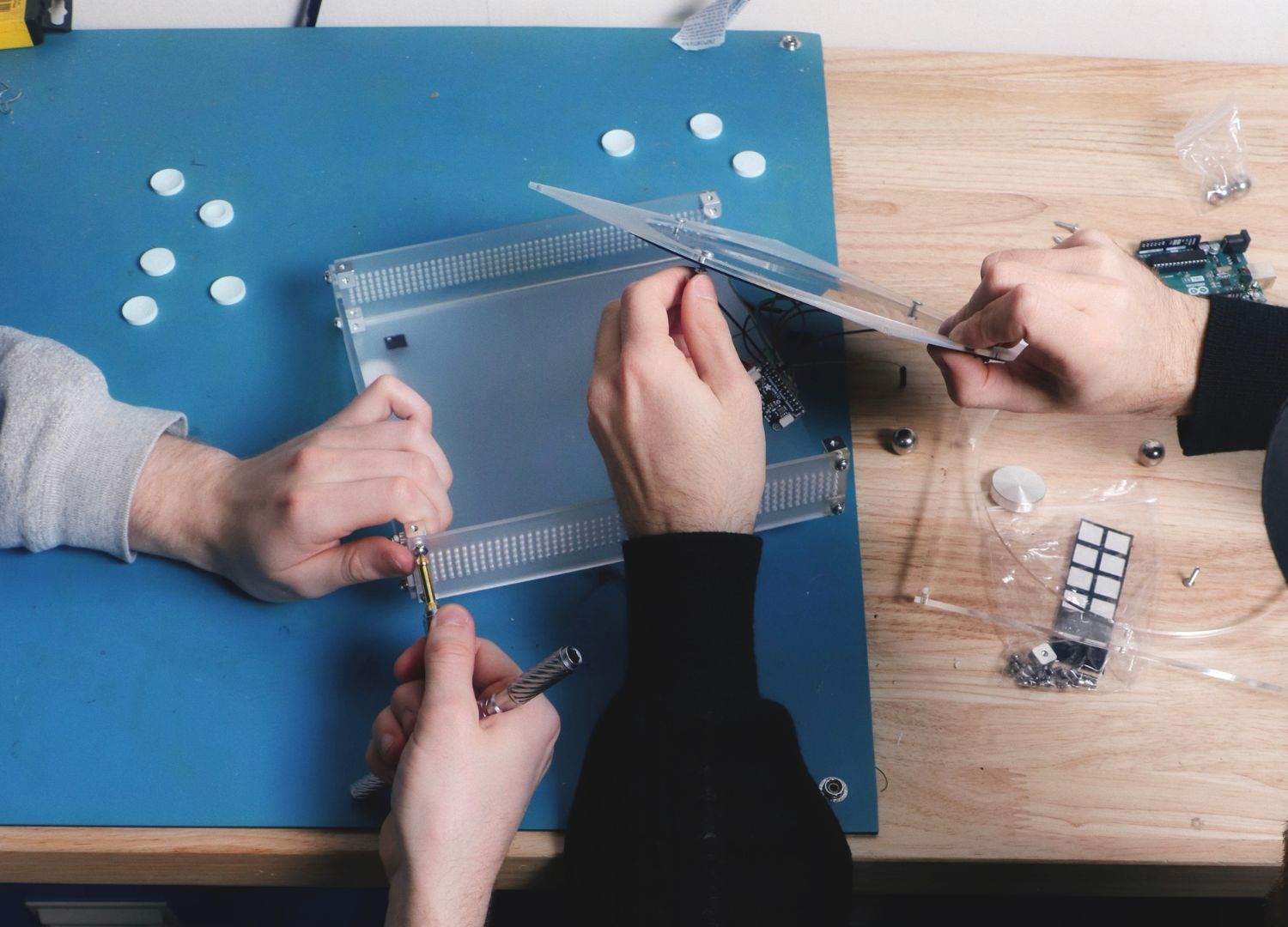
IMAGO by Domenico Di Paolo and Kieran Feechan © Adam Lin
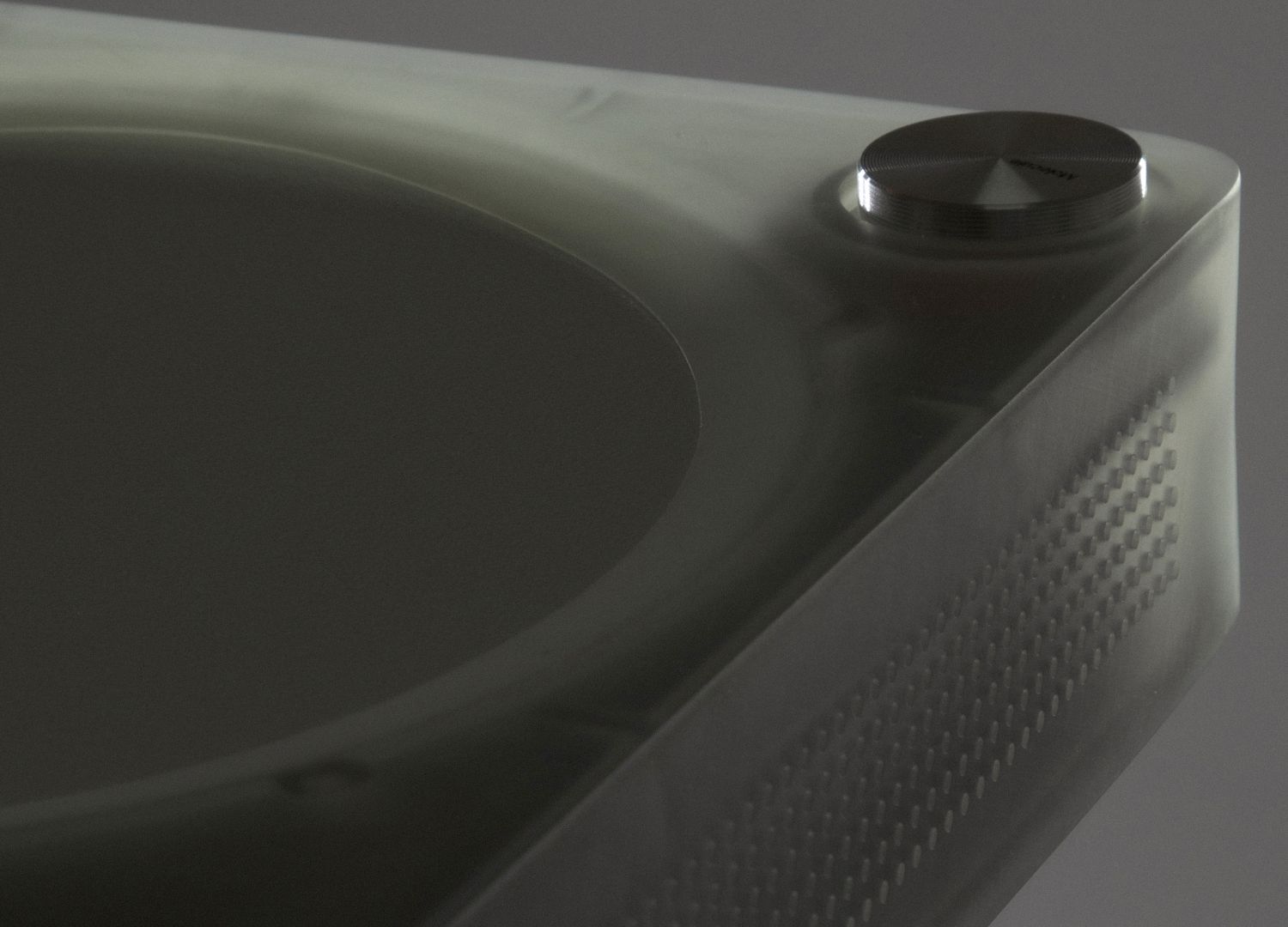
IMAGO by Domenico Di Paolo and Kieran Feechan © Adam Lin

IMAGO by Domenico Di Paolo and Kieran Feechan © Adam Lin
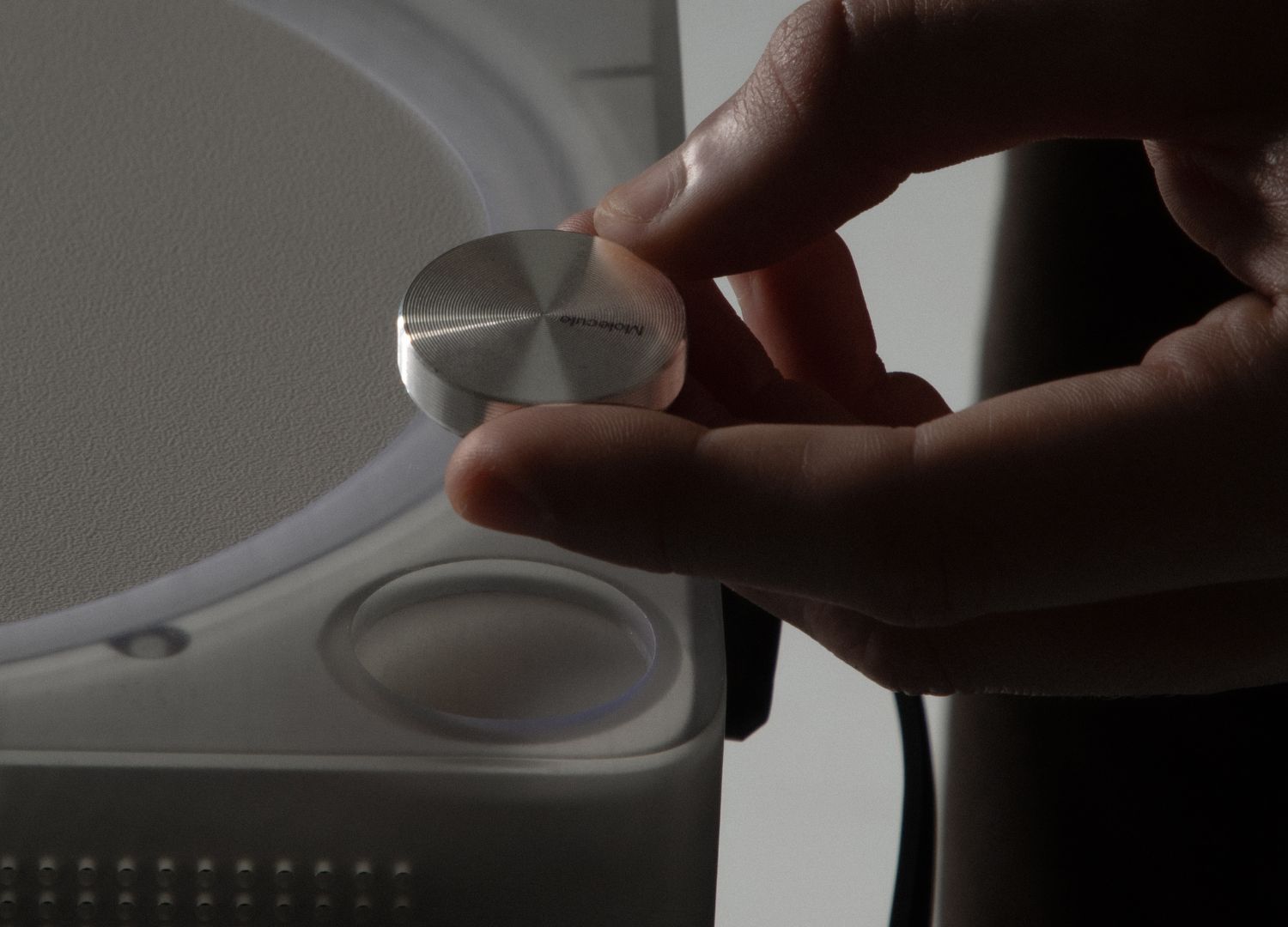
IMAGO by Domenico Di Paolo and Kieran Feechan © Adam Lin
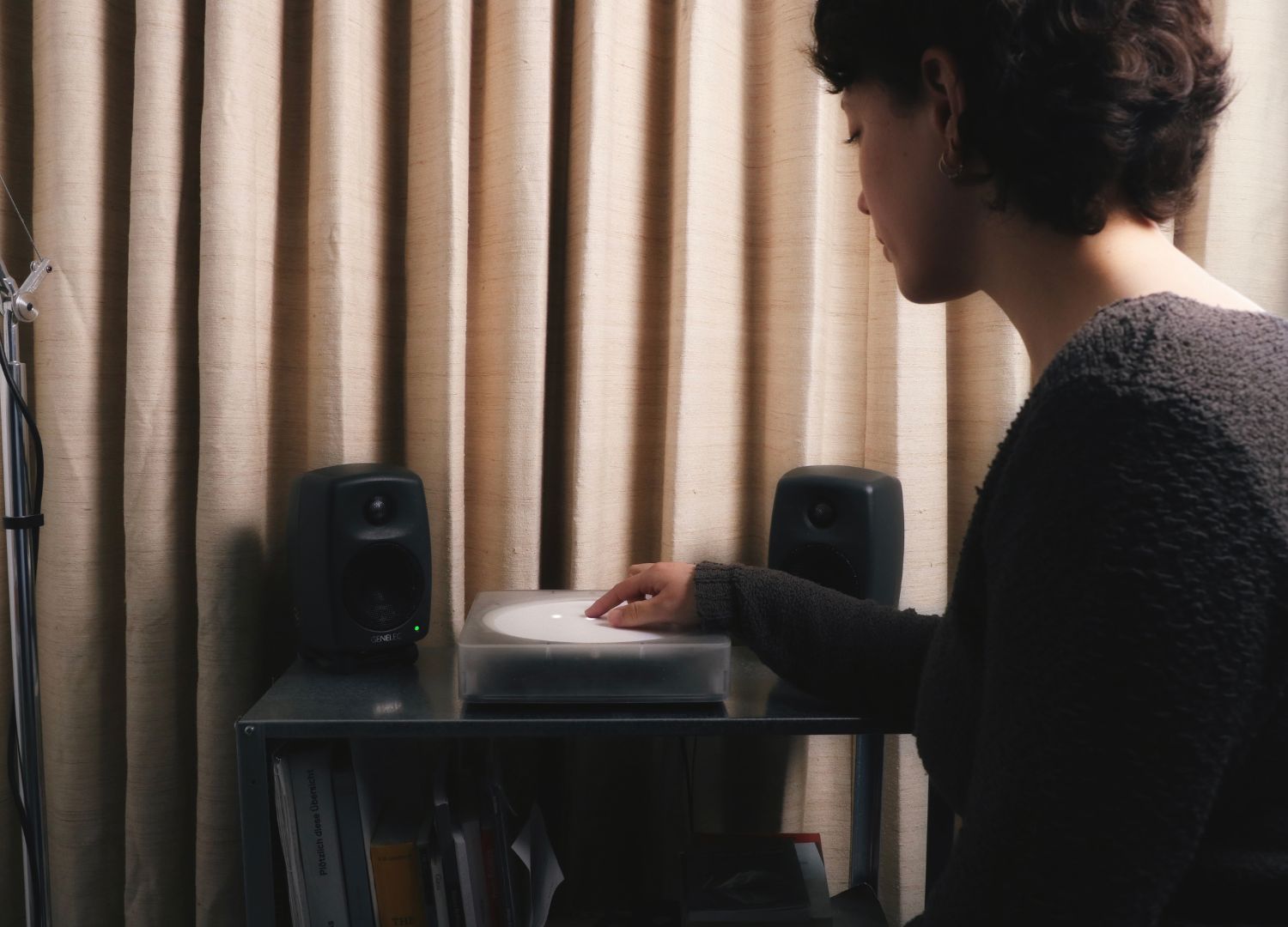
IMAGO by Domenico Di Paolo and Kieran Feechan © Adam Lin
IMAGO by Domenico Di Paolo and Kieran Feechan © Adam Lin
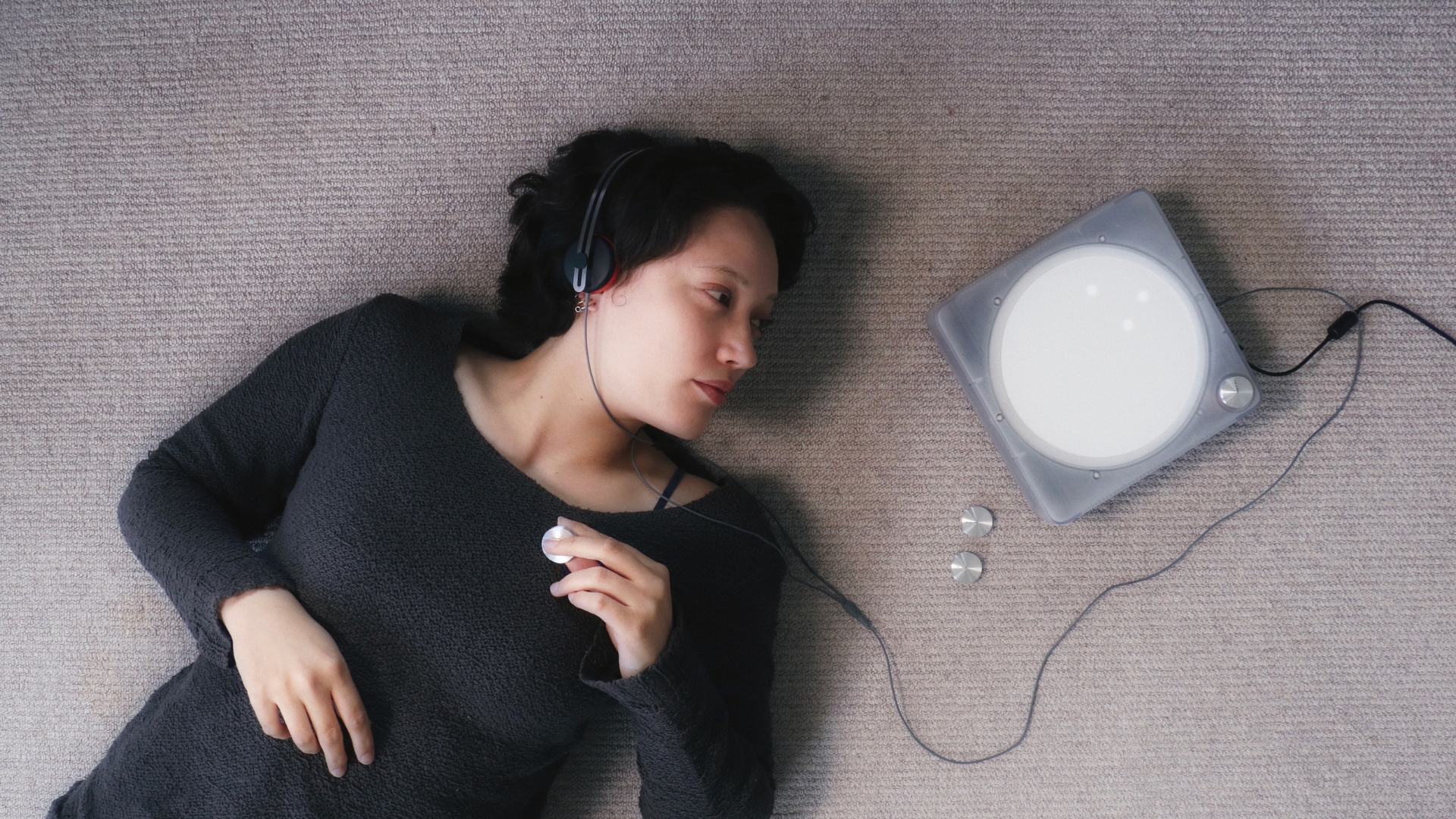
The IMAGO loosely resembles a turntable: a circular interface, a record that you place on it with the same deliberate gesture you’d use on vinyl. But what happens when you insert this disc is not like playing a disc. This little piece of aluminum is actually a key: it contains an NFC tag that unlocks an AI model trained entirely on sounds provided, willingly and specifically, by a musician.
Once unlocked, you can scroll through these sounds with your fingers and shape them into something completely your own. There is no scraping, no cloud, no data going anywhere in this operation because the whole thing is done offline, on the device. And what you hear when you play it you will never hear again.
Despite being digital and powered by artificial intelligence, IMAGO is fundamentally and does the exact opposite of what we’ve become accustomed to with digital technologies and artificial intelligence… We took a closer look at the project with the two designers, Domenico and Kieran.
What exactly is IMAGO and how does it work?
Kieran Feechan:
It’s a musical device that deliberately blurs the lines between an instrumental synthesizer and a deep listening tool. A small exclusive aluminum disc contains the music tracks. When placed on the device, in a motion similar to placing a record on a turntable, it acts as a decryptor and activates the machine learning model inside. Without it, the model is completely inaccessible. you cannot extract it from the device. Once you insert the disc, composition begins.
The music consists of three layers (bass, drums, guitar, for example) that appear as illuminated dots on the circular white interface. As you move them with your fingers, you also change the composition and explore the sounds of the dataset.
Domenico Di Paolo:
The white circle is basically a sound map. When you interact with it, you play with sound groups that are grouped by similarity. We could have shown it visually, but we wanted the user to reconstruct a mental image of the artist’s world by listening and navigating it with the ear rather than the eye.
This is the concept of deep listening, and it comes from our shared passion for electronic music and the Japanese domestic hi-fi tradition, where many homes have a space dedicated solely to listening. Respecting music means having it not as a background but as something close to your body that brings you to a meditative space. IMAGO, which you can hold on your body as you play it with your fingers, was born from the idea of bringing this experience into a home environment.
What the user is hearing is not exactly the artist’s music?
Domenico Di Paolo:
The best way to describe it: the artist creates a training process for the machine and a sound palette, hence a dataset of recordings. When we train the model on this material, it reconstructs all these sounds into a multidimensional sound map. The output is basically an instrument.
And here comes the product design element: we developed a device that hosts this instrument locally, gives it a tactile feel, keeps it completely offline, and allows both the user and the artist to engage in a conversation about making music. This is the act of co-synthesis. Both play a role in the output, which is completely unexpected and constantly changing. And what you hear, you will never hear again. The system and rules are so complex and fluid that you really have to be present to get them.
How did you involve artists in the project?
Kieran Feechan:
We got in touch with a community of musicians in Paris and London that had been experimenting with machine learning and neural tools for a while. Artists with very different practices, but who share our vision for a respectful use of music datasets, exploring what technology can do while rejecting data scraping and mining. For example, we worked with French DJ and electronic music producer Canblaster and Rob Leidlow, composer for the BBC Philharmonic.
Domenico Di Paolo:
Our position was: the dataset you develop is your creative act. And artists responded in different ways. Throwing Snow, an artist we’re working with on the latest dataset, took sounds from his personal archive and composed new material specifically for IMAGO. Rob Leidlow curated a selection from a BBC Philharmonic archive from the late 40’s and 50’s with no copyright issues and we trained the model on it. Different approaches, but in any case the dataset is a creative act.
Why is it an object and not an application?
Kieran Feechan:
Offline hosting has ecological benefits and really helps the experience. But it’s also, massively, a matter of privacy. If we made these models available online or through an app, the artist’s data would be quite at risk. With the physical device, you literally have a key, and the key is the puck. Without it, everything stays completely secured inside the device with no way to get it out.
Domenico Di Paolo:
Having an object that works locally, with a small-scale dataset, on a specific function, I think is really the key to how AI objects will develop in the coming years.
In this regard, should IMAGO be considered a political gesture?
Domenico Di Paolo:
There is absolutely a political view of the state of artificial intelligence in this project, as in previous ones we developed together. We are passionate about the work of thinkers like Kate Crawford and Yuk Hui who focus on data scraping, cosmotechnics and the need to locate technology.
Kieran Feechan:
There is, quite rightly, a strong public opinion against machine learning in music, and we think it’s more justified than ever. The bigger issue is mass scraping: artists’ work being taken without consent is a real problem. Reconstructing the method of collaboration with an artist, treating it as a creative act, is an attempt to reconstruct this system from the ground up. It’s a small-scale gesture, but one that leads in a direction that artists appreciate.
Has this changed the way you think about what design can do?
Domenico Di Paolo:
When working in such a controversial field as artificial intelligenceyou have to be realistic about what you can and cannot do. For us it’s more about charting a trajectory for our own practice. We know we can’t influence the larger system, but with this project we’ve really created a community of discussion around Paris and London. And I think that’s the most important thing: to try to create a network and then translate that network into design action.
Kieran Feechan:
It’s something of a small protest: the creation of small local technologies as almost equivalent to the big platforms and high-tech start-ups that are fully integrated into everyday life. This is what the research pointed out. And honestly, it’s become the thing we keep coming back to in our work.



