
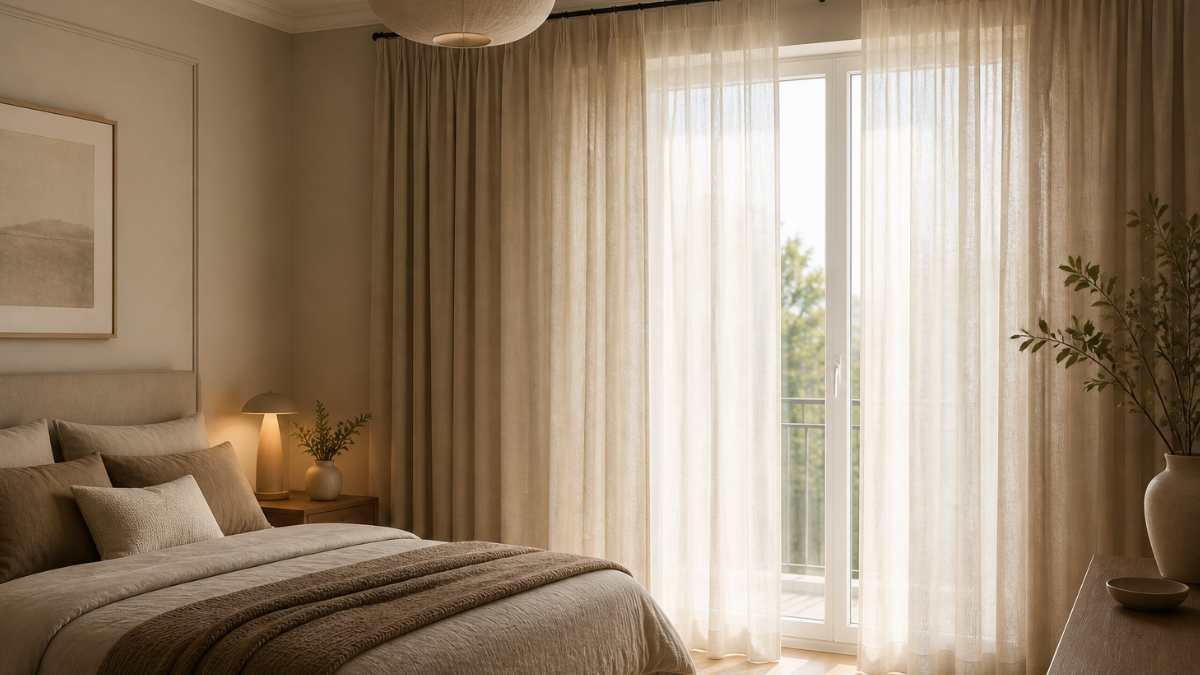

Curtains are one of those items that are often chosen at the end, almost to complete the room. However, they have a huge impact, much more than you think. Not only do they filter the light, but they define the atmosphere, change the perception of the space and also affect the thermal comfort of the house.
The thing is, there is no absolute “right” fabric. There is something that can work in many seasons without forcing you to change constantly. And this is exactly where many make mistakes, choosing solutions that are too light or too heavy, without considering how the house will change during the year.
The problem of curtains that are very seasonal
A tent that is perfect for summer can be cold and inhospitable in winter. Likewise, a heavy, textured fabric can become oppressive in the warmer months.
The result is a house that changes character depending on the season, but not always in a harmonious way. Light becomes too filtered or too direct, the environment loses its balance. This is what happens when you choose the fabric with only one season in mind.
White goods (but not what you think)
Linen is often associated with summer, light and airy curtains. And it is true, but only partially. The latest versions are not thin and transparent like those of the past, but slightly more structured, with visible texture that creates depth.
This type of linen lets the light through without making it aggressive, maintaining a certain freshness in the warmer months. In winter, however, it is not cold, because its texture adds a warmer visual sensation. It is precisely this dual nature that makes it one of the smartest choices.
Brands such as H&M Home or Zara Home offer washed linen curtains with a soft finish, often in the range between €40 and €90 per panel, which work well in both modern and more classic settings.
Thick cotton (the most underrated solution)
Cotton is often considered a plain, almost neutral choice. In fact, when it is slightly heavier, it becomes one of the most balanced solutions.
It’s not too light that it feels flimsy, but not so thick that it weighs down the room. It filters light in a natural way and easily adapts to different environments. It’s the fabric that gets noticed the least, but often works better over time.
It is particularly suitable for those who want a consistent environment all year round, without drastic changes between summer and winter.
The linen blend (the real middle ground)
In recent years, blended fabrics have become very popular, especially linen and cotton combined. This solution combines the lightness of linen with the firmness of cotton, creating curtains that drape better and resist longer.
The result is a fabric that maintains a natural appearance, but with a more defined presence in the space. It’s not very invulnerable, but it’s not rigid either. It is an option that works particularly well in living rooms, where the curtain must accompany the environment without becoming the protagonist.
When it makes sense to choose a heavier fabric
There are situations where a more structured fabric can make sense, especially in very large rooms or with a lot of direct light.
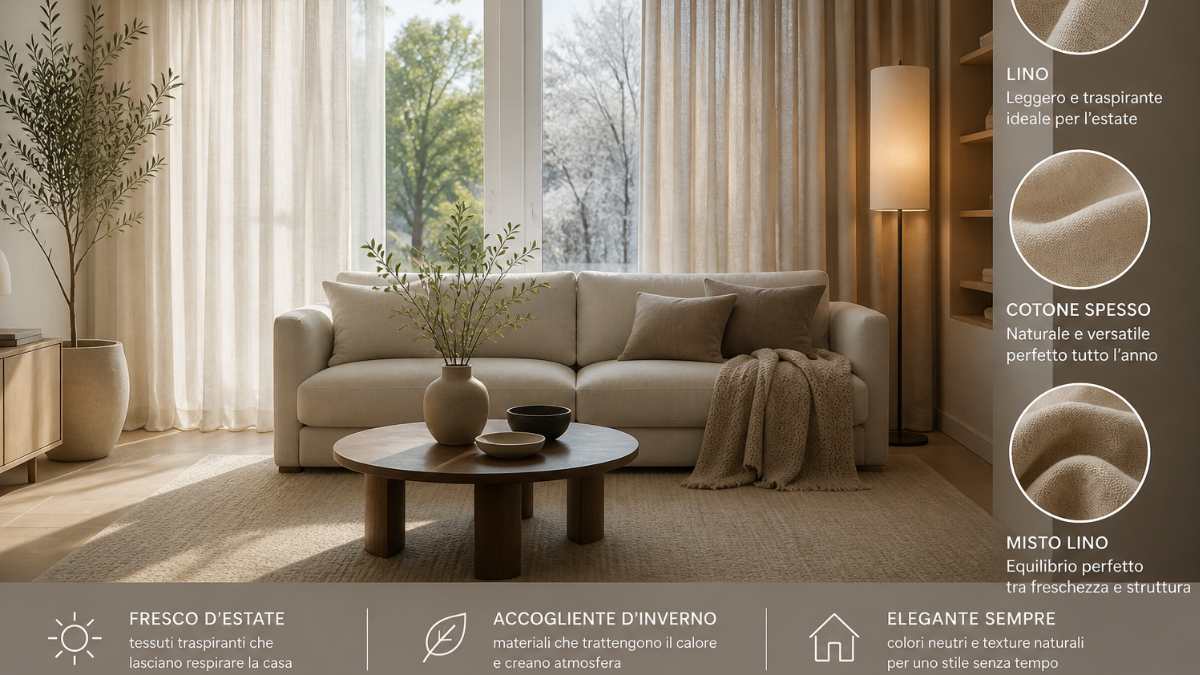
In these cases, fuller curtains help better control the light and make the space feel more intimate. However, caution must be exercised here as well. If the fabric is too heavy, the danger is that it “closes” the roommaking it less airy than it should be.
More modern versions avoid the theatrical effect and focus on softer materials, with a natural fall and neutral colors.
Color counts as much as material
We often focus only on the fabric, but color plays an equally important role. Too cold tones can make the environment less welcoming in the winter months, while too warm colors can be heavy in the summer.
The most interesting shades are the ones in between. Beige, sand, off-white, warm gray. They are colors that react well to light in all seasonsmaintaining a stable visual balance.
A less obvious, but smarter choice
The perfect scene isn’t the one that hits you right away, but the one that continues to work over time. It doesn’t have to look like summer or winter, but adapt to both conditions.
Choosing a balanced fabric means avoiding constant intervention, keeping the home cohesive and harmonious throughout the year. It’s a less obvious option, but a much more effective one.
Ultimately, as is often the case, the difference lies not in the immediate effect, but in the ability of an element to accompany space in time. And curtains, more than you think, do just that.



