


Lise Vester, a designer who immediately impressed me because of her work. At first glance, her design seemed like a well-balanced mix between functional objects and objects that can tell a story. There was something practical, but also something that clearly wanted to be said.
Looking closer – and especially after talking to her – I realized there was a lot more behind it. You can understand her design theory much better when you connect different dots: parts of her biography and parts of her design style. When these elements come together, everything becomes clearer.
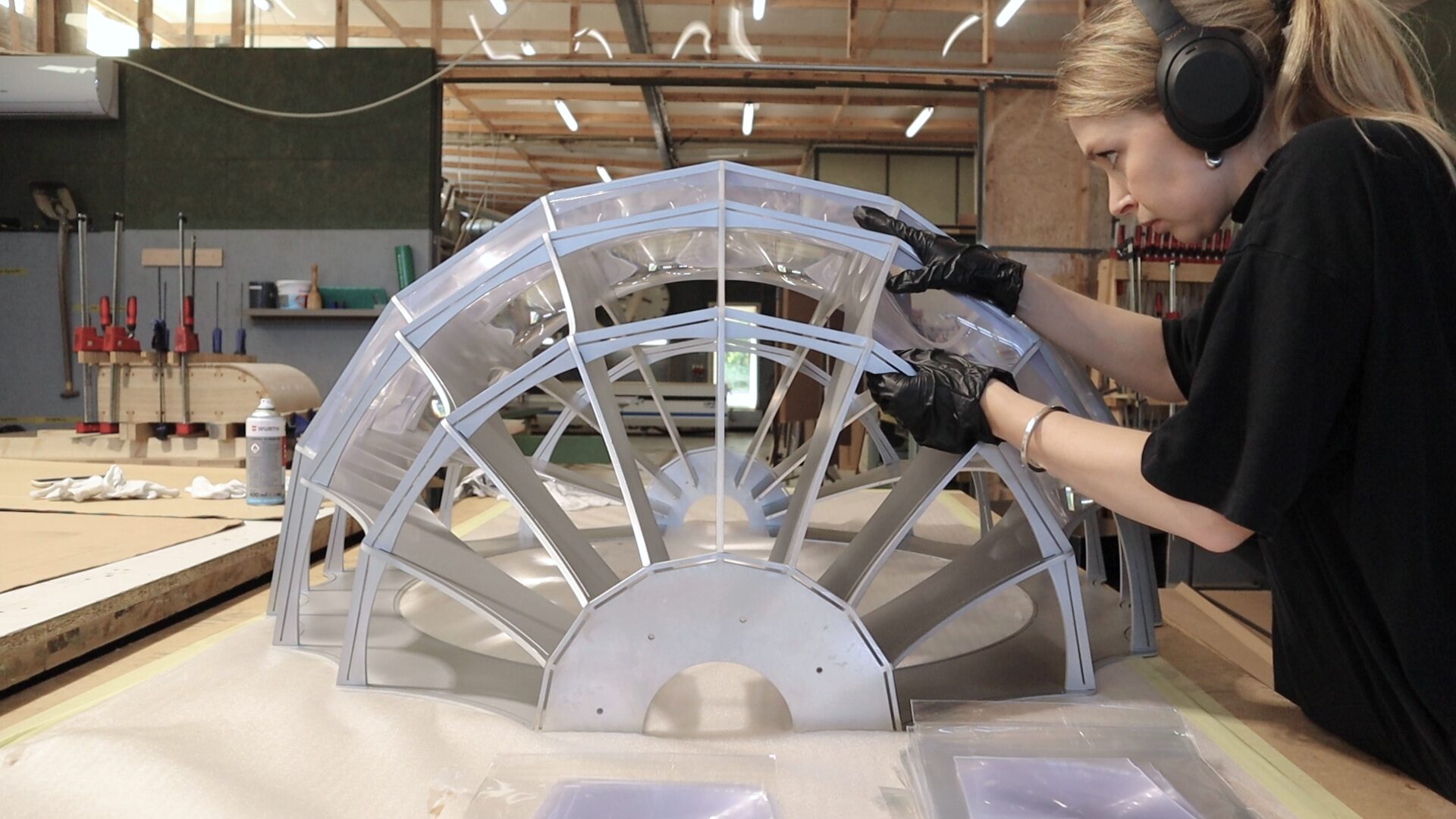
Lise Vester models here Tale Hanging Lamp – ©LiseVester
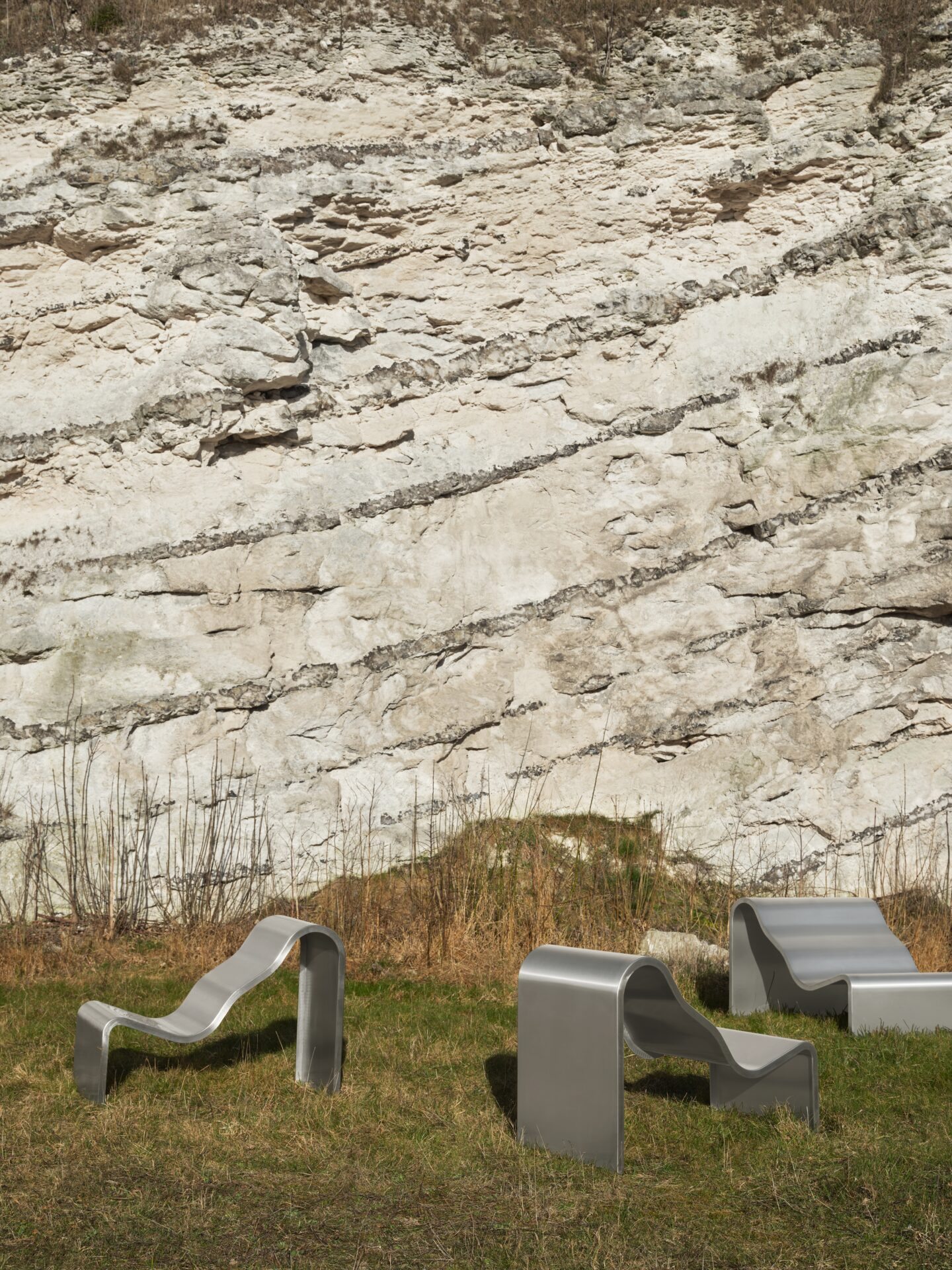
Dream View Bench, Muuto – ©Muuto
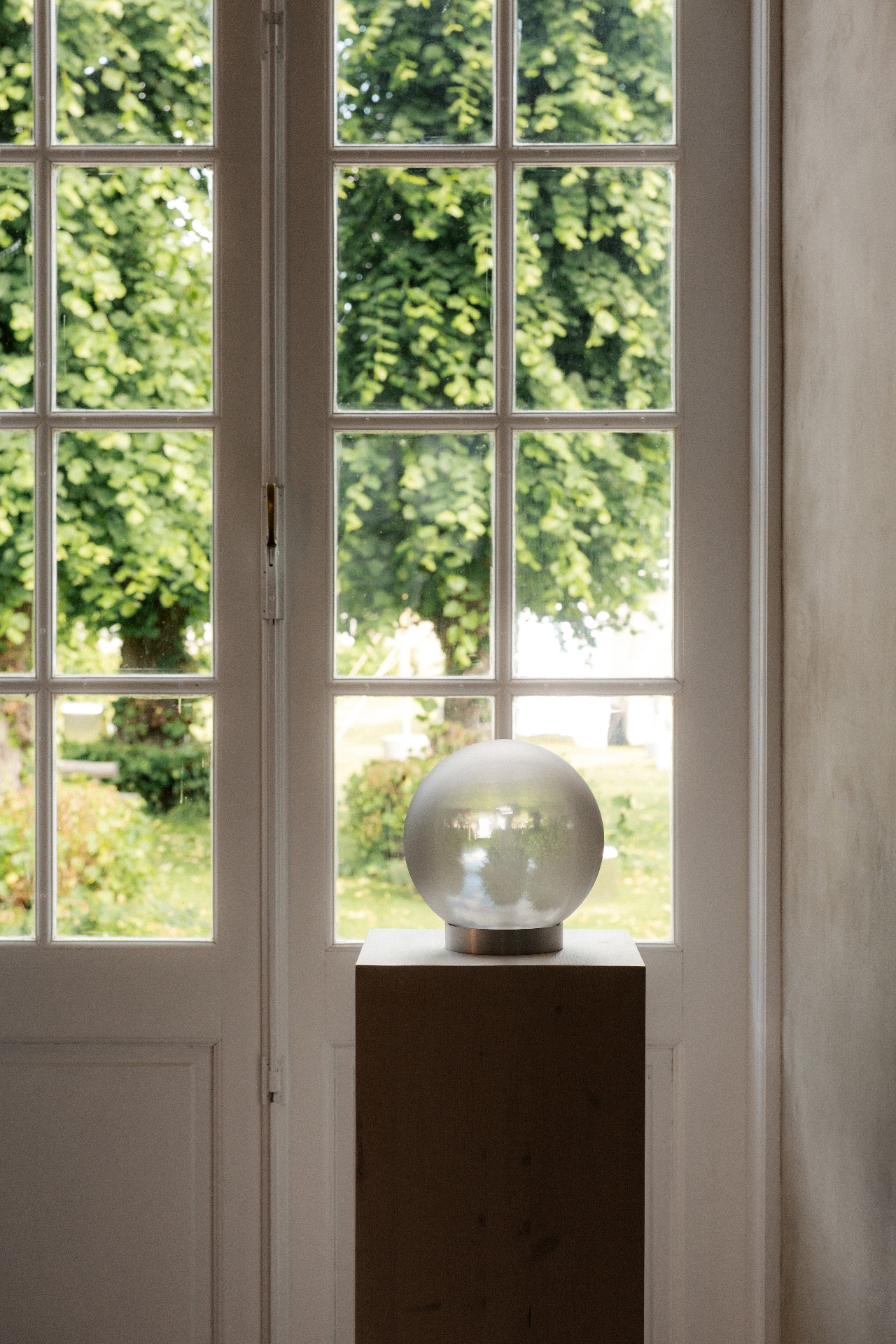
LiseVester’s DreamViewSphere © CecilieJegsen
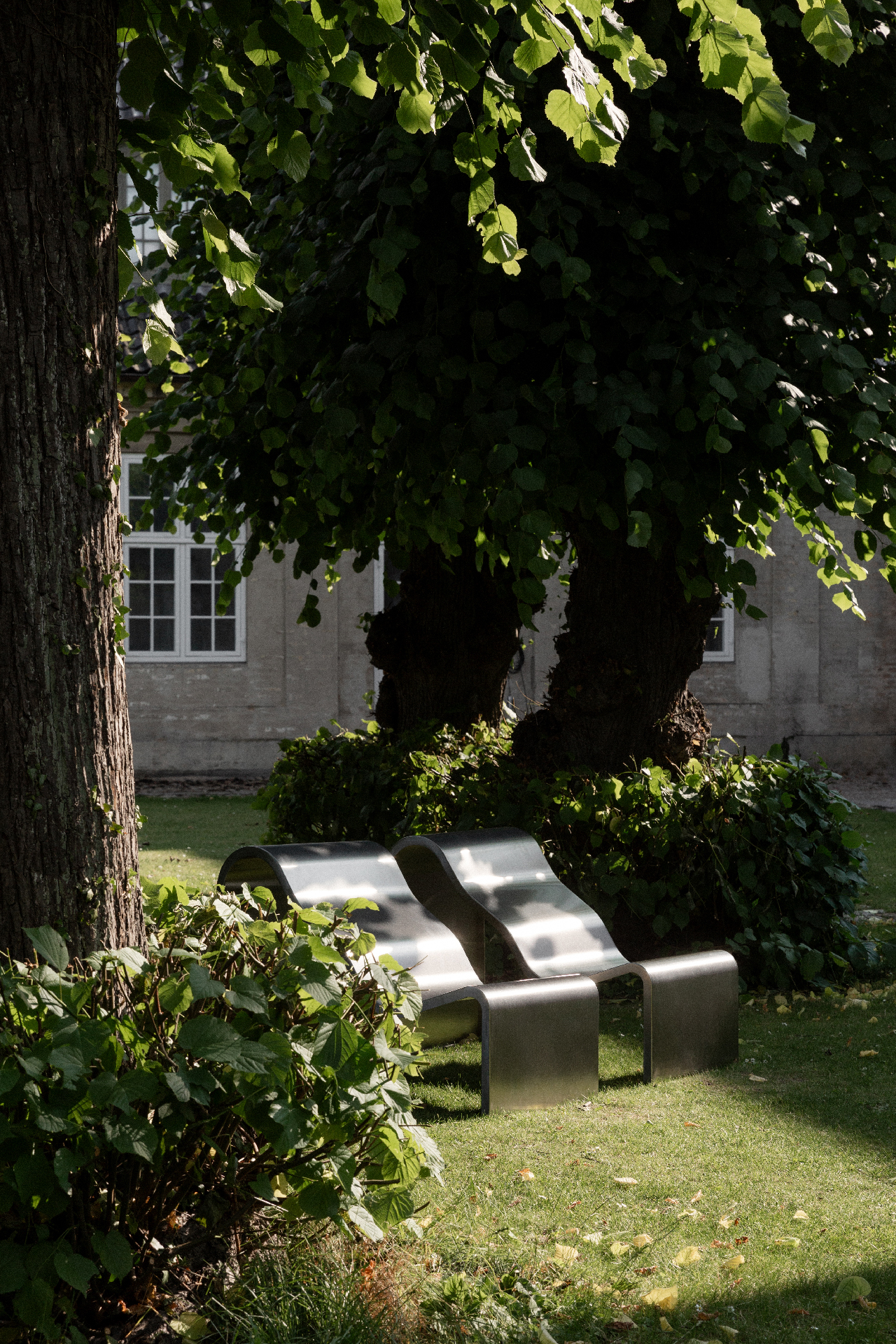
Dream View bench for Muuto, © CecilieJegsen
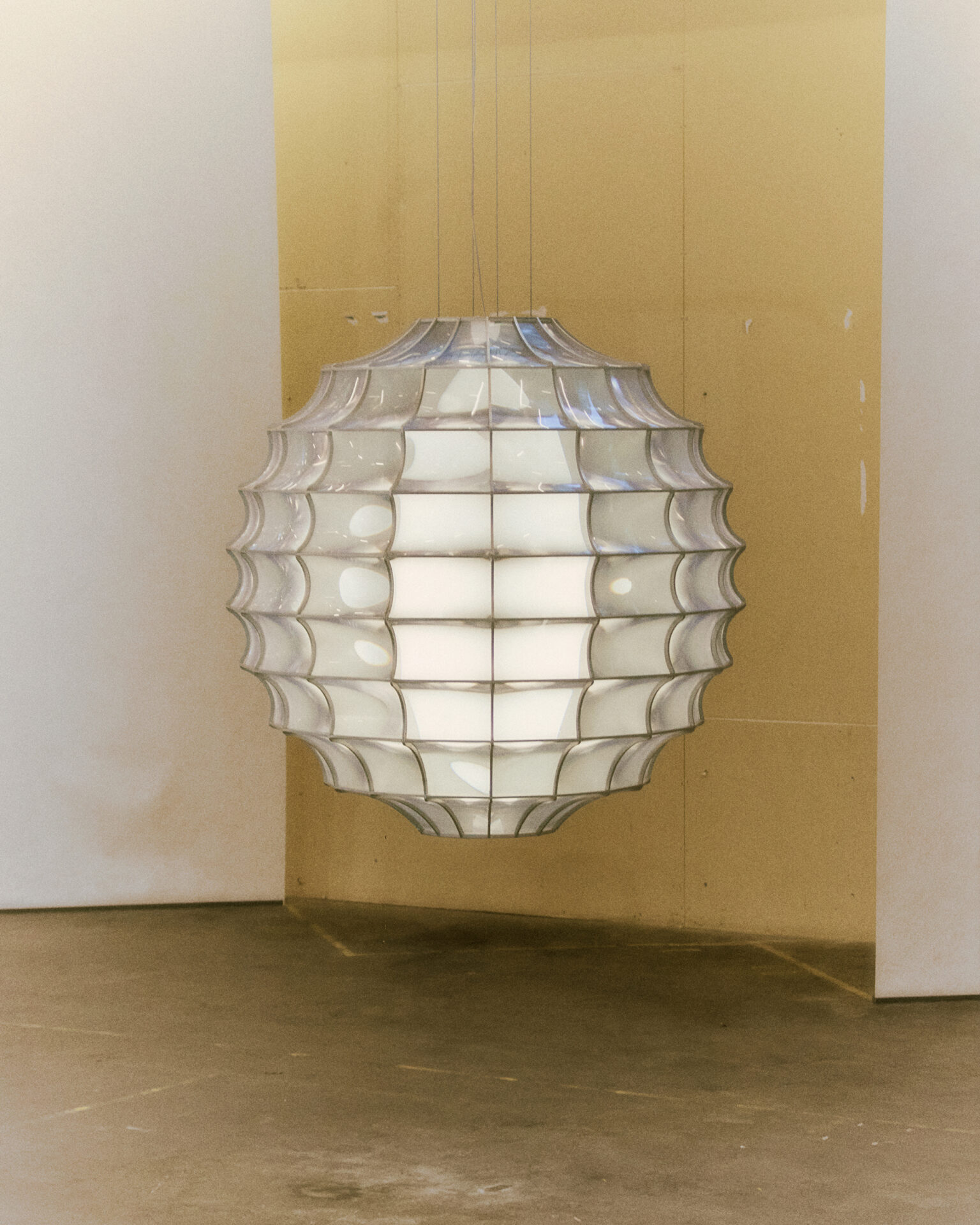
LiseVester, Lighthouse, © Peter Vinther
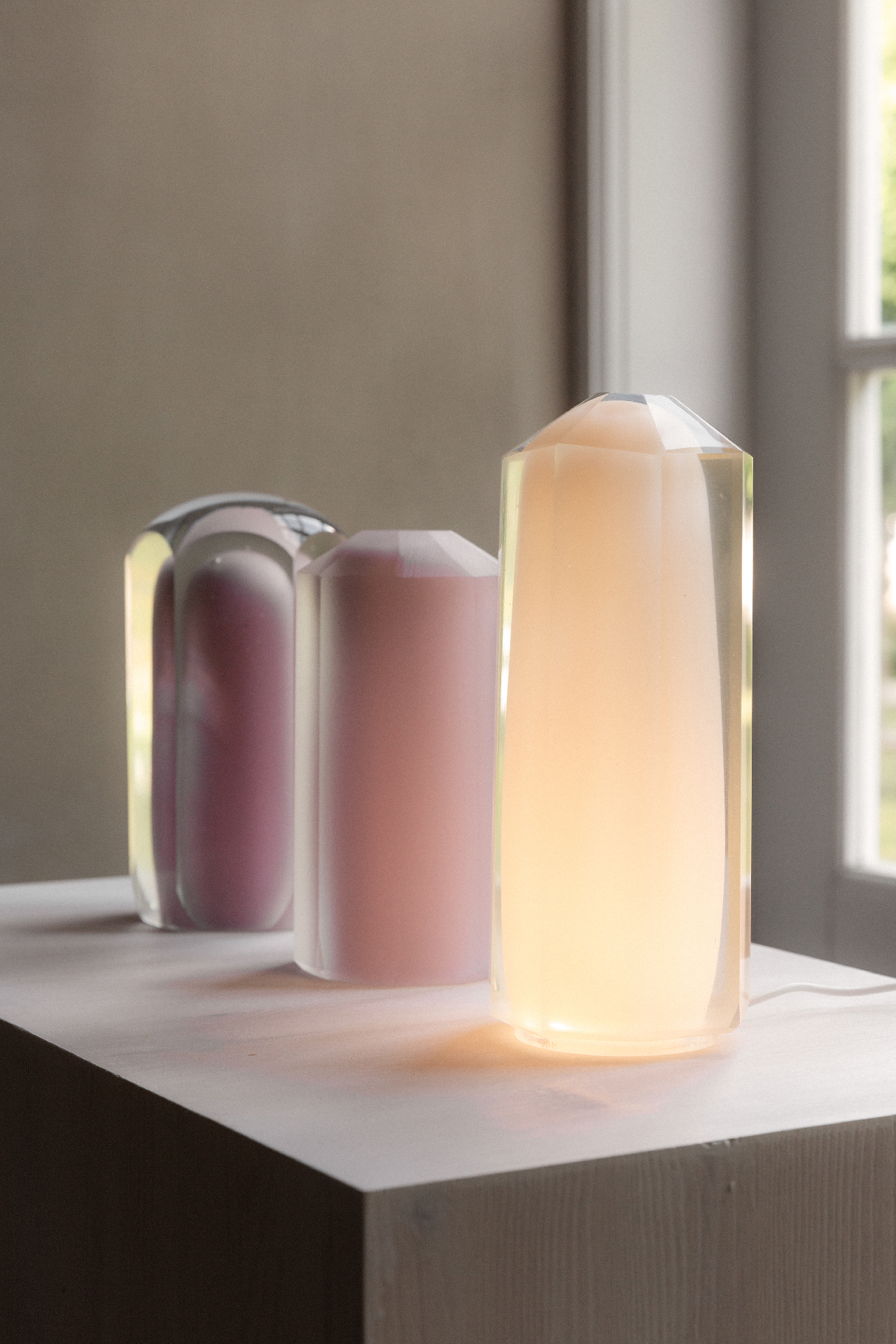
LiseVester’s experimental lights called LightLab – © Cecilie Jegsen
Research education and influence
Lise studied at the Royal College of Art, a place known for pushing students into very deep research, often dealing with complex subjects. During her time there, she worked on research related to mental health and the medical field, focusing in particular on how design could improve the well-being of people in hospice settings.
Hospice is, as we know, a space associated with end-of-life care. It is a dramatic and delicate situation. However, even in such contexts, design can play a role. Through reflection, atmosphere and interaction, objects can affect how people feel.
This survey has been improved Lise Vesterunderstanding of design. Although she later worked on lighting, furniture and everyday objects (things that obviously have nothing to do with mental health), her background shaped the depth of what she does. The objects may look simple or domestic, but the thought behind them is multi-layered.
When the domestic space became central
Then Covid happened. During the pandemic, we were all forced to stay inside our homes. Conversations about mental health, which had often been sidelined, suddenly came into focus. People began to talk openly about well-being, about connection, about the psychological effects of isolation.
At that time, many designers began to think about how design could support people within domestic spaces. Not only through technology, but through atmosphere. Through softness. Through the light. Through small gestures.
Lise Vester was already thinking along these lines.
Designing the experience, not just the object
At one point she asked herself: can I create objects that allow people to enjoy their environment differently? Can small interventions make everyday life a little better? The focus shifted from the object itself to the experience that accompanies it.
In her work we find many examples of objects born from the idea of experience. Take the Dream View bench he designed for In the army. When he approached this project, he wasn’t just designing a chair. He was thinking about how we experience nature. How we position our bodies when observing the landscape. How we sit when we want to feel connected to what is outside.
Everything that followed – the form, the material, the proportions – was a consequence of that experience. The language is extremely simple, almost direct. It can appear purely functional, as if it was designed only for comfort or practicality. But in reality, the function it designs is different.
It’s not just about sitting. It is about improving the mental state. About allowing one to fully enjoy nature. The object becomes a medium between the body and the environment.
Translating physical perception into objects
This approach appears again in other works. Take the Dream View Sphere for example. In nature, we often see reflections in water – slightly distorted, fluid, unpredictable. These distortions are part of the beauty of the experience. The Dream View Sphere translates something similar into a home environment. It brings that subtle distortion into the house.
When you look at it, you see the world from a different perspective. It surprises you, in the same way that a natural event can. It creates a layer between you and reality, like a big drop of water. This is not just a formal experiment. It is connected to material research and how form affects perception. The object becomes a tool for capturing an event or recreating a feeling.
Material exploration and emotional impact
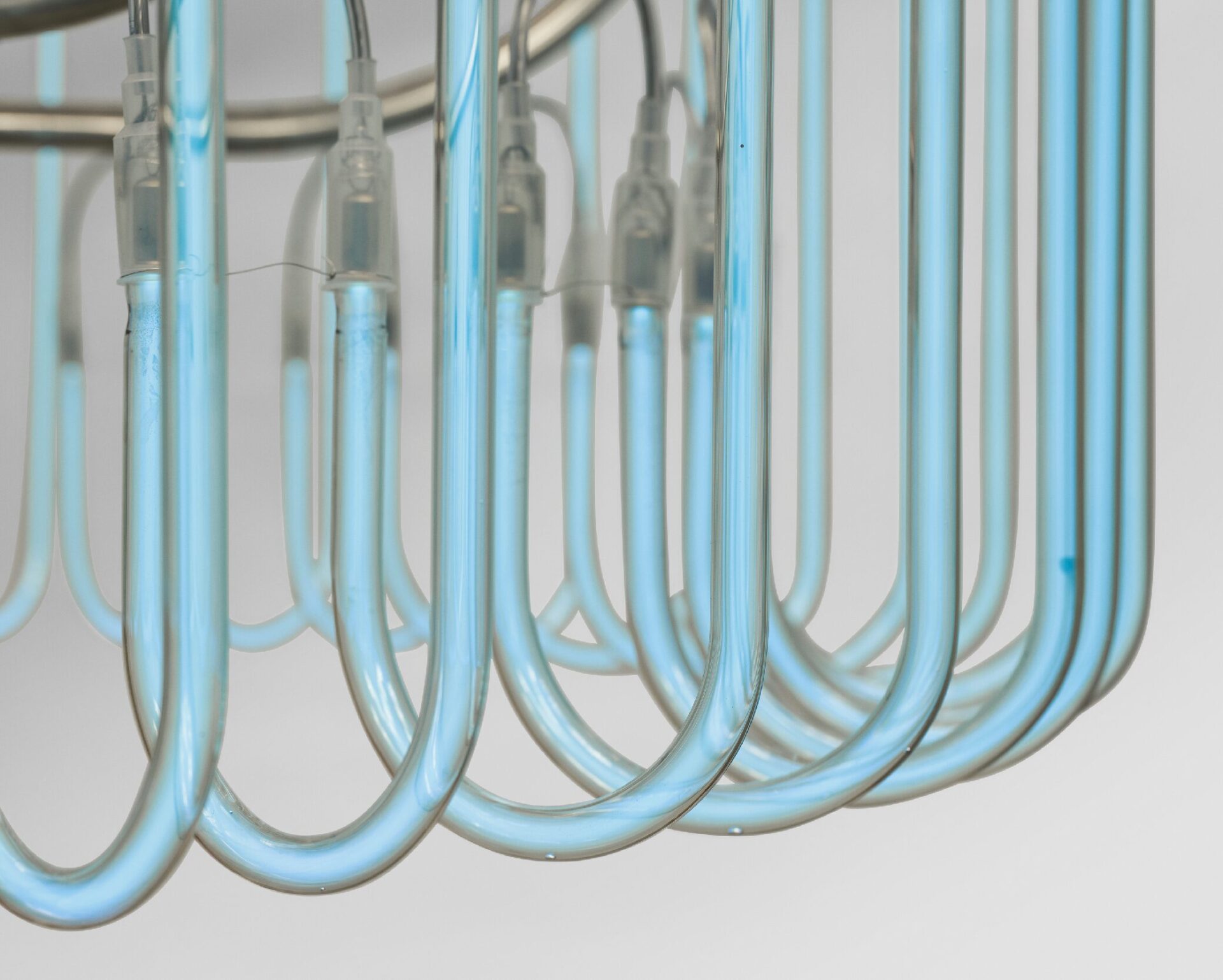
Another example is her neon lamp, Idea Generator. Neon gas becomes bright when compressed and electrically excited. In its most relaxed state, when it is less stimulated and more diffuse, it has a softer, bluish tone. Lise noticed this phenomenon during her material explorations.
He noticed that when neon is less tense, less stressed, it gives off a calmer presence. Even if we’re not consciously aware of it, this calmer tone can affect how we feel. The lamp does not directly reproduce a natural phenomenon, but manipulates the behavior of the material in a way that shapes our experience within a room. Through material and light, he guides emotion.
When research meets industry
What’s interesting is that this research isn’t just limited to her studio. With Muuto, he found a special alignment. There was a common interest in how objects affect emotions, something close to neuroaesthetics. When both sides have strong theoretical positions, a match may occur.
An object full of emotional research and conceptual depth can pass through the filter of an industrial company and become something reproducible. Something that can reach many people. This transformation is critical. A complex idea, for mental well-being, for perception, for interaction, becomes a product. And through production, that experience is made accessible to a wider audience.
Function as an emotional interaction
This is what I find particularly fascinating about Lise Vester. When you analyze its products, you realize that the function it designs is not the conventional one. It’s not just about use in the practical sense. It’s about how people live the experience of the object.
The function is psychological before it is physical. Everything else – form, material, construction – is a consequence of this original idea. It is not possible. He doesn’t declare right away. But they are there, shaping how we see, how we sit, how we feel.
If you liked Lise Vester’s work, check it out Kooy or Yellow Nose Studio.



