
As populations continue to age globally, architecture is increasingly faced with a difficult question: how can homes support physical accessibility without limiting later life to a purely clinical state? Too often, housing designed for aging prioritizes utility at the expense of ambiance, identity, and emotional comfort. The result is a structured environment that works efficiently but rarely feels ambitious. With Home for Life in Heifort, Belgian practice FELT it suggests another possibility entirely – one where aging is not seen as a decline to be managed, but as a stage of life worthy of beauty, autonomy and architectural richness.

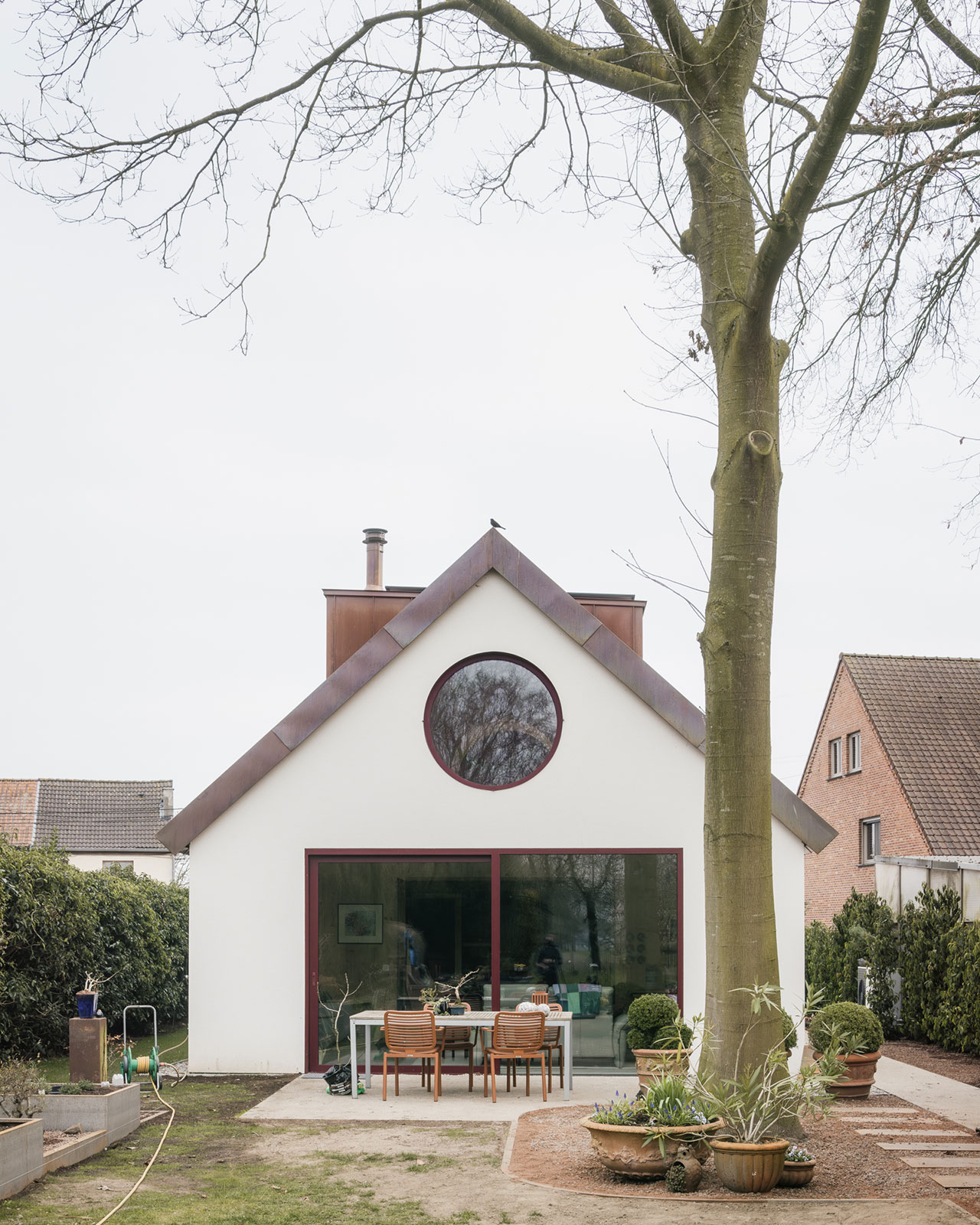
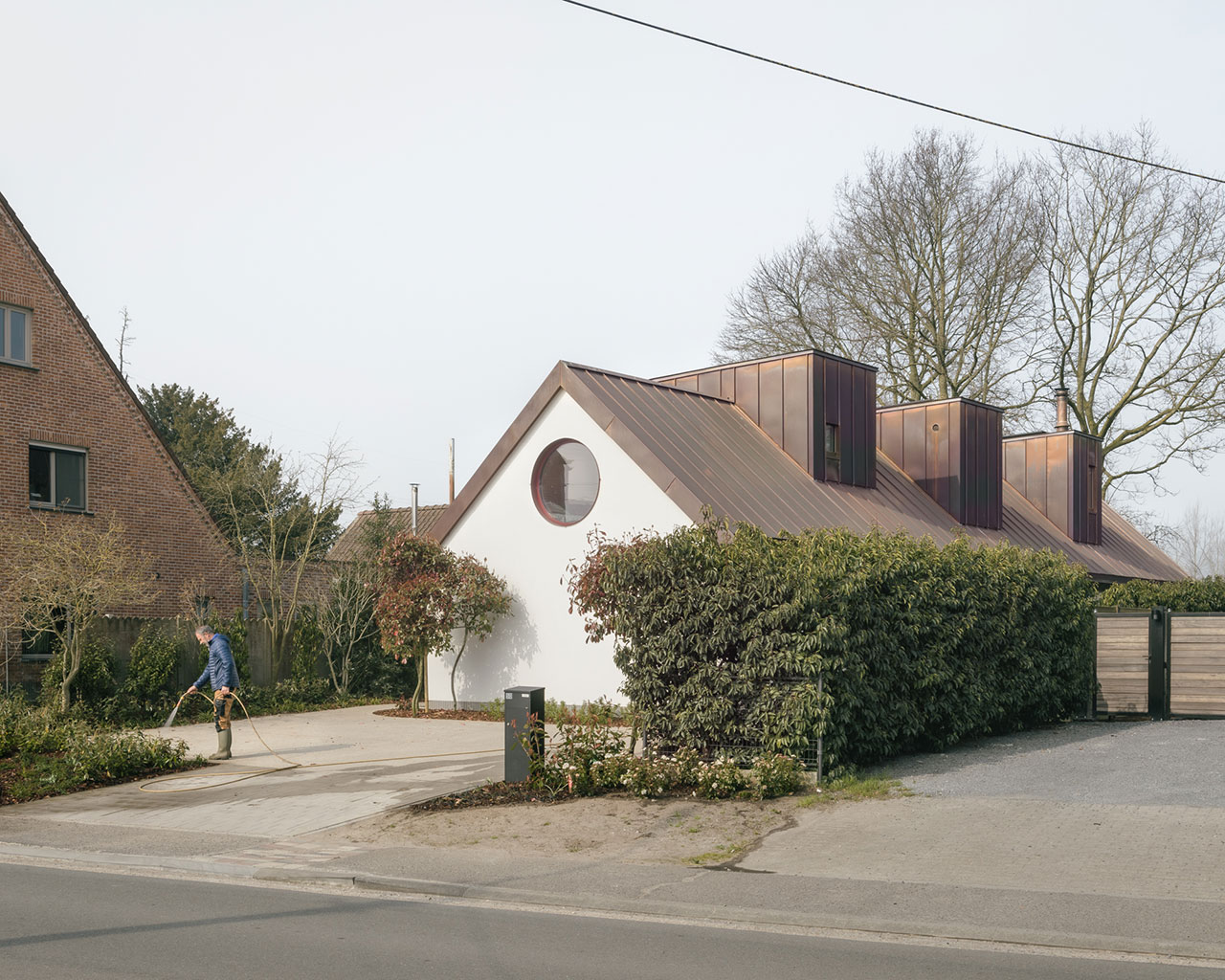
Designed for a retired couple who wish to age in place, the 170 square meter residence quietly incorporates accessibility into an environment defined less by accommodation than by spatial bounty. From the street, the one-story house looks almost archetypal: a solid white volume covered by a copper-toned roof and distinguished by a circular window that gives the facade an almost childlike intimacy. The understated exterior, however, hides an unexpectedly layered interior landscape where light, wood, rhythm and procession become active participants in everyday life.
FELT founders Jasper Stevens and Karel Verstraeten resisted approaching aging as a fixed condition requiring static solutions. Instead, the project anticipates changes over time. “You cannot fully predict future aging or potential mobility-related challenges,” the studio explains, “so flexibility must be built into the architecture itself.”
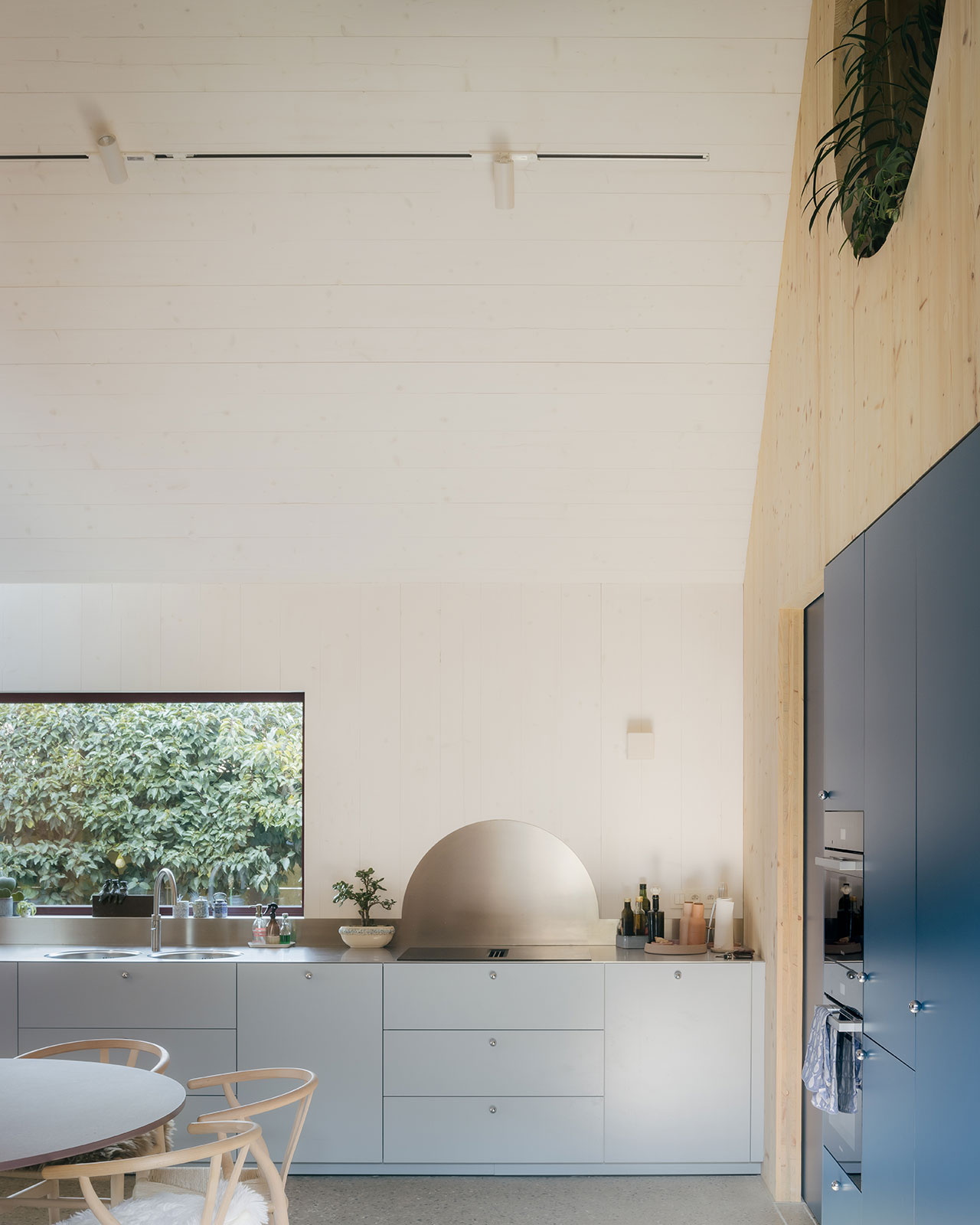
This philosophy manifests itself in subtle but critical decisions throughout the home: generous circulation backs, sliding doors, level thresholds, customizable kitchen fittings and accessible sanitary areas work quietly in the background to preserve independence for as long as possible.
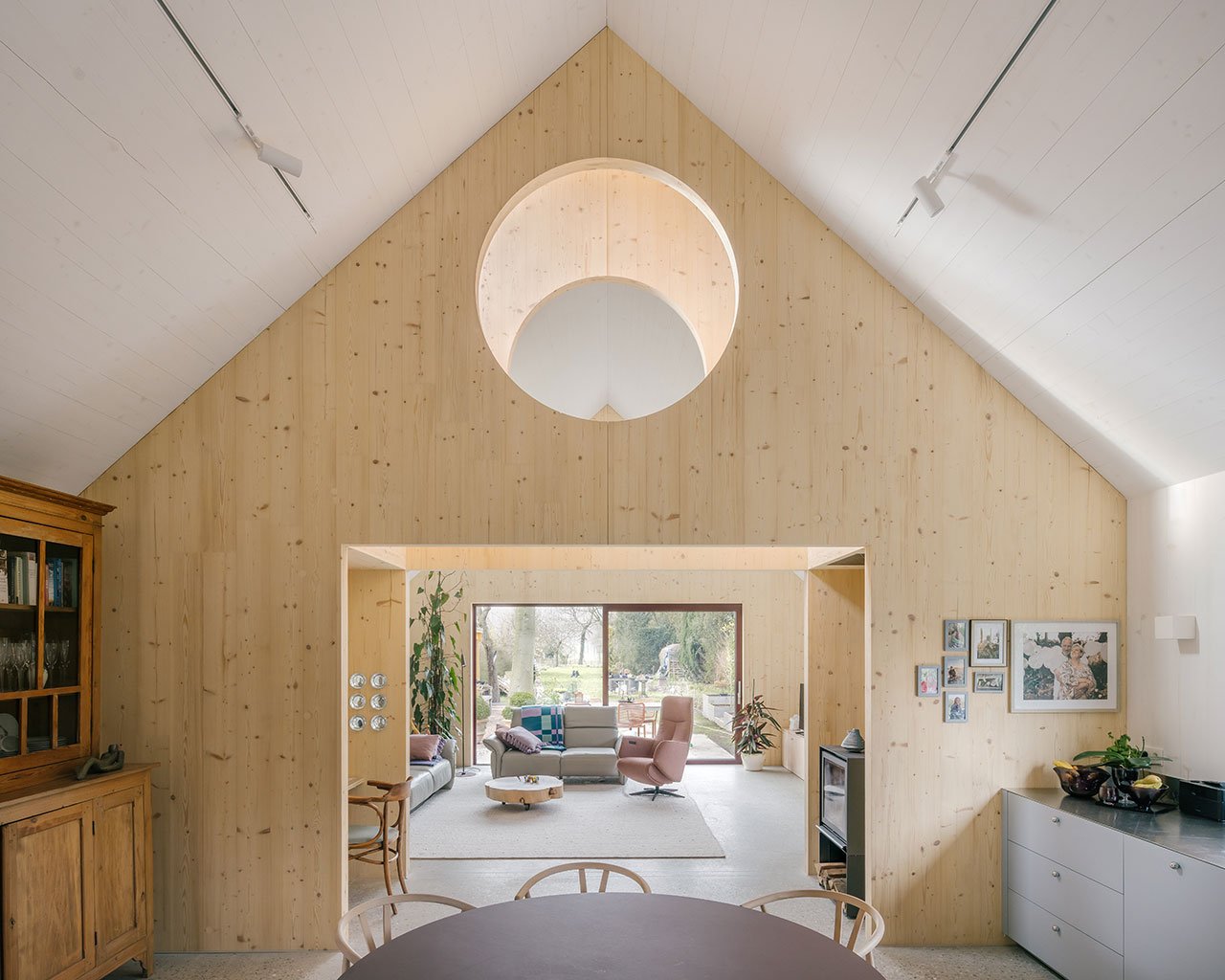
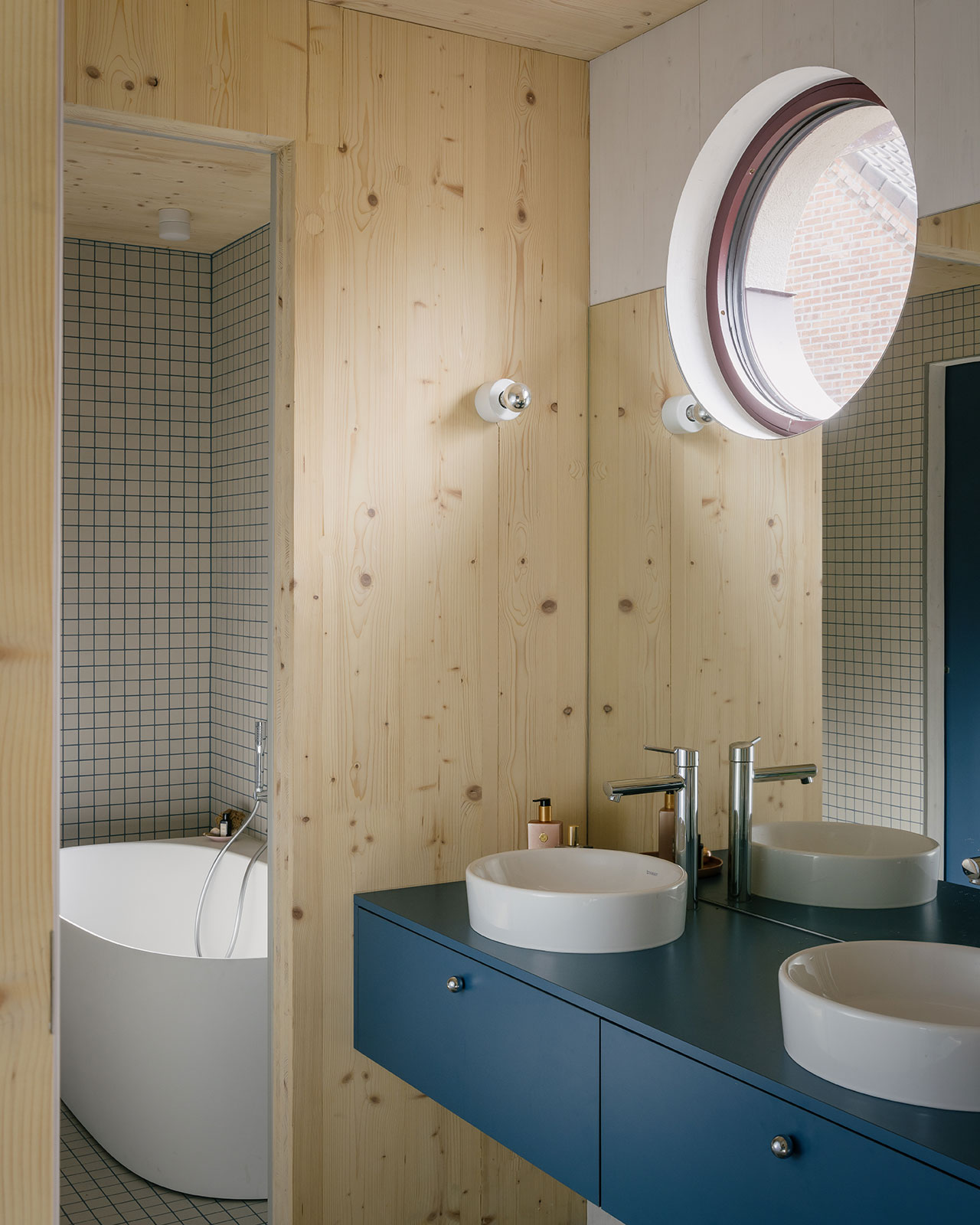
Importantly, none of these interventions are communicated through overtly medicalized aesthetics. Instead, the house feels warm, tactile and deeply domestic. Exposed CLT timber frames create a visible rhythm throughout the interior, creating a sequence of alternating ‘service’ and ‘service’ spaces – a classic organizational principle reinterpreted for contemporary living. Larger open rooms unfold into more compact support spaces, creating a legible design that can evolve alongside future occupant needs.
“The alternation of larger open rooms with service areas creates a design that remains flexible over time,” note the architects. “It also allows the thresholds between spaces to become more open or more closed in the future, depending on changing needs.”
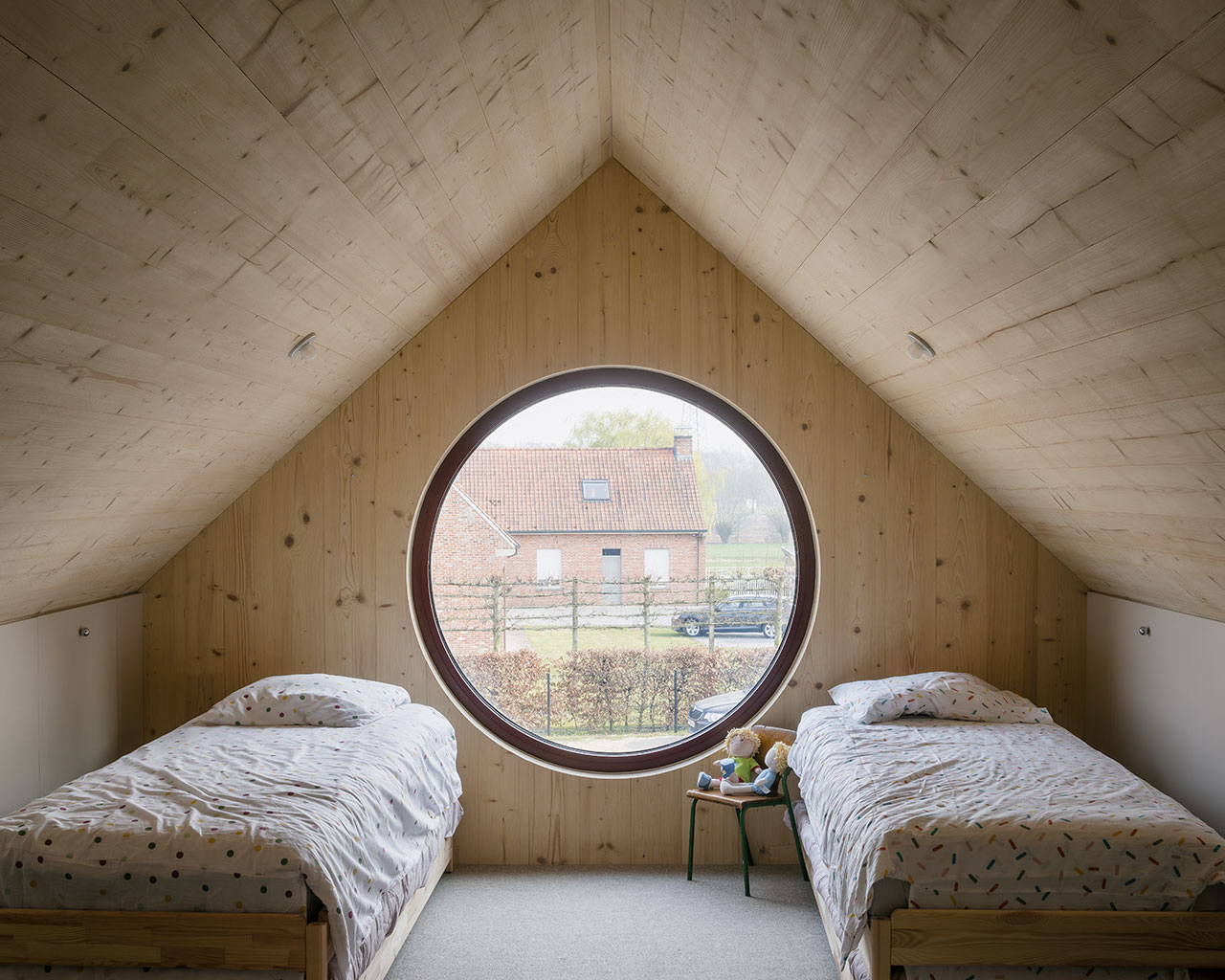
The timber itself plays an equally important psychological role. While accessibility standards often lead to sterile environments, FELT leans towards the softness and intimacy of the material. “You don’t want an environment that looks like a device or an aid,” says the studio, “but a home that conveys calm, familiarity and ease.” Throughout the interior, light wood surfaces absorb and diffuse daylight, creating spaces that feel both intimate and expansive. White painted sections enhance the contrast between structure and openness, balancing warmth with brightness.
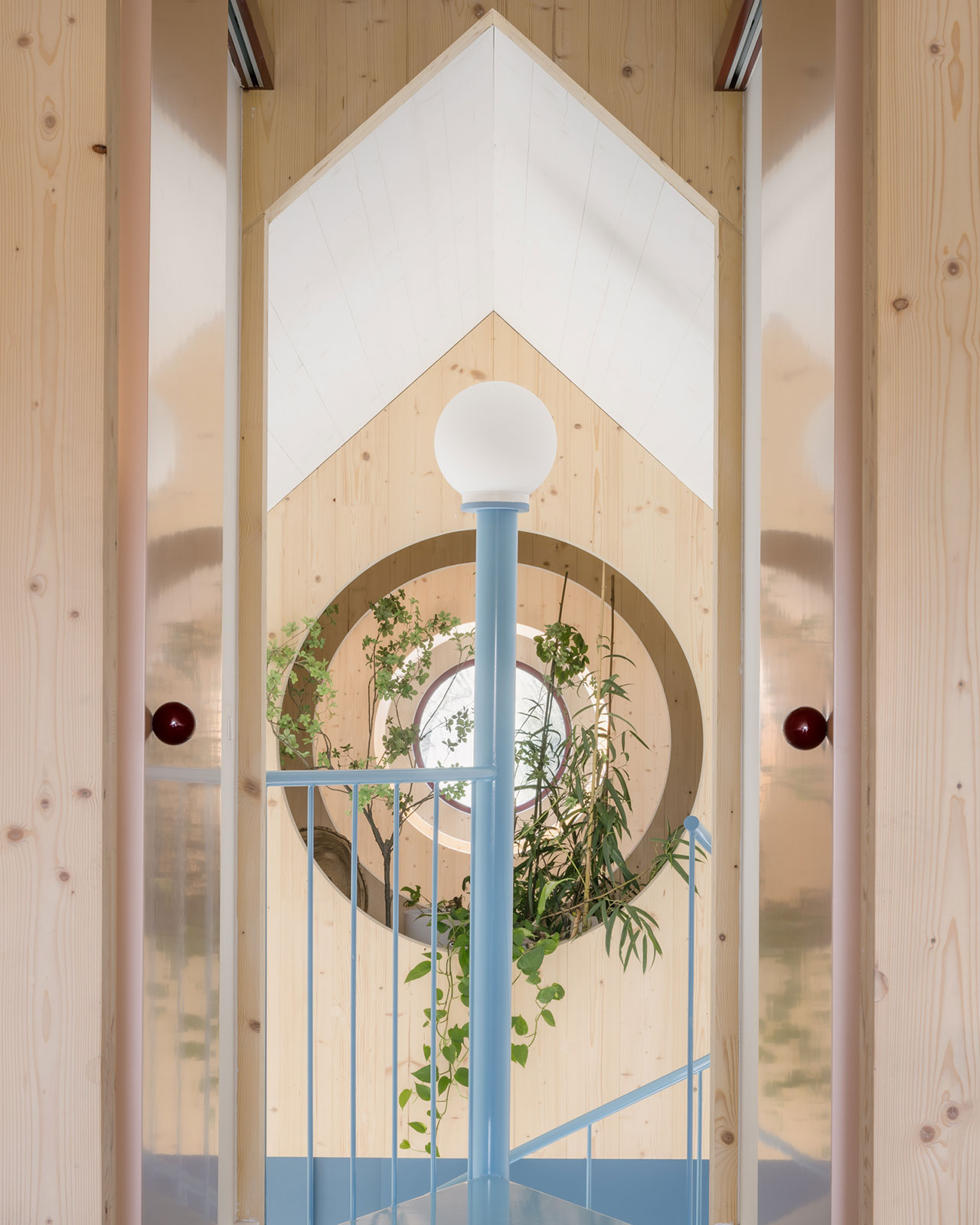
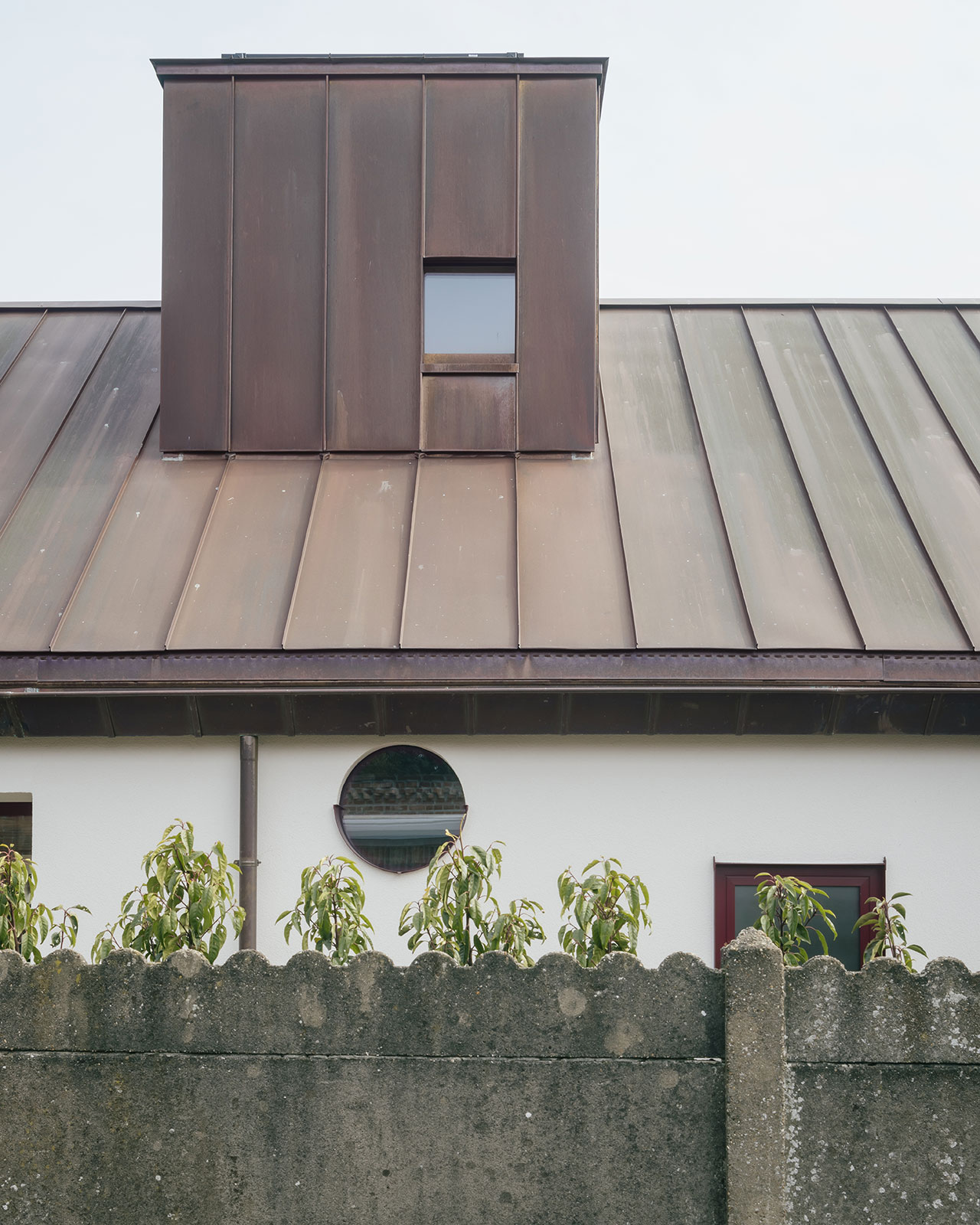
Perhaps the most distinctive architectural gesture of the project reaches from above. Three sculptural chimney-like volumes, clad in copper, rise above the roofline. While formally enlivening the otherwise modest silhouette, they also serve critical environmental and experiential functions. Housing technical and service spaces, the vertical elements draw daylight deep into the narrow plan from multiple orientations. Instead of functioning as isolated skylights, these shafts become luminous spatial volumes in their own right.
The changing quality of light during the day becomes a subtle mechanism for the perception of time inside the house. “The house has a different feel throughout the day,” explains FELT. “The passing of the day becomes almost tangible inside the house.” In a work focused on aging, this sensitivity to temporality is particularly poignant. The architecture here does not attempt to resist time, instead framing it gently and perceptibly through the atmosphere.
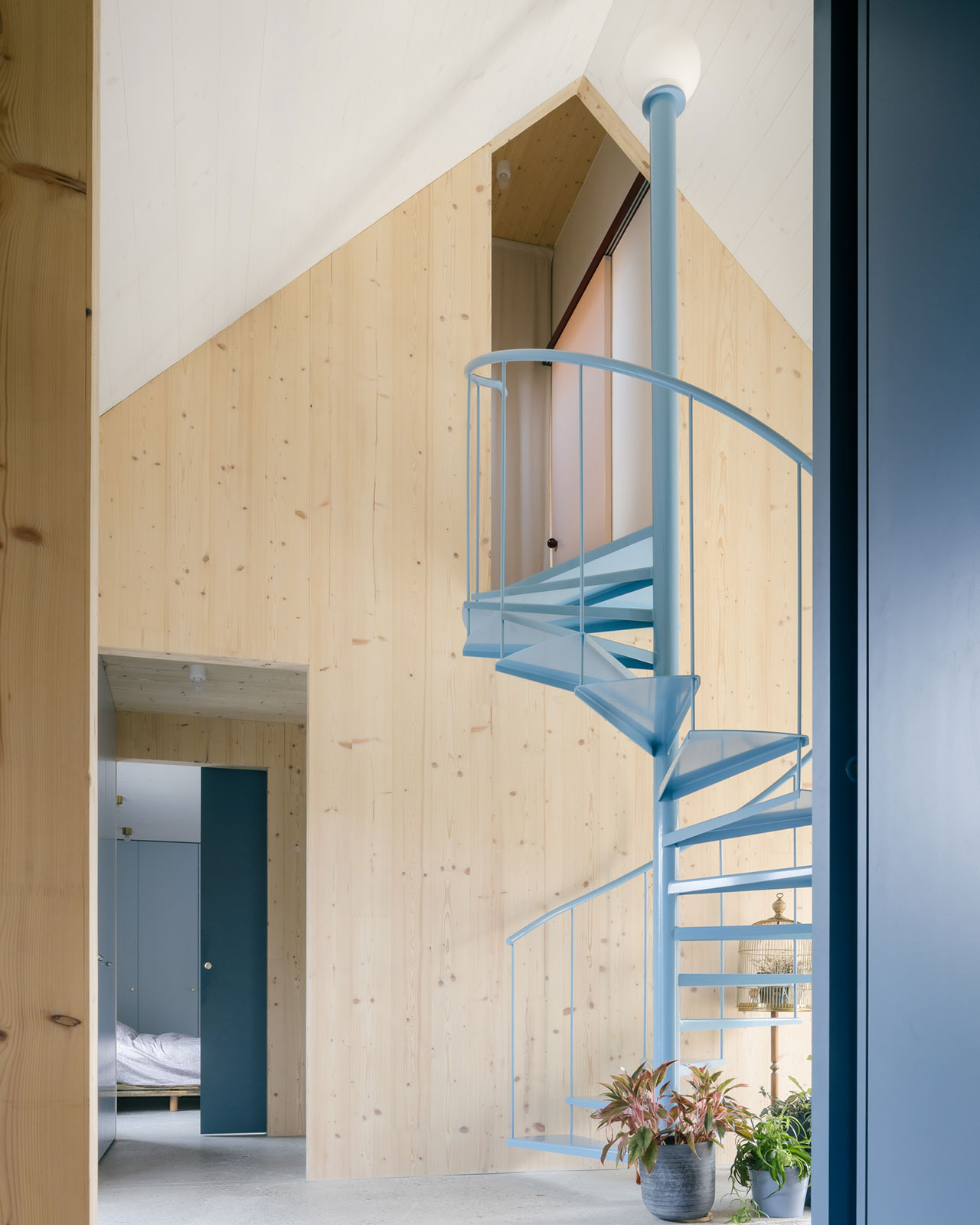
This emotional attention extends to intergenerational life. Within the roof volume is a compact sleeping loft designed for visiting grandchildren. Accessible now via a light blue spiral staircase, the space introduces continuity and joy to a home otherwise organized with long-term care in mind. If the staircase eventually becomes impractical, the attic can be converted into storage without compromising the functionality of the main floor. The gesture reflects FELT’s broader refusal to limit aging to limitation alone.
What ultimately distinguishes Home for Life is its rejection of the assumption that accessibility requires neutrality. “We hope projects like this show that the opposite is possible,” explain the architects. “A house designed around aging can still have a clear identity, its own spatial qualities and a distinct architectural voice.”
To see this and other works by the architecture and design studio, visit felt.works.
Photo by Stijn Bollaert.