


Reclaiming a piece of furniture from the past doesn’t mean filling the house with old pieces, but choosing furniture with character and bringing it back to the present with natural colors, matte finishes and more up-to-date details.
Flea markets, family cellars and antique shops can hide much more interesting furniture than a lot of new mass-produced furniture. A 1950s sideboard, a worn work table or a Vienna wicker chair have proportions, materials and small details that say something. The danger, however, is to introduce them into the home without a specific plan, getting a confusing or very nostalgic result.
For vintage furniture to really work in a modern living room, you don’t just have to clean it up and put it in a corner. We have to reinterpret it. Furniture should retain its identity, but speak a more modern language through colors, finishes and combinations. The shades of earth and nature, from sage green to desaturated forest, from clay beige to warm brown, are ideal for this purpose: they soften the lines of the past and make the piece easier to introduce into modern settings.
Vintage green is not just a trend, but a different way of furnishing
Reclaiming used furniture addresses two very current needs: reducing waste and moving more personal items into the home. Recycling, i.e. the creative recovery of existing objects, allows us to give new life to pieces that would otherwise be discarded, turning them into unique pieces of furniture that are much more expressive than standard solutions.
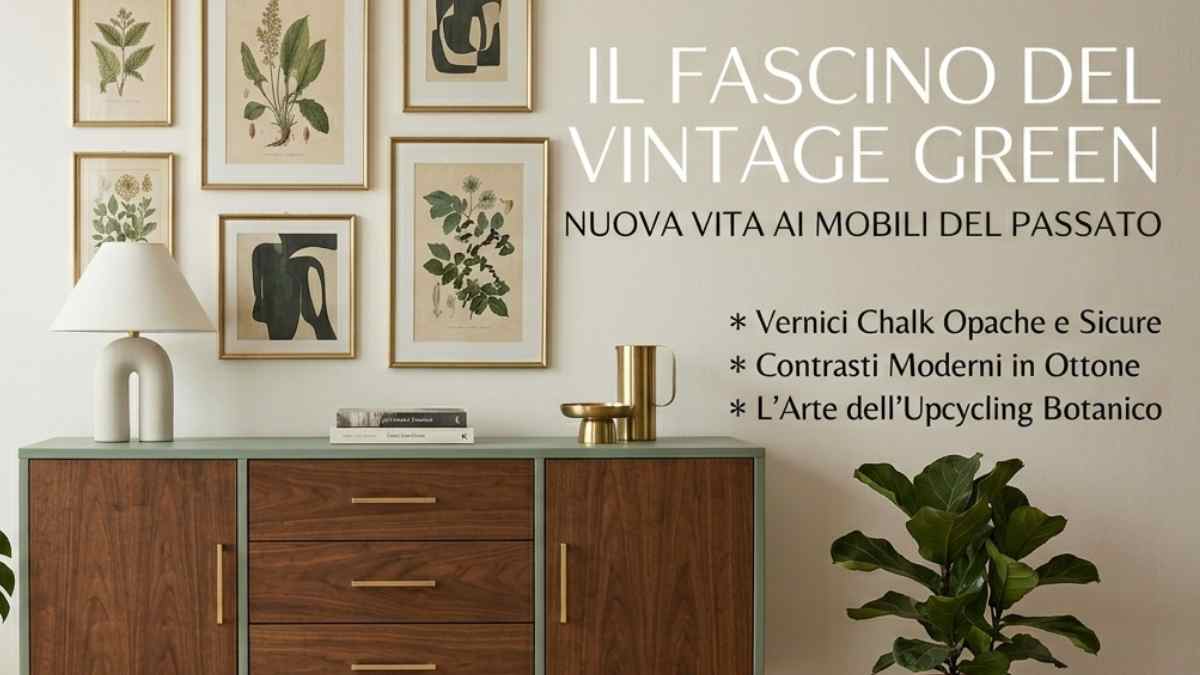
The so-called vintage green was born precisely from this meeting between sustainability, taste for the past and attention to natural colors. It’s not about piling up vintage furniture, it’s about choosing a few items with good structure and enhancing them. A refurbished sideboard can become the focal point of the living room, an old table can be transformed into a desk full of character, a pair of restored chairs can make a basic dining room more interesting.
The secret is to create balance. Antique furniture should be combined with clean walls, light floors, natural fabrics and modern accessories. That way it doesn’t look like an item that ended up there by chance, but a precise choice.
Before painting, you need to prepare the furniture well
The most important stage of recovery is not painting, but surface preparation. Old wood may have residues of wax, dust, grease, previous paint or small imperfections that prevent the new paint from adhering well. Skipping this step means you risk an uneven finish, destined to be ruined in no time.
Before applying any product, the furniture should be degreased with a suitable solution and then lightly sanded. It is not always necessary to completely remove the original finish, but it is important to open the surface and prepare it to welcome the new paint. Even the most worn spots, corners and places around the handles deserve attention, because they are the ones that show defects and lifting most easily.
To obtain a matte, warm and material effect, the most suitable solutions are: chalk painti.e. chalk-based paints, or the Water-based acrylic matte enamels. They are products that are easy to use even at home, have good coverage and allow you to get that plush finish that makes the piece of furniture more contemporary without completely erasing its history.
The shades of earth and nature immediately change the appearance of the furniture
The colors you choose make the difference between a successful restoration and a piece of furniture that continues to look dated. Natural shades are the most effective because they have character, but are not obtrusive. THE sage green It works well on sideboards, bedside tables and sideboards because it’s bright, subtle and easy to match. THE desaturated dark green It gives more depth and is ideal for a statement piece in the living room or entryway.
Earth tones are also very useful. Warm beige, dove grey, clay, light mud and vegetal brown manage to soften the heavy lines of some furniture from the past. They are colors that integrate well with neutral walls, stone floors, light parquet and fabrics such as linen, raw cotton or jute.
An interesting idea is to paint only part of the furniture. By leaving the drawers in natural wood and painting the exterior structure or working only on the doors, you can lighten the piece without distorting it. The original veins remain visible and the color becomes an update element, not a full coverage.
Modern details avoid the effect of the dated house
A piece of furniture that has been reclaimed completely changes its appearance even with small targeted interventions. Old oxidized handles can be replaced with satin brass, matte black or plain ceramic knobs. This detail is enough to make a classic sideboard or low living room furniture more current.
Another very effective solution is to work on the legs. Install a sideboard or chest of drawers iron sharp feet it brightens the structure and creates an interesting contrast between the patina of the past and a more graphic line. The piece of furniture looks less heavy, more raised from the ground and more suitable to coexist with modern furniture.
Contrast should be administered carefully. If the furniture has elaborate shapes, it is better to choose basic handles and opaque colors. However, if the structure is simple, you can be a little more daring with a more intense shade or a metallic detail. The goal is to update the piece, not transform it into something unrecognizable.
The right background enhances restored furniture
A restored vintage piece of furniture needs visual space. If it is placed in front of an overloaded wall or next to many decorative objects, it loses its power. The walls in shades of warm whitedusty beige, light smoky gray or greige are perfect because they enhance the color of the furniture without competing with it.
Plants complement this type of decoration very well. A Monstera Deliciosa, a Ficus Lyrata or a broadleaf plant placed near the sideboard creates a natural continuity with the greens chosen for the painting. The result is a more lively angle, less constructed and more pleasing to the eye.
To make the whole look even more harmonious, it is better to limit the accessories above the furniture. A lamp with a clean line, a rough ceramic vase, a botanical print or a few books are enough to complete the composition. Reclaimed furniture should remain the protagonist, but not displayed like a window display.
Reinventing the furniture of the past means giving value to what already exists, choosing more contemporary colors, respectable finishes and details able to illuminate the shapes. With shades of earth and nature, even a piece found on the market can become the most interesting centerpiece of the living room: sustainable, personal and full of character



