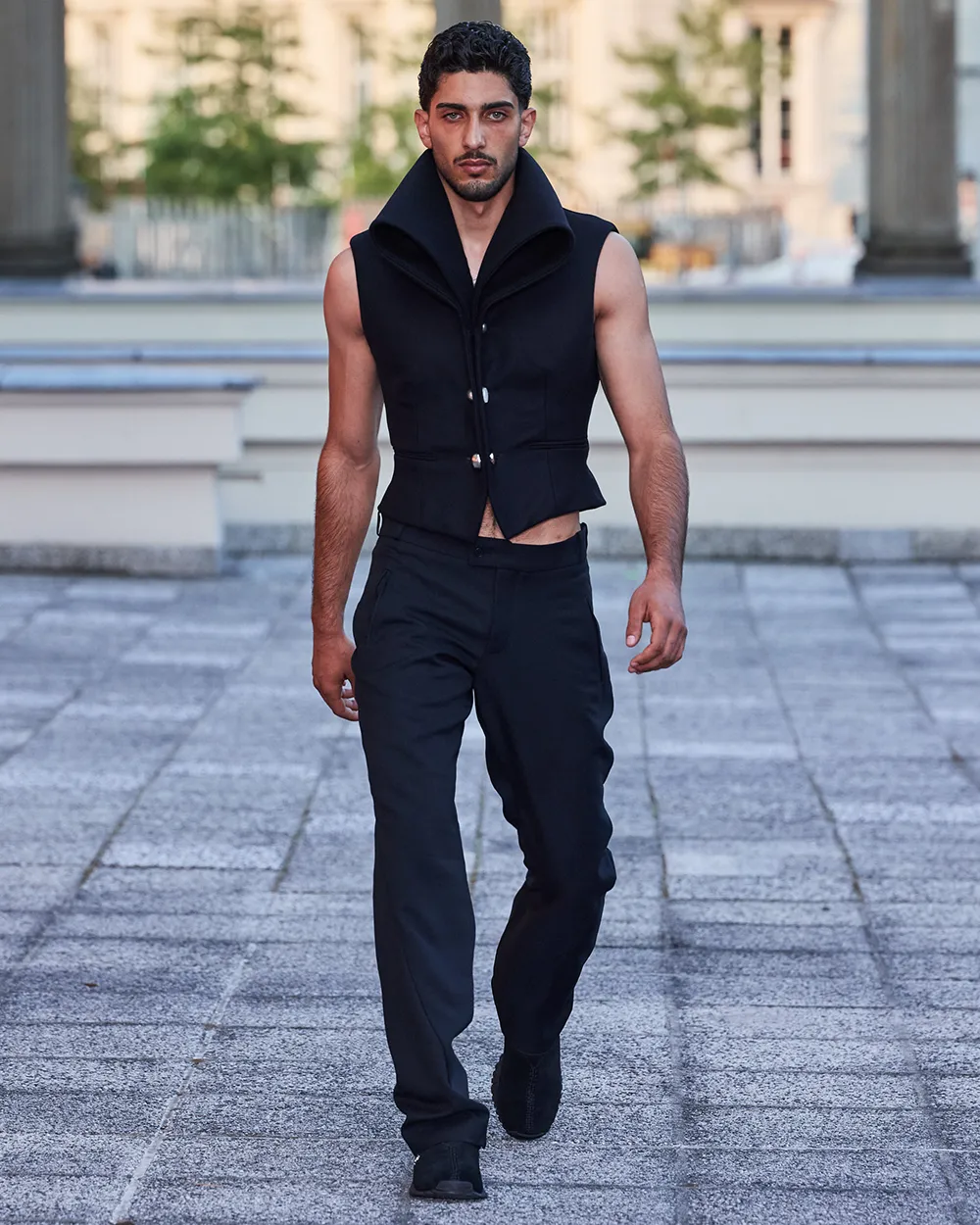
GmbH marks its tenth anniversary with Intervention VI, a Spring Winter 2027 collection presented during Berlin Fashion Week that looks back to move forward. Founded in 2016 by Serhat Isik and Benjamin A. Huseby, the brand began as a way to tell stories through clothing, identity, community and resistance. This season, that impulse turns to Berlin itself, and to a fashion history that remains largely absent from the larger narrative of European design.
The collection begins with a question: what happened to Berlin fashion? In the 1920s, the city had a strong and active fashion scene, with couture houses, salons, designers, tailors, shops and clients operating at a level that rivaled Paris. This history changed violently under the Nazi regime, which destroyed much of Berlin’s fashion community. Many of the people who shaped this world were Jews. Their companies and assets were confiscated, their lives were uprooted and many were forced into exile or killed. The Berlin fashion continuum was broken.
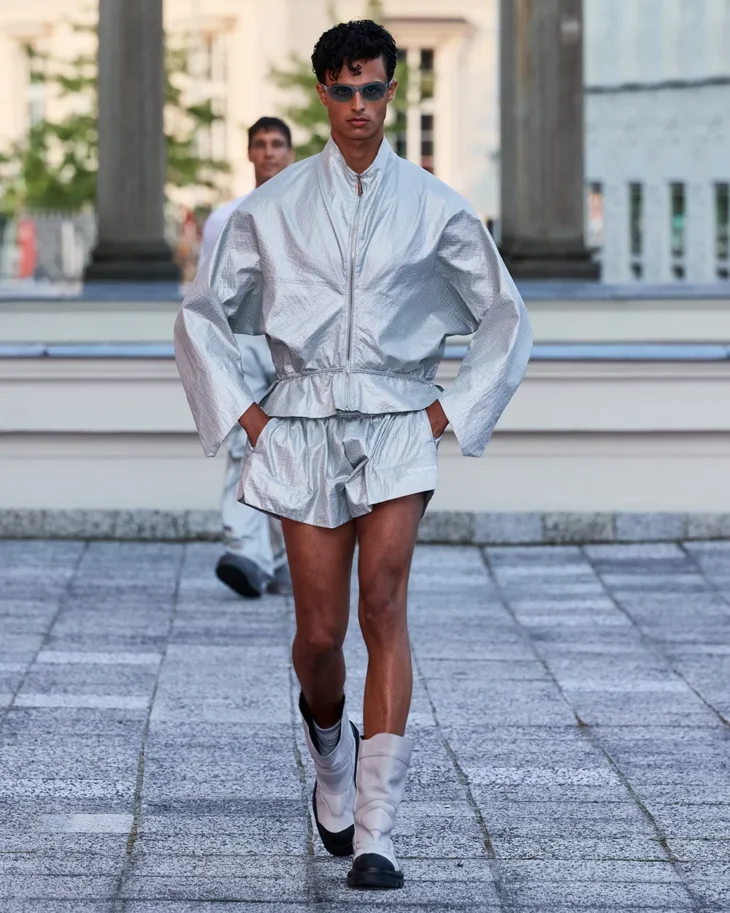
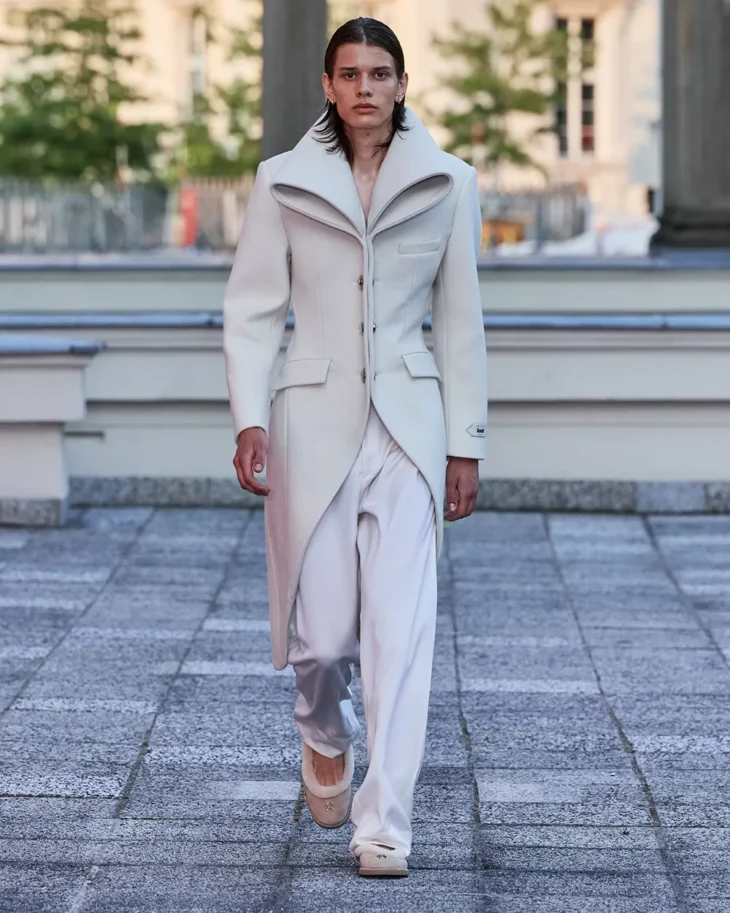
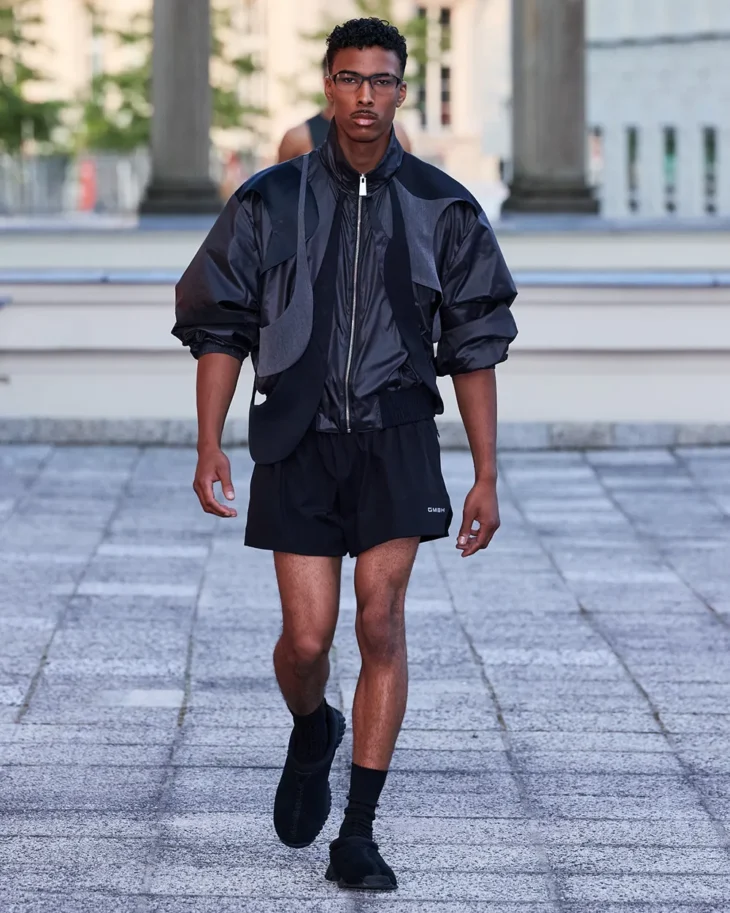
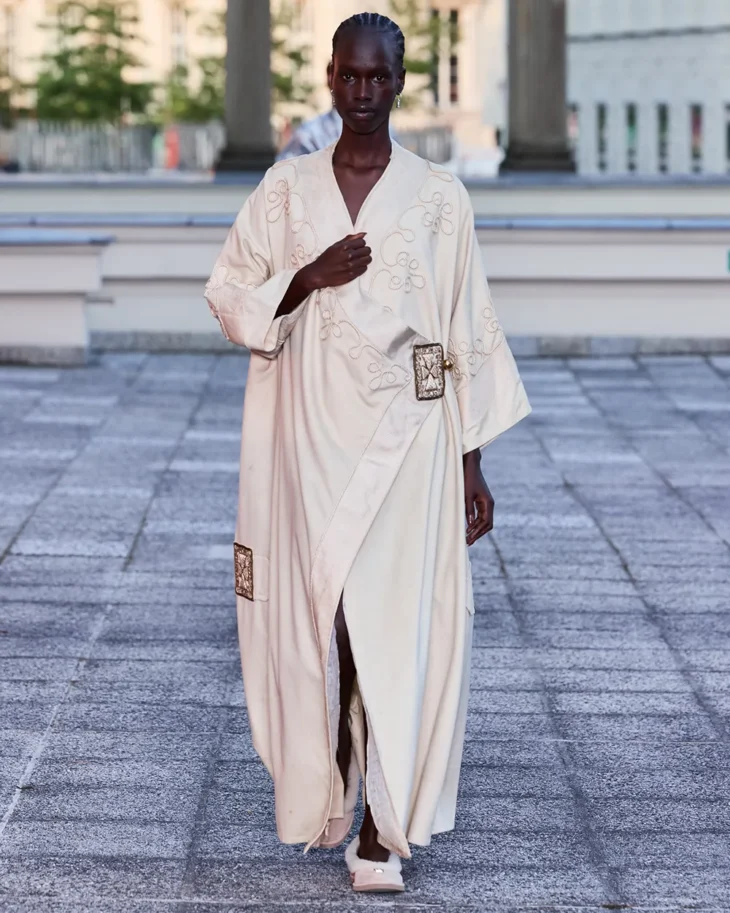
GmbH takes this story seriously, but avoids turning the collection into a sartorial exercise. Intervention VI starts from the brand’s language: stylish sportswear, protective cuts and clothes that sharpen the body while giving it armor. These GmbH archetypes remain visible, but the collection introduces references from Berlin’s couture past. A collar inspired by a coat by Clara Böhm, whose house operated from 1912 to 1939, becomes a point of connection between the present and a dotted design line.
Research gives the collection its emotional center. Isik and Huseby visited Julia Schwarz’s archive, where they came across clothes from a century of fashion history. The exhibition features selected archival pieces from the 1910s to the 1960s, created by some of Berlin’s forgotten designers. Their presence turns the catwalk into a form of recovery. GmbH does not attempt to summarize a hundred years of fashion in one collection. Instead, it opens a door.
This gesture is significant because GmbH has always treated fashion as a cultural expression and a political language. The brand’s work often responds to the circumstances around it, from immigration and race to class, queerness, religion and the visibility of minority communities. With Intervention VI, the political charge comes through the story. The collection argues that fashion cannot be separated from power, because the very history of fashion shows what happens when power decides who will be remembered and who will disappear.
This position is particularly urgent in the current German context. GmbH directly points to increased state repression, the marginalization of minority communities and the visible rise of the far right. Against this reality, the brand insists on resistance. Her political stance does not sit outside the clothes. It gives them purpose.
The strongest part of Intervention VI lies in the way it connects the erasure of the past with present danger. Berlin’s lost fashion history becomes more than archival research. It becomes a warning, source and responsibility. GmbH uses the catwalk to ask why some designers disappear from cultural memory, why fashion in Germany is still struggling for recognition as a serious cultural field, and how a brand rooted in the minority experience can claim its place within this history.
Ten years later, GmbH is not using its anniversary for nostalgia. He uses it to broaden the context. Intervention VI sees Berlin not as a city out of fashion, but as a city whose fashion history was torn apart by violence and neglect. Returning to this history, GmbH creates one of its most intimate collections to date: protective, researched, emotional and acutely aware of the present.