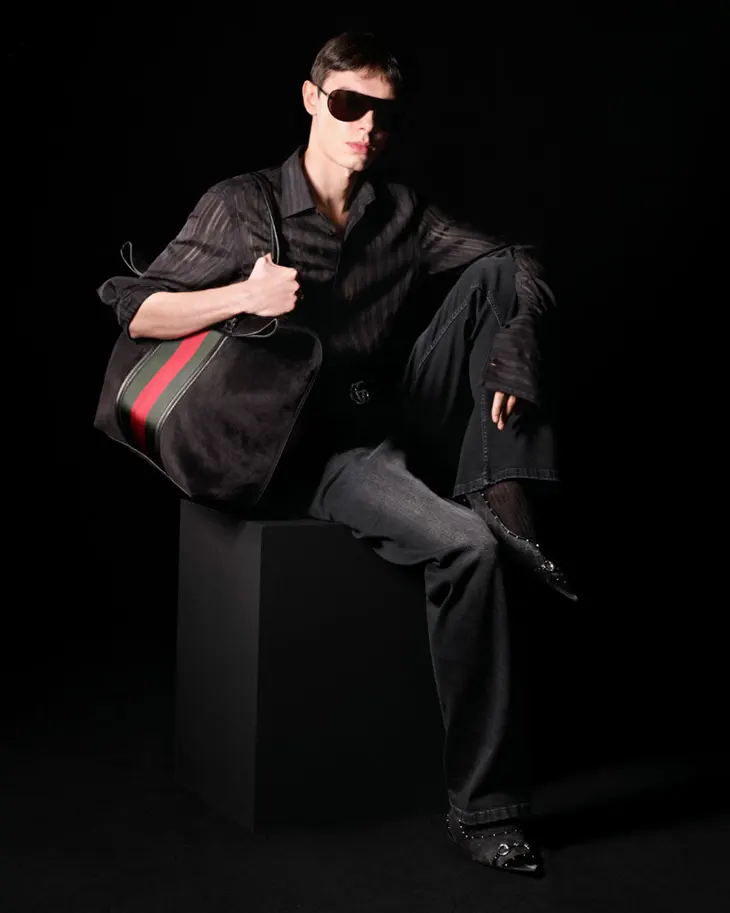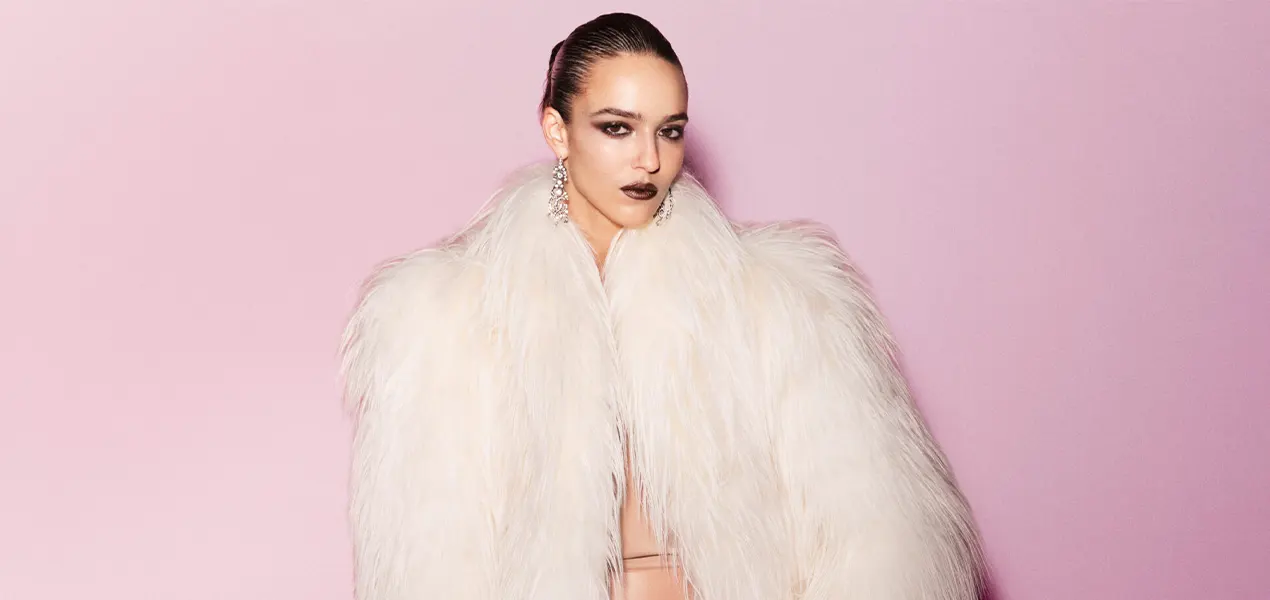

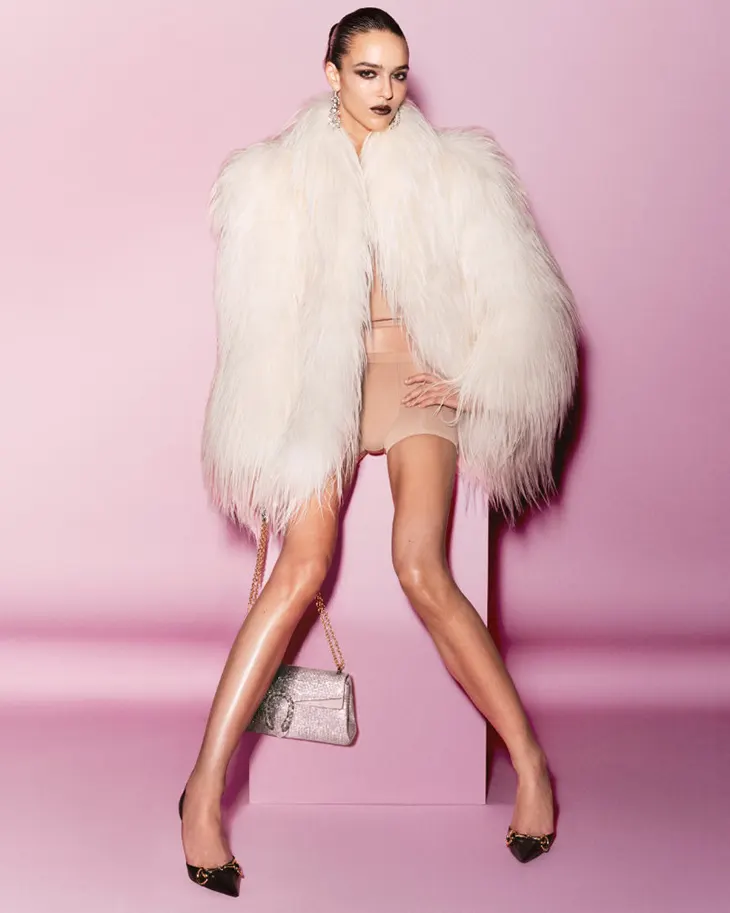
Gucci present document Gucci generation through a campaign photographed by worthywhich defines its visual direction. The project introduces a party wardrobe shaped through a tighter, more controlled approach. Smokey eye makeup anchors the image, acting as a defining element in any look. The styling moves away from heavy layering, focusing on straight silhouettes and reduced embellishment. Lingerie-inspired garments are everywhere, paired with minimal gowns in jersey and silk chiffon.
The campaign unfolds through eighty-four images, each dedicated to a single look. Demna builds the series through references spanning many decades of the house, with a clear focus on Tom Ford time. These references update the structure of the collection without repeating previous designs.
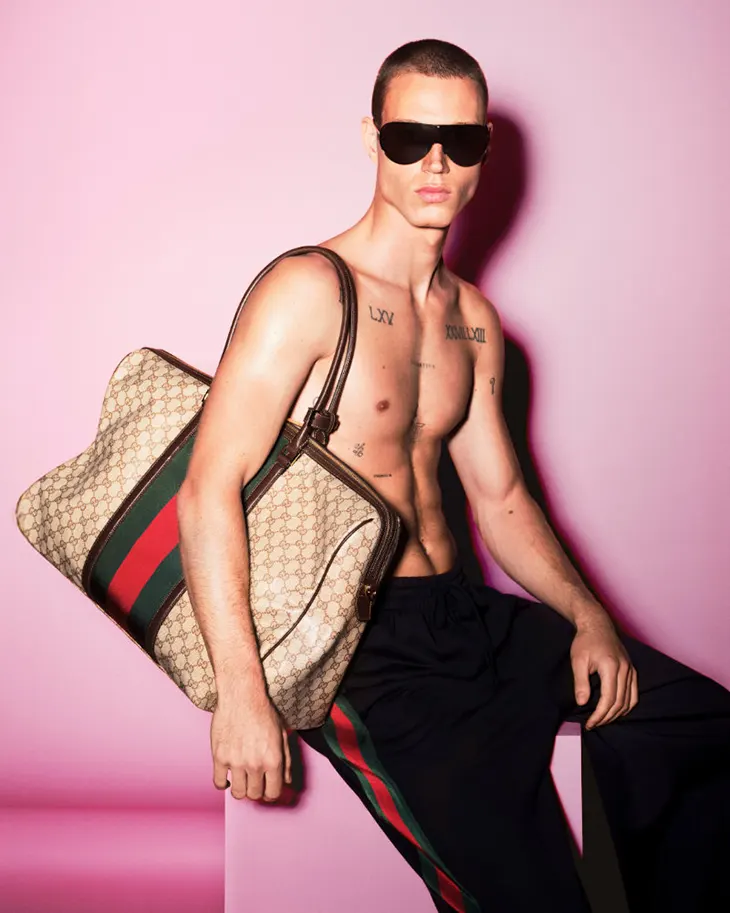
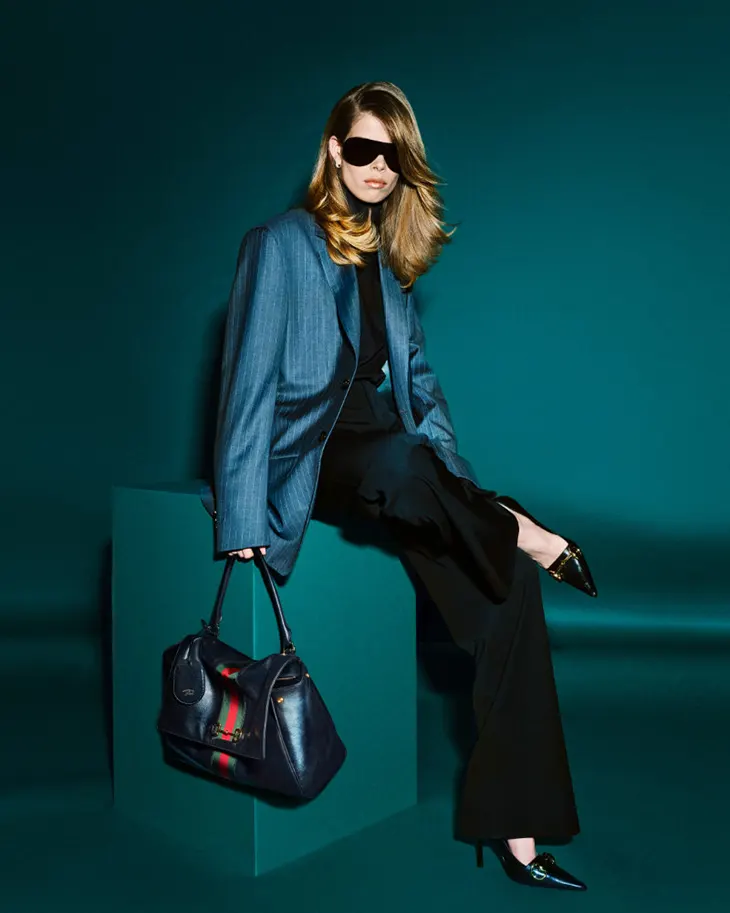
The Gucci generation first appeared last December through a surprise drop that took the form of a lookbook. This release imagined a 1990s runway show that never happened. This campaign continues in that direction, taking the archival material further and reshaping it through proportion and style.
Accessories play a central role in this update. Jackie 1961 appears with revised proportions, changing its established structure. The Dionysus bag takes on a more angular silhouette, enhancing its shape. Characterized by its top handle construction and detailing, the Paparazzo bag features prominently in the campaign. The Lunetta Phone+ shoulder bag is aimed at everyday use, offering a compact form factor for essentials. The web belt and Horsebit hardware remain constants in these plans.
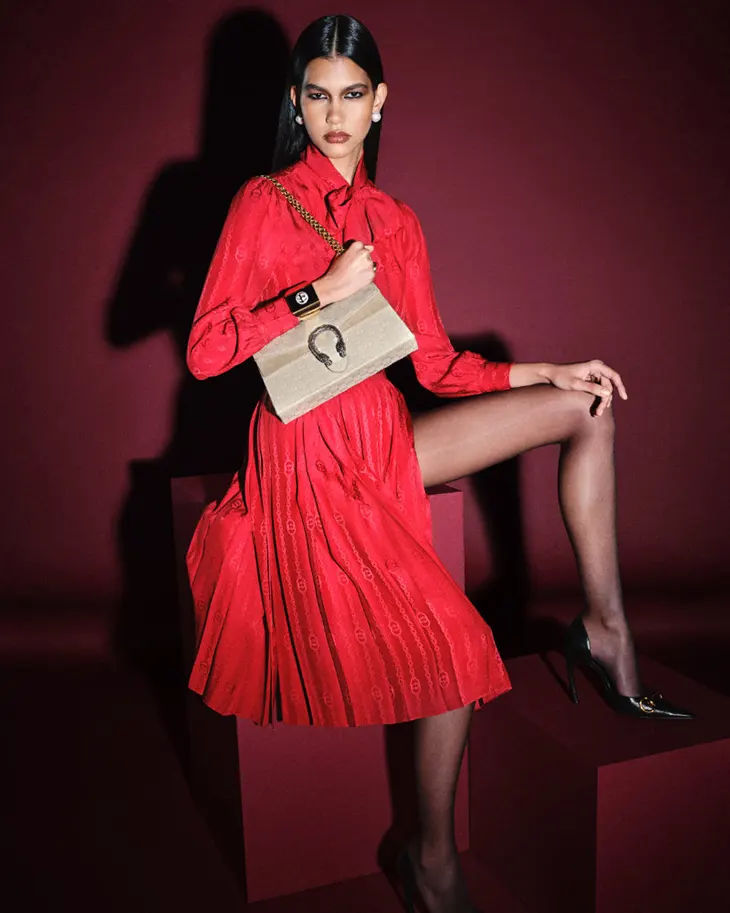
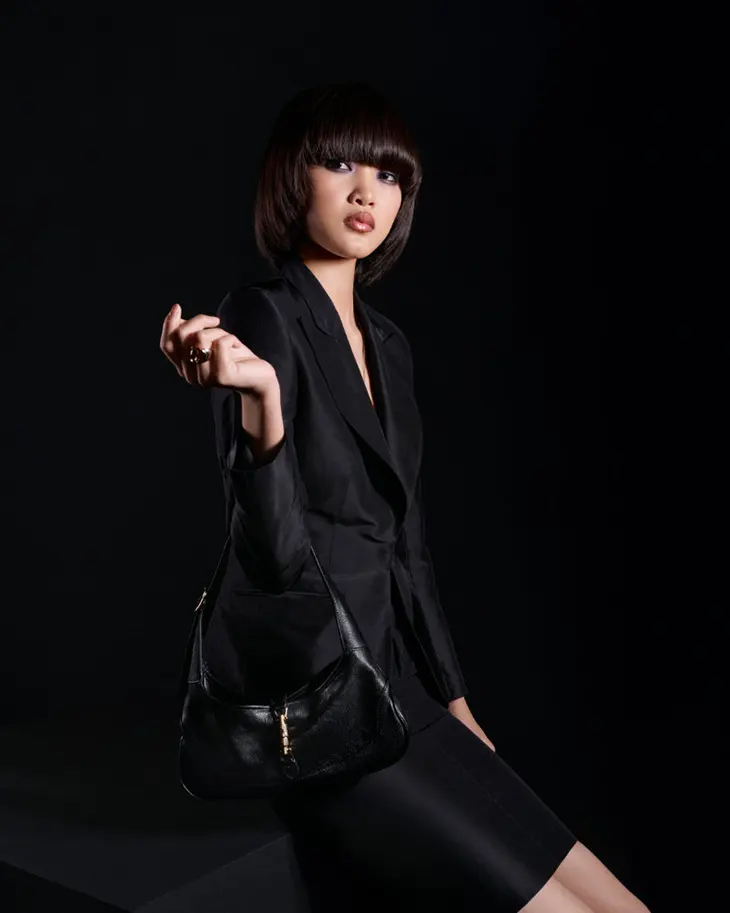
The shoes continue this trend with Valigeria-inspired ballerinas now in men’s sizes, while loafers take on a lighter construction described as “the unstructured lightness of dance shoes.” The ready-to-wear offering supports this approach. Slim-cut two-piece suits define the couture, paired with leather and suede sets that maintain a controlled structure. Textured coats give a lighter feel, while silk garments feature equestrian prints from archival scarves.