
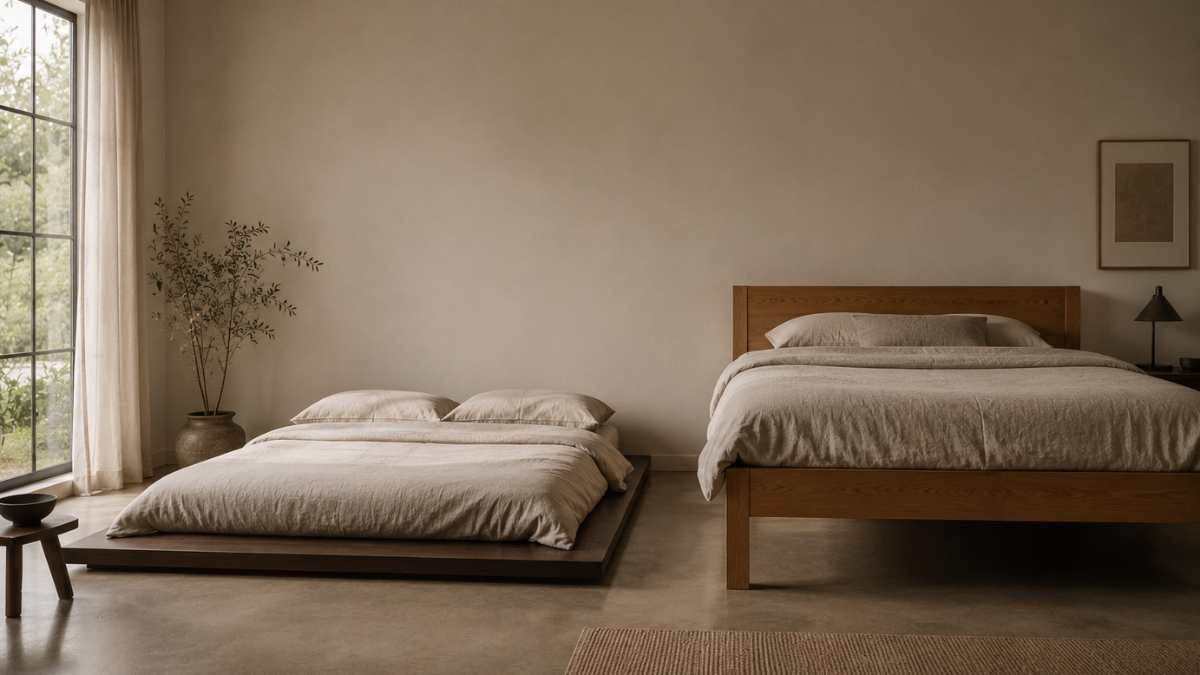

In the catalog of any major furniture retailer, low beds always occupy the most carefully designed pages, the ones with the most elegant photos. Constructions almost low to the ground, mattresses that seem to float a few centimeters off the floor, bedrooms reminiscent of certain stylized Japanese interiors or the Milanese apartments featured in magazines. The visual effect works.
The problem appears the next morning, or a few years later, when the knees are no longer what they were and the simple act of getting out of bed ceases to be automatic. The comparison between a high bed and a low bed is not a matter of pure taste. It brings with it practical, physical and even aesthetic implications that change depending on the room, who lives in it and how it changes over time. It’s worth thinking about this more precisely than most buying guides do.
Because the low bed has taken over homes in the last twenty years
Il platform bedthe westernized version of the traditional Japanese futon floor, spread in Europe from the 1990s following the wave of minimalism. IKEA made a significant contribution with the Malm model in its low variant, a simple structure with a height of the top of the mattress of about 38 cm from the ground, which has brought this aesthetic into the homes of millions of people at an affordable price. At the same time, brands such as BoConcept or Poliform have proposed more elaborate versions, with large upholstered headboards and solid wood bases, placing themselves in a much higher range without distorting the principle.

The visual appeal of the low bed depends on a precise mechanism: lowering the room’s visual center of gravity makes the ceiling appear higher. In a room with a standard height of 270 cm, the difference compared to a traditional 60 cm bed is noticeable. In small rooms, this can make the difference between an oppressive space and one that breathes. It’s not an illusion, it’s geometry applied to furniture. The problem is that this same feature creates real difficulties for those over fifty, those with knee or back problems, or simply those who get up and fall to sleep several times during the night.
The right share does not exist, but the wrong share does
The ergonomics of the bed is measured by the sum of two heights: that of the structure and that of the layer. A low bed with a 15 cm frame and a 22 cm mattress increases the sleeping surface to approximately 37 cm. A traditional one can easily reach 60-65 cm. The ergonomically correct position for sitting on the edge of the bed before getting up requires the knees to be bent at ninety degrees with the feet firmly on the ground: this corresponds, on average, to a height of 45-50 cm for a person of average height.
Those who go below 40 cm begin to load their joints asymmetrically. It’s not a theoretical concept: physical therapists and orthopedists mention it with some frequency to their younger patients, amazed that aesthetic bed contributes to morning pain. On the other hand, exceeding 65 cm creates the opposite problem: the legs remain suspended and the circulation in the thighs can be affected after a whole night. Virgil Abloh had included this tension between form and function in the themes of his brief creative period for Vitra. even if his contribution to the world of home furnishing has remained fragmented.
What really changes depending on the room
A low bed in a bedroom with a dark floor and high ceiling can look like something out of wallpaper*. The same bed in a room with a light carpet, 250 cm ceiling and small windows produces an effect that tends towards the gloomy, almost claustrophobic. Bed share does not live in a vacuum: interacts with the proportions of the room, with the color of the surfaces, with the height of the bedside tables.
Bedside tables, often overlooked in this assessment, must follow the height of the mattress surface or be at least 5-8 cm. A floor-level bed with standard 55cm nightstands turns the nightstand into a small monolith facing the bed. Hay, the Danish brand founded in 2002, has built part of its catalog around this problem, offering modular tables and side supports specifically designed to accommodate beds of different heights. The Eiffel Side Table model, for example, it reaches 45 cm in the lowest version and is one of the few elements of this type that is truly designed to coexist with structures low to the ground without creating visual imbalances.
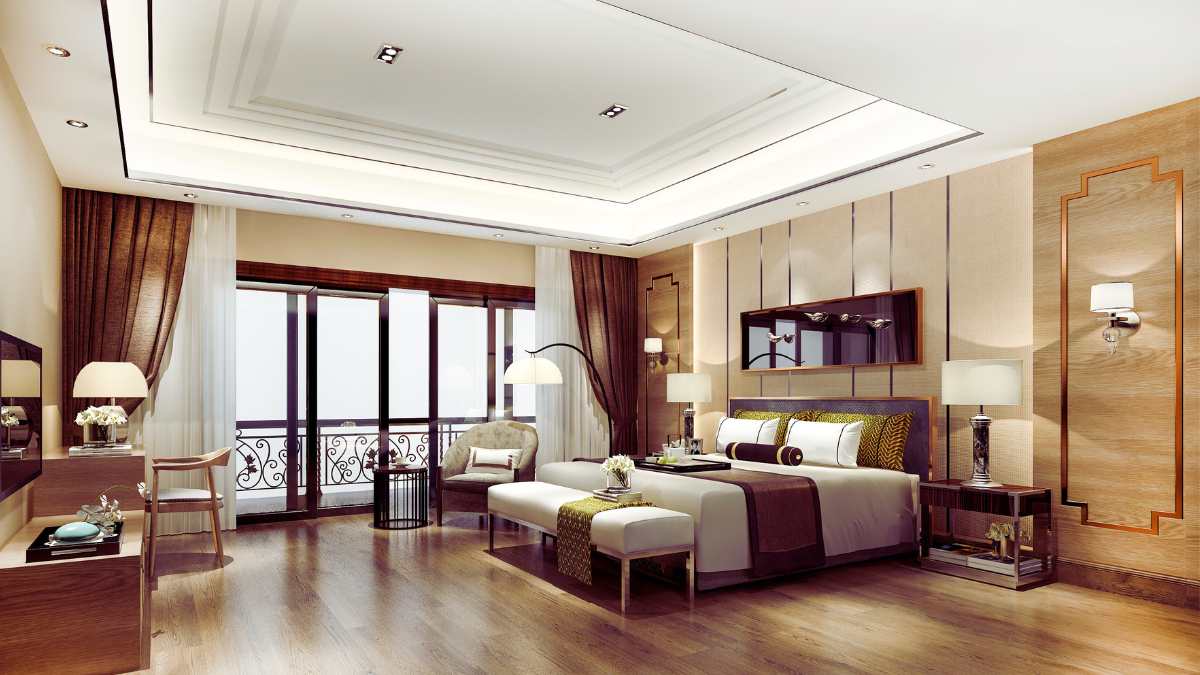
In small rooms under 12 square meters, the raised bed with built-in drawers it becomes a space management factor rather than an aesthetic choice. A bed container with a total height of 60 cm offers space under the top of about 25 cm, enough for four deep drawers. Abandoning it in the name of minimalism means moving the problem elsewhere, usually to overstuffed closets or boxes stacked in hallways.
The mattress decides more than you think
The choice of mattress significantly alters the final height of the bed, and with it the entire aesthetic and ergonomic equation. Mid-range memory foam mattresses they stand at 20-25 cm. Quality pocket springs, such as those offered by Emma or the high-end Simmons division, reach 28-32 cm. A low bed designed for a 20 cm mattress, combined with a 30 cm mattress, increases the sleeping surface to about 45 cm: the aesthetics that reach the floor disappear, but the ergonomics are improved.
This misalignment between structure and mattress is one of the reasons why some beds that look perfect in the showroom produce unexpected proportions at home. Structure is never the only variable. When evaluating a market, Measuring the height of the floor to the level of the mattress with the mattress already installed is a step rarely suggested by sellers and almost always changes the final assessment.
Whoever actually lives in the room decides everything else
A low bed in a room occupied by two people in their thirties, without physical problems, with a high and bright room, works. The same bed becomes critical if one of the two has chronic back pain, if a small child who gets up at night also sleeps in the room, or if the apartment is rented and will change within two years, bringing with it different proportions. The bed is one of the few pieces of furniture that tends to remain stationary for long periods, sometimes decades. The aesthetic trend that seems obvious today may seem dated in eight years, just like four-poster beds which in the 1980s were the symbol of domestic luxury and which today require a certain amount of irony to be reinterpreted.
The photo of a low bed on a neutral background, with rough linen sheets and an abandoned book on the pillow, sells an expensive idea of life. This life, however, also requires getting up on Monday morning at seven with legs that work. They are not two incompatible things, but they require more careful planning than the picture suggests.



