



Minimalist fashion does not mean flat, lifeless surfaces. The most compelling minimalist designs rely on the organic irregularities of fabric to create depth and visual structure. In haute couture, runway presentation and editorial styling, fabric selection shapes how light behaves on a garment, whether under studio lighting or in motion. Synthetic fibers and cheap blends often fall short under bright lighting, reflecting a harsh sheen and losing the loose, organic drape that defines authentic slow fashion design.
Instead, 100% pure Baltic linen offers a solid design foundation. Testing different fabrics under high-contrast studio lights highlights the visual difference: while synthetics often present an even surface, Baltic linens display a distinctive visual depth. This comes from its natural texture, which powerfully catches light and shadow, giving the garment a more tactile, structured quality. The tactile finish of a raw linen weave has a substantial feel, providing a sheer curtain that maintains its shape in motion.
A common oversight in minimalist collections is the choice of mixed fabrics to avoid creasing, which often results in a loss of the fabric’s natural character. Thin, organic strips of pure linen give a garment its distinctive, tactile appeal. High-quality linens are often slightly stiff initially due to the length and thickness of the natural linen fibers, which soften over time while maintaining structural elasticity.
Understanding this texture is essential, but seeing how it translates into movement shows how strongly the fabric affects the cut.
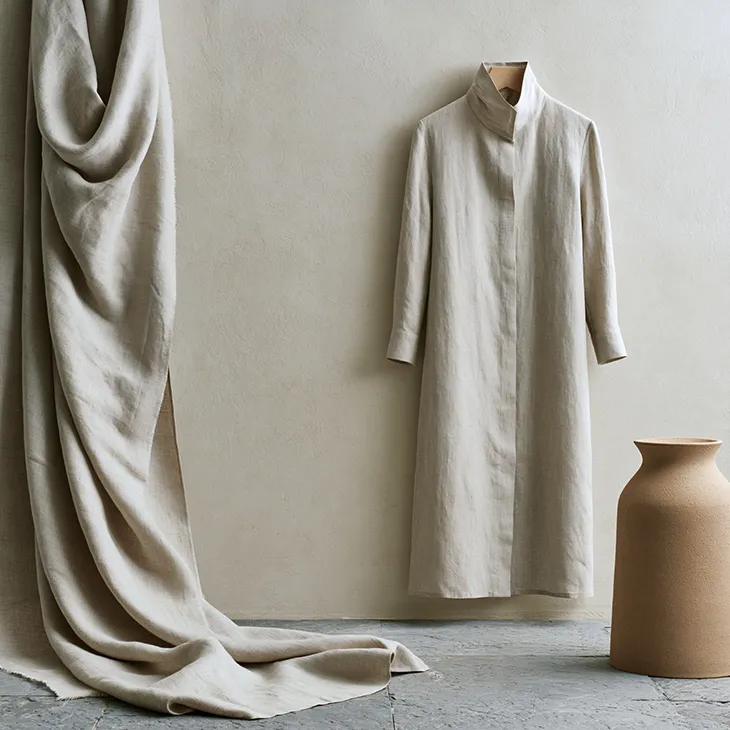
Textile Behavior and Drape
Baltic flax grows in local climates that support longer, stronger fibers. These long fibers create a yarn with high tensile strength and natural weight, allowing the fabric to fall cleanly without collapsing on the body. This quality matters minimalist designwhere the garment often depends on the behavior of the fabric rather than print, embellishment or heavy construction.
A well-cut linen piece should move naturally while maintaining a clear line. Baltic linen works particularly well in relaxed tailoring, unstructured trousers and simple dresses, because the fabric brings ease and movement, while the cut gives shape to the garment.
Because texture and drape are central to the appearance of structured linen, care also affects how the garment performs over time.
Maintenance of structured white goods
Air dry linens and use gentle steam instead of a hot, dry iron. Dry heat can flatten natural plates and make flax fibers more brittle, while steam helps restore their natural volume. This is especially important for structured linen pieces, where texture and drape are part of the design.
Proper care also helps the garment maintain its shape over time. Linen naturally softens with wear, but careful washing, air drying and steaming allow the fabric to relax without losing the weight and surface character that make it visually distinctive.
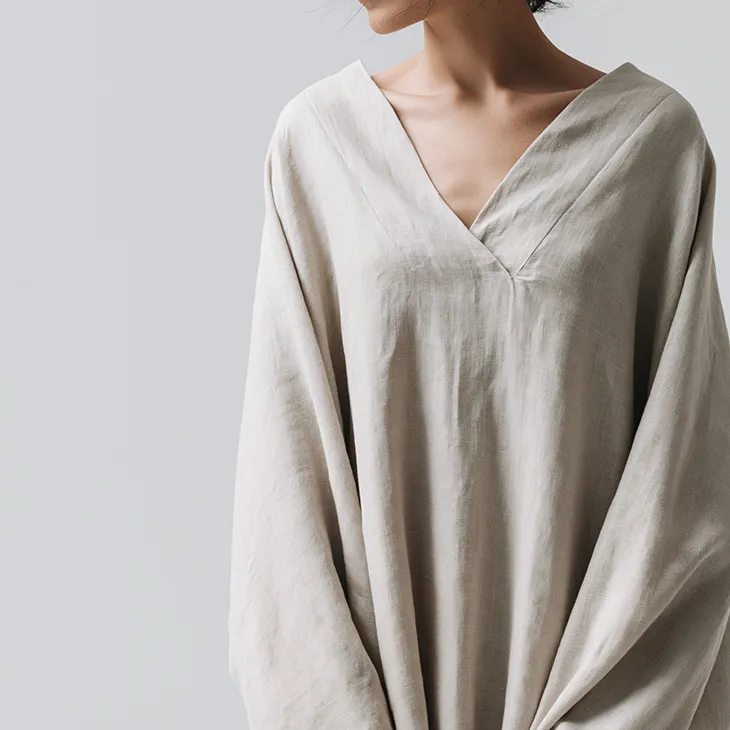
The Flow of Slow Fashion: Design that follows the fiber
Strong minimalist designs let the fabric guide the shape. When pattern makers force linen into extremely stiff, body-hugging cuts, the garment loses the flowing quality that gives linen its character. Contemporary slow fashion collections often use the natural drapery of linen to create architectural shapes that move with the wearer.
A flowing, raw linen garment needs precise patterning. Unstructured pieces still require control, so the garment hangs cleanly instead of looking shapeless. This balance gives linen dresses, relaxed shirts and unstructured trousers a natural ease while keeping the silhouette refined.
The subtle rustle of the linen panels shifting during movement highlights the fabric’s natural, breathable structure. While slow fashion silhouettes are often relaxed, they require precise patterning to ensure that unstructured pieces hang elegantly instead of looking shapeless.
This focus on textile integrity is why contemporary designers often build collections around high-quality Baltic linen, using linen dresses and unstructured trousers to show off natural dressing. These clothes show how the principles of slow fashion can be aligned with a modern, architectural aesthetic.
The design based on the physical properties of the fiber improves both the visual aesthetics and the lifespan of the garment.
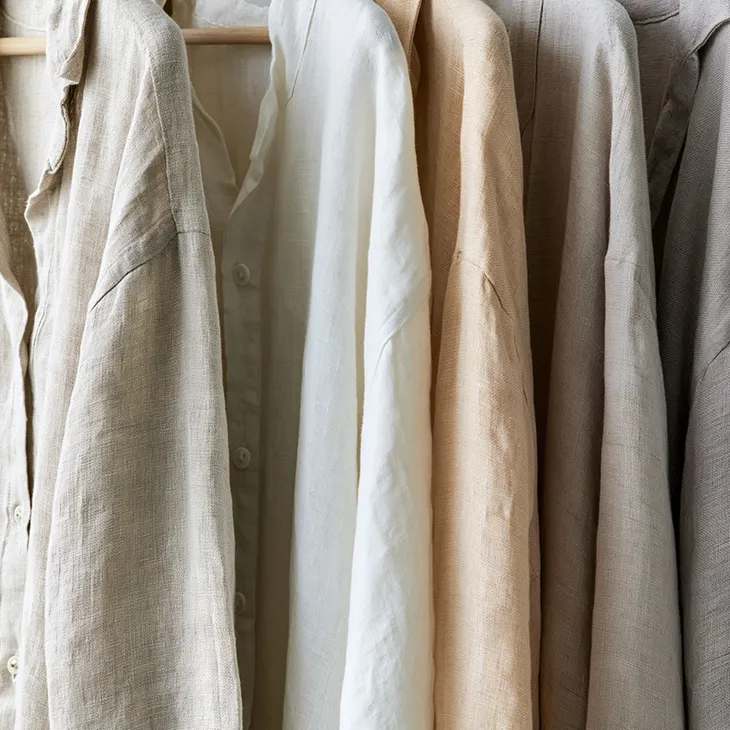
Understanding OEKO-TEX Standards
OEKO-TEX certification confirms that a fabric has been tested for harmful substances and meets specified requirements for human health. For linen garments, this adds another layer of clarity all around textile safety and material standards. The certification supports its wider value slow fashionwhere the quality of a garment depends as much on how it is performed as on how it is made.
The role of fabric density in silhouette performance
Higher density linens create a more structured drape that resists light breezes and maintains its shape. This makes it more suitable for relaxed tailoring, structured dresses and architectural silhouettes.
Lower density linens are lighter and more sheer. It works well for airy summer clothes, but can behave more like gauze and may not have the weight needed for structured minimalist designs. Choosing the right density helps determine how the garment falls, photographs and performs during use.



