


I once put my most expensive extra virgin olive oil in a hot cast iron skillet to cook a steak. It smoked, got bitter, and I basically lit twelve dollars on fire in about forty seconds. This little disaster taught me the one thing most kitchens get wrong about olive oil: the bottle you grab should depend on what you’re doing, not which one is closest to the stove.
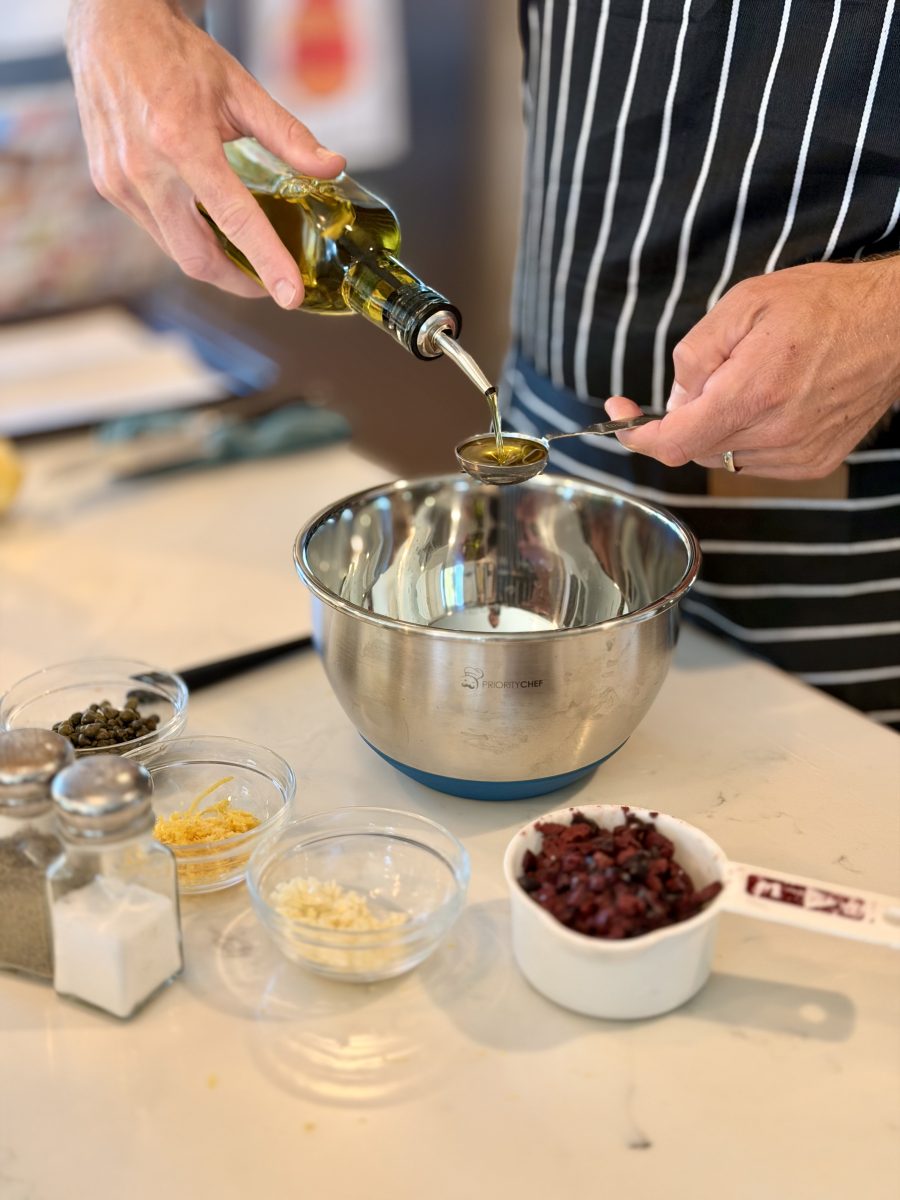
Olive oil is really just juice from olives and the grade tells you how it was made. The two bottles worth keeping are broken down as follows:
| Extra Virgin | Light | |
|---|---|---|
| How is it made? | First press, minimal processing | More sophisticated |
| Taste | Grassy, peppery, full | Close to neutral |
| Smoke point | ~410°F | ~450°F |
| The best for | Dressings, finishing, daily saute | Cooking at a higher temperature, baking, mayonnaise |
A quick note on that word “light”. It means light color and flavor, not calories.
Buy fresh, store it right
Most olive oil goes stale before it goes bad and you can avoid it on the shelf.
Check the label for:
- A harvest datenot just a “best by” stamp. The freshest oils were pressed in the last year.
- Dark glass. It protects the oil from the light that makes it go stale.
- A single country of origin.
At home: store it in a cool, dark cupboard, never near the stove or fridge. Use within a few months of opening. If it ever smells like crayons or stale walnuts, throw it away.
Use it where you will taste it
Reach for extra virgin whenever olive flavor is what you’re after. A vinaigrette is the classic case: shake the vinegar, herbs and a good amount of extra virgin together, then add some mustard to help it emulsify and stick together. Topping with toasted sourdough or finishing off a soup works the same way. Save your nicest bottle for those crude jobs and use everyday supermarket oil for cooking.
The myth of the smoke point
People say you can’t cook with extra virgin. It’s not true. The test kitchen behind my favorite Mediterranean cookbook found the same thing the video shows: good extra virgin holds up to about 410°F, which covers most of the cooking. The trick is to match the oil with the heat.
| Cooking movement | Temperature | The best oil |
|---|---|---|
| Sauté onions, fry the vegetables | 300 to 350°F | Extra virgin |
| Roast, shallow cook | 350 to 410°F | Extra virgin |
| Seared steak, hot wok | 450°F+ | Light or neutral |
| Cake olive oil, mayonnaise | I didn’t want an olive taste | Light or neutral |
The sizzling sound you hear while sautéing is simply water escaping from the food. You only get past 410°F with really high heat strokes and after that point the oil breaks down and turns bitter where light olive oil (~450°F) or neutral oil (500°F+) takes over.
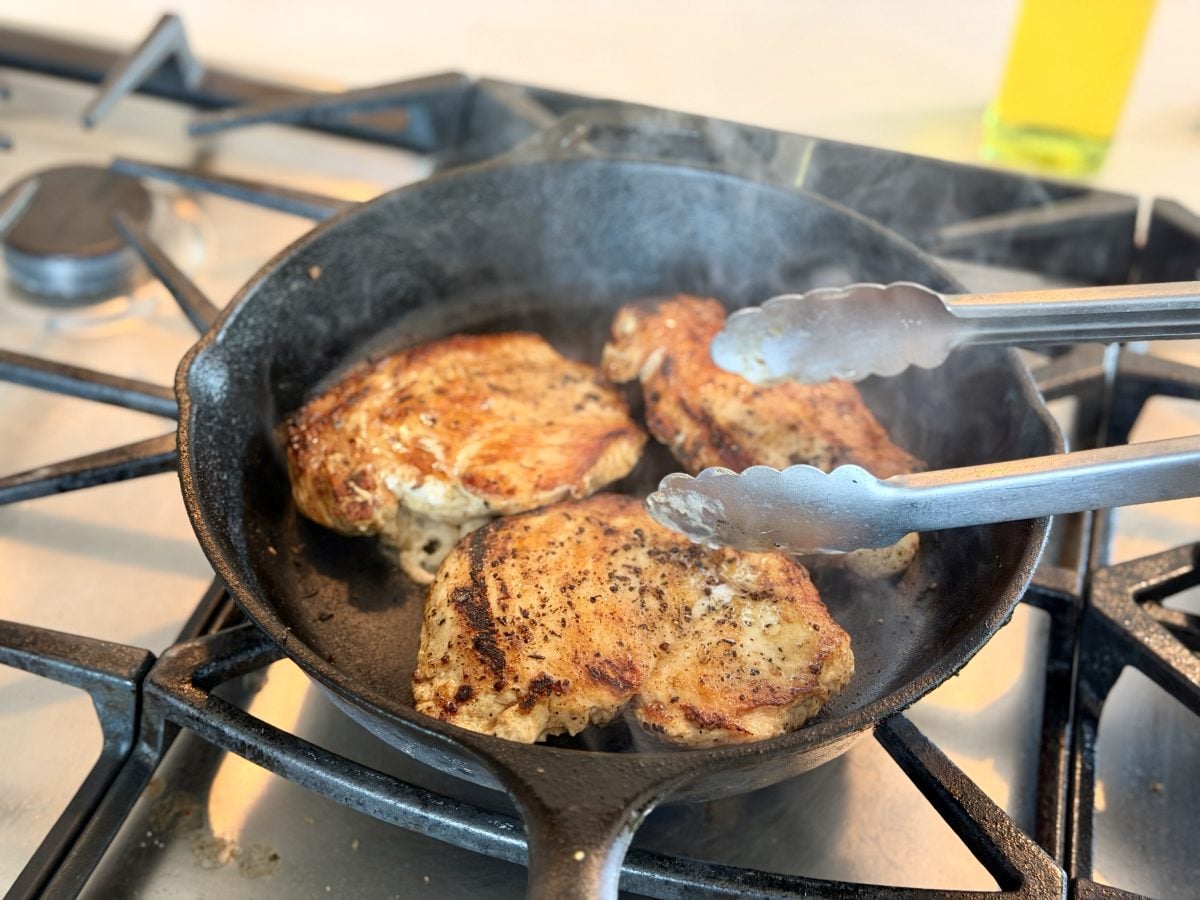
Keep two bottles nearby: extra virgin when flavor is the goal, light or neutral when there’s heat. Match the oil to the job and stop wasting the good stuff.



