


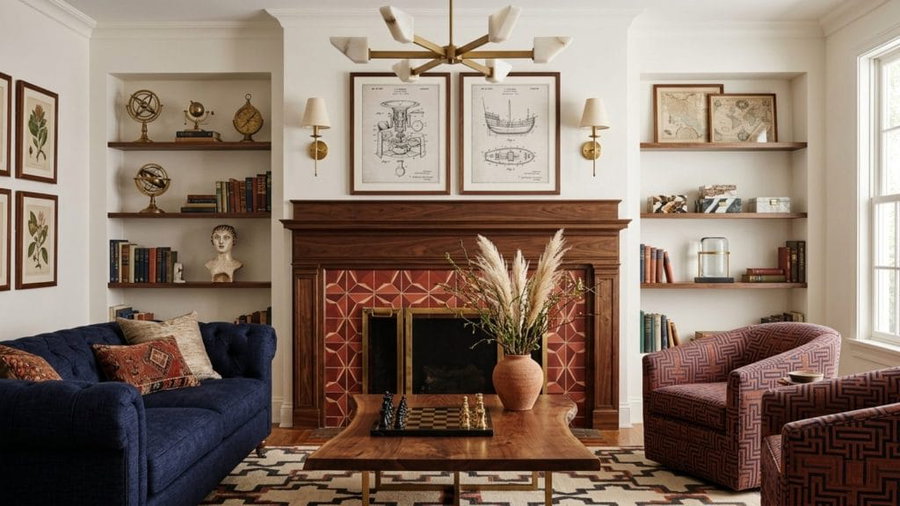
How do you furnish a living room so that it holds together when everything is in place? Most rooms fail at the framing stage, before a single piece arrives. A sofa pushed against the wall is the usual word. That’s why professional designers work from the architecture first and let it dictate the layout, so that the room reads as one decision instead of twelve. Here’s how.
A designer’s guide to furnishing a living room

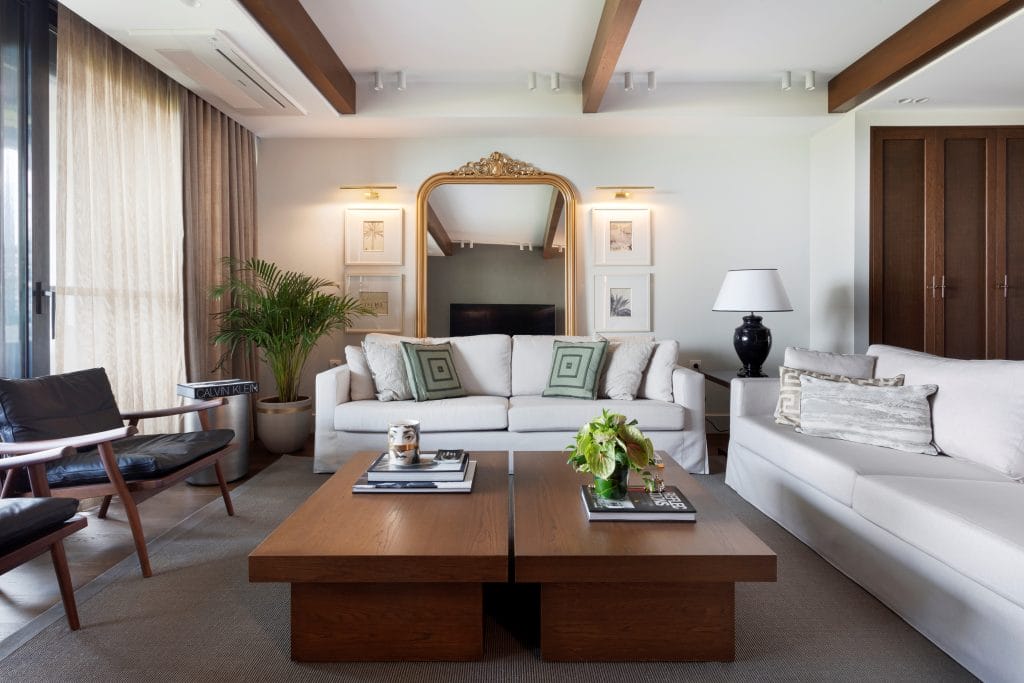
A well furnished living room it rarely happens by accident. Designers move through a sequence and the following steps trace that sequence. Everyone makes a decision on which the next one depends.
Pro tip: Not sure which direction suits your space? Take the free interior design style quiz. It’s the fastest way to narrow down the field before layout work begins!
1. Start with how the room is actually used

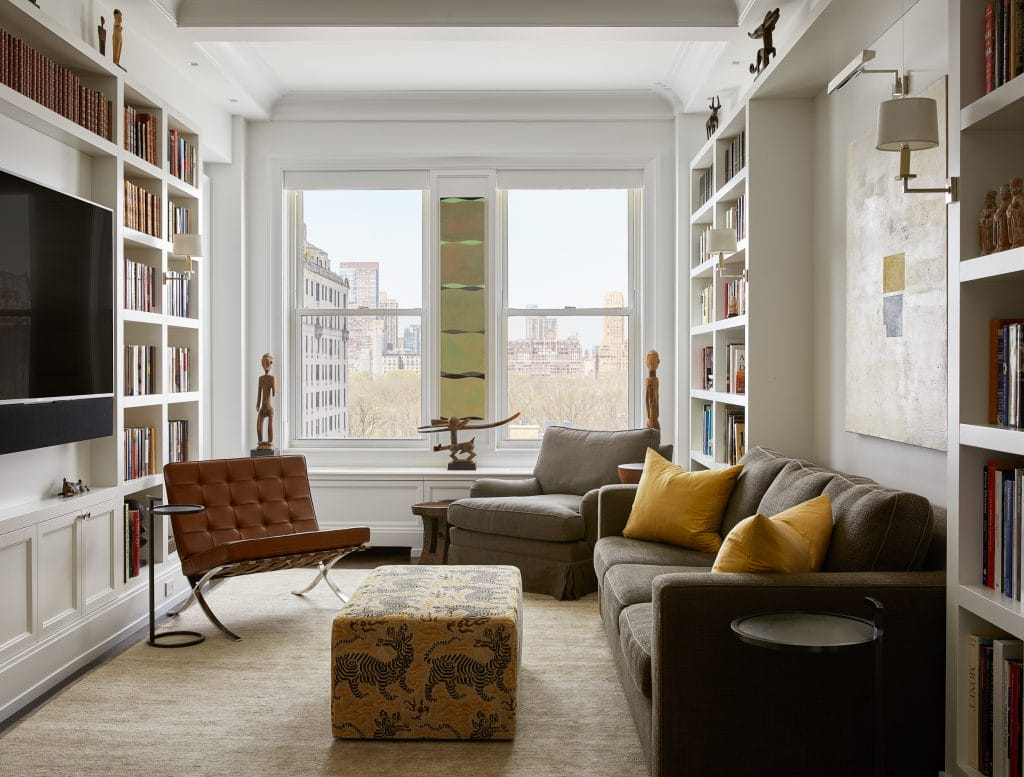
A living room behaves differently at 7 p.m. on a Wednesday than when six people have gone to dinner and the furniture has to meet every scenario in your Living room design checklist. Most rooms are designed around the second scenario and then fail at the first, which is why so many couches end up too far from the side table to put a glass. Walk around the space and note where the conversation tends to gather or where the traffic is cut off. Knowing how to decorate a living room starts with these patterns.
Designer Insight: A sofa placed for hospitality will disappoint you 90% of the evenings you spend in the room. Plan the room for a Tuesday night and it will handle Saturday without effort.
2. Find what the room already wants

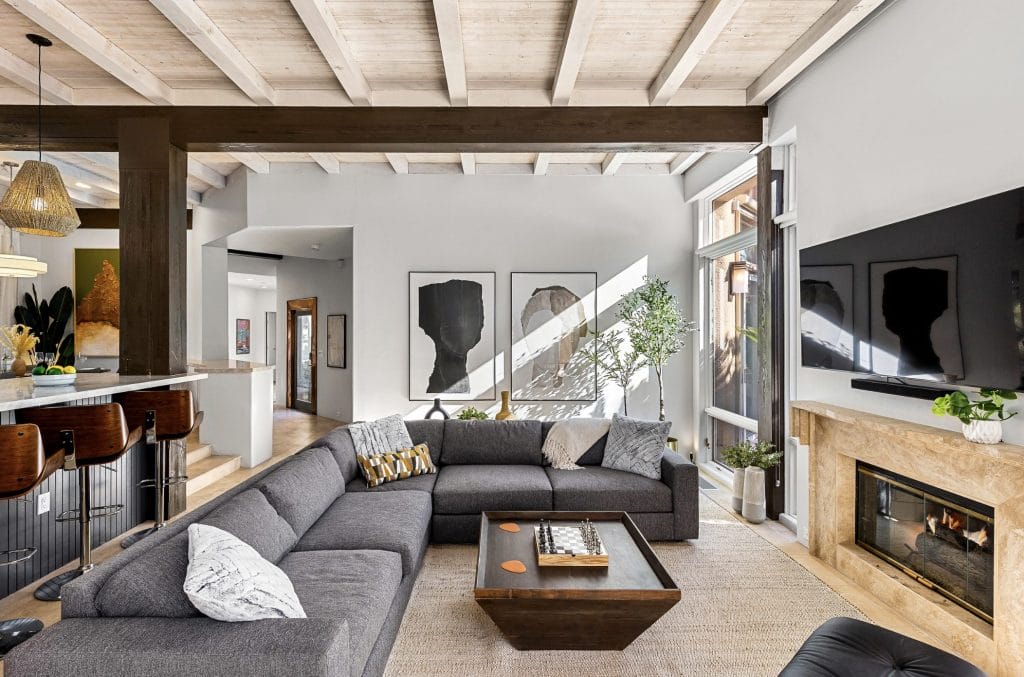
Even one large living room it has a focal point built into its bones, usually a fireplace, a tall window, an unbroken wall ready for art, or a media console. The point is to identify which carries the most visual weight and then commit to it. If architecture offers nothing, a large-scale piece of art or a substantial low cabinet can fill the role. Just remember that competing focal points flatten a room and leave the eye unsure of where to settle.
Designer Insight: If the TV and the fireplace are fighting, stop trying to balance them. Choose one as the main one and let the other fall through the framing or placement.
3. Create the palette from what is already permanent

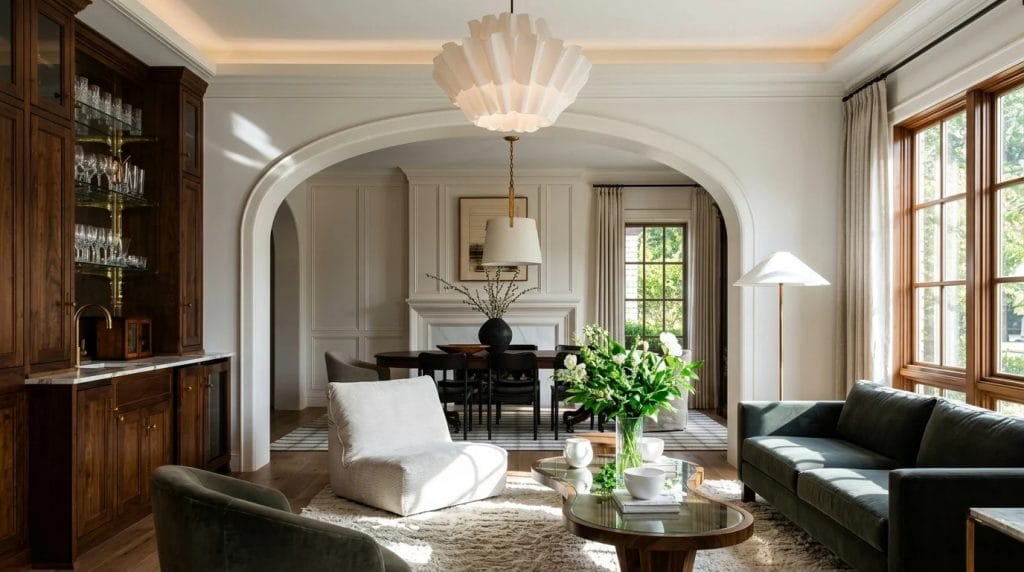
The floor sets the temperature of the palette long before color enters the conversation. A wide oak plank that runs warm pushes the room towards ocher and umber, while a cool gray concrete pours it into bluer midtones, whether someone designed it that way or not. Furnishing a living room around what can’t be changed makes things easier, so embrace those anchors instead of fighting them. For a workable design, choose a quiet base along with a characterful midtone, then use a deeper accent sparingly.
Designer Insight: Bring fabric samples home and look at them at 7 a.m., noon, and after sunset under lamplight to make sure they read correctly.
4. Map out the layout before anything is ordered

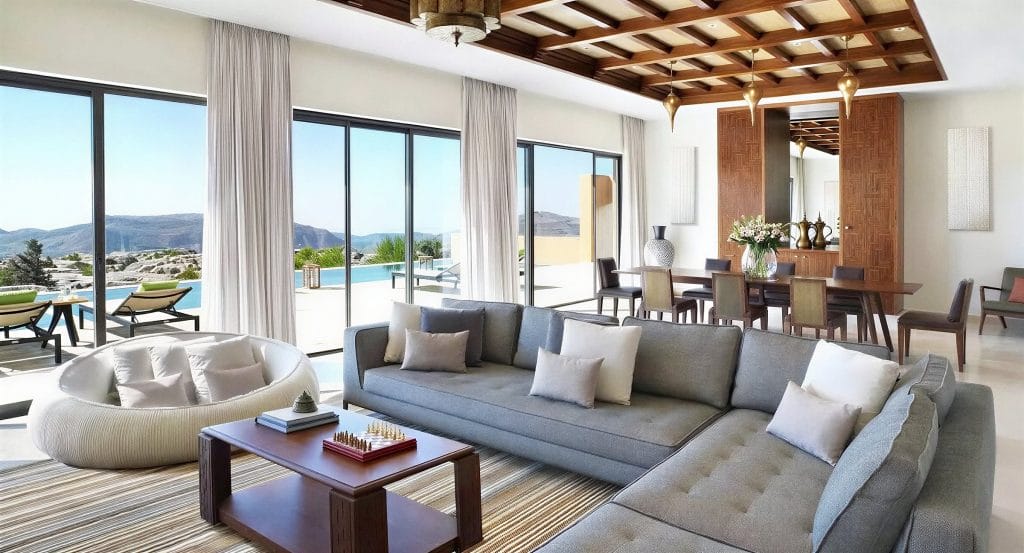
Tape the footprint of each important piece to the floor in painter’s tape and live with it for two days. Some rule of thumb: sofas need 14 to 18 inches between them and the coffee table. Main runners need 30 to 36 inches of clearance to feel right underfoot. A floor plan drawn to scale presents problems that miss a tape measure, particularly around the door swings. Knowing how to set up furniture in a living room is mostly about respecting those distances before you stumble upon a piece that breaks them.
Designer Insight: If the tape outline makes the room feel tight when it’s empty, the actual furniture will feel worse. Reduce one element and the whole design will open.
5. Choose pieces that can withstand the actual seat

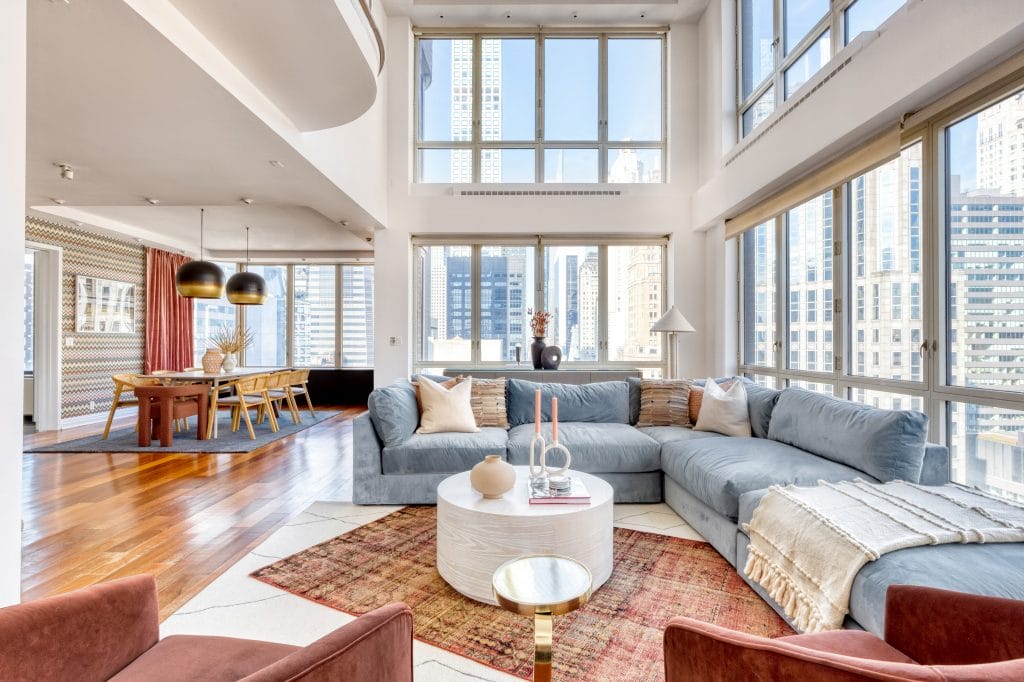
Comfort is designed. Knowing how to furnish your living room like a pro also includes seating that still works on the thousandth night. A seat depth of between 21 and 24 inches fits most adults, and a high-resilience foam padding with a rolled bottom maintains its shape for years of use. Try a couch by sitting on it for ten minutes. Pay attention to where the back support meets the spine and whether the front edge cuts into the back of the knee.
Designer Insight: Eight-way hand-tied springs are worth the charge on every piece of daily use. Also, the framework outlasts the trend cycle by decades.
6. Let scale do the work symmetry can’t
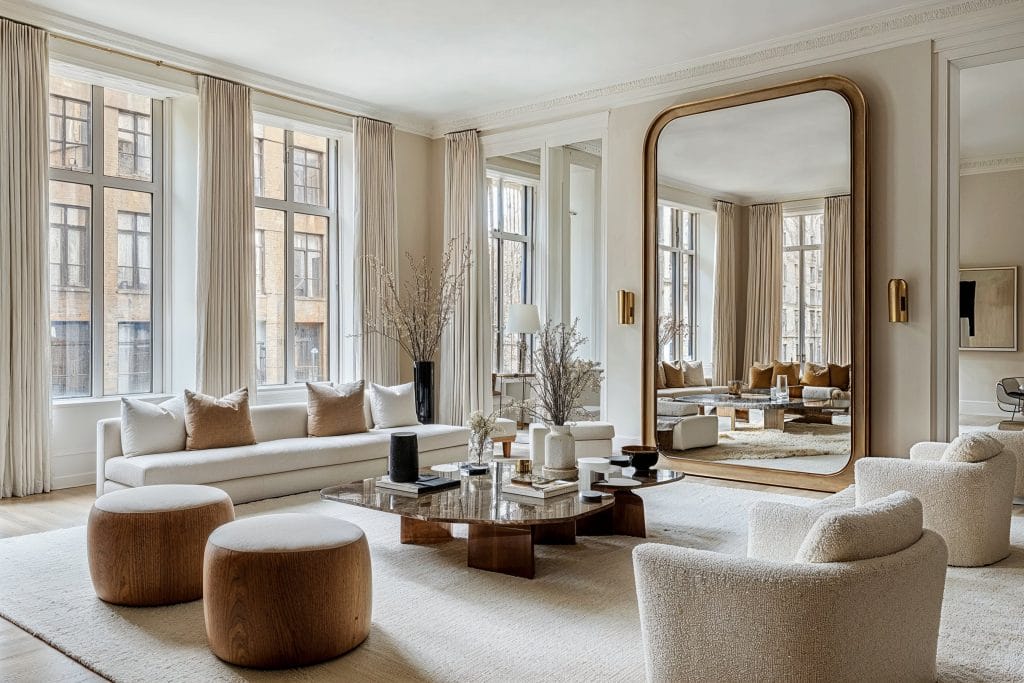
A room is balanced when the visual weight is evenly distributed throughout it, even when the pieces themselves don’t match in form. A heavy Chesterfield on one side, for example, can sit opposite a pair of slim armchairs with a floor lamp between them, and the eye will read both compositions as equal. Coffee tables should be within a few inches of two-thirds of the length of the sofa they serve. Side tables land better at seat height, so fitting the glass doesn’t require access.
Designer Insight: Take a photo of the room in black and white on your phone. Without color, analog problems will appear more clearly.
7. Layer materials so the eye has somewhere to go
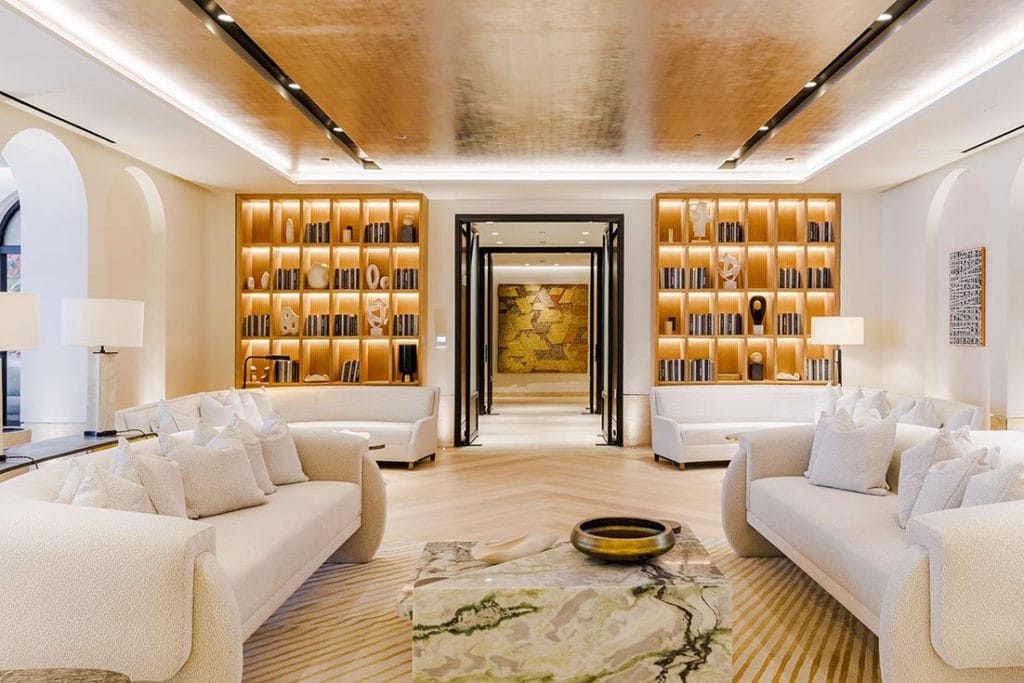
A room built entirely of smooth surfaces looks thin, no matter how good each piece is on its own. On the other hand, polished walnut bouclé adds depth to the eye at close range, and a hand-knotted wool rug carries similar work from the floor up. The acoustic effect also matters: texture absorbs sound, which is part of why multi-level rooms feel calmer once you’re inside.
Designer Insight: Run your hand over every horizontal surface in the room. If three of them feel the same, change one.
8. Lighting Design in Three Layers for Atmosphere

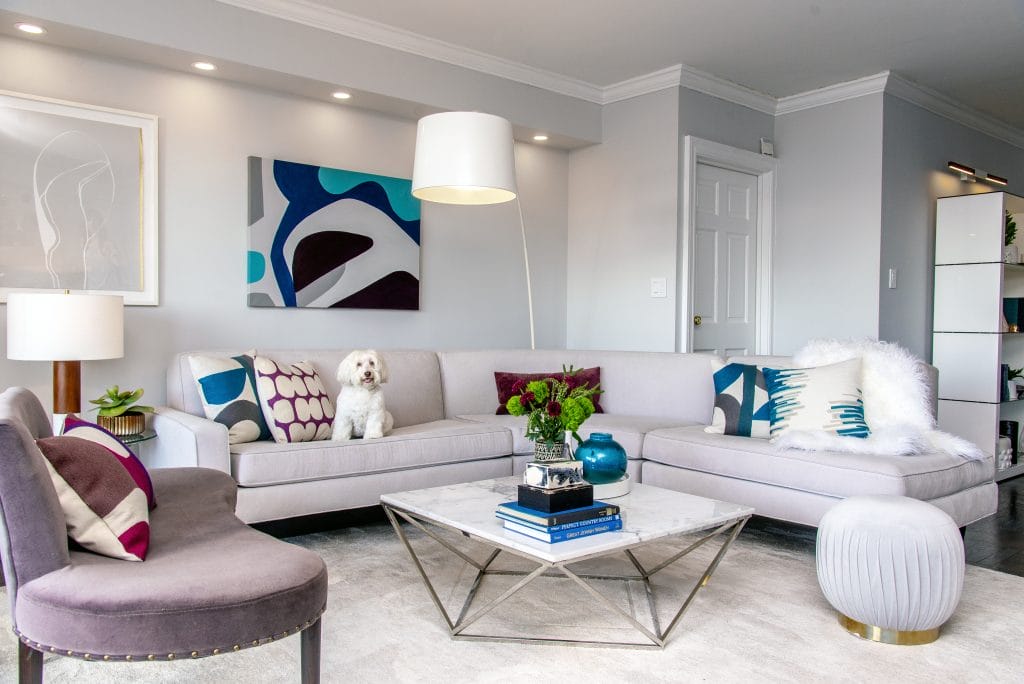
Overhead light alone flattens a life room in what looks like a hotel lobby after dark. A reading lamp next to the chair takes care of the work level where needed, while accent lighting gives the evening its dimension. Each layer needs its own switch or dimmer, with bulbs held at 2700K throughout.
Designer Insight: Install each bulb in a smart plug if wiring is not possible. In this way, you will be able to change the whole mood of the room with one touch from the sofa.
9. Bring in the things that make the room yours
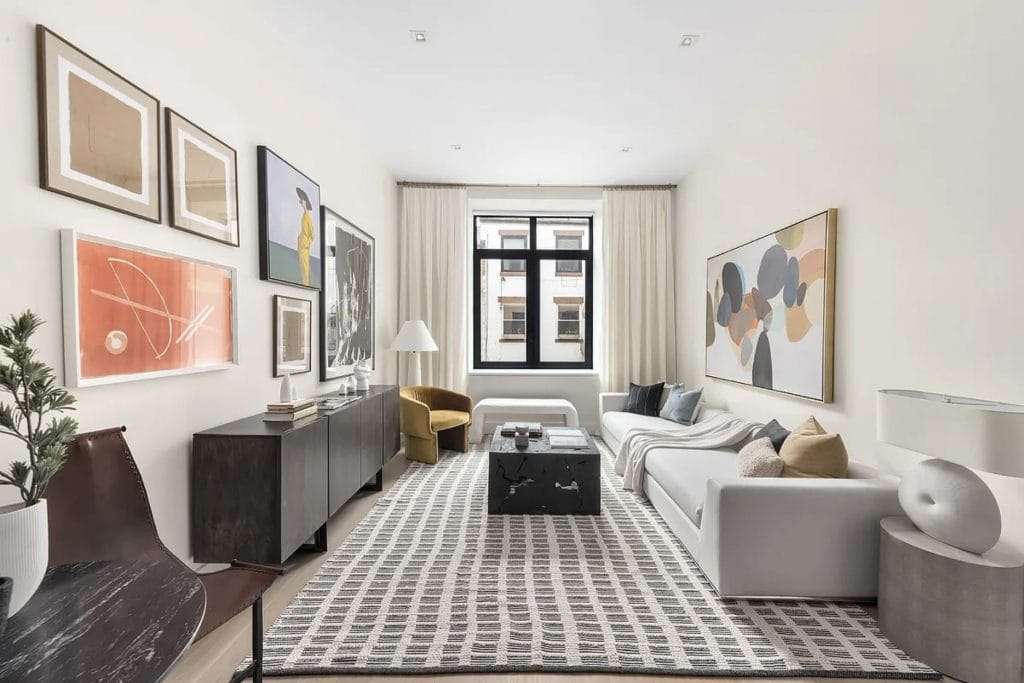
Books placed at different heights along a shelf give the eye somewhere to rest. Pair them with personal items, like a bowl you brought back from a trip, to bring a lively touch. These kinds of objects need to be grouped by material or color. Negative space also carries weight here. a shelf with breathing space seems more logical than one packed on edge. Good home furnishing ideas thrive in collections that leave room for the room to continue to evolve.
Designer Insight: The “rule of three” works because odd numbers negate symmetry. When decorationgroup objects by material or tone first, then change the height so the eye moves through them rather than across them.
How to furnish a living room FAQ
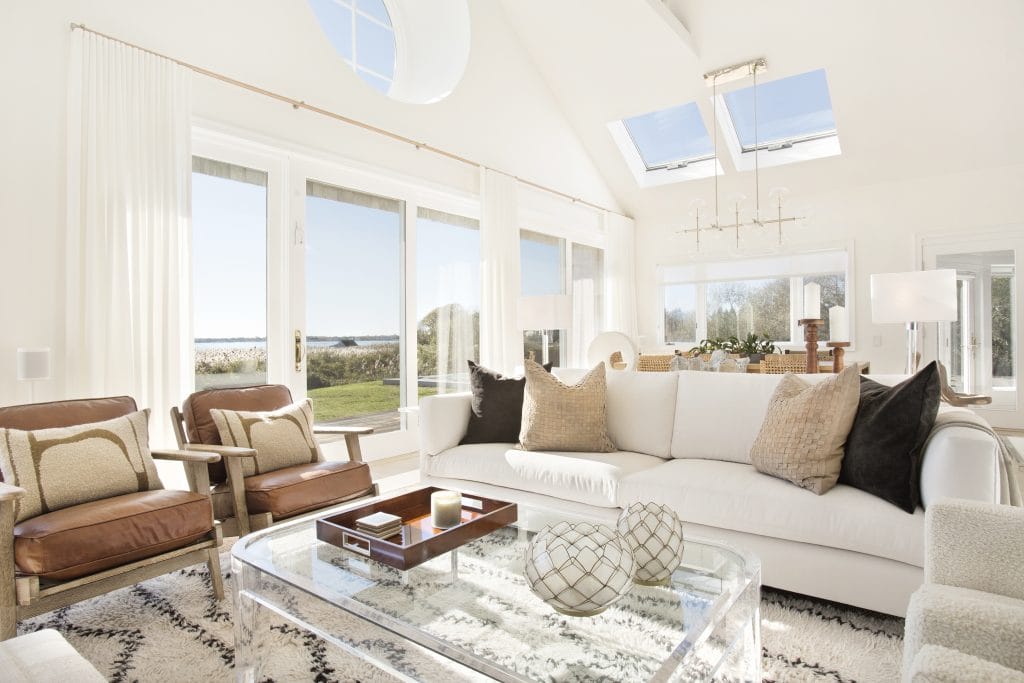
Decide on the width of your conversation area and start with the rug. The couch should sit next to the carpet and the seating zone builds outwards from there. Coffee tables and side tables come once the seating is laid, lighting follows the layout and accessories close the job. Buying a sofa before a rug is the most common reversal and often ends up with a rug too small for the room.
A reasonable working number is 10 to 15 percent of the home’s value for the main living areas combined. The sofa, carpet and lighting absorb the largest share of this number. Investing more in everyday pieces tends to age better than spreading the budget evenly across accent pieces.
Furniture that rises from the floor on bare legs allows the eye to travel beneath it, which makes the room feel larger than its footprint. Thin arms in the wallpaper save inches that matter, and a tight two- or three-tone palette protects the space from fragmentation. Also, a larger piece reads better than several small ones competing for the same square footage. Mirrors placed opposite a window double the perceived light, and a carpet sized to extend under the front legs of all seats widens the visible floor.
Need more help furnishing a living room?
Each decision above has a correct answer for your specific room. A Decorilla designer works the whole nine with you, from the layout to the last accessory. Make your reservation Free Online Interior Design Consultation to start your project today!



