


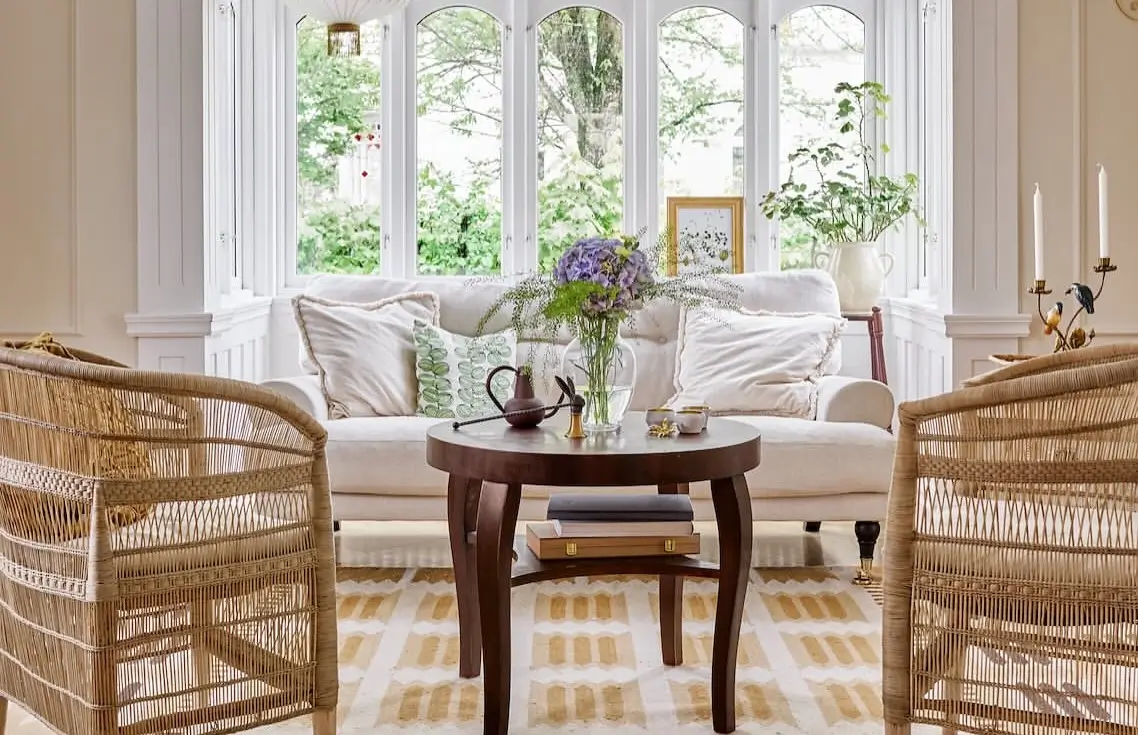
There was a time when wicker furniture meant large conservatory sets, glossy honey-colored finishes and matching coffee tables that somehow always accompanied floral cushions.
Fortunately, those days are over.
Today’s wicker feels lighter, quieter and much more refined. Designers use it the same way they use wood or linen – not as a decorative matter, but as another beautiful texture. And that’s exactly why it works.
If you’ve been tempted to add a wicker chair or woven bench but weren’t sure how it wouldn’t look beach grandma or dated, here’s what designers do.
They treat Wicker as a neutral, not a statement
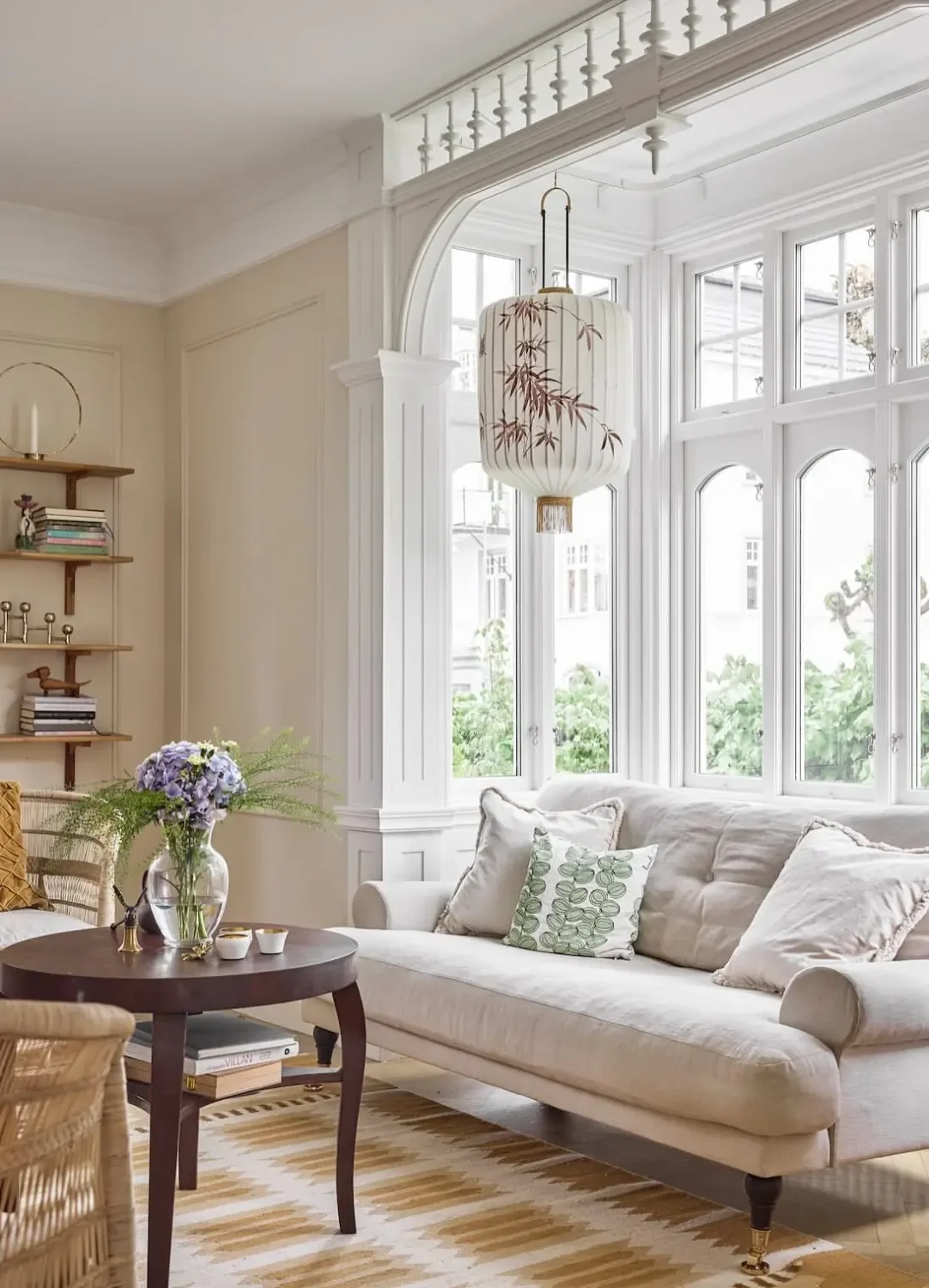
Image: Skonahem
A mistake people often make is to introduce wicker and then feel they have to continue the theme throughout the room.
Instead, use a single woven piece like you would a walnut side table or a linen armchair.
A pair of wicker chaise lounges across from an upholstered sofa instantly softens a room without competing for attention. Their open weave also allows light to pass through, making even the smallest living rooms feel less crowded.
If you are only adding a wicker item, make it sit. It has the biggest impact.
Skip the matching set
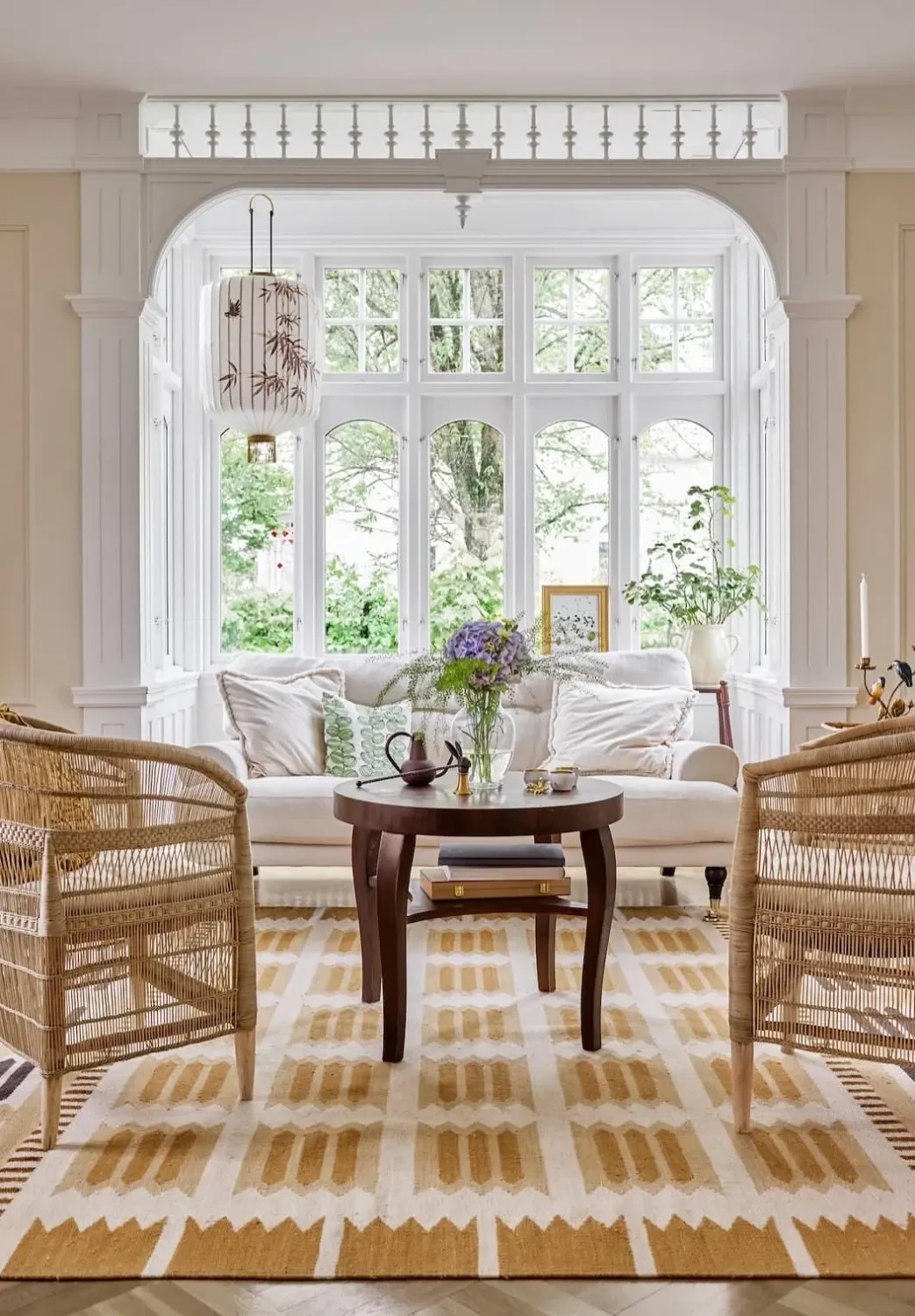
Image: Skonahem
Nothing dates faster than buying everything from the same collection.
Instead, mix ingredients.
A linen couch.
Dark wood coffee table.
Brass lighting.
A vintage rug.
Then add a woven chair or two.
It’s this contrast that makes the room feel focused rather than decorated.
The best interiors rarely repeat the same material over and over again.
Choose shapes with solid lines
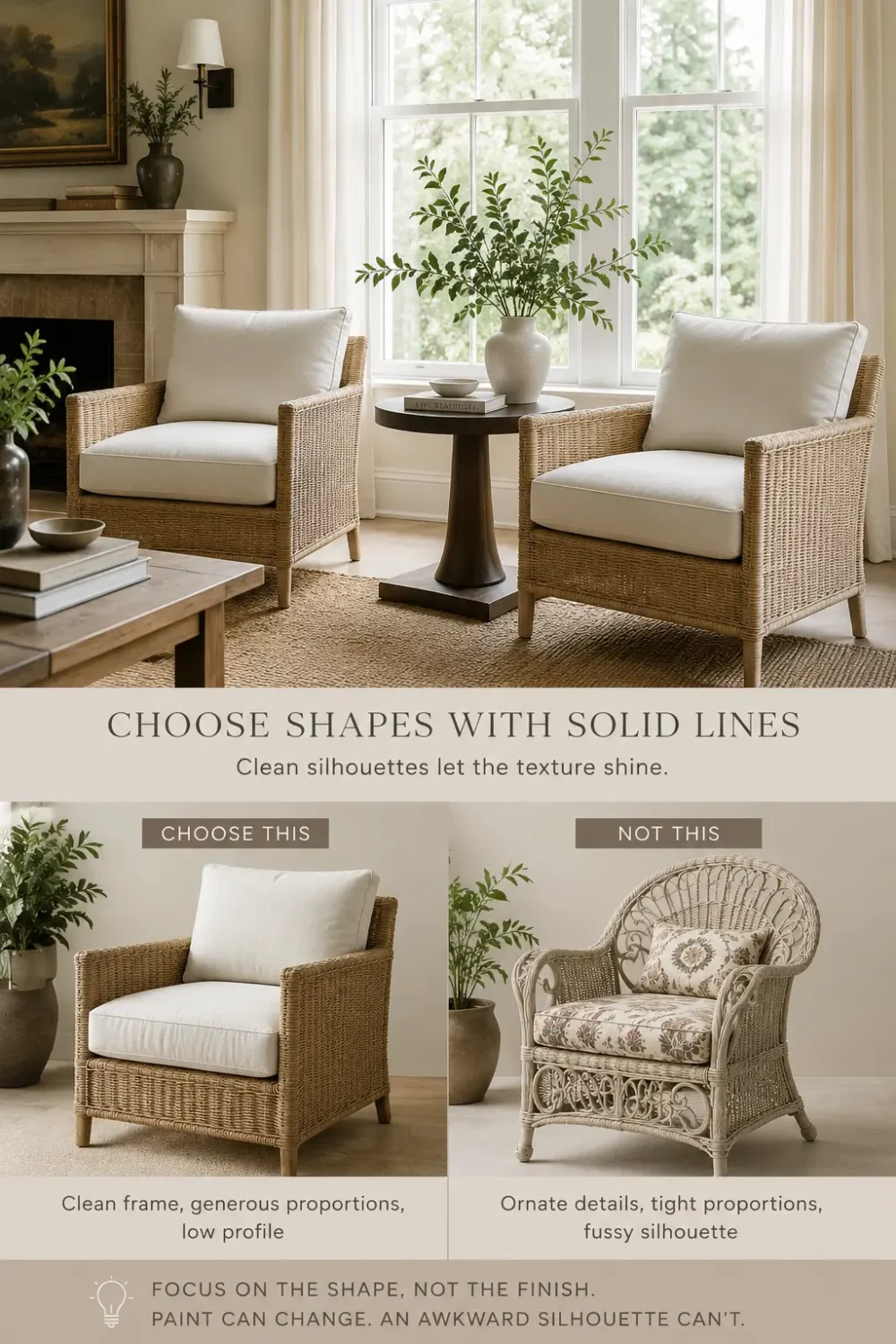
One of the biggest differences between today’s wicker furniture and older styles is the silhouette.
Designers opt for chairs with clean frames, generous proportions and lower profiles rather than elaborate cylinders or curves victorian details.
The simple lines allow the texture itself to become the decoration.
If you’re shopping used, pay more attention to shape than finish. Paint can always be changed. An awkward silhouette cannot.
Combine it with upholstered furniture
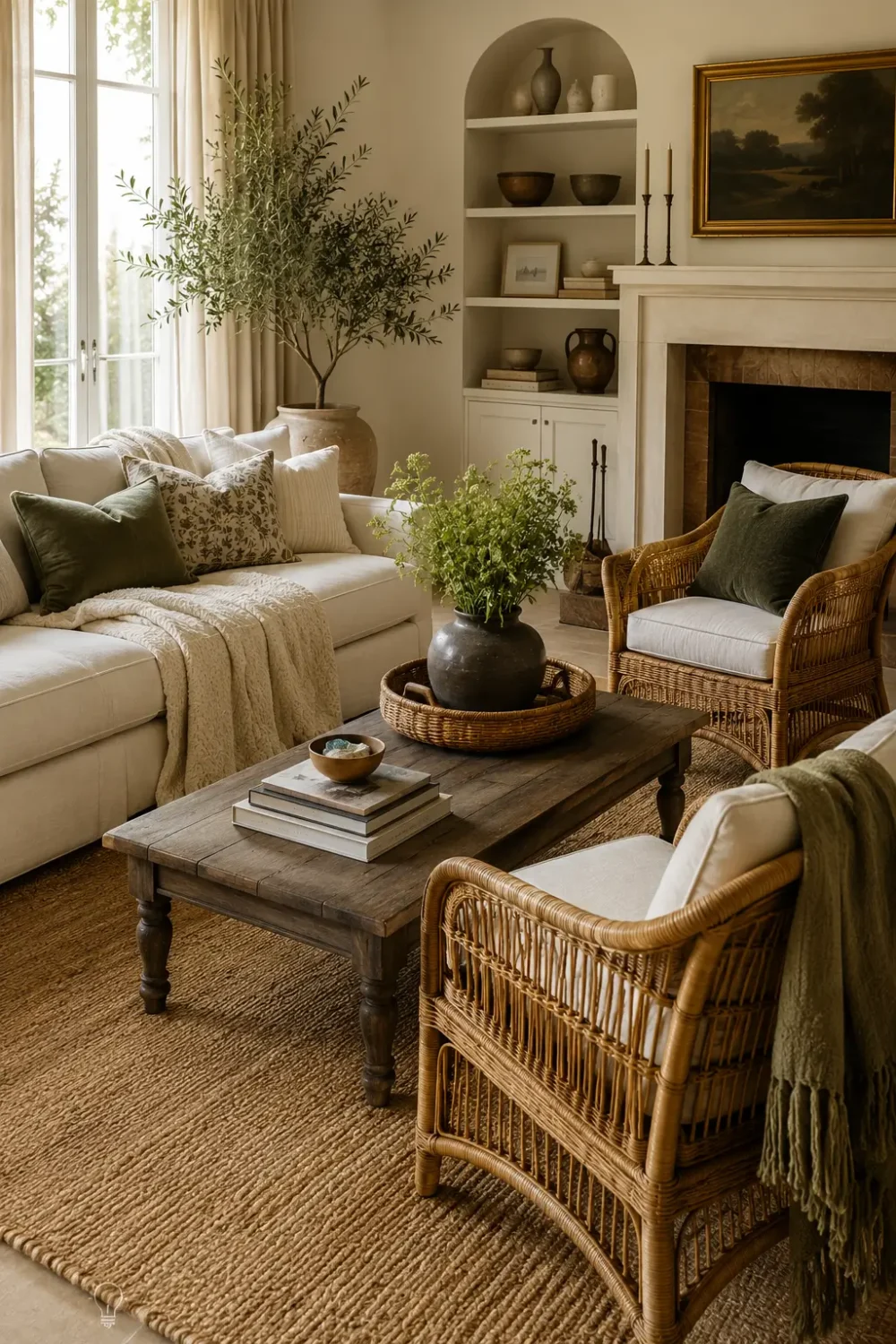
Wicker looks best when something soft balances it.
A room filled with woven furniture can feel visually dry.
Instead, pair it with pieces that invite you to sink in.
Think:
- Linen sofas
- Cotton upholstered chairs
- Plush pillows
- Wool throws
The contrast between smooth wallpaper and textured wicker creates the kind of layered rooms that room designers are always talking about—but rarely explain.
Keep the palette warm
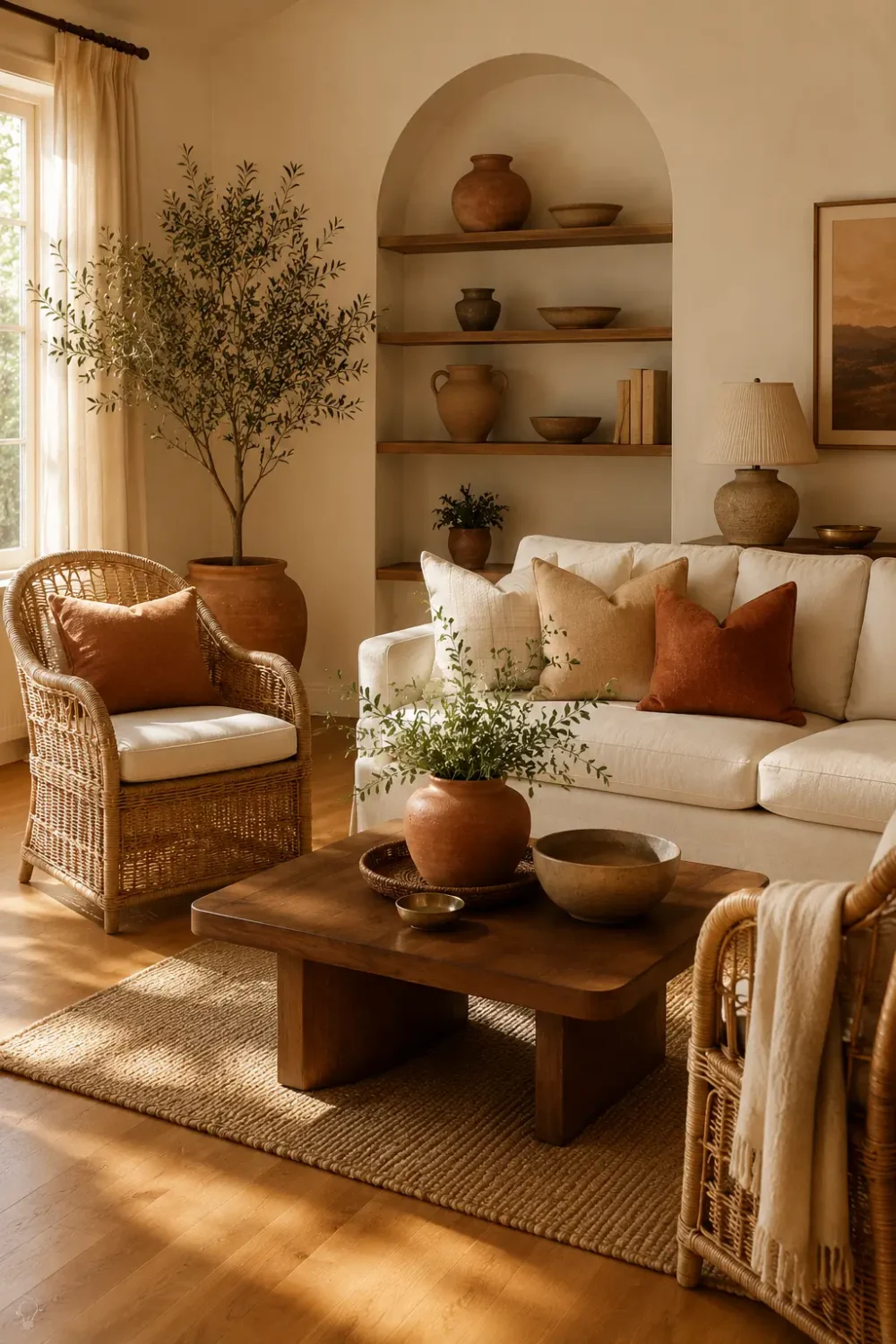
Natural wicker already brings warmth.
Lean into it.
Cream walls.
Soft white wallpaper.
Honey oak floors.
Walnut tables.
aged brass.
terracotta pottery.
These materials share the same quiet warmth, making the room feel cohesive without relying on matching colors.
Avoid pairing wicker with a bright white, chrome or gloss black finish if you want a softer look.
Don’t save it for beach houses
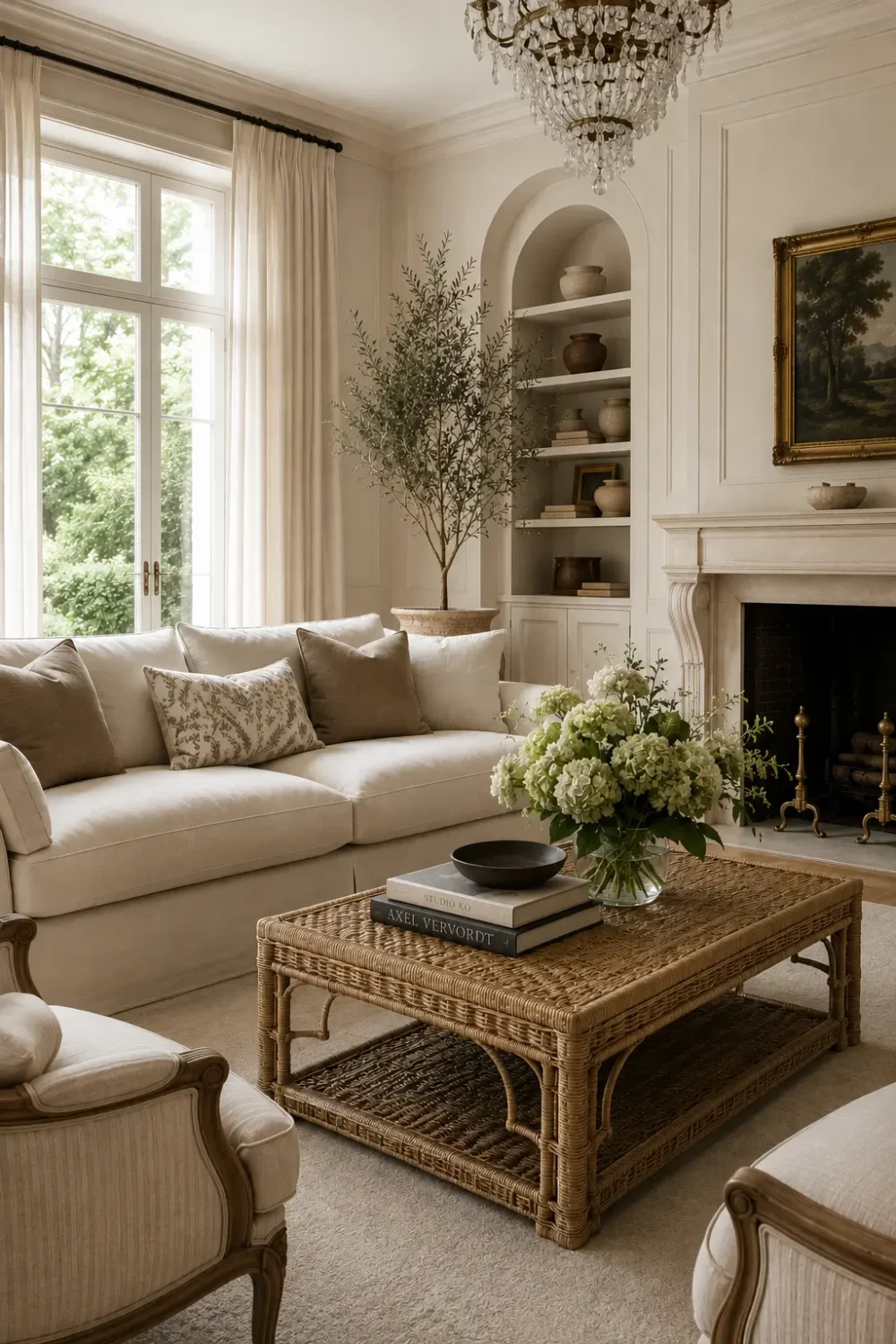
This is probably the biggest misconception.
Wicker is not a decoration style.
It is a material.
The same chair can look completely different depending on what surrounds it.
Place it in a Victorian drawing room with original millwork and it will feel timeless.
Pair it with a Belgian linen sofa and it becomes frugal luxury.
Mix it into a traditional English home and suddenly it looks put together for decades.
The frame is much more important than the straw itself.
Let it break up heavy furniture
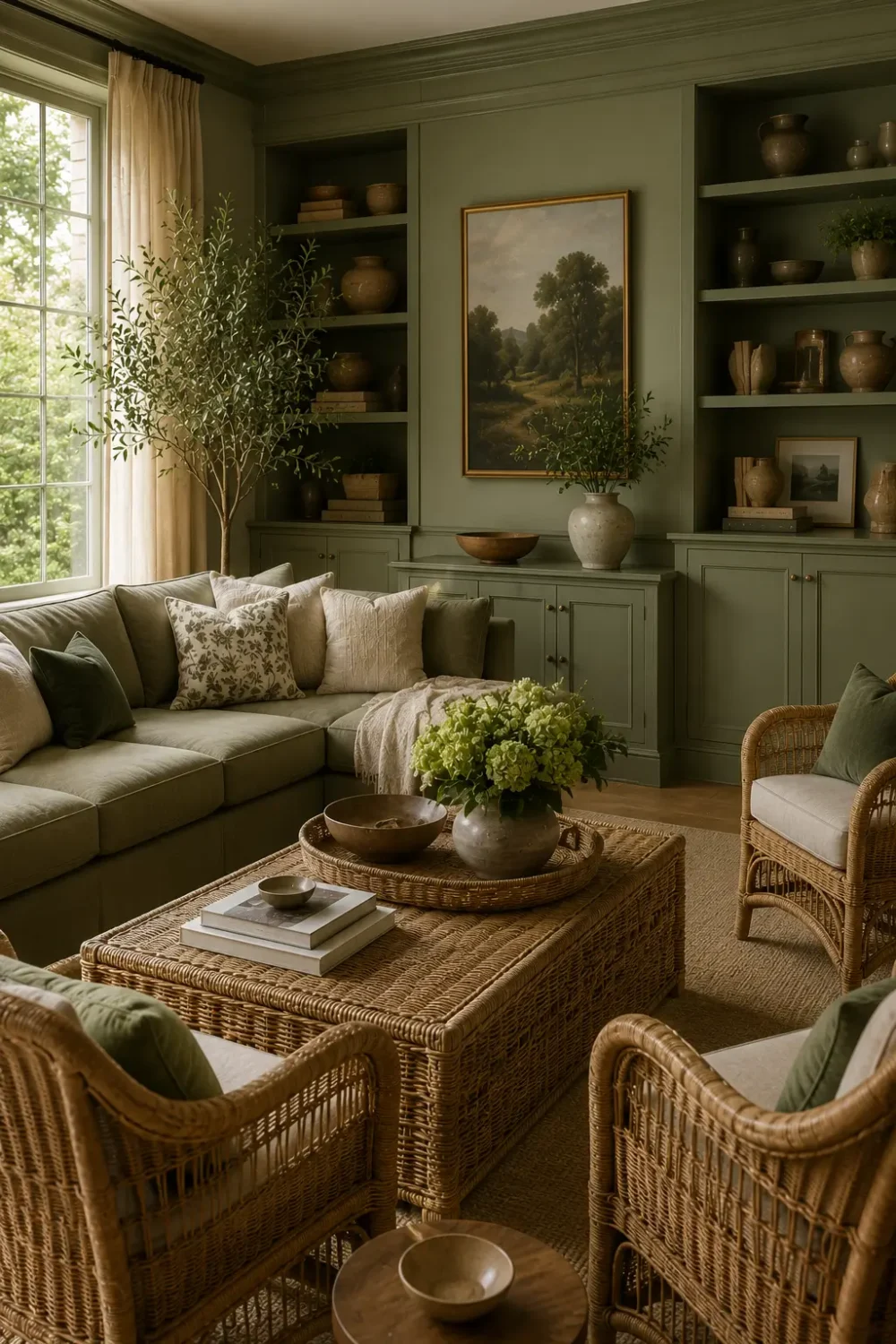
Every room benefits from visual breathing space.
If you already have a large sectional cabinet, substantial built-ins, or dark wood cabinets, introducing woven furniture helps lighten the composition without taking away the warmth.
Because the wicker is visually open, it creates balance where another upholstered chair just adds more weight.
It’s one of the oldest tricks designers use when a room starts to feel too solid.
Mix the old and the new
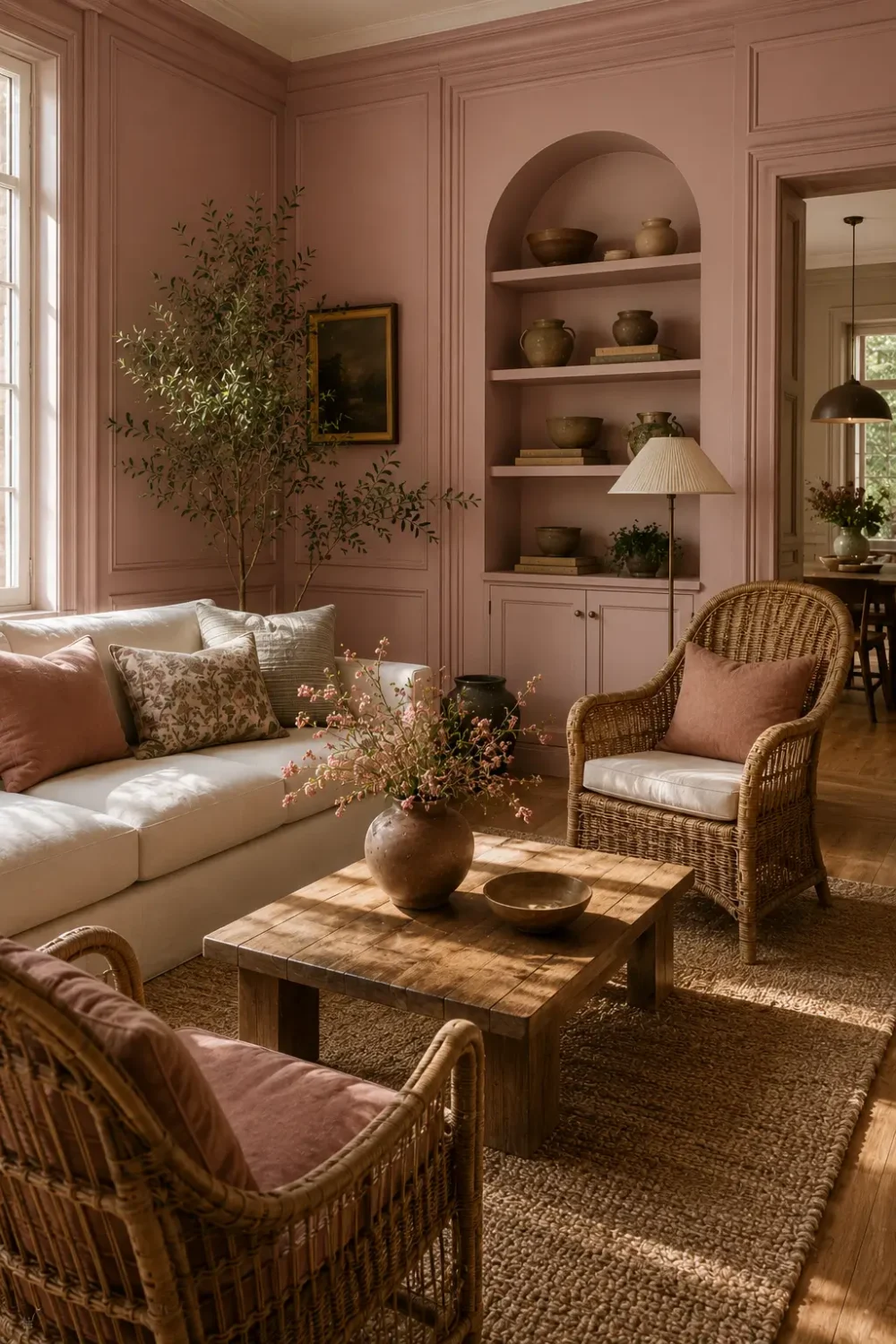
Vintage wicker almost always has more character than brand new pieces.
A flea market chair next to a modern sofa is much more interesting than buying everything at once.
Don’t worry if the finish is slightly faded or the weave isn’t quite perfect.
These small imperfections make the wicker feel authentic and not manufactured.
Just make sure the frame is sturdy and the weave isn’t flimsy.
Think Beyond Living Rooms
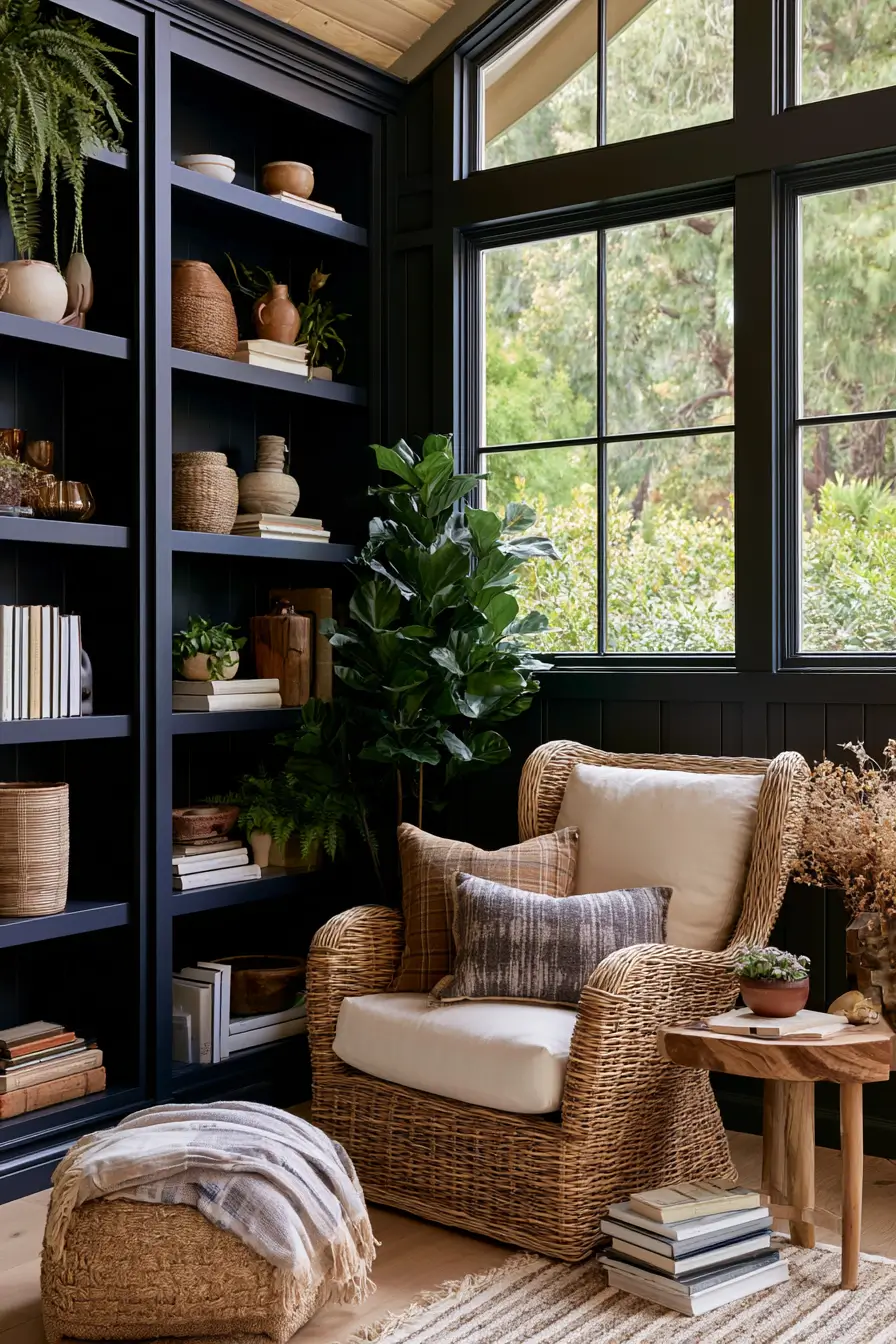
Some of the most successful wicker pieces are not sofas or chaise longues.
Consider using it as:
- Dining chairs around a solid wood table
- A bedroom bench at the foot of the bed
- A reading chair next to a bookshelf
- Entrance seat with linen cushion
- A small office chair in a home office
Using wicker in unexpected places doesn’t let it have an issue.
The secret is self-restraint
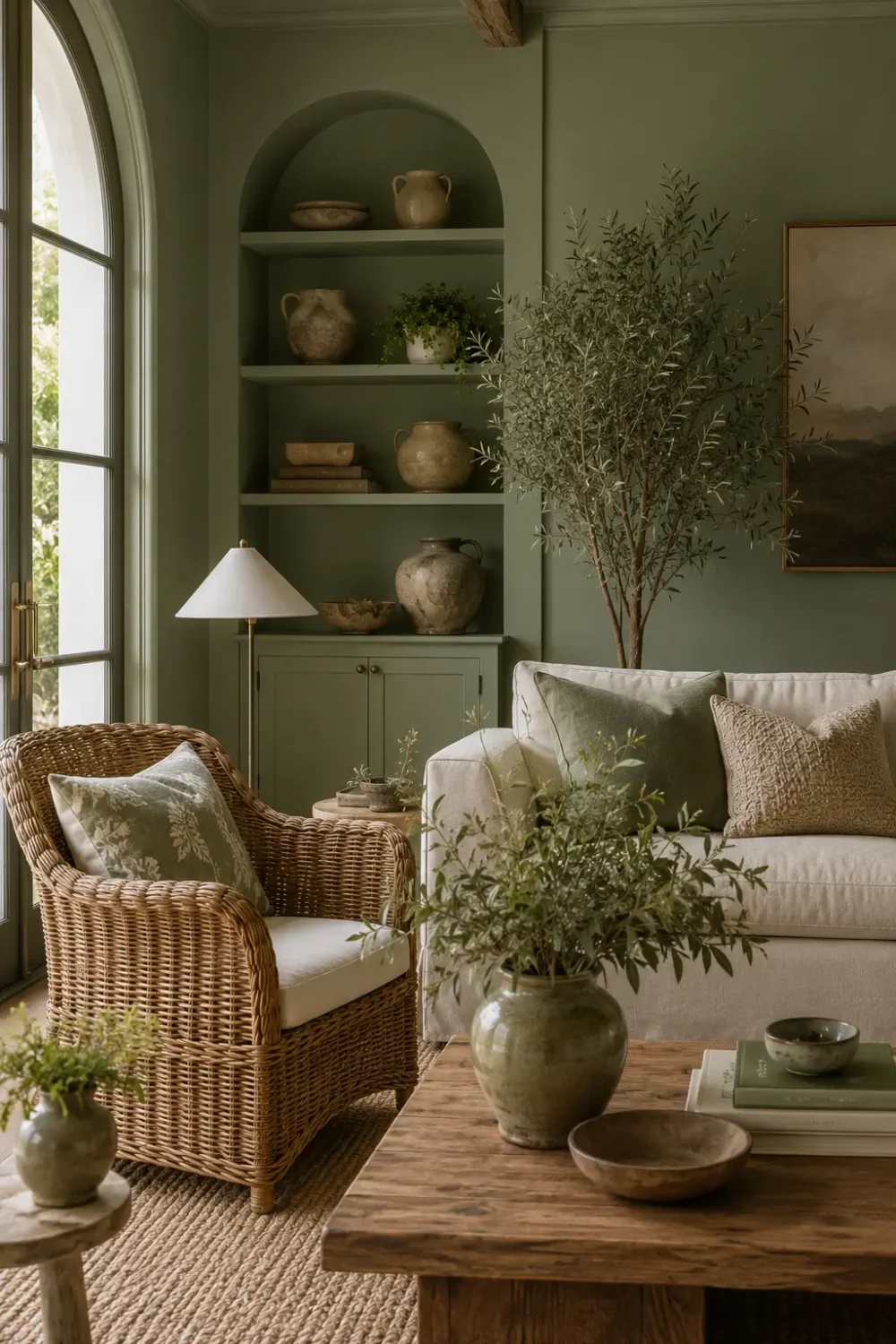
Perhaps the greatest lesson designers have learned is knowing when to stop.
A beautifully crafted wicker chair can do more for a room than an entire matching suite.
Treat it as one layer among many—wood, linen, stone, brass, ceramics, books, and plants.
When wicker becomes part of the conversation instead of trying to drive it, it suddenly feels timeless.
And that’s exactly why it’s finding its way back into some of today’s most beautiful homes.
Discover more from Decoholic
Sign up to get the latest posts sent to your email.



