


As artificial intelligence and digital infrastructures continue to reshape industries, the gap between complex technologies and human experience is becoming increasingly visible. In healthcare, sustainable energy and urban mobility, many organizations have accelerated their digital transformation efforts, but efficiency alone often fails to create systems that people can truly understand and trust. For an award-winning product designer Zhongqi Futhis challenge has become the focus of her multidisciplinary practice.
PLAN
What sets Fu apart is her ability to go into technically complex systems and design the human decision layers that make them easy to use, reliable and scalable. Originally trained in architecture, Fu earned her BA in Architecture from Huazhong University of Science and Technology before completing her Master of Architecture at Columbia University in New York. After graduating, she worked at Robert AM Stern Architects (RAMSA), one of the leading architectural firms in the United States, where she began to question how design could move beyond physical space to human behavior, interaction, and decision-making. This shift eventually led her to move into UX/UI and product design, bringing with her a systems thinking mindset rooted in architecture.
Human-Centered Infrastructure Design in Sustainable Energy
Fu’s most defining early experience came in the renewable energy sector, where she worked as a solo product designer leading 0-to-1 business software initiatives in high-tech industrial environments.
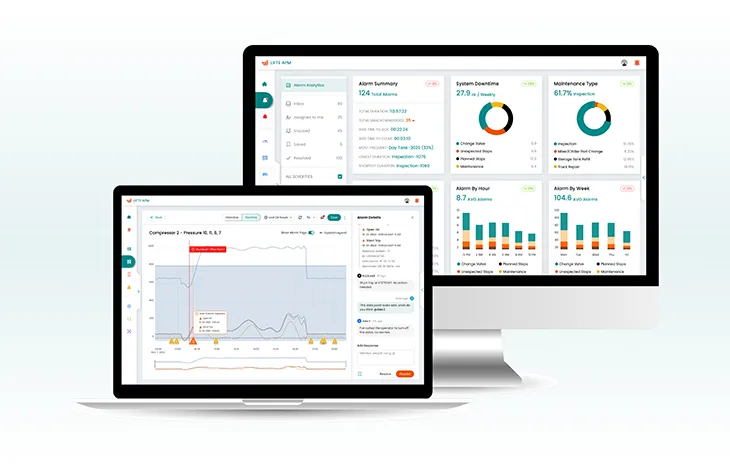
At hydrogen startup LIFTE H2, Fu joined as the founding product designer and established the company’s earliest design system, brand language and UX foundation for its industrial IoT monitoring platform. The platform enabled hydrogen companies and infrastructure suppliers to remotely monitor live operational data and equipment performance in large hydrogen supply chains. Her work helped the company expand internationally, securing customers across Europe and South Africa ahead of its acquisition by Electric Hydrogen in 2023.
After the acquisition, Fu continued her work at Electric Hydrogen, a clean energy unicorn startup based in Massachusetts, where she served as the lead product designer across multiple business platforms. One of the company’s most critical systems was its Asset Performance Management platform, designed to support large-scale hydrogen production infrastructure.
Working as the only product designer in a highly engineering-based organization, Fu developed an immersive user research methodology by embedding herself directly into hydrogen production workflows. Rather than relying solely on interviews, he observed operators on production floors to understand how teams monitored data, responded to alerts and coordinated maintenance under pressure.
Through this process, he identified a major operational issue: fragmented monitoring systems prevented workers from quickly understanding the severity of alarms or coordinating responses across departments, leading to delayed maintenance and higher risks of failure. Fu redesigned the experience through scalable UX systems that integrated live operational data, prioritized notifications, and introduced automated alerts with clearer action paths. Her work supported the company’s ability to scale the business’ product infrastructure during a period of rapid growth that included a $380 million Series C funding.
Redesigning health and emotional AI systems
While working in industrial infrastructure, Fu also began exploring how intelligent systems could support emotional well-being and healthcare experiences.
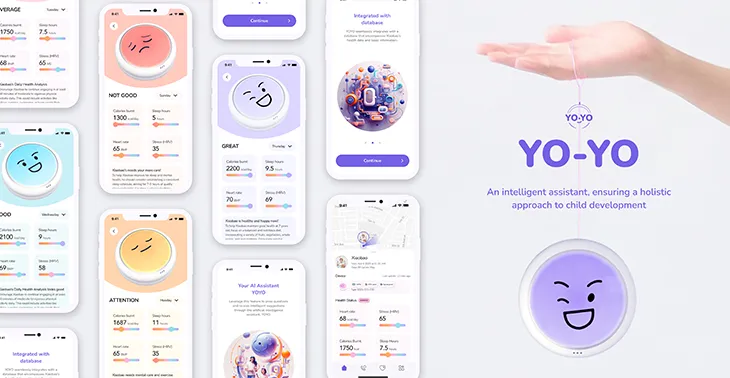
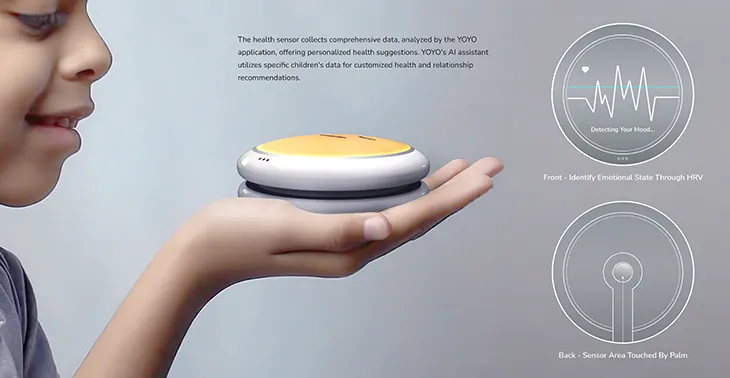
One of her most acclaimed works, YO-YO, examines the relationship between AI and emotional care. Designed as an AI-assisted mental health companion for children, the project combines a natural interactive game with a connected wearable platform that monitors emotional and physiological signals while encouraging communication between children and parents. Rather than positioning AI as a substitute for human relationships, the project explores how technology can support empathy and emotional awareness in families.
The project received international recognition including Red Dot Design Award, A’ Design Award, Asia Design Prize Gold Winner, MUSE Design Awards, Titan Health Awards and London Design Awards. These recognitions are significant because they came from design, healthcare, innovation and product award environments, reflecting that Fu’s work has been evaluated on multiple dimensions and not just as visual interface design.
In 2025, Fu joined Reveleer, one of the leading healthcare SaaS companies in the United States, as a Senior Product Designer. There, he leads experience design on enterprise systems that include healthcare enrollment, insurance workflows, and AI-assisted data assessment platforms serving millions of users.
Fu’s work has focused on redesigning enrollment and data review workflows so that healthcare teams can move from fragmented legacy tools to clearer, AI-assisted decision-making pathways. By simplifying workflows, introducing scalable design systems and creating clearer decision-making pathways, Fu has helped support customers’ transition away from legacy systems to more streamlined digital experiences. Several major US healthcare organizations, including Blue Cross Blue Shield, Baylor Scott & White, AllCare Health and Medical Card System, have adopted the platform to improve workflow clarity and reduce operational friction, with product development continuing through 2026.
Speculations on future mobility systems
Beyond her professional work, Fu continues to explore speculative design projects that connect physical infrastructure, artificial intelligence, and urban experience.
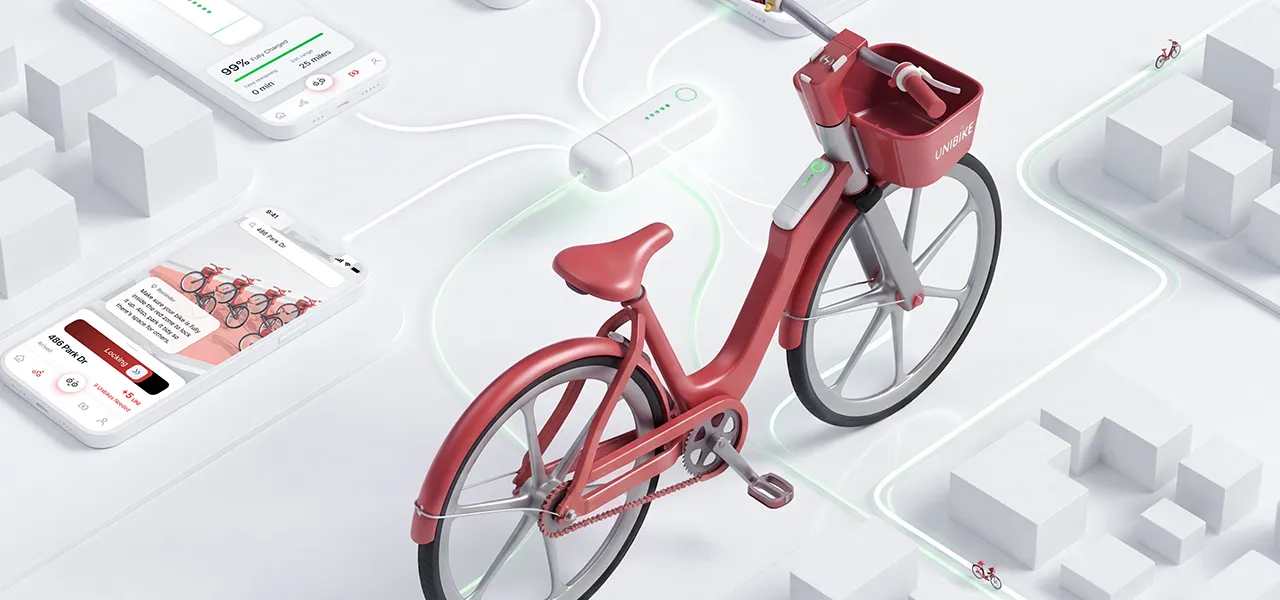
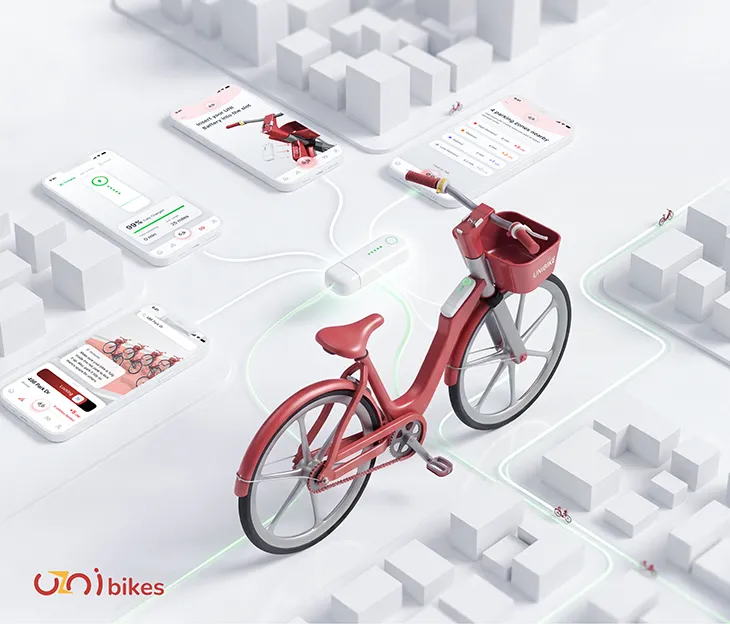
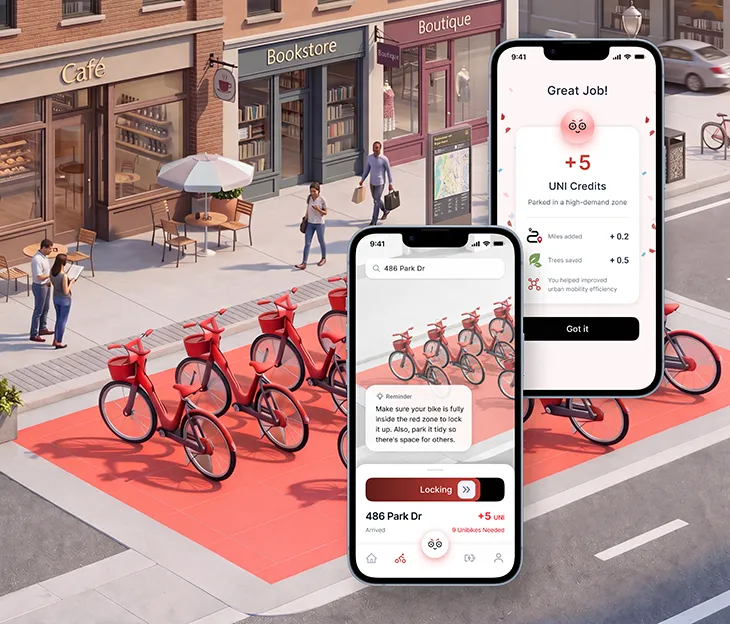
Unibike’s award-winning project redefines urban mobility through an ecosystem that combines shared bikes, user-owned removable batteries and AI-powered mobile interfaces. By separating the battery from the bike itself, the project addresses issues associated with traditional e-bikes, including heavy hardware systems and high maintenance costs. Its mobile platform also introduces incentive-based behavioral systems that encourage users to rebalance the distribution of bicycles in cities through dynamic rewards.
The project proposes a decentralized mobility model where transport, portable energy and intelligent digital systems work together as part of everyday urban life.
Although speculative, the project has progressed beyond the concept through award recognition, patent protection and exhibition selection. As of 2024, Unibike has received recognition from Core77, MUSE Design Awards, Titan Innovation Awards and NY Product Design Awards, while securing a patent in China. In 2026, the work will be exhibited in New York as part of Utopia. & A’Design Award International Exhibition – CARBON x SILICON: The Agentic Shift.
What sets Fu apart is that she repeatedly takes technically complex, high-risk systems – hydrogen infrastructure, healthcare data and mobility networks – and turns them into decision-making environments for the people who operate them.
Across renewable energy, healthcare, artificial intelligence and mobility, Fu’s work consistently explores a central question: how can increasingly intelligent systems remain deeply human? Rather than treating design as surface-level interface creation, her practice positions UX as infrastructure – shaping how people understand, trust and engage with the technological systems around them.
Words from DSCENE Editor Maya Lane.



