


Cleaning the bed is one of those household chores that never seems to end. Between sheets, pillowcases and mattress covers, the idea of having to wash even pillows every week becomes a logistical nightmare, with endless drying times and the risk of the upholstery losing its shape. However, hygiene is non-negotiable. This is why many turn to a different approach: don’t wash less, but protect better.
The secret is not to neglect cleaning, but to use a layering strategy that keeps the pillow core pristine for much longer. It’s the difference between having to “treat” dirt that’s already set in and prevent this from happening.
The double layer: the real barrier against sweat and allergens
The most common mistake is to think that a pillow case that coordinates with the sheets is sufficient. In fact, the fabric of classic pillowcases is often too thin to block the moisture and sebum that the skin releases during the night. The solution that changes everything is the use of a Technical pillow cover with zipper placed under the aesthetic pillow case.
These guards act as a real physical barrier. By washing only the outer pillowcase and pillow cover each week (which dries in an instant), the inner pillow remains perfectly dry and disinfected. This allows you to drastically reduce deep washing of the pillow itself, preserving the fibers or memory foam for years.
Daily dry disinfection
Instead of using water, the new method focuses solely on air and light. Every morning, his habit shake the pillows outdoors or near an open window for at least ten minutes allows the moisture accumulated during the night to completely evaporate.
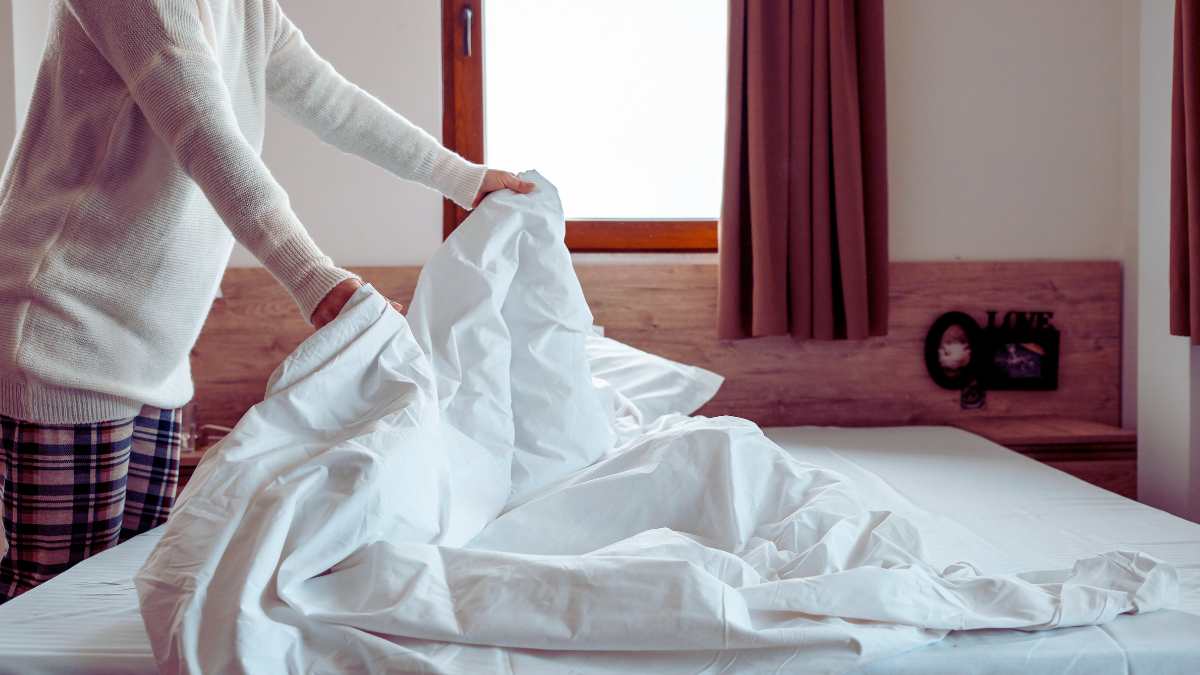
Moisture is the main cause of the proliferation of mites and bad odors. Display pillows (without pillowcases, when possible) on direct sunlight it is a very powerful natural disinfectant. UV rays work against bacteria and micro-organisms, giving that feeling of freshness that is usually only obtained after a full wash in the washing machine.
The use of steam for quick and deep cleaning
For those who want a higher level of hygiene without having to wet the pillow, the vertical steam it is the ultimate tool. Passing a jet of high temperature steam over the surface of the pillow allows you to break down the bacterial load and renew the fibers in just a few minutes.
Unlike washing in the washing machine, steam does not soak the filling and allows you to reuse the bed almost immediately. It’s a system Extremely effective for memory foam pillows or latex, which are known to dislike total immersion in water and tend to be damaged if rotated too often.
Bicarbonates and essential oils: the cleaning you can’t see
Once a month, even without washing, you can proceed with deep cleaning Dry with bicarbonate. Simply sprinkle the surface of the pillow, leave for half an hour and then wipe well with a clean nozzle. Bicarbonate naturally absorbs odors and residual moisture.
Adding a drop of lavender or tea tree essential oil (known for its antibacterial properties) to baking soda or directly to your pillowcase not only improves the smell, but helps create environment hostile to mites. It’s a small gesture that turns the bed into a true oasis of well-being without any excessive effort.
When washing is still necessary
By adopting these techniques, built-in pad washing can be reduced to two or three times a yearinstead of once a month or every week. This extends the life of the product and always guarantees optimal support for the neck and back.
The secret is to understand that daily maintenance is much more powerful than drastic cleaning done infrequently. A protected, ventilated and carefully processed pillow will never have to undergo the thermal and mechanical stress of too frequent washing, remaining like new for much longer.



