


Furniture, lighting, and even a room divider may not seem to have much in common at first glance, but Lawrence Technological University (LTU) in Southfield, Michigan, found unity in an unexpected place: sheets of 100% recycled HDPE made from post-consumer plastic, including discarded milk cartons. Created by six second-year Product Design students at LTU, the collection transformed the material into a cohesive series of objects that explored the craftsmanship, experimentation and creative potential of circular design, winning the university the Best of Schools award at this year’s WANTED Schools Report during ICFF.
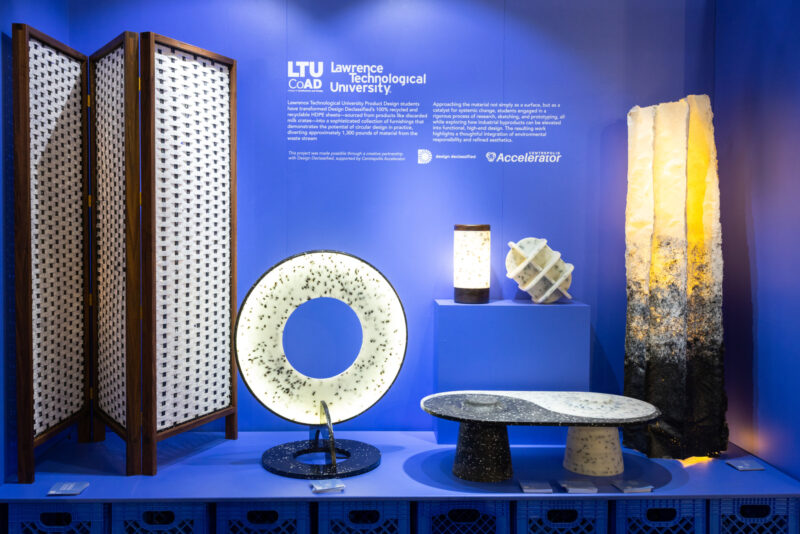
Photo by Jenna Bascom Photography
Developed in LTU’s Sustainable Systems course, the exhibit was created in collaboration with a Michigan-based manufacturer Design declassified and supported by Centrepolis Accelerator. Rather than treating recycled HDPE as a limitation, the students embraced its unique properties, creating furniture and lighting that diverts approximately 1,300 kilograms of plastic waste while demonstrating the material’s potential beyond conventional applications.
What makes the achievement particularly remarkable is that the exhibition was not assembled from projects across the university’s design program. Instead, the entire collection was produced by a single undergraduate class. The exhibition featured works by Ashgen Boyer, Dante Cerroni, Lourdes Davish, Sofia Eddy, Delanie Shorten and Ryan Sukhraj.
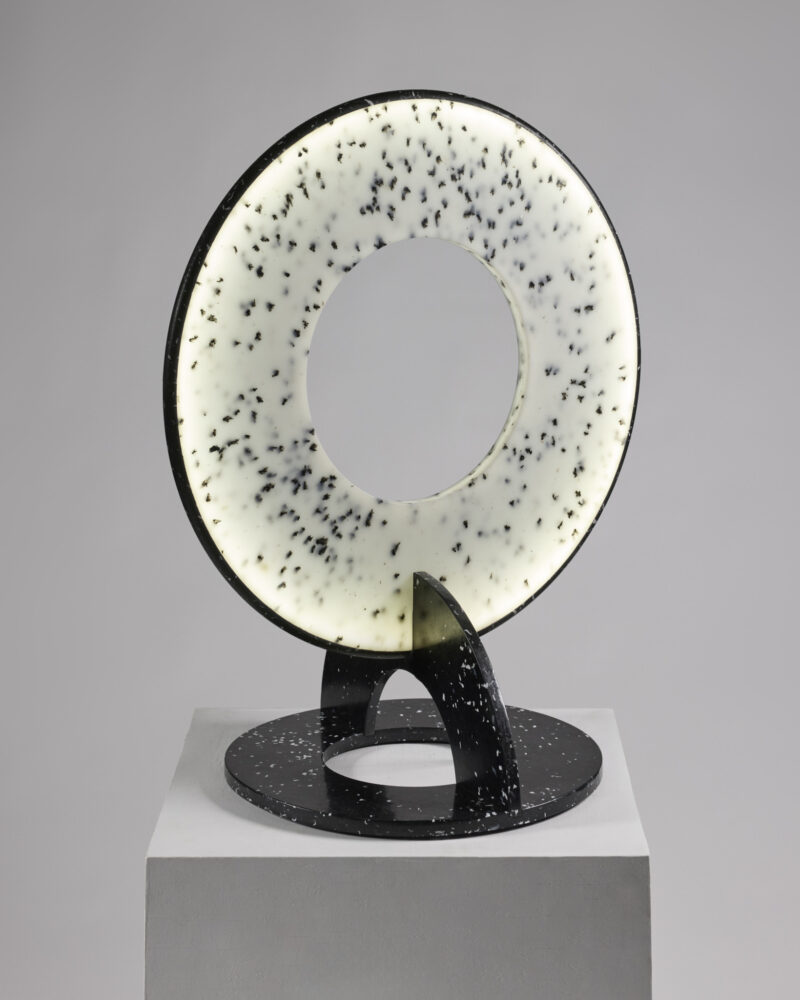
Design work by Dante Cerroni. Photo courtesy of Steve Kroodsma/LTU.
“I teach the Sustainable Systems class,” says assistant professor Erika Cross, who curated the exhibit and suggested I apply to ICFF after seeing the caliber of work her students produced. “Unlike most School Showcases, which feature curated collections of work from entire design programs, ours was a collection produced entirely by undergraduates in this single course.”
Because each student worked from the same recycled material, the exhibition developed a common visual language leaving room for individual exploration. The resulting collection included Cerroni’s Loop Lamp, Davish’s Phoji Room Divider, Shorten’s Nested Coffee Table and Sukhraj’s Cloud Puzzle, each approaching the common material through a different lens.
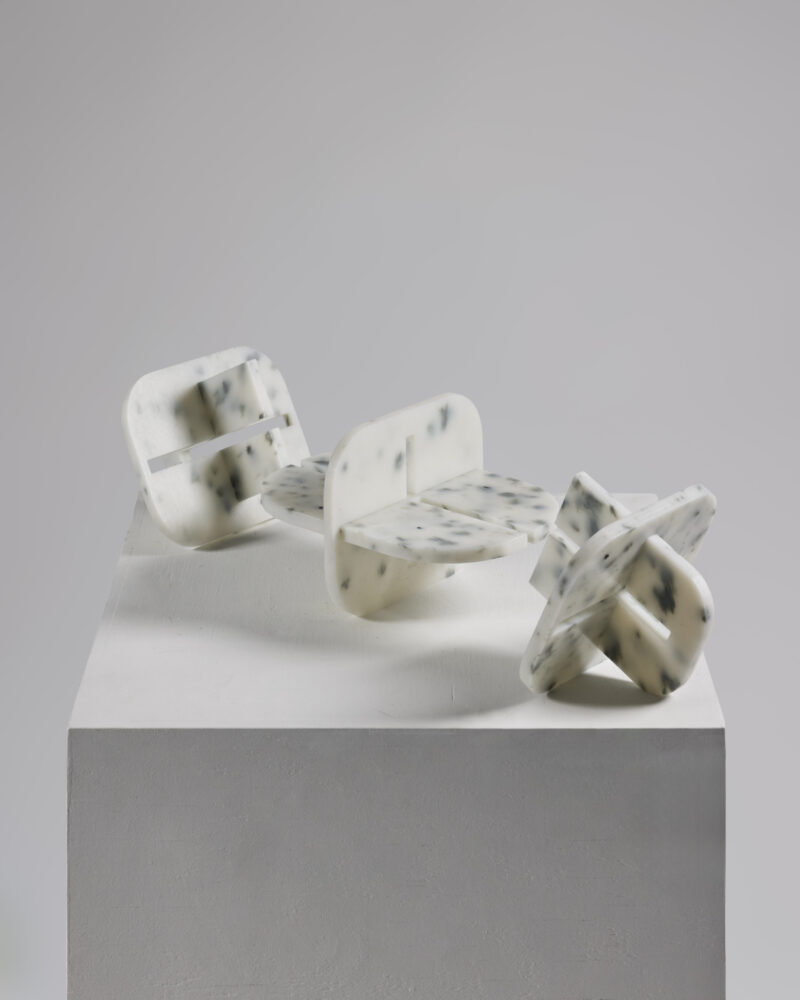
A work by Ryan Sukhray. Photo courtesy of Steve Kroodsma/LTU.
“Students didn’t have to worry about their pieces fitting into our collection,” says Cross. “The material was the common denominator, but the students’ unique methodologies were the variables.”
This freedom led to unexpected discoveries throughout the semester. Davish collected scraps from the CNC router, melted them into translucent veneer-like sheets and stitched them together to create the Fade Floor Lamp, a subtle black-to-white gradient. Shorten experimented with top-cut HDPE to create an expanding coffee table base that retained enough flexibility after heat forming to accommodate multiple sizes of table dimensions.
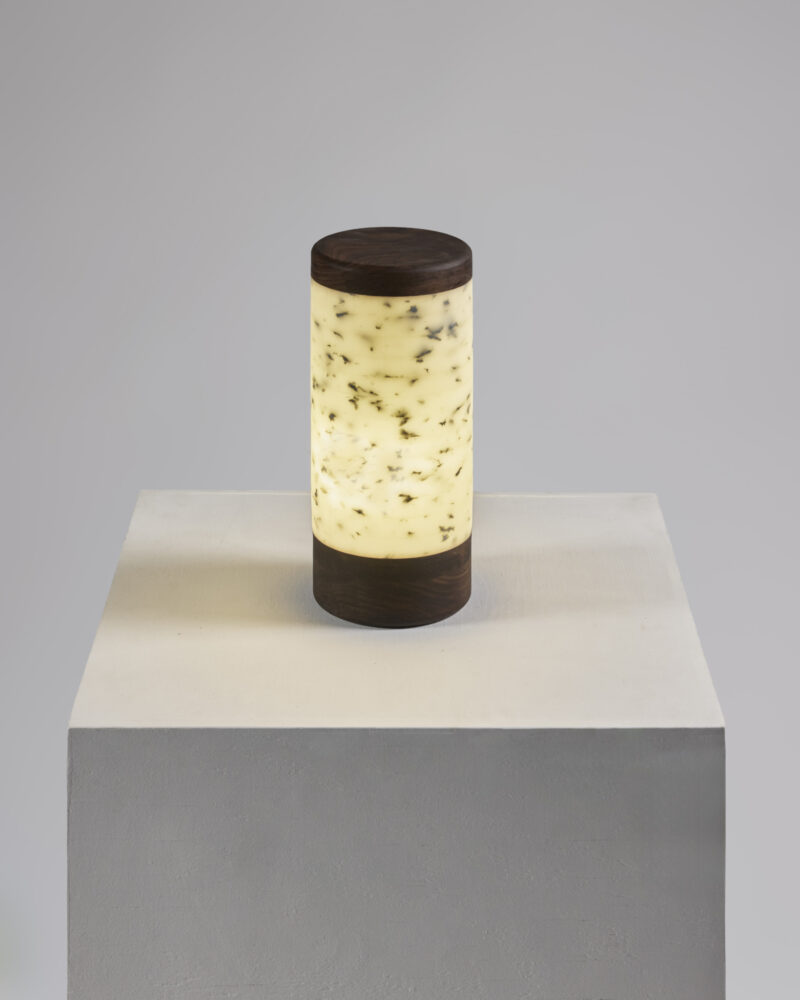
A work by Delanie Shorten. Photo courtesy of Steve Kroodsma/LTU.
For Cross, these moments reinforced an important lesson: meaningful innovation often begins with understanding a material, not imposing preconceived ideas on it.
“The real exercise was to prove that recycled materials can achieve a high level of luxury and craftsmanship,” he says. “Ultimately, the goal was to design pieces so aesthetically compelling and structurally thoughtful that they stand on their own merits first, with their sustainable provenance story as a beautiful secondary discovery.”
Receiving the Best of Schools award validated not only the students’ work but also LTU’s emphasis on industry partnerships and hands-on learning. Cross hopes that projects like this will continue to shape the future of design education, giving students opportunities to engage directly with emerging materials, manufacturing processes and real-world collaborators while developing thoughtful solutions to increasingly complex challenges.
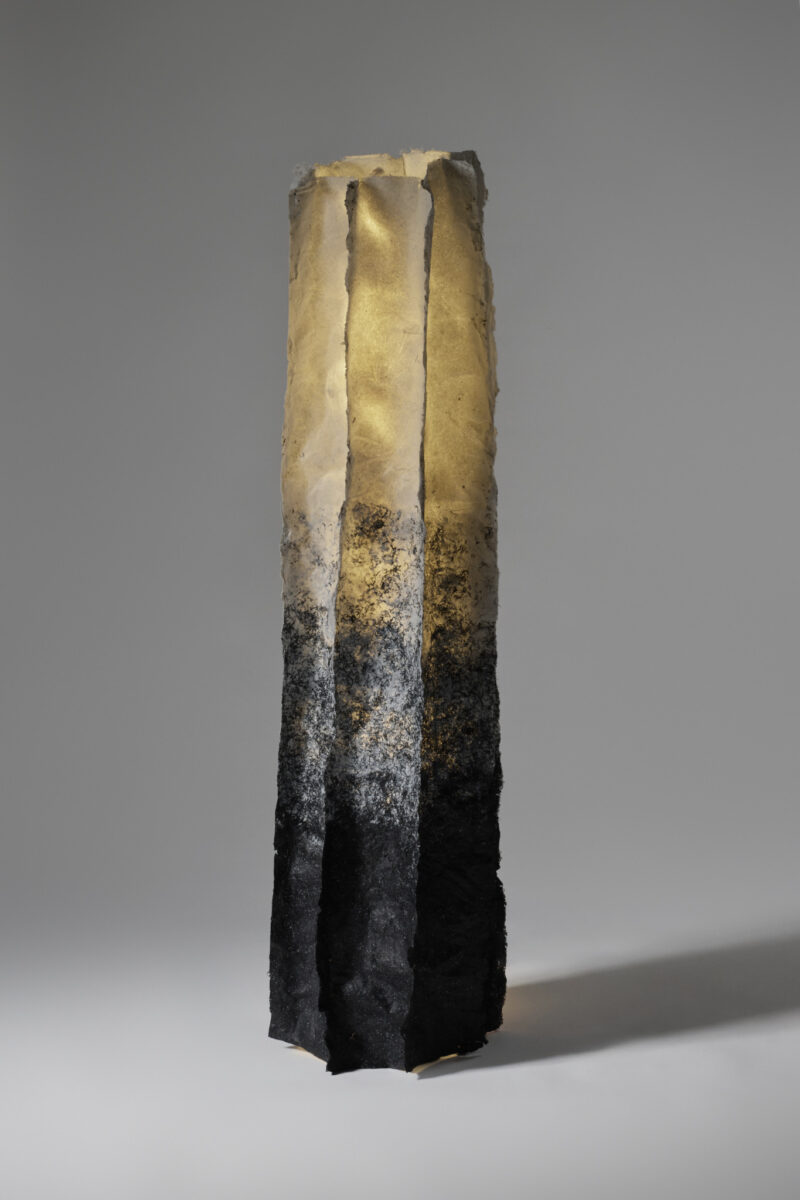
Work by Lourdes Davish. Photo courtesy of Steve Kroodsma/LTU.
Learn more about Lawrence Technological University’s product design program at ltu.eduand follow the College of Architecture and Design at Instagram.




