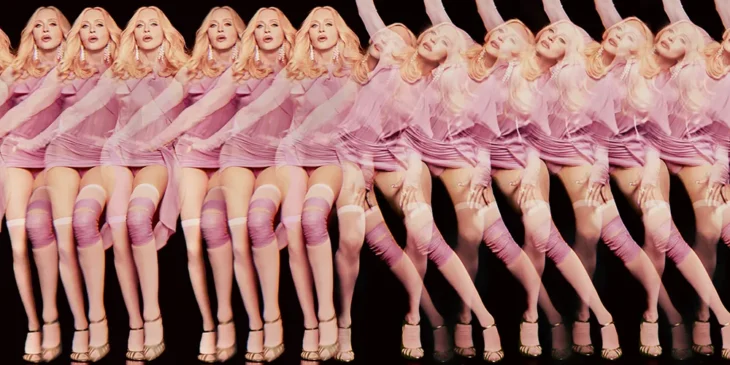
There is something almost touching about his persistence Madonna complaint. The words change, but the desire beneath them does not. Too sexual. Too ambitious. Too universal. Too muscular. Very young. Very old. Too artificial. Overexposed. Too. For more than forty years, people have been trying to pinpoint the exact point at which Madonna should stop being Madonna.
Now the complaint reaches age. It pretends to be an aesthetic judgment, but it’s more like social management. Why is she dressed like that? Why is she still dancing? Why does he still want the center? Why are they with younger artists? Why doesn’t she protect her legacy by becoming smaller, quieter, cleaner, more grateful?

The question is never just about the music. It’s about behavior. Madonna’s body has always been treated as public property and a public problem. A site for fantasy, punishment, desire, disgust, imitation and moral correction. She built her career on understanding this before most of her critics did. He caught the audience’s eye and turned it into material.
This is why it still pisses people off. He refuses the usual bargain. Culture offers women a deal: be desirable, then disappear before the desire becomes complicated. Madonna keeps missing the exit.
At first she was criticized for wanting too much and showing too much. She had sex unapologetically and people acted as if the real offense was the body itself. He used universal symbols and people acted as if he had invented blasphemy. It ran through club culture, queer nightlife, voguing, fashion, dance and religious iconography as if pop could contain them all. Sometimes it took too much. Sometimes he understood exactly what he was touching. Often, both things were true at the same time.
For more than forty years, people have been trying to pinpoint the exact point at which Madonna should stop being Madonna.
That’s part of Madonna’s difficulty. She cannot become a mere feminist saint or be dismissed as a mere provocateur. She is very helpful for that. She has always lived in contradiction: liberating and controlling, generous and appropriating, brilliant and exhausting, honest and strategic, vulnerable and weak. This is why it remains interesting. Icons become boring when they stop producing arguments.
Each season brought a new charge. During Like a Prayer, he was accused of sacrilege. During Erotica and Sex, she became the epitome of female desire gone too far. During Evita, the industry briefly rewarded discipline and transformation, as if it had finally behaved. During Ray of Light, she was allowed spirituality because motherhood and electronics made her appear elevated. During Confessions on a Dance Floor, he found the purest possible architecture for escape: the club as machine, the body as instrument, dance as faith.
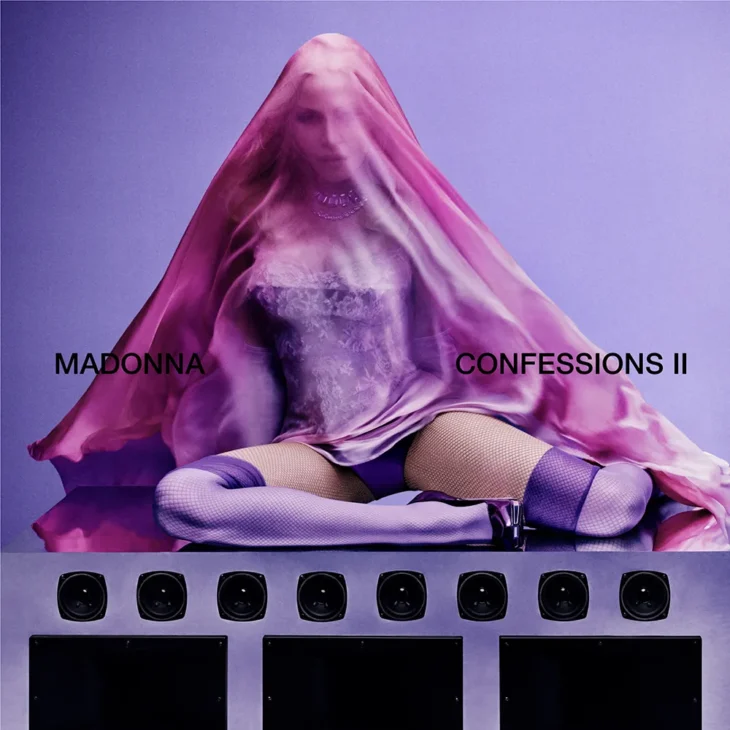
Now Confessions II it arrives and the return is almost too perfect. Madonna returns to the dance floor, the place where shame turns into movement. The sequel reunites her with Stuart Price and brings in Sabrina Carpenter, Stromae, Martin Garrix, Feid and Lola Leon. It’s a record based on continuity, not nostalgia. The point is not to keep 2005 in glass. The point is to ask what happens when a woman who has already declared herself many times chooses the word again.
The club has always been one of Madonna’s most natural spaces because she doesn’t demand purity. It demands repetition, sweat, faith, delivery, demonstration. It is where people go to become less stable. In this sense, the track is the opposite of the record. The archive wants to keep Madonna. The track keeps her changing.
Madonna’s body has always been treated as public property and a public problem.
This is what makes the age discourse so dull. He wants to turn her into a monument and then punish her for moving. He wants the old successes, the old face, the old body, the old challenge, but only if they arrive as a memory. Madonna refuses memory as a final form. It insists on presence, which is much more annoying.
People say he should age gracefully. What they often mean is that it should be made easier to ignore. Grace, in this wording, means withdrawal. It means neutral clothes, soft lighting, heritage interviews, tasteful memoirs, maybe a documentary with archival footage and emotional piano. It means that you enter the museum before anyone sees what the appetite is like after youth.
But Madonna was never tasteful that way. Taste was never the task. The work was power, image, repetition, transformation, survival. He understood pop as a construct long before the language of “seasons” became marketing grammar. Each version of herself arrived as a room you could walk into: the virgin, the saint, the ruler, the mother, the mystic, the disco body, the traumatized survivor, the woman who still refuses to let go.
Denial matters. Not because every Madonna record is great. Not because every image works. Not because criticism should stop at the feet of heritage. The issue is more basic and more uncomfortable: the reaction to Madonna often begins before the work appears. She is judged first for the fact that she continues. The music becomes secondary to the scandal of its constant visibility.
The virgin, the saint, the sovereign, the mother, the mystic, the disco body, the traumatized survivor, the woman who still refuses to go away.
This is where Confessions II becomes useful as a cultural object, whatever one might think of individual pieces. It gives Madonna a room that already belongs to her and lets her test how much of herself she can still move in it. Associates place it in the present. Lola Leon brings to the family, the daughter who was a child in the first Confessions and now appears in the sequel. The disc becomes less a return than a refusal to close.
Madonna has publicly lived through desire, illness, grief, motherhood, injury, recovery, ridicule and worship. It was treated as a warning and a plan, often by the same people. Her body has been praised, sold, copied, mocked, policed and mourned while still inside it. This is what happens when a woman becomes a cultural construct large enough for all to view.
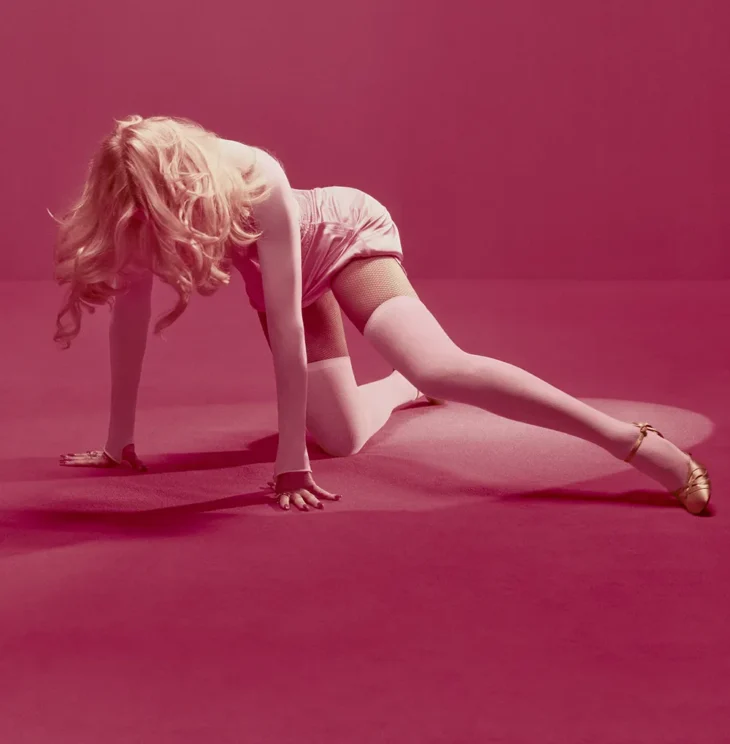
The funny thing is, people keep telling Madonna it’s over, and she gives them another surface to argue with. He doesn’t have to win every argument. Just keep producing them.
Maybe that’s why she still feels needed. It does not offer the comfort of graceful disappearance. It offers the irritation of remaining visible after the license has been revoked by civilization. It reminds us that age does not erase vanity, hunger, sexuality, control, humor, vulgarity, ambition or the desire to be looked at. It remains embarrassing in the way that any freedom can be embarrassing when unapologetically exercised.
The funny thing is, people keep telling Madonna it’s over, and she gives them another surface to argue with.
Madonna doesn’t owe anyone her silence. He owes no one gentleness. He doesn’t owe anyone a graceful exit.
She owes us her own problem.
And he continues to pay for it.