

Cleaning done, surfaces dried, mirror without streaks. However, the bathroom does not look clean. There’s something that doesn’t add up, a sense of neglect that lingers even after half an hour of work. Most people at that moment look at the tiles, the floor, the bathroom accessories. Almost nobody looks at silicone.
It’s there. Along the perimeter of the tub, in the corner between the shower tray and the wall, under the sink where it meets the wall. When it’s new you can’t see it. As it grows it becomes the only thing you see.
Why silicone ages so badly
Silicone is a porous material. Absorbs moisture, soap, shampoo residue, salts. In an environment such as the bathroom, where humidity is constant and wet and dry cycles repeat each day, degradation is inevitable. It’s not a matter of cleaning: even in very neat bathrooms, silicone darkens over time, first almost imperceptibly and then in a way that leaves no doubt.
The problem is that The silicone cannot be cleaned, it must be replaced. Many people spend years cleaning these corners with specific products, bleach, old toothbrushes, with no lasting results. Black always comes back, why? it’s not a surface, it’s a structure.
Sto Cen, one of the brands most used by professional installers, produces Anti-mould silicones designed for wet environments which last much longer than the typical ones sold in DIY stores. The difference is visible after a year or two, when the cheap silicone has already started to darken and the professional one is still white.
The effect it has on the perception of the bathroom
There’s a reason dark silicone feels so uncomfortable. It is always found at the joints, i.e. exactly where two surfaces meet. They are the lines that define the shape of the bathtub, the shower tray, the sink. When these lines become dark, the entire structure of the bathroom appears compromised.
It is the same principle with which the grout, the joints between the tiles, completely change the appearance of a covering. Patricia Urquiola, who has designed some of the most important ceramic collections of the last twenty years, has often talked about how grout is an integral part of designing a tile. Not accessory detail, but a element of the project. Silicone works the same way: defines the contoursand when it is compromised it endangers everything it defines.
When and how to intervene
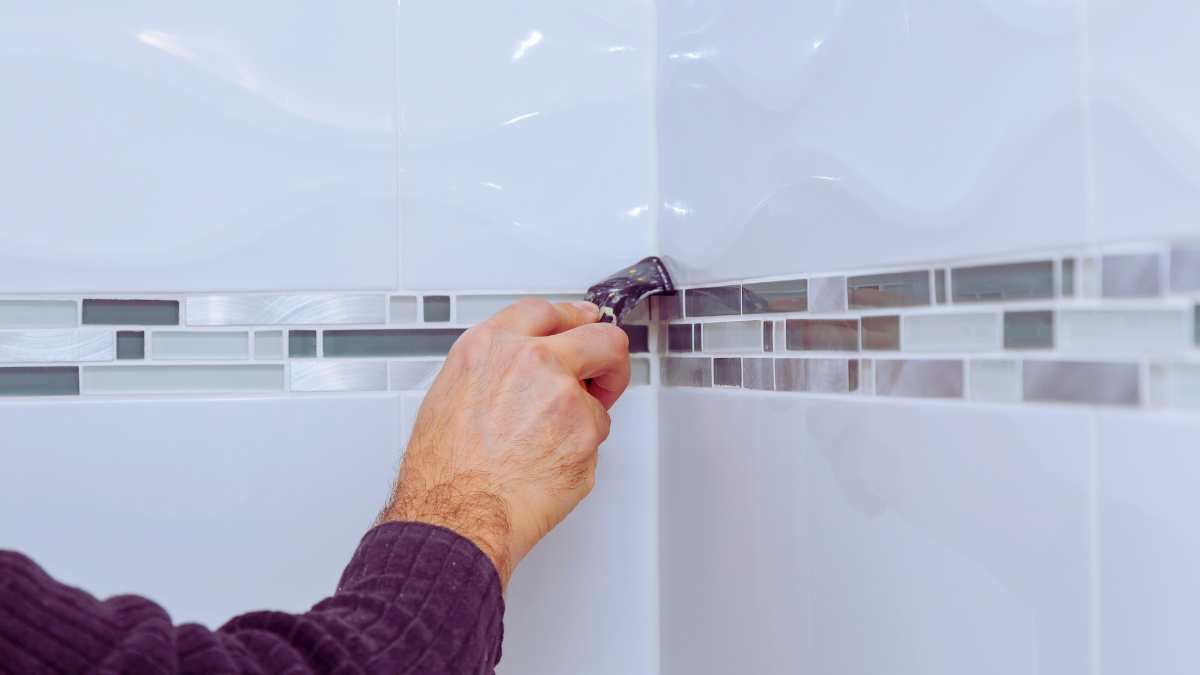
Removing and reapplying silicone is a task that many people put off because it seems complicated. It actually requires two tools, a cutter and a spatula, a few hours of work and twenty-four hours of drying. THE The result is immediate and lasts for years.
The right time to intervene is before the silicone has darkened deeply. When the darkening is still superficial, sometimes a specific product for joints and silicone based on oxalic acid is sufficient. When the black has penetrated the material, the only solution is replacement.
It is worth choosing quality silicone, preferably with an anti-mold formulation and in a shades integrated with tile joints. Pure white in a bathroom with gray grout creates a contrast that over time becomes as annoying as dark silicone. Better to match or choose a neutral light gray that works in most environments.



