


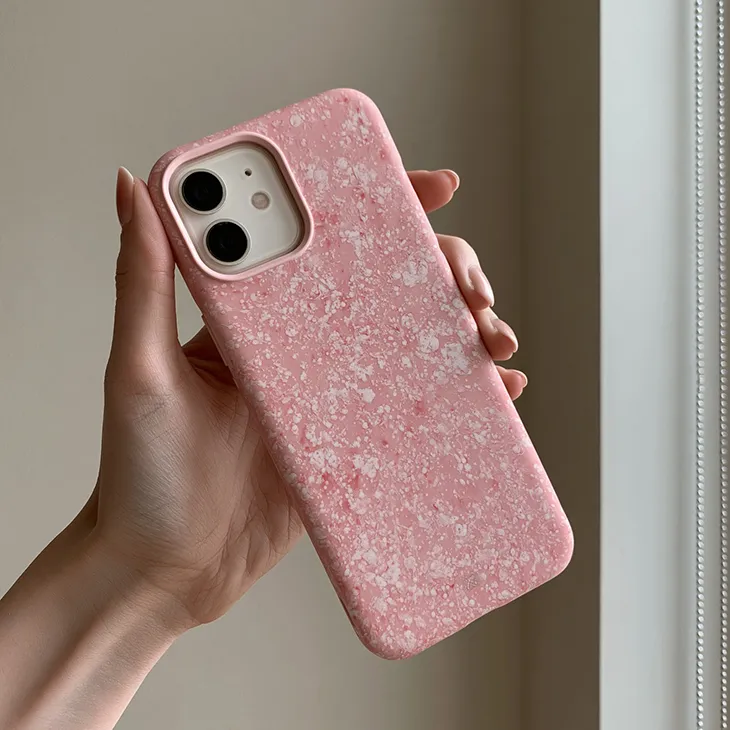
Minimalism has been around for a long time. White space, monochromatic palettes, the single object in an otherwise empty frame, the logic of reduction has dominated design discussions for the better part of two decades. That route ends, and one of the clearest places to watch the shift is something most people carry in their pocket: the phone case.
Maximal iPhone cases have moved from a category of niche accessories to a small but noticeable design trend, and the cases worth looking out for share a few features. They layer pattern instead of isolating it, florals over geometric grids, collage-style photo prints stacked with line art, glossy resin finishes poured over pressed objects or glitter hangings. Some use raised, almost sculptural textures so that the design can be felt and seen. Others borrow the visual density of a scrapbook or sticker sheet, packing dozens of small patterns that only add up to a cohesive close-up image. The result is an object that rewards a second glance, something closer to a miniature collage than a printed leather.
This density is not arbitrary. Ultimate iPhone cases they echo a wider cultural mood that has been building across fashion and interiors for several years: a renewed appetite for colour, texture and visual abundance after a long period of restraint. Architecture has its own version of this debate, with facades that lean toward texture and ornament instead of stripping it away. The catwalks brought back print-on-print combinations that would have seemed unruly a decade ago. None of this is to say that a phone case does the same job as a building or a collection, the stakes and art involved are obviously different. But the underlying instinct is the same: more visual information, deployed with intent, can be a form of bounty rather than noise.
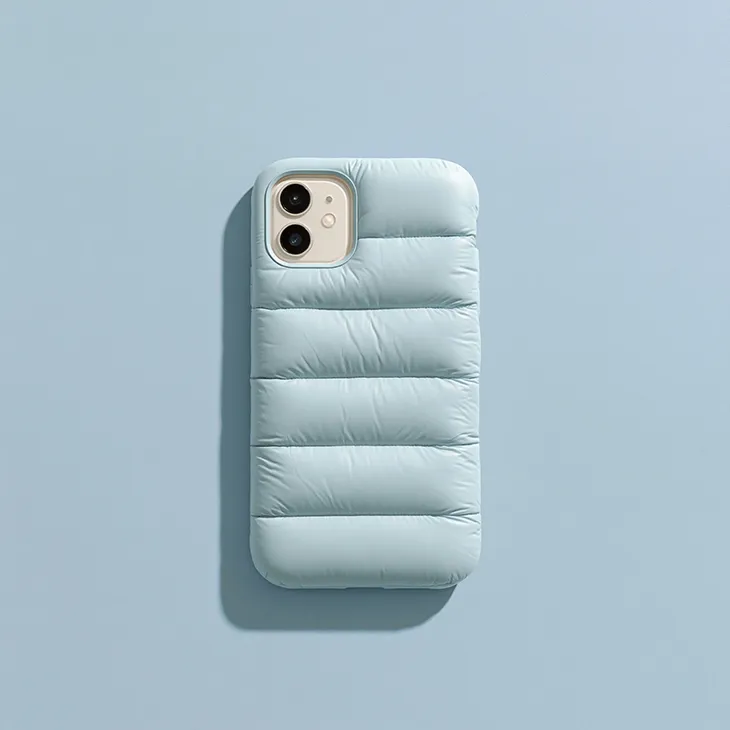
A different kind of scale
What makes the phone case an interesting test case for this shift is its scale. A heavy plan facade it must read clearly from across the street and still stand when someone is standing next to it. A phone case never has this distance problem, it comes close, at hand, dozens of times a day. This changes what “maximist” can mean for the object. A case can be packed with details that would feel chaotic at signboard size because the format guarantees a slow, narrow, repetitive view. The layer under the layer, the little pattern hidden in a corner of the pattern, these only work because the object is made to be held, not looked at from a distance.
Pattern as a design decision
Pattern has long been treated as the less serious cousin of “real” design choices, something that is applied to a surface rather than built into its structure. This has changed in textiles, ceramics and packaging design, where designers have shown that a repeating pattern can have as much intent as any other formal choice. The best maximalist phone cases follow this logic: the pattern isn’t placed in an empty shell, it’s organized around repetition, scale changes, and color rhythm in a way that holds together as a composition. This is a fairly modest design problem compared to what a textile designer or architect solves, but it is real, and it shows in the difference between a case that feels busy and a case that feels considered.
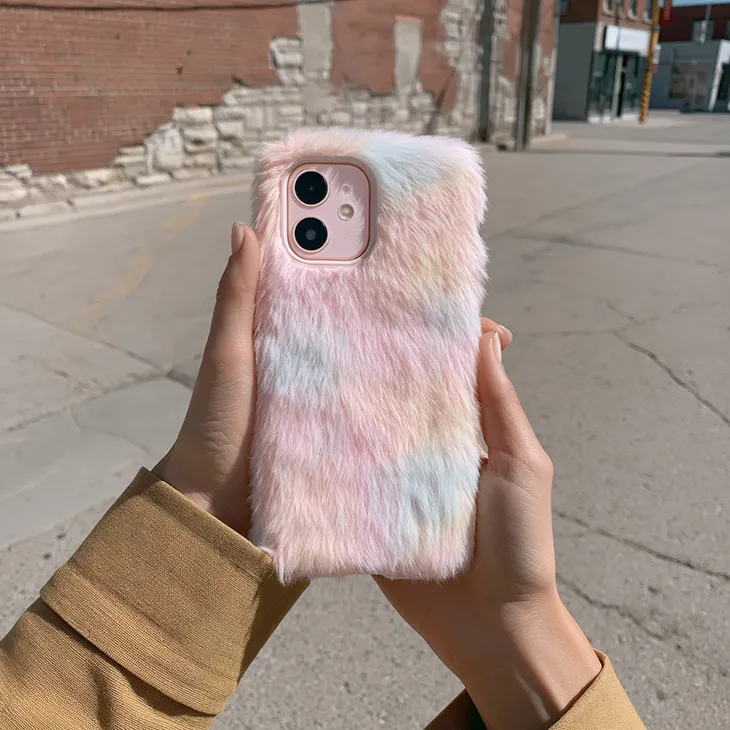
Color at close range
The same renewed appetite for color that appears interior spaces and streetwear gives the maximalist premise somewhere to go. Decisions about which hue dominates, which fades, and how much contrast the eye can tolerate at close range are small-scale versions of decisions that every colorist makes. The size of the object doesn’t make these decisions any easier, if anything, a four-inch surface leaves less room to hide an unbalanced palette.
It was built to be collected
Maximal design in all disciplines tends to create series rather than single objects, and the case class is no different. Brands working in this space often release cases in collections, a common color story, a repeating pattern, a set of variations on an idea rather than as individual prints. That’s part of what makes them collectible: the single case is a single decision, but the series shows the range of decisions a designer was willing to make within a visual concept.
Why does it stick?
A phone case is picked up and put down more times in a day than almost any other item a person owns. This repetition is precisely why density works here: an object that still reveals something at a hundredth glance has solved, on a very small scale, the same problem maximalist designers they hunt everywhere else, not less to look, but more reason to keep looking.



